Tag: The Buddha

  • Life is a celebration


    I was doing regular weekly followup at an Art of living center today morning. While breathing, I realized Something. Probably it’s nothing new for many – the moment I took the breath in, it became me! The air I breath became me and I was nothing without it. We become a part of something be it breath, food or the environment. As a kid, I enjoyed many festivals Ganeshotsva was one of them. Slowly I started feeling it is more political than social. I was disenchanted and grew over it. After coming in Mumbai, I connected to this festival once again. Slowly I this season and festival has become a part of me.

    This festival has been teaching a lot of things to me. Have you observed something special? Almost whole year we have some or the other festival and celebration in India. We go out to submerge the deity with full funfair dancing. This is going to happening once again predominantly in Western India (Maharashtra). Every year during this festival I learn – and forget later – that life is celebration.
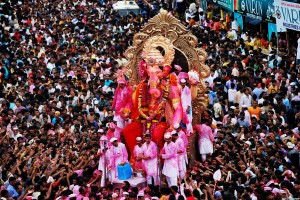
    Similar worship will start in few weeks in Eastern India (West Bengal) also in Gujarat. The god on the other side would be – Devi. Imagine, a deity brought home with full reverence, worshiped twice a day and in the end submerged.

    I get quiet surprised, in Indian system there is no particular festival (occasion) of mourning unlike another predominant religion. Shraddh paksh is there, but it is not exactly about mourning. Shraddh paksh is about paying respect and homage to the departed ancestors and remembering them. Probably the reason for not mourning is that we – most Indian religion – presume that there is coming back. So, why to mourn? We have to pay homage to our ancestors because of them we are here. However, they too will come back until Moksha.

    If there is no end, why be sad? Why be disappointed? Why not celebrate every moment? Had there been Ganesha, he would have loved these last 10 days, and would have danced on the way for submerging – he too would know – life is celebration. Life is a celebration, better we realized it earlier in our life time. A celebration with awareness, if not realized, “life is a trouble… death is not“.

    Whatever, good or bad I / you take in (be it food, thoughts or breath) becomes me / you. So it is a good idea to “be a celebration”.

    Moksha – attainment of self-realization, liberation from the cycle of life and death.
  • Adviti and genes of generations


    As I shared last week, we are blessed with a baby girl – Adviti. Our daughter has just turned 6 months. With her coming in, and our near and dear visiting us, comparison of “who does she look like?” started. Some say she looks like me others say she looks like my wife. Yet others say, her face will change for first couple of years and we cannot make a final judgement until then.

    Besides her looks, we have observed a peculiar behavior of Adviti. She has a sideways smile. This smile resembles bit of my smile. It surprised us in the beginning. Initially we brushed it aside as a random observation. However, when we saw Adviti smile often sideways, plus stretching herself after waking up, we realized that she probably has got some behavioral traits resembling mine. We started asking ourselves, besides the physical appearance does baby have behavioral similarity too with parents? It is not some behavioral trait at a later stage of (learnt by) the baby but an infant as young as 3 months.

    When my wife and I had this question, we realized the value of building ourselves into a better person. We are not only building ourselves but also our coming generations. This brings me back to spirituality and meditation. You can read an interesting article on advantages of meditation at this link. Have you ever questioned how does your present life impact your offspring (born or unborn)? Perhaps meditation has some keys of evolved future generations.

    Now, I am firm believer that we must teach meditation and spiritual practices to our kids, these are more likely to impact our coming generations positively. At times, when I see kids playing violence based games or watch gory movies I feel that we need to put some discretion somewhere.

    I believe Sri Sir Ravi Shankar (or some other spiritual master), said somewhere once – “…meditation done by a person impacts his ancestors as well as coming generation…” When I see Adviti’s some behavioral traits I have no doubts about the impact now.

    Instead of writing / reading about meditation try one (and many others), here


  • Teaching virtues to Adviti


    We were blessed with a baby girl a couple of months back. We have named her Adviti. Adviti from a Hindi / Sanskrit word Advitiya which means unparallel, peerless or no other can be like her (him). As they say in Chinese catch them young, now, I am parenting Adviti and teaching her virtues.

    In last couple of months life has changed. A lot has changed for me and specially for my wife – Simple. Having a baby is a huge responsibility and taking care of her has changed us both in many ways. A dimension is added in all these personal, psychological and emotional changes – how do we provide good upbringing to Adviti?

    Being bit spiritual, though she is just turning six months, I started reading Jatak tales to her. At times I laughed at myself – I am reading these stories to her in English. I wonder if she understand Hindi (native language) forget about English (non native language). Isn’t it difficult to figure out approach for correct (better) upbringing of kids? Has anyone figured it out?

    When I started reading these stories to her, I asked myself, should I teach certain virtues – taught in the stories – to her? I wonder in next couple of years how our society will change.

    As a kid I lived around a lot of Jain followers. During those days not eating onion and garlic was natural to me. In fact I am trying to practice their eating habits now too. Besides other concepts, the Jain philosophy teaches a concept – Asteya meaning non stealing. However, in today’s society where morally corrupt make the law and loot are mostly legalized, what is the meaning of a parent teaching such lessons to his/her children?

    I have examples of previous 70 years of corruption cases of India alone, forget about the rest of the world. The law gets bent such that corruption – even though it is evident – of these lawmakers become legally correct. It is so difficult to prove – something that looks so evident – that many corruptions happened but we cannot prove it easily – case in point is – case on son of previous finance minister. Our (specially Indian) legal system is so slow and lopsided that it takes 20+ years to get someone jailed (read Sanjay Dutt or Lalu Prasad Yadav) and prove someone innocent (A postman).

    Here, it is needless to say that Indian film industry tried proving Sanjay Dutt innocent with all the flaws. Isn’t it possible someone in future will try to paint these current politicians also as innocent? If our culture is getting a narrative that is distorted parents may have doubt in teaching virtues to their kids. Asteya – non stealing – is it just a good concept in books or religious sermons? Does it make sense to teach virtue’s to our next generation?

  • Guru poornima


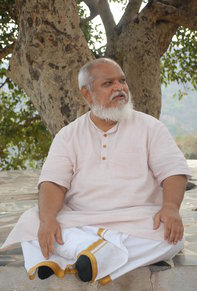
    I have had privilege of meeting at least three enlightened masters in my life (until now), mentors and coaches. Some of the mentors may be enlightened masters and I am not aware about those. However, rest three I am sure – Sai Kaka, Dada ji and Guruji. It is difficult to have very close day-to-day meeting with the enlightened masters. The mentors have a special place they guide, encourage, handhold, and challenge, I have been fortunate that I have a long list of mentors.

    I received a wonderful story on whatsapp “Importance of Guru” or mentor or coach in life.  Without much ado here is this wonderful story on Guru Poornima.

    ——————

    Once upon a time, a cow went out to graze in the jungle. Suddenly, she noticed a lion racing towards her. She turned and fled, fearing that at any moment the lion would sink his claws into her. The cow desperately looked for someplace to escape and at last, saw a shallow pond. Barely evading the lion’s reach, she jumped into the pond, and in the heat of the chase, the lion blindly leaped after her.

    Sai KakaTo the surprise of them both, the pond was extremely shallow yet filled with deep recesses of mud. After toppling over each other, the cow and the lion found themselves a short distance apart, stuck in the mud up to their necks. Both had their heads above water but were unable to free themselves no matter how much they writhDada Gavanded.

    The lion repeatedly snarled at the cow and roared, “I am going to enjoy the sound of crunching your bones between my teeth!”

    He thrashed about in fury but soon became fretful as he found no prospect of escape.

    The cow thoughtfully laughed as the lion struggled to free himself and asked him, “Do you have a master?”

    The lion disdainfully replied, “I am the king of the jungle. Why do you ask me if I have a master? I myself am the master!”

    The cow said, “You may be the king of the jungle, but here all your power has failed to save your life.”

    “And what about you?” Retorted the lion. “You are going to die here in this mud too!”’

    The cow smiled mildly and said, “No, I am not.”

    “If even I, the king of the jungle cannot free myself from this mud”, snapped the lion, “Then how can you, an ordinary cow?”

    The cow gently replied, “I cannot free myself from this mud, but my master can. When the sun sets and he finds me absent at home, he will come looking for me. Once he finds me, he will raise me up and escort me home sweet home.”

    The lion fell silent and coldly glared at the cow.

    Soon enough, the sunset and the cow’s master arrived. He immediately recognized the plight she was in and lifted her to safety. As they walked home, the cow and the master both felt renewed gratitude for one another and pitied the lion they both would have been happy to save if only the lion had allowed them.

    The cow represents a surrendered heart, the lion represents an egoistic mind, and the master represents the Guru. The mud represents the world, and the chase represents the struggle for existence therein.

    —————————————–

    Its good to be independent and not rely on anyone. But don’t take it to an extreme, you always need a partner/coach/mentor who will be always on the lookout for you.

    Having them does not mean you are weak, it’s just that you can be stronger with their help.

  • Why-Analysis – Karma


    In operations consulting we used to do why-why analysis. It is a method to identify cause of an occurrence. There are other methods also available for doing such analysis. The objective of such different methods is be to find the root cause of some occurrence.

    Why this happened? Because of that. Why that happened? because of something else.This why question is asked on the answer of previous question until an actionable cause is identified. Mostly a root cause is reached in maximum of 5 why’s. It is a very commonly used cause and effect analysis tool in operations management.

    I watched this video and could relate to karma, our entanglement to karma (Maya) and that root cause analysis technique mentioned above. The lesson here is, one must try to find “The cause of cause”.

    Guruji (Sri Sri Ravi Shankar) is saying in this video that when you stick at one or lower levels of the cause attribution you do not get to the real cause. On the contrary that entangles you, in Karma, even more.

    If we do not perform Why-Why analysis correctly, we get frustrated and the operations do not get improved. Thus, properly performing this analysis will get to the root cause – mostly management. How and why a decision was made which resulted in the issue say for example high inventory or poor quality output. Thus that can help improve operations of the organization.

    Similarly when we analyze karma we would reach to the ultimate – the cause of all the causes. Guruji calls it – Shiv tatva in this video.

    Karma plays a role everywhere, be it spiritual life or professional. However, doing a why-why analysis on operations is easy on the contrary doing a why-analysis on “the cause of all the causes” is easier said than done.

  • Grass grows by itself


    For last couple of years, I have been buying stuff (mostly grocery and vegetables) from where I get a bill (invoice), even if I have to pay a bit more. Reason has been straightforward – I am fine paying more because presumably the one who gives me bill pays tax. It reduces burden on my tax and thus country can improve and prosper. Straightforward logic. However, another thought runs in mind – things are getting automated, be it agriculture or industries. Technology based jobs are likely to get automated too. This will create a scarcity of jobs. We should support roadside vendors otherwise how will they sustain their livelihood.

    Next level challenges for Governments and even for private sector will be job creation at grass root. The other thought says possibly there would not be a need of job creation. Things will happens automatically due to automation. On a philosophical level as Ramana uncle keeps on quoting – Sitting quietly, doing nothing, spring comes and the grass grows by itself. ~ Basho. This no one would require to do job, the same possibility suggested by Keynes.

    The world thus would be a kind of utopia, we hopefully wont require ruling over the other. It would be a time of soul searching, digging inside doing inner revolution. I strongly believe prosperity of each individual is the best way to reach the Utopian world. Economics, fails at such Utopian world, because where there is scarcity there is demand and supply. However, if everyone is prosperous probably no one will feel wealthy. Feeling of being wealthy at that time would be defined by some other measures – not necessarily by money. Currently too we are on the verge of redefining wealth, money is not what you have in your pockets or home is no more the only wealth. Wealth is – stocks you have, count of zeros in your accounts, may be in future we would look at bitcoins in your electronic wallets.

    Possibly, the Buddha was disillusioned by wealth – he was a prince after all, wealthiest of kingdom – when he saw a sick old man, a dead body etc. Likelihood of seeing a Buddha like person is far higher in prosperous economy. India was at peak of its economic, scientific and spiritual knowledge. The world now and in future needs to think about spirituality and economics in same plane. The world we are creating for our coming generations should have growth, livelihood, sustainability and spirituality together. This requires learning a couple of concepts of Buddha’s teachings deeper – i. interdependent co-arising ii. the middle path and iii. righteousness (speech, action, livelihood,efforts, mindfulness, concentration, view and resolve).
    I think we need to think beyond jobs creation, wealth, we need to think about a holistic development of human race because the grass grows by itself.

    Happy Buddha Purnima, may everyone become The One soon.

  • Earth day


    Today is Earth day. Actually everyday should be The Earth Day, its ok at least we human have given recognition to earth that one out of the 365 days is celebrated as Earth day. Perhaps we have taken the liberty to pollute earth for 364 days after celebrating one day in the remembrance. If we keep our act as it is currently, the remembrance will soon become “remembrance” only. More precisely worst we wont be there to observe the remembrance either.

    Is there something that we can learn from Earth? Many! Just stick to the two here. It gives without any expectations. Thanks to the Earth, every cell in our body is made up of earth. We did not bring anything and would not take anything back with us. Can we learn to reduce our expectations?

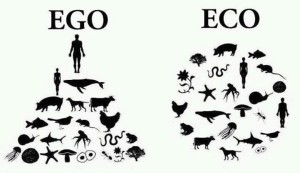
    It holds us all without any ego that “you exist because of me”. We get into this kind of me, my opinion and my way of living (religion) better than yours faster than we learn to exist on this earth. Humanity is fighting for small little opinions for centuries, its lately that we have realized the value of Earth to at least celebrate the day. In fact this Earth day is a lesson to all of us – that we need to give up our dominion. This image represents it far better than words can.

    We believe we are free to take our actions, we forget that the consequences are also there. These consequences are not just for us but for everyone around us. Some of the species are extinct already other few are in line. The whole world is interdependent on each other. If we miss this point we wont exist sooner rather than later. I read it once – If all bees die, humans will die soon too.

    Let us celebrate this earth day with respect to the mother earth and to each and every creature on the face of the earth. Otherwise for long we have been the “takers“.

    Forget businesses and countries, humans wont survive if we do not learn the lesson of interdependent co-arising. No wonder we need to learn the lessons taught by previous spiritual masters – compassion, Non-attachment, Nonviolence, mindfulness and gratitude.

  • A Hasidic tale – Prayer


    I have been reading one or the other story of Father Anthony De Mello’s books – The Prayer Of The Frog Vol. I and Prayer of The Frog Vol. II and share the same here occasionally. The books have small and very interesting stories. One of the story I read was on Prayers, here it is –

    Late one evening a poor farmer on his way back from the market. He was a religious person and when he found that he has missed his prayer book at home. The worst fear he had was he has misplaced it. This was the most disheartening thing that could happen to this pious and religious person.

    The wheel of his cart had come off right in the middle of the woods and it distressed him that this day should pass without his having said his prayers.

    With this disappointment, he was worried that he is missing something very important today. So he did something interesting. This is the prayer he made: “I have done something very foolish, Lord. I came away from home this morning without my prayer book and my memory is such that I cannot recite a single prayer without it. So this is what I am going to do: I shall recite the alphabet five times very slowly and you, to whom all prayers are known, can put the letters together to form the prayers I can’t remember,”

    And the Lord said to his angels, “Of all the prayers I have heard today, this one was undoubtedly the best because it came from a heart that was simple and sincere.”


    I have heard that Jesus said, “The kingdom of the Gods belongs to people who are like child-like.

    We all must do our prayers and any other works – personal or professional – with such sincerity and simplicity, isn’t it? Do share your thoughts.

  • Trust, PNBFraud and Cryptocurrency


    It was a monthly routine of some of my friends of our engineering days that can explain one Professor Mankad’s statement – “Money is what is accepted as money”. Some of my friends, used to be penniless for last one week to ten days every month. Possibly it is a common phenomenon of current generation students. So for about last ten days these friends of ours used to borrow from us. A couple of times I gave, returns used to be few and far between. I and few other “venture capitalists” stopped lending these friends. In these trying times, the borrower friends came up with an idea – whenever the received a cheque (rarely demand draft) – from home it used to take three or more days to realize those – they used to borrow against it.

    Let me try to explain it with example, say Neerav got a cheque of INR 2500 from home, he will show that and borrow money (say INR 1000) from Yogesh and possibly INR 1500 from Pravin and another INR 1000 from Prateek. Now Neerav has borrowed INR 3500 against a cheque of 2500. All of the lenders used to be under an impression that within next five days or so we will get our money back as Neerav has got INR 2500. We used to accept that cheque as guarantee of timely return. “We” accepted cheque in “Neerav’s name” as a money. Thankfully none of the Neerav’s defaulted on our outstanding.

    We have been living in a very nicely woven cobweb of currency and economy for at least last two centuries. Currency and thus “money” is the biggest fraud happening around us. Be the gold standard (relatively better method of “value”) to fiat currency. What is money? The question Professor Mankad asked us in our MBA class about 8 years back is still very relevant and I have been revisiting it time and again. When he asked such question, we started answering coin, currency notes etc etc. His one line response was – “Money is what is accepted as money”. Yes that is true, money is what is accepted as money, as we used to accept cheque without known Neerav has kind of pleaded same cheque to 5 different lenders!

    Bitcoin logoEarlier, I wrote on trust as a foundation – Currency for the future. QUOTE from there Let us flip the coin and say “Trust” is the currency. What would happen? Those who have hoards of currency may be the most bankrupt people on the earth. Perhaps, a business of trading of trust would start (Bomday Trust Exchange or National Trust Exchange). Would the world be a different place then when currency would be mutual trust (well not necessarily Mutual such as DLF and Robert Vadra. UNQUOTE. This I wrote in 2012, at that time Cryptocurrency (example bitcoin) was not commonplace – well even I did not know about it. I had a different measure and calculation for the currency – money what is it?

    However, lesser than the intangible concept of Trust that I thought, we have a better believable system evolving these days – cryptocurrency. If we keep on seeing the meltdown of 2008, NPA frauds of India and many other such scams from the politicians and their accomplice etc. we will soon accept the bitcoin or other such more reliable systems for transactions. Crypto is putting pressure because administrations and regulatory authorities will lose control on the economy. With the control also they are not making any good; at least if we see India – a former FM and his son facing trial but our system is unable to conclude the trial or many scammers settling out of India.

    I am bit hopeful on blockchain, it is more reliable (difficult to fudge) and open as against the lenders like Punjab National Bank who can decide on their fancy on the money of other depositors. Blockchain is the way for not only currencies but for many other things including contracts and agreements. Hopefully then we will have a more balanced society and “trust” as digital money. Only fear is these “connected” bureaucrats, politicians and their page 3 friends, clique will first get their ill gotten money put in these digital currencies and probably try to make it murky too.

    Disclaimer – story of engineering days is authentic, names of my friends are changed, I didn’t have any batchmate in Engineering named Nirav.

  • Driving in India


    Many activities in India can be related to spirituality take for instance driving. It is a very spiritual experience. I have had the privilege of driving on Indian roads – streets and highways, metro to small cities and even two wheeler and four wheeler. I have used choicest of the words while driving. This experience also includes bicycle and how can I ignore walking? This idea of connecting spirituality and driving (plus walking) stuck to me when one of my friend’s was hit by a two wheeler rider breaking his wrist and handset.

    In two ways spirituality is manifested when you drive in India, one when you are stuck in traffic you have two options. Option one you are at the verge of meditation, or the complete opposite curse self or Google maps left right and center for selecting the route or abusing people who caused (not following lanes, jumping signals etc) the traffic. Option number one is better any day. I can vouch for this specially in traffic of Mumbai.

    The other way of manifestation of spirituality is when you are riding a two wheeler, specially in a tier 2 city. The two wheeler riders in tier 2 cities drive such that you have to take care of yourself. The thought processes of these riders are like this – “I’ve to take care of myself, hell with others, they will take care of themselves”. You have to be very careful because anybody can pop from any side. When my friend’s wrist was hurt badly and mobile screen broken I could not resist but think about all these. The rider it seems was practicing riding meditating (like walking meditation) while driving went away in thin air, without stopping and apologizing.

    You have to be selfish to drive in tier 2 city because a two wheeler rider will take care of himself you take care of your vehicle rest of the other people around you are Maya, signals are for mortals you are self realized parabramh (the non destructible God).

    This “selfishness” reminded me of the above short comment from Osho – the other way of connecting spirituality to Indian traffic conditions. What is your take? Can driving in India be a spiritual experience?