Tag: The Buddha

  • Connectedness

    The world is divided into countries, races, religions, and god knows how many different factions and sections. There may be valid reasons for such sections. However, everything and everyone is connected. Problem to one results in problem to everything else around it. We have to learn the lesson of connectedness, be it hard way or easily.

    Connectedness

    Once different body parts were annoyed with the stomach. They were unhappy that they had to procure food and bring it to the stomach while the stomach itself did nothing but devour the hard work the parts did.

    In a meeting, all body parts decided they will stop bringing food to the stomach. The hand won’t lift it to the mouth, teeth won’t chew and throat won’t swallow it. This would force the stomach into doing something.
    After all, they were part of the whole. They had forgotten this basic reality. The decision to stop bringing food to the stomach resulted in making the body weak, feeble, and brought the body to the death bed.

    In the end, they all learned a lesson that in helping one another they were really working for their own welfare.

    Interdependence

    I had written about witnessing an incident of rioting firsthand. The learning from that incident was that we must learn managing our emotions. We can learn this by learning meditations. In fact, meditation brings compassion too. Result – more balance and peaceful response to situation instead of rioting – “Connectedness“.

    https://business2buddha.com/2019/05/heart-mind-action-awareness-meditation/
    https://twitter.com/SVNewsAlerts/status/1299458895396646915
    Protest should be representative not damaging public property

    Recently, I heard of the news of riots in a city in Sweden. Similar things occurred in two of the biggest cities in India – Delhi, and Bangalore. In our selfishness, if we miss the connectedness we end up harming not just ourselves but the whole surrounding. In our shallowness, we may consider ourselves as different or separate from the other however this aloofness ends into troubling everything.

    Note – Story source – Father Anthony de Mello, Prayers of the frog

  • Develop taste

    In school, we studied the concept of survival of the fittest. However, learned it in Engineering. With the practicals lessons on “survival of the fittest” our tongue had learned tasting food without hurting itself from the hot food. With time, we must learn to develop taste for different things in life, be it good or bad food, experiences, situations, or practices. At least, we must be open to test and experience before making an opinion or choice. Once we develop taste, we can choose to continue with the new things or no, isn’t it?

    The story

    Pramod – my engineering batch-mate – was an awesome cook. He had a roommate whose nickname was Golu. Whenever Pramod used to cook, we used to wait for the final bell to open our attack on the food. I still remember the food, how can I forget the fragrance of lentils (dal) and rice?

    Over time each one had learned, if you wait for the food to get warm, you would remain hungry. Everyone knew this and complied with the principle of attacking the food as soon as possible. Those days were unconventional.

    Golu used to eat with us, however, after the meals he used to start finding fault – salt was less, there was no taste of spices, and so on. Initially, we responded, later we realized it was his habit. So we started ignoring it, yet Pramod had had enough of it. This happened so many times that once Pramod told him – “you won’t be allowed to even touch the utensil, forget eating.” We had dinner, washed utensils, and gave it to him. Golu started cooking we were watching him assuming he is a critique he must be a better cook.

    Golu cooked; while he was cooking we’re aghast and repeatedly told him do not put so much red chilly powder, not so much turmeric, etc. The food was red due to red chilly powder. We refrained from eating the food. We knew it was terrible, however, he kept on praising himself – in vain – his facial expressions were enough for us.

    Learning

    The learning was – either you develop a taste – in this case, it was a rather wonderful food – for the food or learn cooking yourself. A larger lesson for life, we end up making an opinion about things without knowing much about those. Some times we make this error – we follow Yoga or take Ayurvedic medicine and make fun of the same in public. At times, people have not done meditation yet, they critique it. The best I would advise anyone is to practice meditation at least once even if you want to critique it. It would have a positive impact on you. Who knows, you would continue doing meditation, knowing what you have been missing in life?

  • Gyani in professional life

    The Bhagvad Geeta defines who is a gyani (sage) as follows – “One who remains unattached under all conditions, and is neither delighted by good fortune nor dejected by tribulation, he is a sage with perfect knowledge.” It is very difficult to implement in life. The practical approach for trying is – “Pandemic has happened, we are in lockdown. This is our current reality. We cannot change it, isn’t it? What we can do now is detach ourselves from this reality and look at what can we do as a professional and as a person.” If we approach situations in this manner we can be Gyani in professional life – a saint in suit. Here is a very small example with me how I failed in it recently and learnt a lesson.

    My recent experience

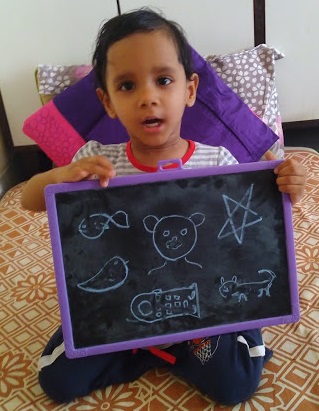
    My daughter – Adviti – has been kind enough to teach me some lessons on a regular basis. She reminded me of a Shloka of Bhagvad Geeta – “who is a Gyani (sage)?” Recently we gave her a slate and chalk so that she can scribble some things on it. She is too young – 2 years only – to write something useful. So, to keep her entertained, I make caricatures, animals or some drawings. It is a slate; it needs cleaning to scribble something next time. I am a very terrible painter, this has been a learning experience for me how to make something worth its salt. Slowly,2 I started drawing things that at least have some resemblance to the original. Now, I have started making something which is of at least some value – or I feel it is so.

    Adviti-Drawing-Lesson-Who-is-Gyani

    Initially it was ok for me, the drawings were awful and she was rubbing stuff. Yesterday I copied one of the drawings from her coloring book. I fell in love with that and as usual Adviti rubbed it clean. I tried to stop her, because I was very happy with the drawing. Probably for her there is no definition of beauty or ugliness. For her everything is equal. In fact there is a probability that the drawing I made was not worth it but I fell in love with it because I made it. So it was a lesson for me to let go and be equanimous in such situations. By the way, the picture on the side is about 2 month old, I make better drawing now 😀 😉

    http://business2buddha.com/2011/07/when-will-we-stop/

    Who is a Gyani (sage)?

    दु:खेष्वनुद्विग्नमना: सुखेषु विगतस्पृह: |
    वीतरागभयक्रोध: स्थितधीर्मुनिरुच्यते || 56||

    duḥkheṣhv-anudvigna-manāḥ sukheṣhu vigata-spṛihaḥ
    vīta-rāga-bhaya-krodhaḥ sthita-dhīr munir uchyate

    One whose mind remains undisturbed amidst misery, who does not crave for pleasure, and who is free from attachment, fear, and anger, is called a sage of steady wisdom.

    य: सर्वत्रानभिस्नेहस्तत्तत्प्राप्य शुभाशुभम् |
    नाभिनन्दति न द्वेष्टि तस्य प्रज्ञा प्रतिष्ठिता || 57||

    yaḥ sarvatrānabhisnehas tat tat prāpya śhubhāśhubham
    nābhinandati na dveṣhṭi tasya prajñā pratiṣhṭhitā

    One who remains unattached under all conditions, and is neither delighted by good fortune nor dejected by tribulation, he is a sage with perfect knowledge.

    I remember above shlokas of Bhagvad Geeta that she is effectively teaching me without even realizing. The lesson is “who is a Gyani (sage)?” I got too attached to the drawings – very trifling things – that would be gone over time. Whenever she wiped those I felt miserable, though I know these drawings are transitory.

    It is easy to relate to the slate and scribbling. It becomes difficult to apply this wisdom to our daily life. In our daily lives we are attached to the “bigger things” be it our certificates, designations or possessions. It’d be good if we learn this lesson for our daily life.

    Source – Bhagvat Geeta and the translation (Holy Bhagavad Gita).

  • “Greedy” monk

    Prayers of the Frog Volume 1 and Volume 2 is a wonderful story book. Here is another story from the same. This story connects the dots with perception that I had been writing. We do have some monks like this in our society. Do read the story for now.

    Monk

    Greedy monk

    Gessen was a Buddhist monk. He was also an exceptionally talented artist. Before he started work on any painting, however, he always demanded payment in advance. And his fees were exorbitant. So he came to be known as the Greedy Monk.

    A geisha (Japanese women who entertain through performing the ancient traditions) once sent for him to have a painting done. Gessen said. “How much will you pay me?” The girl happened to be entertaining a patron at that time. She said, “Any sum you ask for. But the painting must be done right now before me.”

    Gessen set to work at once and when the painting was completed he asked for the highest sum he had ever charged. As the geisha was giving him his money, she said to her patron, “This man is supposed to be a monk but all he thinks of is money. His talent is exceptional but he has a filthy, money-loving mind. How does one exhibit the canvas of a filthy-minded man like that? His work is good enough for my underclothing!”

    With that she flung a petticoat at him and asked him to paint a picture on it. Gessen asked the usual question before he started the work: “How much will you give me?” “Oh, any sum you ask for,” said the girl. Gessen named his price, painted the picture, shamelessly pocketed the money and walked away.

    • Many years later quite by chance someone found out why Gessen was so greedy for money. A devastating famine often struck his home province. The rich would do nothing to help the poor. So Gessen had secret barns built in the area and had them filled with grain for such emergencies. No one knew where the grain came from or who the benefactor of the province was.
    • Another reason why Gessen wanted money was the road leading to his village from the city many miles away. It was in such bad condition that ox-carts could not move on it; this caused much suffering to the aged and the infirm when they needed to get to the city. So Gessen had the road repaired.
    • The final reason was a meditation temple which Gessen’s teacher had always desired to build but could not, Gessen built this temple as a token of gratitude to his revered teacher.

    After the Greedy Monk had built the road, the temple and the barns, he threw away his paint and brushes, retired to the mountains to give himself to the contemplative life and never painted another canvas again.

    Read other such good stories and learn for yourself. I have referred to the book and its stories many times earlier too check here.

    http://business2buddha.com/2018/07/21/intentions/
    http://business2buddha.com/2018/07/08/perceptions-create-reality/
    http://business2buddha.com/2011/02/15/no-judgement-its-all-about-perception/

    Essence – A person’s conduct generally shows what the observer imagines it to show.

    Again this boils down to perception.

    http://business2buddha.com/2020/04/06/perceptions/
  • Perceptions

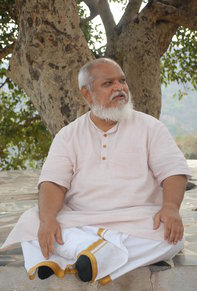
    Perceptions are our realities – however, how real are these perceptions? The reality persists until we get to understand the other side too. Long back, I met Sai Kaka and he told me very interesting lines explaining how we are stuck and how the “beyond” is experienced. If you look at many opinions and “-isms” you would realize that almost all are bound and jailed in the opinions of their own. What Sai Kaka told me was this –

    Sai Kaka

    Sanskar yukt chaitanya jab (संस्कार युक्त चैतन्य जब)

    • chintan karata hai to usko chitt kahate hai (1. चिंतन करता है तो उसको चित्त कहते है)
    • manan karata hai to usko man kahate hai (2. मनन करता है तो उसको मन कहते है)
    • nirnay karata hai to usko buddhi kahate hai (3. निर्णय करता है तो उसको बुद्धि कहते है)
    • asmita ka bhan karata hai to usko aham kahate hai (4. अस्मिता का भान करता है तो उसको अहं कहते है)
    • inme se sansakar nikal jaye to jo bachata hai vo shuddha chaitanya hai (इनमे से संस्कार निकल जाए तो जो बचता है वो शुद्ध चैतन्य है)

    This in English means –

    When a conscious filled with rituals (or say the lessons learnt about ‘way of living’)

    • thinks we call it mind (imagination)
    • contemplate we call it Mind [there is a difference between Chitt and man which I am not able to translate in English]
    • makes a decision we call it intellect
    • perceives pride we call it Ego

    Now when the rituals or ‘way of life’ learnt, get out of this conscious mind, what is left is the pure consciousness.

    I recalled these lines from Sai Kaka when I read the story of Prayer’s of the frog on Perception.

    Story from Prayers of the frog

    A monk was walking in the monastery grounds one day when he heard a bird sing. He listened, spellbound. It seemed to him that never before had he heard, but really heard, the song of a bird.

    When the singing stopped he returned to the monastery and discovered, to his dismay, that he was a stranger to his fellow monks, and they to him. It was only gradually that they and he discovered that he was returning after centuries. Because his listening was total, the time had stopped and he had slipped into eternity.

    Prayer is made perfect

    when the timeless is discovered.

    The timeless is discovered

    through clarity of perception.

    Perception is made clear

    when it is disengaged

    from preconceptions

    and from all consideration

    of personal loss or gain.

    ‘Then the miraculous

    is seen and the heart is filled with wonder.

    http://business2buddha.com/2014/03/10/amazing-isnt-it/
    I have written on Amazement/wonder read here

    Ashtavakra Geeta talks about Wonder, Janaka responds to Ashtavakra with astonishment. This veil takes time to cast-off. Our perceptions create our reality and we are stuck with that reality with our preconceived notions. When this perception, way of life, Sanskar is removed what is left is consciousness – pure bliss ( इनमे से संस्कार निकल जाए तो जो बचता है वो शुद्ध चैतन्य है).

    I have thoughts on the conflict of perception, in my mind that I shall try to put next week.

  • Interdependent co-arising in long run

    Last week I was in the US. I spoke with a friend of mine he is a professor in a college in USA. We discussed many things, what got our attention was the dependence of many moving parts of our society such that everything impacts everything else. This is nothing but interdependent co-arising.

    Related blogs –

    Vaccination and interdependence (pulse polio elimination initiate of Govt of India)
    Societal impact
    Interdependent co-arising a farmers example
    Entrepreneurship
    All interdependent co-arising related blogs

    We discussed the school system of USA, how the impact of 2008 great recession is going to impact funding of schools in coming time. The story is like this – during the collapse of late 2007 early 2008, birth rate in USA reduced. This is researched and published fact refer here “…the college-going population will drop by 15 percent between 2025 and 2029 and continue to decline by another percentage point or two thereafter…”. The researcher states birthrate as the factor, quote from the same source “…When the financial crisis hit in 2008, young people viewed that economic uncertainty as a cause for reducing fertility,” said Grawe. “The number of kids born from 2008 to 2011 fell precipitously. Fast forward 18 years to 2026 and we see that there are fewer kids reaching college-going age…”

    After 17 years when expected students those who could go to college have reduced this is impacting overall finances and the operations of schools. Look at the impact, how one things affects other. This is interdependent co-arising. What goes around comes around, impact on education may cause other impacts example – job market, sustainability of businesses and resulting in another possible economic crisis – it is a loop.

    Abstraction of this scenario

    You must have heard – if a butterfly flutters its wings in Amazon forest, it may cause a hurricane in Japan. We at times miss the power of small things and ignore them. This understanding of sensitivity of impact of one thing on a larger scale makes a person compassionate. Currently the world needs compassion more than the mad rush to reach somewhere. In the long term, impacts are what are left behind not the individual goals we kept in our mind.

    Image source – NeedPix

  • Living in the moment, how?

    Have you been disturbed by the outside environment? Is it that you lose your temper when some external factor influences you? It is nothing new, isn’t it? I too face the same time to time. Recent observations helped me look at these incidents little more carefully. Thus, I could question myself – How can one be centered and focused from the outside distractions? How can one live in the moment? Here I’m with some of my own’s answers too.

    Incident

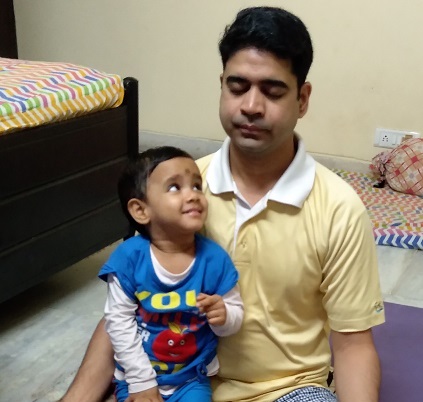
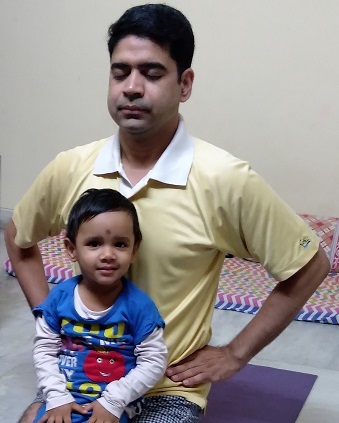
    I’ve been associated with the Art of living since 2004 and practicing the practices taught there. This involves some yoga asanas, pranayam, Sudarshan Kriya (A breathing exercise) and meditation. I’m continuing with my practice after marriage and my daughter Adviti‘s birth. The only difference now is that Adviti comes and sits on my laps occasionally. It is kind of distraction. Though it was good that it happened, now I’m more aware and question myself, how can one be a saint in professional life? The saint in professional life thought came to mind because there are multiple distractions and problems we face daily, how can one be focused even after so many distractions?

    Initially, I was bit uncomfortable that Adviti is disturbing me. Somewhat worried when doing asana if my hand or leg may hurt her. It is said that when someone is meditating or doing his/her spiritual practice you must not disturb the person. In fact it is said that you must not even touch the person. Here this infant is sitting on my laps, holding my hands and asking me to join her to play something. It happens rarely to me that I’m in a meditative state when I’m “doing” something.

    Long back I had a blog draft, in which I had contemplated what must be going in the mind of a sadhu (monk) who has left everything and gone to the Himalayas. He must have achieved the peace of mind he might be looking for. I had lot of questions to this fictional sadhu about he lessons. A thought cropped up when Adviti started sitting on my laps during my practice. Will a sadhu – who has attained peace at Himalaya – remain the same peaceful person in the world where there are distractions? The distractions can be traffic to office or noise of road construction or for that matter, your daughter wanting you to play with her, when you’re meditating.

    Learning

    My daughter has been a great learning to me. She is a cute little doll who enjoys moment to moment she lives in the moment. In fact she is so full in the event that if she is crying “she is crying” period. This is the case with every infant and kid, they are in “the now” all the time. Adviti does not know what I am doing or if she should stay away from me during those 30 min or so. She is fully involved, perhaps she is not aware that it is called awareness and still she is completely AWARE of her action.

    How to live in the moment?

    Almost for all questions my answer ends with spiritual practices. There is nothing wrong in this, I think. At the end of the day we all are spiritual being in various levels of evolution. There can be few simple to do points to be aware –

    1. Becoming aware of our thoughts, many a times we are doing one thing and thinking another. This distraction should be minimized. Keep an eye on the distractions.
    2. Do any activity with full awareness, it is difficult in the beginning. Why – read point 1 above. Keep aside your mobile, stop all notifications (except calls perhaps). This is how babies are, fully involved in the now
    3. Meditate, sit silently for some time and make it a daily practice. It helps. I know there are a lot of meditation techniques (Vigyan Bhairav talks about 100+ such techniques)
    4. As a professional, whenever you are doing an activity – know what is the outcome expectation from this activity. By the way outcome expectation is an innovation method too. When you are aware about the outcome, your actions should “ideally” be directed towards the outcome. It sounds contrary to the most famous guidance of Krishna (paraphrase) – “You do your duty, fruit of duty is not in your hand.” Though, here the guide is your actions should be directed towards the outcome. It implies here that plan for the result, and act in the moment.

    Results of action with awareness are better than just actions. We get distracted by event. The ability to respond to the activities around (and inside) with awareness improves us as an individual.

  • How to transform society?

    We’ve seen a lot of ups and downs in last few years across the world – be it social unrest, terrorist attacks, individual gun attacks or rapes. There are good things also happening, however as an evolved and superior generation, are we really up to our own marks? The answer to this question for me was “no, we can do better”. Naturally the answer followed with another question how can we improve ourselves and transform society? This question needed a bit more understanding of the so many unpleasant issues.

    Starting 2010 we have been social uprising in Middle east to terrorist attacks in Europe or teenager attacking in school or a recent rape and killing of a girl in Hyderabad India. We can divide these incidents as individual and group incidents. Incident where a single person is involved, we can call it Individual and group where a group was involved. Society is made up of collection of individuals. In society we have groups of people who are insane and they are more active, thus we end up have bitter incidents more in our society. I believe for improving the society we must work at individual and group level both. The Buddha also said – there is cause of suffering and a way out.

    Why are social problems there?

    As a whole we as a society have become identified with race, religion, region, social status etc. This at a subconscious level makes us identify ourselves with a limited identity. We are human being and just by chance we are Indian or European or Christian – we need to understand this. Further, if we believe or feel deprived that would be manifested and would come out.

    As an individual and as a society we can give what we have. If I ask you for 100 dollars, you can give it to me only if you have 100 dollars or more. How can an individual or society be peaceful when individuals and groups are stressed? The stress manifests itself in different forms – be it gun attack, terrorist attacks or rapes. A society that feels it is unfairly treated – whether it is right or no – will created unrest, possibly terrorists. This needs a solution.

    Art-of-living-logo
    The Art of Living

    I do social service under Art of living foundation. I have conducted meditation sessions for people. My personal experience seeing the participants pre and post meditation and the participant’s experience itself makes me feel that everyone must meditate. Since, I have personal experience of Art of living courses, I can vouch for the difference it makes to people, in fact the prison program has transformed prisoners too. Have you heard of a Bandit Angulimala? He was a dreaded terrorist, The Buddha transformed him too? Many people are far better than him. Meditation has immense power to transform.

    How to improve society?

    • First thing we must do it, good people must be more activity and get more attention / coverage by media too – This is what Guruji (Sri Sri Ravishankar) says.
    • We humans must go beyond our limited identity – be it the ego or social identity (race, religion or region)
      • Stop comparing yourself with others
      • Get out of your superiority / inferiority complex
    • Know your freedom is till your nose not beyond that. This can help you understand that you do not have right to kill, steal or rape.
    • Accept diversity, anything written / spoken which signify hatred must be discarded; even if that comes from any authority book. Guruji said something similar recently.
    • The easiest is – attend an Art of living Happiness program.
    • Meditate, I have decided to make a difference by helping people meditate.

    Ethics cannot be taught in class to be followed in life. Ethics need to be imbibed, my personal experience is that teaching of ethics and being happy with oneself can be imbibed by a meditative mind only. If you need help in learning meditation reach out to me. If you want to attend Art of living course – go here.

  • How to fix your mindset?

    My colleagues Akshay Chalke and Gaurav Thosani are full pictionaries of movies. While our group has some discussion, they relate to some or the other sequence of a movie, say, the dialog and start laughing amongst themselves. At times, we’re clueless what transpired, other times few other friends also start laughing when present context and movie sequence is clear. Initially, I used to look at Akshay and Gaurav with confusion, what the heck? What’s the meaning, what’s so special in that? At times, when they used to inform about the movie sequence (mostly I’d not watched) I used to feel what’s funny in that? In some chats, when I’d watched the movie, I went back about quarter of a century (I’m very old!). These small incidents helped me learn how can you fix your mindset?

    My story

    It was 1997, I’d just started traveling, that too alone – a distance of 500km (overnight bus journey) for my engineering. Being the youngest in family, naturally, I had lived in lot of protection and guidance. On top of that I was emotional & quick to get nostalgic. Those days, about 25 years back, video coach buses were cheaper and used to provide entertainment by playing a movie till mid night.

    It’s a nuisance if you don’t like the movie and a headache if you want to sleep for next day’s college. On top of all this, my mindset and disappointment with my present situations, made me uncomfortable and disappointed by the world in general. Though, the movies used to be light comedy like- Ishq or Govinda- movies of 90s. Some movies used to be slapstick comedy – no sense, just laughter rides. But, my mental condition, disappointments and nostalgia made me hate these movies. I never liked some hit comedy movies of that time, such as Ishq, Dulhe Raja, Auntie No. 1, Bade Miyan chhote miyan etc. In fact some songs made it to the list for example song of movie Ishq Nind churayi Meri kisne o Sanam; although I always liked singer Udit Narayan over others of that time.

    You can read other blog on “Situation.” how this single word sentence changed my approach to life.

    Read more about teachings of my professors about satisfaction.

    Read another one on how our sanskara‘s create our reality and possible Karma

    Lessons

    I started giving some thoughts on the incidents when Akshay, Gaurav and colleagues laughed on that movies sequences etc. I realized, if one’s mind is disturbed anything around doesn’t feel good. In fact the association with situations and mindset can be as long as decades. The next thought was now when I know it is mind’s problem, how to fix your mindset?

    I’ve watched few of those movies in last few years. Now I wonder those were not as bad, in fact, few were hit of that period. Slowly I realized, these are small moments of fun and lightening the mood. At the end of the day, one must be happy that’s the bare minimum one can have in life.

    How to fix your mindset?

    The point is, how can one be beyond one’s mental state and situations and still be happy / balanced in tough times?

    1. one way is to be in the present moment (tough hum?)
    2. learn to differentiate between the situation you are facing currently with the general state of your mind that’s created by other situations in life. You must have heard of keep your work and personal life separate (Easier said than done right?)
    3. fake happiness (balance or equanimity) as in the movie Three idiots “All iz well”
    4. look at learning opportunity in this tough time. Focus on lesson than the pain (easier)
    5. meditate daily (the best)

    Fixing your mindset become easy if you start any of the above steps. In my opinion is a better method of fixing mindset. Otherwise we become headless chicken driven by the situations around us. Still, if you’re unable to make your mind, reach out to me, we can speak on this lesson. Lastly read this simple telephonic discussion that could give you an idea or this may give some drift.

  • How to get out of the comfort zone?

    Last week I wrote the biggest lesson that I learnt with Professor Tomas Lopez. Simple summary of the lesson, we’re conditioned to think in certain manner. It cause more trouble to our daily situation then anything else. I was fortunate to have been reminded of this problem of mine (our mind) by Professor Mankad too – read here. Professor Lopez put me out of my comfort zone many a times. Getting out of comfort zone is very important if you want to earn some pearls in life.

    Here is a short story of loss, that one must avoid in life. This story is from the book – Prayers of the frog Volume 1 and Volume 2. An awesome book with short stories and life lessons.

    Awareness

    An oyster saw a loose pearl that had fallen into the crevice of a rock on the ocean bed. After great effort she managed to retrieve the pearl and place it just beside her on a leaf.

    She knew that humans searched for pearls and thought, “This pearl will tempt them, so they will take it and let me be.”

    When a pearl diver showed up, however, his eyes were conditioned to look for oysters and not for pearls resting on leaves.

    So he grabbed the oyster which did not happen to have a pearl and allowed the real pearl to roll back into the crevice in the rock.

    From the book – Prayers of the frog V1

    The author concludes – You know exactly where to look. That is the reason why you fail to find God.

    prayer-of-the-frog

    It happens with all of us, we look for happiness in something other than what we have in hand. This is where we end up being unhappy. Many a times we know the answer to – “When will I be happy?” Yet we miss the path to the goal. In fact, when we achieve the goal; our goal post has already changed. This is the problem of our mind, we are never calm, even before we reach somewhere we find the next destination. Here the destination can be as easy as the next venue for dinner or as ambitious as next company, job, or car. What we need to change is our way of thinking.

    Our life experience and circumstances programs us to become a certain individual over time. Be it the diver of the above story, or me or you. We must ask a question to ourselves – are we ready to get out of our comfort zone?

    How to get out of the comfort zone?

    Our comfort zone is the worst enemy of our possibilities. As was the case with the Digger. I think we can get out of comfort zone by some of the ways such as

    1. Getting into tough spots with choice – life is a trouble… only death is not I was put in those situations by Prof Lopez
    2. Awareness in actions, if you had read my blog on conditioned mind, you would understand the context
    3. Get out of your ego, do something that does not conform to your definition of YOU. Read how Mumbai brushed my ego
    4. Learn from past experience (slingshot example), yet try things without getting bogged down by your past experiences
    5. Remember our perceptions create our reality, do not limit yourself with those limited perceptions of yours
    6. Keep things simple as ABC – story from Prayers of the frog
    7. Think and know, you are nothing in front of the creation, why limit yourself, why feel low, embarrassed even before trying?

    The Buddha also went beyond his comfort zone to be enlightened. In fact he had put his everything on the gamble. Let me know which one you can relate to? Or what you think is even better method of getting out of comfort zone, it would interesting to learn.