Tag: The Buddha

  • Value for Money: From Balloons to the Breath of Life

    In the rush of boarding school bus, after the Delhi blasts in of early November 2025, a simple conversation with my seven-year-old daughter Adviti unfolded like a gentle teaching from the Buddha himself. She wondered why I hesitated over certain toys and things she adored. I struggled to convey the essence of “value for money”. A delicate balance where investment yields joy, utility, and lasting worth. My complex mind was thinking in jargons and like the economic principle of optimizing resources for maximum benefit.

    I thought for a while and was failing to get to the concept. Suddenly an idea came to mind to make this real for her young mind. Drawing from our market stroll few weeks ago, I told her about the big balloon we bought from market at 25 rupees: “What if it bursts right away, leaving no play, no laughter? Those 25 rupees vanish like mist, offering nothing in return.” Her eyes lit up with understanding, grasping in an instant what eludes many adults.​

    Value: in professional sense

    This conversation happened with Adviti as I lit the diya in our home temple. My thoughts moved to a parallel world. The balloon transformed in my mind into the fragile vessel of life itself; our prana (or life), fleeting human form, so easily burst by carelessness or violence.

    Yet this shift does not diminish the drive of daily dharma; my thoughts move to the spirituality. Though, it does not mean that professionally, I take life easily. I am competitive compared to many I see. I always strive to do things that make a difference, with a simple life goal that people remember me as a professional who punched above his weight. This is an ambition of leaving legacy, yet it naturally flows into deeper inquiry. But after that, the next step always is spirituality.

    Thus, weaving the threads of marketplace and mandir, I tried balancing these thoughts. In business, value for money demands efficiency, quality, and impact; in spirituality, it calls us to question the true return on our life’s investment. Hinduism’s karma and Buddhism’s Right Livelihood urge us to create positive ripples – for self, family, society – turning every action into Dhyan and Dana, selfless giving that endures beyond the transaction.

    Shadows of Wasted Value

    These positive waves can quickly turn into chaos when bad events disrupt our peace. I was thinking all these things and at the back of my mind, the recent Delhi blasts brought back painful memories of the Mumbai attacks I saw in 2006, 2008, and 2011, making me think how ignoring life’s value affects everyone around us.

    Terrorists squander their own lives and others’, blind to the sanctity of existence. A doctor, trained to heal, choosing instead to destroy, was completely beyond my comprehension. At the same time, I was angry, no one holds the right to burst another’s balloon, for in ahimsa (non-violence) lies true value addition for generations. Imagine channelling that education into service, not harm; this is enlightened management, where economic prudence meets spiritual awakening, fostering communities of compassion over chaos.​

    Child’s Wisdom, Adult Awakening

    Adviti, at seven, embraced value for money through play; when will the learned among us awaken to the same concept to “value of life”, the life’s greater worth?

    Invest mindfully, act ethically, live purposefully. In blending business acumen with Buddha’s wisdom, we ensure no burst leaves us empty, only enriched, connected, eternal.
    Let this simple lesson from the balloon stay with us all, like a quiet reminder during our morning aarti. It shows us how to move from everyday buying-selling to real, lasting change in life; the kind that touches our atma and stays forever.
  • Business and the Buddha – Does It Still Stand?

    In 2010 when I started the blog Business to Buddha, my hypothesis was simple – there is a connection between business, economics, management and spirituality. At that time, I found it very logical. But today, I sometimes stop and ask myself – does it still stand true? Or was it only a nice thought to start a blog?

    I go back to Buddha’s teaching of dependent co-arising – we grow when others grow. In business language, this looks like collaboration, co-innovation, ecosystem play. One company wins, but not at the cost of the other, rather both become stronger in the process. In my first blog, I had taken the example of BMW launching Z3 with James Bond movie. Or even in racing – Ferrari and Honda compete, but they push each other to make better cars. Competition, yet mutual growth.

    That is why I felt Business to Buddha makes sense.

    But where does it not work? The reality of quarterly numbers, investor pressure, market share fight – these are not spiritual conversations. Here sometimes compassion or equanimity takes a back seat. You can’t tell your board, “let’s wait for the muddy water to settle before we act.” In these moments, spirituality looks like a luxury.

    Krishna’s Wisdom

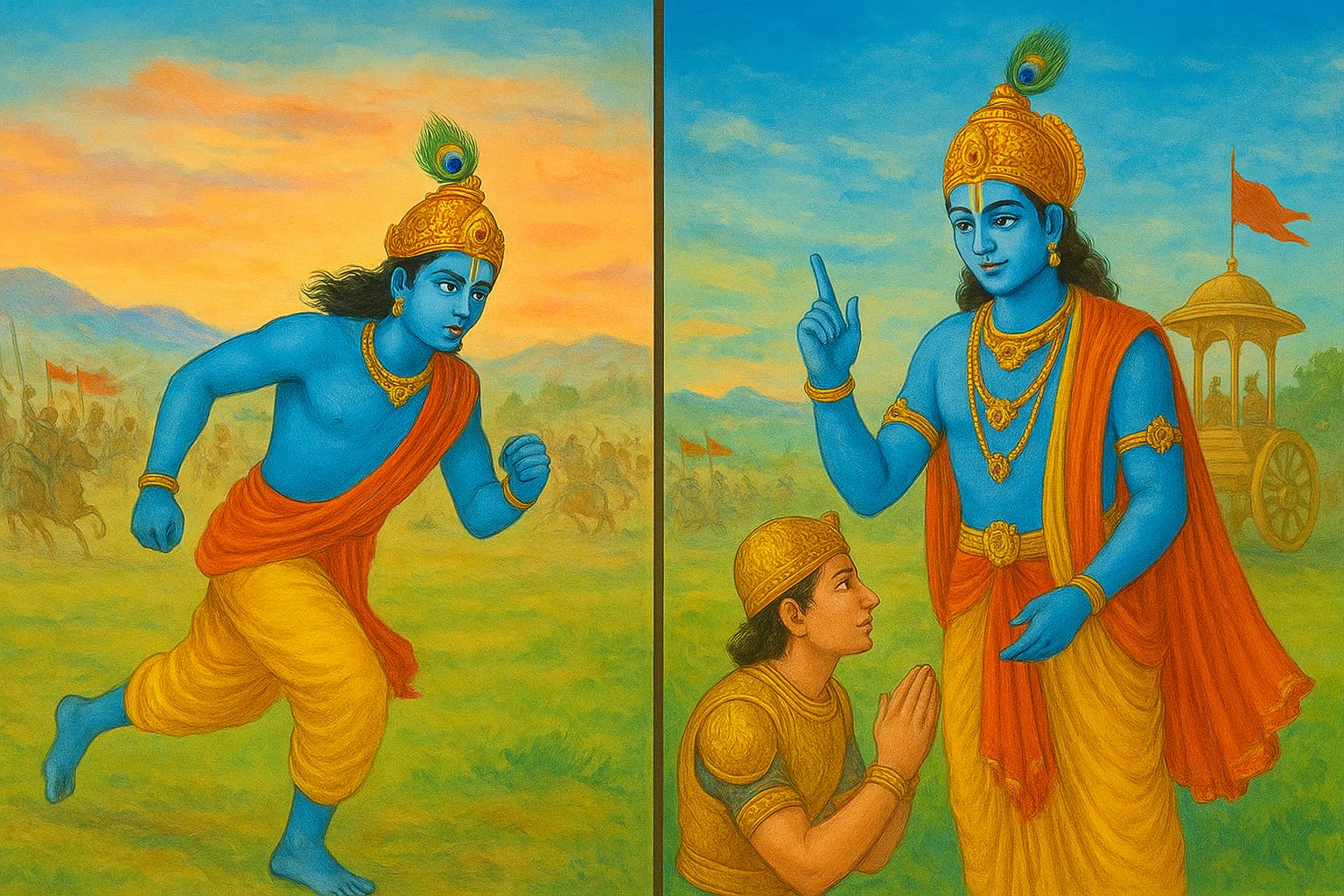
    This is where I feel balance is important. If you see Mahabharata – Krishna himself ran away from one war (Jarasandh and Kalayavan, if I recall right) but later encouraged Arjuna to stay and fight at Kurukshetra. Same Krishna, two different situations, two opposite responses. Business also needs that balance. Sometimes retreat, sometimes full action. The wisdom is to know when to do what.

    Chanakya also wrote – artha (economics) and dharma (ethics) go hand in hand. If either is missing, the state collapses. Maybe that’s what we miss today – we run only for artha and leave dharma behind.

    So does Business to Buddha still stand? I’d say yes, but not as a formula, more as a reminder. It is not that every board decision must sound like a sermon of Buddha. Rather, it is about remembering there is a middle path – between hard business realities and human values. Between quarterly pressure and long-term trust.

    The Buddha said walk the middle path. Krishna showed both – running away once, fighting another time. Chanakya tied economics with ethics. Somewhere in between these, lies the balance for us – in boardrooms, in markets, and in our lives.

    Maybe that’s why this blog continues. Not because I have answers, but because I still feel the question is valid – can we connect business with the Buddha? For me, yes – because life itself is this balance.

    Image generated using AI model

  • “When you get to the end of your rope…

    “When you get to the end of your rope, tie a knot and hang on”. This was one of my MBA batchmate Rachita’s status message. I am talking about 2010-11. I asked her, what is the meaning? Why have you put it?

    She explained it to me, the context was our tiring coursework and demanding content. I kept it in my blog drafts and I loved the concept, finally returned and writing this after 14 years!

    During MBA, at times it was difficult to even comprehend and we needed extra-classes. Later in the course, we used to discuss that MBA is all about commonsense. We laughed at ourselves and for few things we discussed how easy was the concept and we were confused!

    Many times, when we do not comprehend things in life, we find ourselves completely lost, but when the aha! moment happens the concept becomes so easy.

    Let me explain it with a story of A Potter.

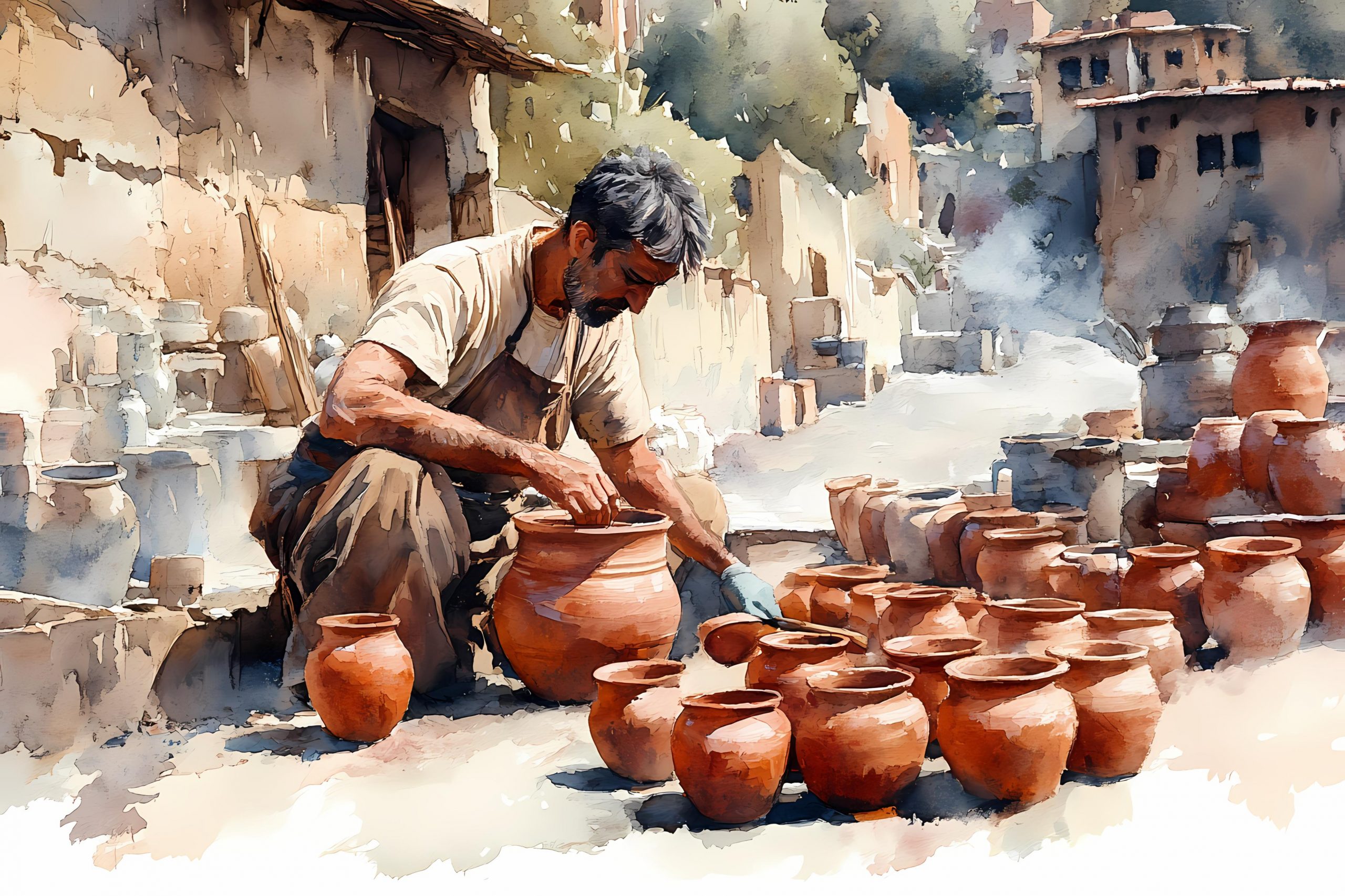
    The Potter from Banaras

    Long ago, in the ancient city of Kasi, lived a humble potter. He wasn’t learned, rich, or respected – just a quiet man who made clay pots by the Ganga. Business was erratic. Sometimes, the rains ruined his clay. Sometimes, he couldn’t afford to buy food after a day’s work.

    One monsoon season, his kiln collapsed in a storm. His year’s savings – gone. His cart broken. For a while, he tried everything: borrowing money, seeking help from traders, selling small items door-to-door. Nothing worked.

    One evening, standing alone by the riverbank, he muttered:

    “Why is this happening to me? I did nothing wrong.”

    There was no answer. Just rain, river, silence.

    He returned home. And the next morning, he did the only thing he could: he sat with his broken pots, gathered bits of salvageable clay, and began again. Slowly. Quietly. He built his business once again brick, by brick, by brick.

    He stopped chasing fast fixes. He rose each morning, meditated by the river, shaped one pot at a time – sometimes selling none, sometimes one. He became known not for his success, but for his stillness.

    Years passed. He never became famous. Why care for his becoming famous or rich, what he gained is the inner peace. But many came just to sit with him. He listened more than he spoke. His calm presence became a space of peace.

    A young boy once asked him, “Why didn’t you give up when your kiln broke?”

    The potter smiled and said, “Because sitting with the mud was all I had. And somehow, it was enough.”

    Business and Spiritual Parallels

    Economically, he faced collapse: no income, no capital, no safety net.

    Managerially, he shifted from problem-solving to process-living – focused on what he could still control: rhythm, presence, patience.

    Spiritually, he became what the Gita calls a Sthitapragna – a still-minded person, unmoved by success or failure.

    So always remember – “When you get to the end of your rope, tie a knot and hang on”.

    Picture source: Freepik.com AI generated image

  • Impermanent and trifling or forever and important

    I was playing with Adviti in our building’s parking area. There were some small dead branches of a tree. On the face of it, it looked an impermanent and trifling item to me. I took it in my hand, showed it to Adviti. We started talking, I told her this was a branch of the tree above. It had leaves, that nourish the tree. Well, I did not go up to photosynthesis, Adviti is only three years currently. I questioned myself with the chain of thoughts – are things Impermanent and trifling or forever and important?

    Smiling-Baby

    Deep inside, I started feeling multiple things, one as if the branch and leaves had their own life. What I mean is – the life of a tree and the life of a leaf or branch were separate. It was a strange thought, this is like saying my hair, or skin, or nails have a separate life other than my own body. It becomes even weirder from here. How do I know that I have only “This Life” that I perceive? I have written earlier – and we all know – our body hosts umpteen living organisms. I cannot experience them therefore they are separate or they do not even exist for me, is it?

    All these thoughts were going on with the disturbing news of deaths due to Covid. I came home after the small walk with Adviti and started re-reading a chance chapter of Old Path White Clouds book. It was luck that the chapter was based on interdependent co-arising, the concept of Buddhism I love the most. news of death makes one feel a void, and question the existence. At the same time, the thought of the impermanent and trifling nature of our life comes to mind. At the same time when I think from a larger perspective, our life seems forever and important.

    Let me share some paraphrase parts of the philosophy of the Buddha on “Impermanent & trifling” vs “forever and important”.

    While The Buddha was meditating he was a Pippala leaf. Looking deeply at the leaf The Buddha perceived the leaf had a presence of The Sun, the stars, and the Moon. Without the sun, without the light and warmth, the leaf could not exist. Similarly, the leaf contained the clouds, without the rains this leaf could not exist. Similarly, the earth, time, space all were present in the leaf. The entire universe existed in the leaf. The leaf was a manifestation, it existed before and it will exist even after the physical form is gone. Impermanence is the very basis of growth.

    Impermanent and trifling or forever and important

    The Buddha’s perception concludes with these thoughts – “To accept life means to accept impermanence and emptiness of self. The source of suffering is a false belief in permanence and the existence of separate selves. There is neither birth nor death, production nor destruction. These false distinctions are created by the intellect. If one penetrates the empty nature of all things, one will transcend all mental barriers, and be liberated from the cycle of suffering.”

    Everything is Impermanent and trifling or forever and important. It is the perception with which we look at things. My understanding of interdependent co-arising makes me conclude that even the speck of sand is also forever and important – only form changes.

  • Behind our eyebrows

    The world that we see is not outside, it is behind our eyebrows unless we can qualify what we see accurately. Many times, what we see may not be the reality, it is a reflection of what we think we are seeing. Ashtavakra’s explanation is “the rope on the ground is seen as a snake because your mind thinks it is a snake”.

    Shut the mind off

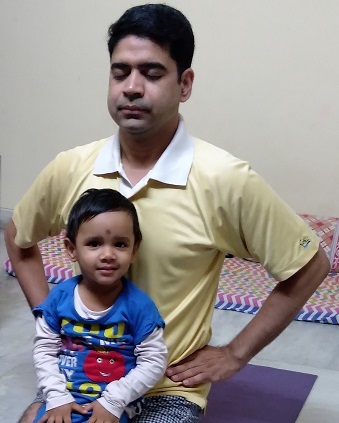
    Mumbai has hardly any winter. This was Feb thankfully we were not sweating after our bath – as we do now in Apr. Thus, we feel good in whatever winter Mumbai has. As usual, this morning also I was doing my daily morning Sadhana (meditation practice). My daughter – Adviti – had just learned to enjoy a toy that moves, throws light, and plays song alongside. She had this toy with her for over a year. When we tried it a year back, she got frightened with the light, sound, and movement of this toy. However, off late, she accepted the toy, and now she keeps on playing with it. A drawback with this toy is – it does not have a volume control option.

    Adviti-with-me-Pranayam

    I was meditating and she was dancing around with the noise of the toy. After a while, I felt that I should go and stop the toy so that I can peacefully practice today’s Sadhana. Meditation aside, this thought followed up with others. First, it was a noise for me, music for her. She was unaware – as my wife and parents were too – that the sound was uncomfortable for me. The toy was the world for her, she was enjoying it with her heart and soul dancing around it, giggling, and inviting her mother and grandparents to join her. Generally, you feel elated when your child or grandchild is happy. My wife and parents were also engrossed in Adviti’s joy. At the same time for me, meditation was my world. In the same room, we were in two different worlds.

    This happened for a couple of days with me. Somehow, I could keep on continuing my practice without asking for stopping the toy. Within few days, I realized my meditation is my practice, it should not be impacted by external factors. If our mind feels something is a problem we can analyze it with disinterested reasoning or shut the mind off because it creates unnecessary noises behind our eyebrows that we do not even realize.

    The summer has set-in in Mumbai, now after the bath, we start sweating. We do not complain, we cannot change it. Every Mumbaikar has a response for summer of Mumbai – “accept it” – either put an AC at home or apply deodorant.

    Behind our eyebrows

    It happens with all of us. We end up creating our own problems. The mind makes us feel or believe something that may not necessarily be correct. Before assuming something or making a perception a verification can help.

    In March, someone accused me of a thing that neither I intended nor I did. In fact, I had no role in what was going on in this gentleman’s mind! The bigger surprise is – “I was not even the actor in what he though Mr X did, but I was the accused!” I was literally a third party, Mr X, the gentleman and I (one who had no active or passive role in actions of Mr X). I tried justifying myself to him. When I realized the mindset of the other person; I stopped defending myself. Since I had just learned a lesson with Advity’s playing with the toy I could relate the learning. I moved on thinking “if your mind is corrupted, you would be responsible for the words, actions, and consequences. How can someone help you until you are open to listening?”

    Actually, the thought in Hindi was this – “Agar tumhare dimag me bhusa bhara hai to aag bhi dimag me hi lagegi, koi aur uske liye kya kare?” अगर तुम्हारे दिमाग में भूसा भरा है तो आग भी तुम्हारे दिमाग में ही लगेगी, कोई और उसके लिए क्या करे? It would be great if someone can help me translate this effectively in English.

    Everyone lives in his own world. This world is made up of what we live in our minds. What we see is not ahead of our eyes, it is behind our eyebrows.

    After writing the blog, I searched if some enlightened master’s comment is available on these thoughts, I found a pertinent one from Sadhguru.

  • Spirituality and Science

    Mahavir – the Jain Tirthankar – was traveling – walking – for his rainy season retreat (Chaumasa). As is the case with any enlightened master in India, Mahavir too had followers traveling with him. One of his followers – named Gaushalak – was mischievous and wanted to have Proof of his enlightenment.

    While they were crossing a rivulet. Gaushalak asked Mahavir, do you see that plant? Mahavir responded in the affirmative. He further asked Mahavir, would this plant grow into a tree? You know all, you can see the future, and you are enlightened can you please confirm this?

    It is said that enlightened people can talk to even the non-living, or in other words, they can understand beyond the perceived too. In fact, someone told me that in Indian Ayurveda, Rishi’s came to know about some of the herbs when they asked the plant for a cure.

    So, Mahavir reached to the plant, apparently, he asked the plant would you grow into a tree? The plant responded to Mahavir in a Yes. Only Mahavir was at the consciousness level to hear the plant, none of the others. He continued his walk and responded in another affirmative to this follower.

    As this follower wanted to test Mahavir, he went to the plant, pulled it off the ground, and threw it aside. Further, he said – I have removed the plant; I am proving you wrong right now itself. Mahavir continued his walk.

    The rain retreat was over. Mahavir and his followers walked back, cross the same rivulet. Mahavir pointed to a plant and told Gaushalak – do you see the plant? This is the same one, it has not only found another ground but also grown within the past few months. Gaushalak was ashamed of his deeds and doubting the master.

    If I related this story to us as professionals, it is the will to cross the hurdles and blossom in adversities when you have been uprooted.

    My experience

    What makes enlightened masters different than the others? They have a consciousness level of super-consciousness. Super-consciousness can be defined as omniscient, omnipresent, and omnipotent. It may sound a bit off from the spirituality where God is not a matter of discussion. The Buddha did not answer the question of the existence of God. Consciousness has a higher level that is beyond the manifested world.

    I attended a meditation silence retreat of the art of living foundation during the new year’s weekend. It was a wonderful experience. It helped me to understand and experience some unique things. Many experiences cannot be expressed in words. However, the concept of spirituality connected to present-day physics (quantum mechanics) was very easy to grasp and experience. We are all wave functions. Hinduism states that we are made of five elements – Earth, Air, Water, Fire, and Space. Space is omnipresent. All the other elements according to the Mass Energy equation of Einstein are interchangeable to mass (I would call it manifestation) to energy and vice versa.

    The Indian sages have achieved multiple manifestations and changes of form. Read Autobiography of a yogi or At the 11th hour for some examples. Basically, we believe in things that we can comprehend or think are possible. We call things as miracles that are incomprehensible or beyond our perception “as possible”. Slowly science and spirituality seem to be merging. Now our experience can connect the dots to scientific proofs. Slowly our perception of miracle, manifest and unmanifest will be even more blur.

    Two miracles

    In a place named Agar Malwa in MP, there is a Samadhi of Swami Jaynarayan Ji Upadhyay. He was a lawyer and a meditation practitioner. It is an incident of July 1931. Once he was in deep meditation (Samadhi) and missed attending the final hearing of one of his clients. When he came out of meditation, he ran to the court. There he came to know that his final arguments were unbeatable, and his client is acquitted. He was physically in meditation at a temple and there he was in the court too. He knew he missed the session. People say that after hearing this about himself, he left everything and became a monk. Recently, in the same city a law college started and it is named after him.

    Similarly, there is another incident of Guru Nanak dev’s manifestation. It is said that when Guru Nanak dev Ji died, His mortal remains turned into flowers. There was a dispute about his last rites. His Muslim followers wanted to bury, Hindu and Sikh devotees wanted to cremate the remains. Guru Nanak dev Ji avoided this dispute by suggesting the followers bring flowers and keep the same on either side of his. Whichever side’s flowers remain fresh, that sect’s custom should be followed with mortal remains. After his death, only flowers remained, the body could not be found. It is documented as well.

    Spirituality and science

    Some things are beyond comprehension – at least as of now. However, those things can be possible. Science is able to provide an explanation for some, during and after the silence meditation retreat course, I could connect some dots relate to some experiences. Earlier I used to dismiss such stories as fiction. Now, I feel that there is something unexplained for science – call it the ether or Space element – that can be experienced with deeper meditations.

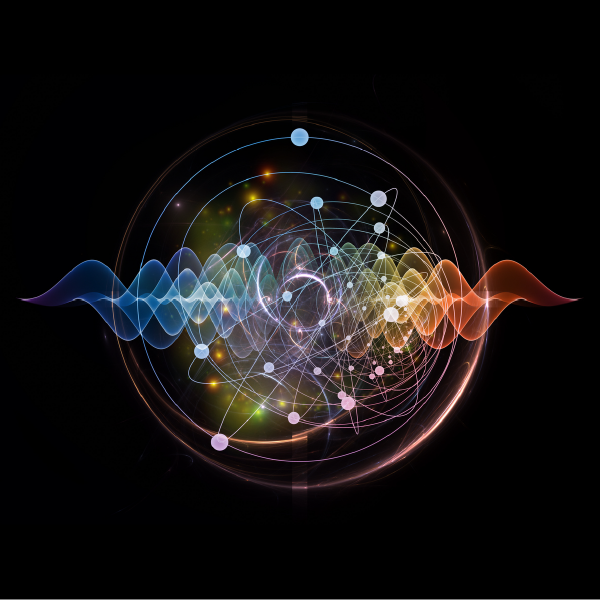
    The point I want to drive home is, we are spiritual beings in physical forms. The idea is not to discuss miracles but the possibilities. Finally, each one is a wave function condensed into a manifestation. In some cases those who are evolved can make change manifestation too. Probably, the self-realization spirituality talks about is the realization and experience of the wave function – that is the omniscient, omnipresent, and omnipotent.

    Image source – https://letstalkscience.ca/educational-resources/stem-in-context/introduction-quantum-mechanics

  • Dependent co-arising

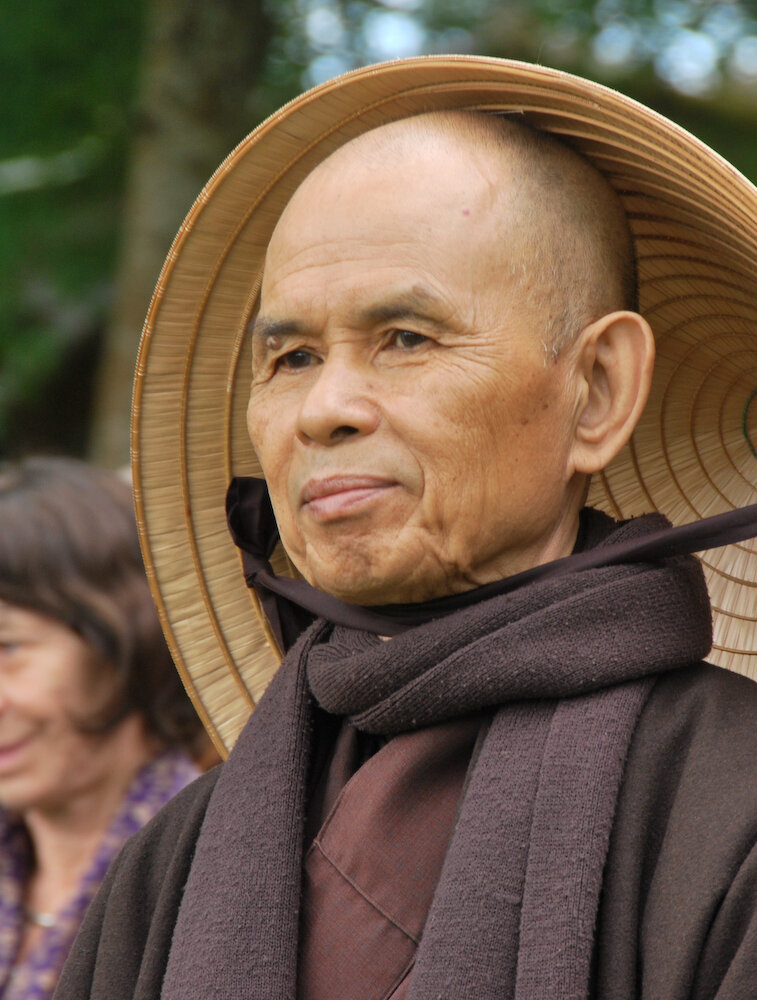
    Interdependent co-arising is a very key concept of The Buddha’s teachings. The other interesting names of this concept are dependent co-arising and dependent origination. Dependent co-arising is a deep concept. The depth requires an understanding of the concepts of Buddhism. So, I keep writing at a very shallow level examples to drive home the point. Whenever I read the book – Old path white clouds by Thich Nhat Hanh I get itched to this very concept. He explains this concept in easy words – “From interdependent origins, all things arise and all things pass away.”

    Thich Nhat Hanh

    I have shared multiple examples specifically for dependent co-arising on my blog. These examples were shallow yet practical relationship between the teachings of the Buddha and the present-day Business.

    Here are some examples

    Vaccination and interdependence (pulse polio elimination initiate of Govt of India)
    Societal impact
    Interdependent co-arising a farmers example
    Entrepreneurship
    Intra-country example and macro-economic example

    Whenever I try to interpret this concept; besides the interdependence, this concept touches on another concept of Hinduism (or Indic religions) – the concept of Karma. Karma gives us a guiding principle of cause and effect. It is easy to understand with the help of an English proverb – as you sow; so shall you reap. A very easy example of the cycle of Karma can be seen in an episode – Lucky penny – of How I met your mother.

    However small we think we’re as an individual, we’ve the power to make an immense impact on the world. You may have heard – if a butterfly flutters its wings in Amazon forest, it may cause a hurricane in Japan. I came across this interesting Domino effect video. I could relate it to the butterfly effect and thus to dependent origination.

    Watch this and relate the accumulated energy of the bar to Karma, the first piece as the butterfly fluttering wing and in effect interdependence of everything as a cycle.

  • Deepavali, rangolis and a lesson

    Diwali is the biggest festival in India. As a kid, I used to love Rangolis the most besides other interesting stuff such as sweets. During Diwali season, making Rangoli was a morning and evening ritual for about a month from the beginning of Dussehra till Bhaiduj. I used to ask my elder sisters to make one Rangoli each that too twice a day – in the morning and the evening. Those were some days! Recently, watched a video rangoli and a lesson dawned on me.

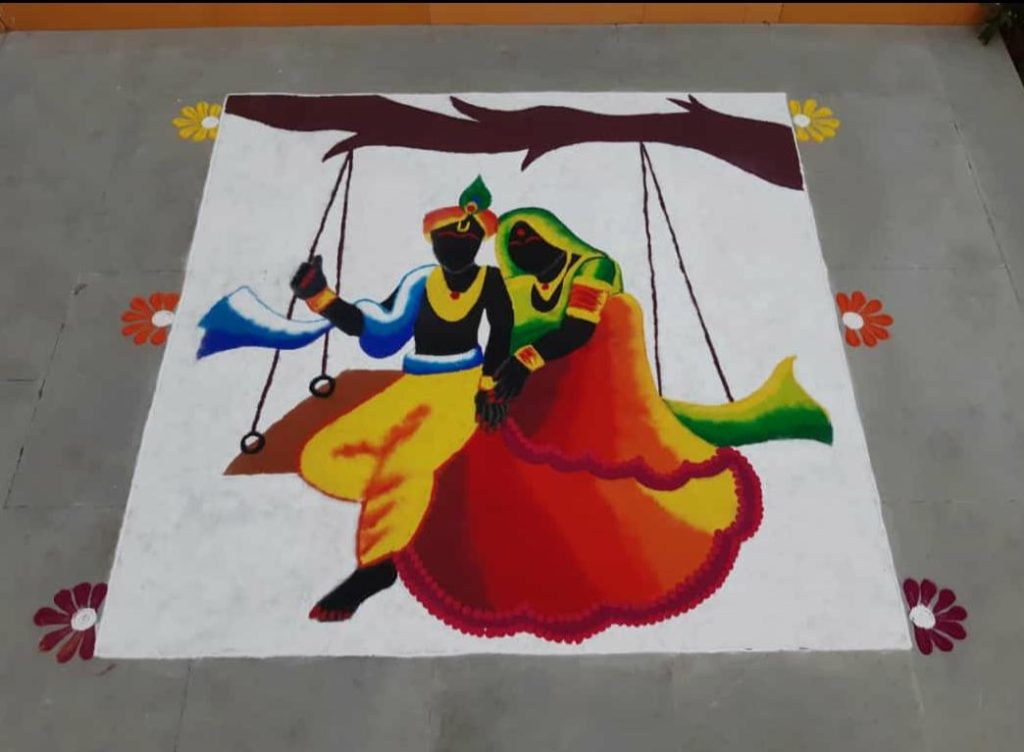
    Source – Rangoli by my friend’s niece

    Rangoli making was an elaborate process. First, bring some bricks and arrange them in a square or rectangular format. Second, fill it with mud, mostly made using cow dung. Let it dry. This is our platform for making Rangoli. We bought different colors, sample Rangoli design books, and some stationery. Further, the creation of dots required another list of activities. We bought a large piece of paper, an A0, A1 or A3 size. Then we made horizontal and vertical lines on it. Once this table or grid-line is prepared made holes on intersections with incense sticks. This paper becomes our grid-line or ruler. During the festival, clean old Rangoli every time, spread cow dung mud on the platform, let it dry for some time and start Rangoli making. Rangoli making started with making dots using the grid-line.
    About a month back, Youtube gave this link on my timeline. It is a famous Rangoli channel with millions of views for many videos. I watched one of the videos. I still like Rangolis though we do not make it in our apartment as we used to in Dhar.

    Yesterday happened to go for my yearly health check up in a hospital. This is a big hospital and during Covid, it is designated hospital too. The staff there was full with energy and making Rangoli, wearing traditional cloths, and after decorating their department they lit diyas too. In such a tough place they were full of life, and enjoying the activity. All this while, I went to different departments for check-ups and was happy to see the staff engrossed in the celebration. Even during such tough time and treating Covid patients these people were celebrating. I was very happy to see that.

    Deepavali, Rangolis and a lesson

    I was watching one Rangoli on the channel, staff in hospital, and my childhood. A thought struck me instantaneously. Rangoli making can teach life lessons. Every day morning, you clean your verandah. Sprinkle water and make Rangoli. In the evening, clean the same Rangoli that you made with a lot of interest, and love. This is a daily chore at least in many rural areas in India, especially in south India. If one has to clean it in the evening, why make it? Or why make it so beautifully? The creator knows it; in the evening after making it, within a few hours no one will be there to watch it. Still, the creator makes it with interest. The creator also knows that tomorrow morning it will be cleaned. The lesson is – even if you know you have to leave the elevator, and everything is impermanent whatever you do, do with interest, love, and full devotion.

    Happy Diwali

  • Remember! We’ve to leave the elevator

    Sigmund Freud is one of the authorities on the interpretations of dreams. He wrote a very famous book “The Interpretation of Dreams”. One of his quotes is “Dreams are never concerned with trivia.” I rarely dream or perhaps I dream but forget them before I wake up. If we give some serious thoughts to our dreams, few can teach a lesson or two. The lesson that I learned from a recent dream was – “remember we’ve to leave the elevator”.

    My dream

    Remember! We've to leave the elevator

    Two weeks back I had a dream. This dream was a bit unusual. I was coming out of an elevator. I came out and saw a family – Husband, wife, and two of their children – one infant and one toddler waiting for the elevator. In this building, we had the provision of a room and kitchen for domestic help. This was a family of one such domestic help. I asked him – what happened Ram where are you going with so much luggage? He responded – we are going to our village. Due to Covid we are exhausted with our limited resources and have better chances in the village.

    I held the door of the elevator so that the family can get in. Ram kept luggage and his wife took the kids in. Before I could leave the door for them to proceed, I noticed, Ram was arranging his stuff in the small place as if he has to put his kids to sleep here.

    Before closing the door, out of curiosity, I asked him what are you doing? You will reach ground within a min or so, why are you arranging your stuff here as if you have to live here forever? Before Ram could answer this question, my sleep was interrupted; I woke up.

    Food for thought

    It was good food for thought. We keep on “arranging” things in life, parents ask children to “settle down”. Settling down is a euphemism in India for getting married and having a family. American research suggested that 1 in 8 Americans die in their sleep. We are unsure of waking up the next morning but we prepare life long to arrange things and settling. On a lighter note, “we are very optimistic, to be in the other 7”.

    My point is, instead of being satisfied, which is here and now, and worth earning we become feverish and keep on running endlessly. In some cases, rather than being feverish, some activities become necessary because of other entanglements. It is complex to understand my previous sentence, so to understand the point I am making read this story of the entanglement of a Langot (undergarment).

    Remember! We’ve to leave the elevator

    We must pause and introspect some time. I had written about introspection about a decade back with this question – Why are you doing what are you doing? We must strive for goals and ambitions. At the same time, we must be mindful too. The point is, we must live life to the fullest, enjoy it, and make it comfortable for ourselves and those around us. After all this, we must remember – we are not going to stay here forever – we have to leave the elevator some time – however beautiful it is. The Ram within woke up to say – Ram, you have to leave the elevator sooner or later so watch your actions.

    Image source – https://charterelevator.com/modernization/modernize-you-cab-image/

  • Choices

    My daughter, Adviti is growing up. She has started asserting her liking and choices gradually. She decides what she wants to eat when she wants to change the song, and what she wants to wear. It is turning out to be a fascinating life lesson for me.

    We start making choices since childhood. I remember spending time with my niece Chinu when she started making choices. She liked watching Kung Fu Panda (movie) I enjoyed watching Kung Fu Panda with her, she also collected pebbles as I did as a kid.

    Smiling-Baby

    I believe some of our choices are involuntary, and some are self-made. Let me take an example – Adviti likes us chanting of Bhojan Mantra (video below) before meals because she has seen us doing it for as much as the last six months. I wonder if she understands it, or whether the rendition is clear. However, she loves it, and if we start eating our meal without the chanting, she forces us to chant the mantra. Possibly this is what Sanskar is. I’d call it an involuntary choice – I may be wrong though, she may be forcing us because she understands! When she changes the Youtube video – it is most likely a self-made choice.

    Choices, Liking and Love

    Though I found time now to write about it, however, I had been thinking about Adviti’s likes, dislikes, and choices for a while. Those who know me know that for my arrange marriage I met two dozen girls. Many rejected me, I rejected some. In these discussions, some accused me of – you are not proceeding further “because I am fat”; “because I am darker shade” etc. I had to respond to these because these were genuinely not the reasons. I will share few arguments that I shared with these prospective alliances.

    One, on complexion, I said, let’s assume I get to marry the fairest girl in the world. Every evening I come from the office. and we start fighting on a trifling matter. In that case, what is the value of the “fairness” to me? It is said that beauty is skin deep, isn’t it?

    Two, on complexion and shape, I said, let’s assume I get married to someone, she met with an accident, or I met with an accident resulting in a body deformity. Would the other person leave the better half who met with an accident? I had to take this example because one alliance had such an incident. I had to tell her that such things are possible after marriage too. A bad example but I took such an example.

    Lastly, on the shape, I said who is going to remain like this forever? With age, we all will be out of shape. why worry about it from now? One must be fit for a healthier life but one should not take serious decisions giving one-factor full weightage.

    Those long discussions (or at times long-distance discussions), in some cases the contest of mind vs heart, for alliances made me look at likes and dislikes little objectively. I asked myself – if I love someone because of face or shape or behavior (or family – yes Indian marriages are not just two people it is their family and extended family too) what if one parameter changes in the same person? In the end, I came to realize – choices are made (or someone or something is loved) because of the whole and not because of the parts. Check this section of an Indian movie – Nayak the real hero – where protagonist is explaining his “dream girl” and what that turns out to be by his father who is a cartoonist.

    If I love someone or something – I love that because of the uniqueness. The uniqueness includes possible flaws. If I had to respond to “why I love someone or something” what would my response be? If my response is because of X, Y, Z and A, B, C, etc. There may be more people with those same qualities. Would it be possible to love those others too? This question helped me realize the lower strata of love. This stratum is for love, liking, or choices we make in the material world. The spiritual world has compassionate affection – of the Buddha – for everyone or full devotion – Bhakti – for the loved one.

    The realization was that we make choices in the whole and start intellectualizing the choices part by part for bringing balance between heart and mind. This justification brings reasoning of “why” and “because of”. Most likely Adviti makes her self-made choices on the whole, once she grows older she too will start intellectualizing the choices to justify her liking.