Tag: the art of living

  • Businessman Buddha

    I was extrapolating to get into a mind. The mind of a person – who left everything and went to the Himalayas. What changed for him, how his mind responded to the alone-ness. What was going on in there – in the mind? Why he left the society and went to the hills? What conspired? How he changed there? Would he be the same changed person when – in case – he comes back to the society?

    Middle-Path

    Can one have the same mindset of a hermit of Himalaya, in the concrete jungles? Can one balance being a hermit in the concrete jungle? Is it true that people find peace of mind in Himalayas? What is different there and here in the worldly city?

    My recent experience of Art of living‘s Anand Utsav course has given me few more questions and dimensions. Last week I wrote about listening to the tik-tik of wall clock. My wife entered the room switched on the fan, I missed the tik-tik. This is what happens with us in our daily highly demanding and at times stressful professional life. We miss very many things in the noises of becoming someone, owning valuable things, money, designation etc.

    The long and short of all this is balancing the life with awareness and becoming a saint in a professional life. Do we really need to be a monk to be spiritual? Most of us are running to be someone or to achieve something. There is no problem in having ambition and goals; the point is ,it make one restless. Why to be restless and anxious? Is not it a possibility that a person can be centred and yet ambitious? Is not it a possibility of a person being spiritual, professional and successful? These questions have become easier for me to have a perspective after the Anand Utsav course. I would certainly repeat more courses of Art of living.

    Just-be

    One can follow the middle path of being an enlightened master without leaving everything. One can be an enlightened master without leaving family. I see future enlightened masters will be successful professionals. These future generation enlightened master would / may not even talk about high flying esoteric spirituality. They will do their work as any worldly person does. These masters will not leave everything for the Himalayas, they may not sell their Ferrari. I think that is what is the lesson of the Buddha – Middle path. I think that is why current generation enlightened master’s are bringing spirituality to masses and to the day to day life.

    As Osho said long back, many of the masters will be like the Zorba. Zorba the Buddha (Osho’s book) – “… Zobra is Love and Buddha is Awareness… when you are Zorba the Buddha, you have attained the greatest height that is possible in existence…”

    Image source of monk https://www.theguardian.com/technology/2011/apr/17/untangling-web-aleks-krotoski-religion

  • Work, games and spirituality


    It was a pleasant evening of  summer vacation in 1996. We were playing cricket as usual. We were about 15-16 boys and kids of our colony. Few of us were in teens, me and my friend used to lead and divide team and lead them to play against each other. My friend – an all-rounder – was a very sincere, serious and fully dedicated to the tasks given and therefore respected by all friends alike. I knew his this nature because we were together in NCC too. This event happened 20+ years back. Yet I remember the day, because it taught me about work, games and spirituality. Though it took me 20+ years to learn the lesson.

    That day in the very first match of 6 overs, we’re all out at 8 runs score. This was the first match for evening, my team discussed to lose this match and we will play next better. We’d given up even before beginning our bowling. I took the first over, and bowled slow delivery to my friend. He understood our thought process, instead of playing the ball, he caught the ball and threw it at me angrily. He said – if you want to play, play seriously! If you dont, either I or my team wont continue playing with you guys. Go back bowl like you would otherwise!

    Actually it hurt my ego. I felt humiliated and realized that they too deserve a fair play. So, this time around – knowing that we are going to lose – I bowled the best I could. In first over we took 4 wickets and gave away 2-3 runs. Our team size used to be 7-8 mostly. So, we realized we are in the game! But the problem was – my friend was still on the crease and we had weak alternative bowlers. We’d no chance, I gave the ball to my bowler and went to field at boundary (long on).

    I don’t know what was going on in my friends mind, whether it was his overconfidence or desperation to finish the game quickly he hit a big shot. I ran like mad to catch and jumped to catch the ball, bruised myself but my friend was out. This was the moment – similar to Sachin Tendulkar’s wicket in 90’s for Australia – we realized even with 8 runs score and 29 balls spare, we can win. It was just a matter of few more balls and we won.

    The lesson

    I learnt a lesson when I was reprimanded to immense humiliation. Though I could comprehend the learning only now when I read an interpretation of Bhagavad Gita Chapter 4, shloka 22 by Sri Sri Ravi Shankar (Guruji). A friend of mine from The art of living shared this interpretation with me. I am sharing a select part of the message which can help identify inference.

    यदृच्छालाभसन्तुष्टो द्वन्द्वातीतो विमत्सर: |

    सम: सिद्धावसिद्धौ च कृत्वापि न निबध्यते || 4.22||

    yadṛichchhā-lābha-santuṣhṭo dvandvātīto vimatsaraḥ

    samaḥ siddhāvasiddhau cakṛitvāpi na nibadhyate (4.22)

    “Being free of jealousy, having that equanimity of mind, Arjuna, do your job!”

    …When you don’t think whether you will succeed or not, you will be able to give your hundred percent. Often it is the result which makes you not give your hundred percent… If you know you are going to lose, then you will not be sincere about playing the game... When you don’t worry whether you win or lose, or you don’t even consider its effect, you give your hundred percent, that is really playing, that is a real game.

    “It is the same with work. Work has to be like a game.”

    A yogi considers even his work as a game, so be a yogi. Yogi means ‘one who does things in perfection.’ Every little thing he does will be perfect because he has that equanimity of mind. Only when you consider your work as a game, can you ever be detached about whether it is going to be successful or not. It doesn’t matter anyway.

    My friend taught me the above lesson – I learnt and understood that lesson recently.

  • Life is a celebration


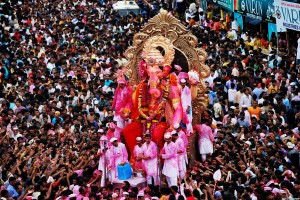
    I was doing regular weekly followup at an Art of living center today morning. While breathing, I realized Something. Probably it’s nothing new for many – the moment I took the breath in, it became me! The air I breath became me and I was nothing without it. We become a part of something be it breath, food or the environment. As a kid, I enjoyed many festivals Ganeshotsva was one of them. Slowly I started feeling it is more political than social. I was disenchanted and grew over it. After coming in Mumbai, I connected to this festival once again. Slowly I this season and festival has become a part of me.

    This festival has been teaching a lot of things to me. Have you observed something special? Almost whole year we have some or the other festival and celebration in India. We go out to submerge the deity with full funfair dancing. This is going to happening once again predominantly in Western India (Maharashtra). Every year during this festival I learn – and forget later – that life is celebration.

    Similar worship will start in few weeks in Eastern India (West Bengal) also in Gujarat. The god on the other side would be – Devi. Imagine, a deity brought home with full reverence, worshiped twice a day and in the end submerged.

    I get quiet surprised, in Indian system there is no particular festival (occasion) of mourning unlike another predominant religion. Shraddh paksh is there, but it is not exactly about mourning. Shraddh paksh is about paying respect and homage to the departed ancestors and remembering them. Probably the reason for not mourning is that we – most Indian religion – presume that there is coming back. So, why to mourn? We have to pay homage to our ancestors because of them we are here. However, they too will come back until Moksha.

    If there is no end, why be sad? Why be disappointed? Why not celebrate every moment? Had there been Ganesha, he would have loved these last 10 days, and would have danced on the way for submerging – he too would know – life is celebration. Life is a celebration, better we realized it earlier in our life time. A celebration with awareness, if not realized, “life is a trouble… death is not“.

    Whatever, good or bad I / you take in (be it food, thoughts or breath) becomes me / you. So it is a good idea to “be a celebration”.

    Moksha – attainment of self-realization, liberation from the cycle of life and death.

  • Bhakti


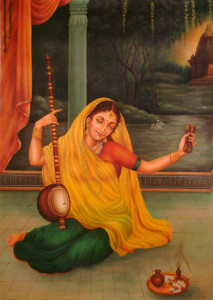
    The Buddha only spoke about scientific path of liberation – Meditation. According to Indian philosophy there are more ways, one is Bhakti or devotion. Remember Meera bai, Meera bai followed Bhakti path?in_union_with_krishna_oq05

    I was speaking with someone. I said I recite Hanuman Chalisa but find it very strange. Hanuman Chalisa is a prayer/song/devotional hymn for Lord Hanuman (Foreigners know Hanuman as Monkey god of Ramayana’s time).

    According to Hanuman Chalisa, Hanumanji suggested Vibhishan (brother of King Ravana) to go to lord Ram, thus Vibhishan became king of Lanka after Rama defeated Ravana.

    तुम्हरो मन्त्र बिभीषन माना।
    लंकेश्वर भए सब जग जाना॥

    I never liked this part of the Hanuman Chalisa (statement). What I know is – Vibhishan suggested Ravana that Ravana has done wrong and Ravana should make amend. Ravana does not listen to Vibhishan and ostracize him. Vibhishan knew what is right and wrong. He made his choice to be on the side of Rama in the war. I dislike Tulsidas (author of Hanuman Chalisa) giving credit to lord Hanuman for Vibhishan’s choice and decision. I would not question on Sugriva‘s anointment though.

    At times, I have reservations with these prayers where we keep on praising the lord with a result in mind. “Please give me this thing or that thing.” Effectively we are making a business deal with them an example is Ganesha’s aarti – http://greenmesg.org/mantras_slokas/sri_ganesha-jai_ganesh_jai_ganesh_aarti.php which seems more of a business than a loving relationship.

    My this hesitation was broken by one Art of Living Bhajans. I had seen (almost met) Guruji – Sri Sri Ravishankar – in 2003. But I did not do the course for 1.5 years because I felt “My Guru will have time for me, he (Sri Sri) has a lot of followers.” My sister forced me into the course. Besides the interesting method – Sudarshan Kriya – I learnt in the course, what I loved was this bhajan, link below. It has “no demand”, it has “no praise” either. It just repeats one name of lord Krishna.

    This is real Bhakti in my definition. I love this bhajan – no request, no appeal, no begging and no demand. This is Bhakti – whatever you want to confer, confer; it is your wish/will. I am reciting your name no matter what, no matter in what situation you keep me. That is the other path for liberation according to Indian spirituality.

    Hari Hari || Chitra Roy Art Of Living Bhajans

    Image source – http://3.bp.blogspot.com/_Pvuexh7J1Cs/S–9pMcpNaI/AAAAAAAACUU/7c7rmt5eIbY/s1600/in_union_with_krishna_oq05.jpg

  • Arranged marriages


    Yesterday I received a call from unknown number – Hello, is that Pravin? Yes I said. “I’m Ms Gautam [name changed], we connected that time etc”. We talked for about 10 min, that lady (though belonging to the Art of Living community) almost abused many unknown AoL devotees.

    The lady never told name of her daughter. Yes that is true. I was contacted earlier, that time too she circumvented the question. This “arranged marriage” is a strange business – watch video below. Before you select whom you like, you first select he/she should be from which caste, what education and yes even at some place “salary”!? I was watching “Timepass” a Marathi movie recently. Two kids in their teens fall in love watch movie for what happens next. The movie ended with same questions on my face. We decide caste, social status and status first rather than the choice of guy and the girl. Things are very subjective and here goes my story.

    I registered on renowned matrimonial sites of India. I know they are in business, yet their constant push bugged me. It was bit disappointing, when they called me during weekdays. Anyways, what frustrated me using those sites was – stereotypical approach of considering me of one community rather than a prospective educated groom. I have written about it earlier too, especially against hypocrisies of my community – Lingayats.

    I came across two sites and thus deleted my profile at traditional sites. The sites are – ibluebottle.com and ZoobyDooby.com (ZD). Both are different, interesting and refreshing.

    BlueBottle is good but wants salary to be disclosed (seems awkward if one makes selection of bride/groom on salary as first criteria!). Second, you cannot search and connect on BlueBottle. BlueBottle has full personality test; what is the guarantee that someone will be able (intentionally or unintentionally) to answer all subjective questions correctly. On the other hand, ZD has a poor interface and is slow. The positives – BlueBottle puts profession as primary whereas ZD gives you chance to go through profiles. Especially ZD does a wonderful task of matching interests and profile interaction (Facebook profiling) based on an analytical engine. Watch the video how ZD works here.

    Just to give you an example – I follow the Art of Living and first person I see on ZD matches is a devotee of AoL. Is not is surprising and interesting? Let me add – when we search prospective bride/groom, we do it based on what we think we like. However, ZD learns from our social network and helps us interact and discover. Interestingly it’s free!

    I believe we are all born equal (unlike Hinduism’s caste system based divide). I feel good when I see ZD and BlueBottle believing and doing things accordingly. In long run it would help our society to get away from our “preconceived” notions of what we should like and towards what we naturally prefer.

    Disclaimer – company in which I work has invested in ZoobyDooby

  • Just do it… ok try it


    It was a rainy day of 2007. As usual Sachin and I got down from our 7th floor rented apartment to have a ” morning cutting chai”. Cutting Chai in India is a 1/2 cup tea generally preferred over large quantity. Irony is – people drink as much as 8-10 cuttings a day not realizing it.  I was to go to office after that small tea time and Sachin, back to get ready for office. Evident, I was in formals with my laptop bag. We were talking and enjoying that our tea with some drizzle. The perfect thing – tea during the rain!

    This morning too, without any exception the day for all those small temporary shop owner was starting. The temporary shops are established in the morning and wrapped-up – literally – in evening (many times without a trace). Generally, you may find an ecosystem of shops in India (specially in Mumbai). A chai-wala (tea stall) next to a idly-dosa or Sandwich (breakfast) stall. These things become complementary and good business ecosystem as well as service ecosystem for people.

    We were enjoying tea and Sunil – a paratha wala (temporary shop – sample image) came. He had his paraphernalia in a hand driven cart (Thela gadi – sample image). He asked for help to chai-wala (being neighbor and knowing each other). Reason was – his thela gadi was not balanced and he had to take down stuff, in fact go back and bring something more too. Chai-wala refused – “its raining and blah blah..”. I found it strange, told “him tomorrow you may need his help”. He laughed. I felt bad at the plight of the paratha wala, kept my bag aside went out of shade helped him take stuff down. As it was raining, I was wet and had some blots on shirt because of his few dirty things. I felt happy helping Sunil in need, though I got wet and my shirt was dirty. But the help was selfless act. The whole day my morale was high and I felt very happy.

    Recently when I started reading Sikh literature I see emphasis on selfless act (seva). Seva is preached by the Art of Living foundation as well. Really if you help someone or do something without expecting any returns you feel very good. Just start doing it… ok try it. I bet if you would not enjoy doing it.

    Remember – no expectation and complete selfless act.

  • What difference will it make?


    I recently got involved with a project with the Art of Living. The project is based on the upliftment of residents of Dharavi. So, I just happened to visit the website of Dharavi School of the Art of Living. When I read this story on the site, I thought that this I would share on my blog.  Here is the story….

    The story of Starfish

    A small boy was walking along a beach with his grandfather. Every now and then he would pick up a starfish strewn on the beach and throw it back into the ocean.

    His grandfather watched for some time and then impatiently said, “Son, what are you doing? There are so many starfish. What difference will it make?”

    The small boy picked up one more starfish, looked at it, and throwing it back into the ocean said to his grandfather, “It makes a difference to this one! This one will live.”

    Often we are saddened, overwhelmed and paralyzed by the enormity of a task. But like the small boy, each one of us can make a difference to someone.

    The website concludes –

    The children of Dharavi are much like the starfish: strewn aside by circumstance and society. You can bring them back into the mainstream. Give them an education delivered with affection. They too can make a difference to this world. Wouldn’t you like to give them a chance? To know more about the school  Click here. To contribute to the school Click here!

    Source – http://www.dharavischool.org/the_starfish_story.html

  • Inner revolution


    Recently heard that UK has declared recession, Spain and Italy has done so earlier, Greece has once voted against the austerity measures and Sarkozy is no more French president – which is a dent on austerity measures of Eurozone. This is the story of Euro! USA employment numbers are not that encouraging, employment should be about 250,000/month however last time I noted it was 150,000 or so. China showed reduced production and Indian GDP is down.

    The picture looks gloomy, however have you seen importance of stars during full moon?  No! The importance and glitter of stars is prominent during darkest of nights. I believe this tough economic time is hinting of such nights when we would realize the importance of small things which impact us in big way. Take an example corruption! Take an example Greed! Though it seems a lesson on moral science but what else we are saying when we talk about the “Moral Hazard” as the biggest reason of recession and financial turmoil! In Indian context we need to work on reducing corruption (byproduct of greed) which is the biggest moral hazard here. In Europe and US Greed is the problem.

    I asked myself – are we going to see a revolution in the world? This revolution I believe would be on a tangent – it would not only happen in the society, not only by the society but also it would happen on the self! We have seen societies changing, cultures evolving  however these changes die down slowly and moral hazard starts again.

    Guruji

    I was attending an Art of Living (with Guruji :)) session today and the idea of ‘inner revolution’ stuck to me at that time. This makes a perfect sense – if everyone becomes righteous, we would not need to change the society, it would change itself.

    We need to get ready for inner revolution and help change the world for better today and tomorrow! Remember this would start from each one of us.