Tag: Loose Bloggers Consortium

  • Time


    In the war of Mahabharata, there were days when one or the other side was looking at the sun to set as soon as possible. The rules of the war were set that war will happen between sunrise and sunset. When Arjuna took oath to kill Jayadrath before the next day’s sunset or immolate himself, Kaurava’s were waiting for day to end sooner.
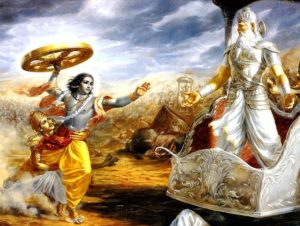
    On the other hand when Bhishma was the supreme commander of Kaurava’s army everyday was a mayhem for Pandava’s army. Bhisma killed thousands of soldiers and hundreds of chariot warriors everyday. Krishna’s frustration (though frustration cannot be the right word here) was at peak, when he felt that Arjuna isn’t fighting with Bhishma with all his capabilities and took weapons in his hands to kill Bhishma – Krishna had vowed not to fight from either side, but was a Charioteer for Arjuna.

    At this Arjuna requests to Krishna not to break his vow, and he promises to fight with his full might to not just defeat Bhishma but also end the war today itself “only if the sun does not set (as fast for the day)!” Arjuna even if was a great student yet had missed occasionally – Krishna’s loudest message to him in the whole of Geeta was perform your duties, do not think of results. Arjuna kept on missing this during these 18 days. Once here and other time at Jayadrath’s killing, Arjuna wanted the sun to be bit slow – Time to stop. I wish he had remembered the beginning of the war when Krishna was teaching him the Geeta – time must have stopped at that time, how can time fly when the god himself is speaking about the truth. Perhaps time must have not even existed when the Bhagvad Geeta was narrated.

    Time is a difficult concept to explain, oxford dictionaries define it as – “the indefinite continued progress of existence and events in the past, present, and future regarded as a whole.” What is the start and end of time? There seems to be none. In Indian philosophy time is defined as Kala. Kala has a lot of small to large measurements, that is for some other day. However when I thought about Time as a topic for LBC I could think of two things – one commentator of was Old Hindi TV Serial Mahabharat, and other a consultant saying – time is the commodity I sell. It is the most precious commodity I have, I cannot get it back once it is gone.

    The commodity is really very important and extremely perishable plus nontransferable, it cannot be restored once gone or consumed. The best thing is each one of us have the same amount of it – unlike any other commodity. What use we make of it is something to be decided by each one of us.

    We all want the time to move slowly when we are happy and to just vanish when we are in trouble. However, we always feel that when we are elated time elapses fast and vice-versa. Isn’t it? The following I wrote long back when I was doing my engineering (about 2 decades back, 1998-99 – my god I am old!) Hindi and English translation side by side

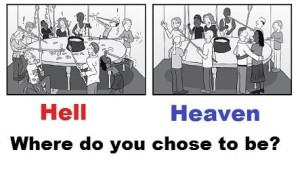
    स्वर्ग भी है यहाँ, नर्क भी है यहीं Heaven and Hell are ‘here and now’
    तुमने जैसे जिया जो पल The way you pass each moment
    तुम ही परिभाषित करोगे, कि तुम जो स्वर्ग याकि नर्क मे You define whether you are in Heaven or a Hell.

    Ramana uncleji suggested this topic for the weekly LBC blog posts. You can see what the other writers perspective is on this topic at their respective blogs Maria, Ramana and Shackman uncleji.

    Image source – http://sathyasaiwithstudents.blogspot.in/2013/06/bhakti-part-1-story-of-bhishma.html

  • Perceptions and illusions


    Off late, I have – kind of – become forgetful. One of my friends shared someone’s phone number with me, a couple of days later, I bet with him that I ddin’t get that number. We checked Whatsapp, SMS, emails and not to miss address book too. I almost won the bet, thankfully it was not a monetary bet. I still kept on searching – in my “notes” app too I could not find. My friend told me the whole incident and I got a hunch, I think he did share the number! But to my utter surprise I could not find the number anywhere.

    Well, I asked him that number again, he was bit annoyed yet gave me the number. I recalled – he had shared such number once – though I did not remember the whole number. It made me think about what happened in this situation? This incident made me understand that many a times we take things for granted, we tend to ignore many things. When we ignore things we are likely to be bodily at one place and mentally at another – in some fantasy or illusionary world. Isn’t it? The illusion we create through such mental images either become our perception or mend it and thus our limited (or at times incorrect) realities are created. For example – my forgetting my friend’s sharing the number with me as “You didn’t share the number”. If such incidents are not realities how do we know what is reality? In fact I think we need to ask ourselves – what is reality?

    Life is simple – the illusions we assume as reality make it difficult. The fantasy we create are based on our perceptions or our belief of some reality. Our perceptions make our life difficult isn’t it? Let us say – an illusion – “our religion is under threat!” If a religion is one of the biggest in terms of number of followers – what is the threat?

    We are so preoccupied with our own illusionary world that we miss many small things needless to say important or that which are the realities.

    I suggested this topic for LBC, however for last couple of weeks I was not able to write regularly. You can read my fellow bloggers post on this topic at – Ramana uncelji, Shackman and Maria. I am trying to catch up with my backlogs of weekly blogs on spirituality, management and business.

    Related blogNo judgement – its all about perception

  • What would you do in long term?


    In the long run we all are dead – John Maynard Keynes

    I was talking to my boss. He throws interesting questions – what do you think of next disruption? Ok do not talk about bitcoins, healthcare and analytics has already plateaued! Hum! That is a challenge. Wish I knew what is next disruptive business, technology or industry.

    I asked myself, is there lack of cloths that people die of severe cold in winter in India? Is there lack of food on earth that people die of hunger in world? If there is lack of cloths or food, why are our retail stores full with cloths, and food wastage is ~33% or so (National Geographic).

    My mind goes in a very long term when such questions come to mind. I believe in next hundred or hundred and fifty years or may be sooner, we would not need money (currency) or any such thing. This is very surprising for the financial system, businesses or capitalistic mind to believe. Let me elaborate. Have you seen Uber? Has Uber made ownership of car redundant for many people?

    What if our all basic requirements are fulfilled in the same manner – for example, I have some cloths in my wardrobe, I do not wear them all in a day. I wear only one at a time. Why should I have so many cloths? What if we can just select what to wear, wear it and return at some location when we are done! You may ask a question – then how would people earn money or offer services? Uber ride requires cash, card or wallet payment. Let us think of a future – car is driven by machine, cars are run by electricity, electricity is produced automatically by nuclear power and cars are manufactured by machines. No need of a human being for anything. Remember Keynes idea of working 4 days a week or lesser. Actually our capitalistic mind does not approve of this. People must work to earn their living. The best thing is – only capitalistic approach of running for better, more, improved can help us reach the state of future which is imagined here.

    When everything happens automatically, so what would humans do to earn, or say passing time? Can you relate the first part of previous sentence with the nature? Everything happens automatically for animals and they just pass time, they do not need to earn their living. Just think the phrase “Earning your living”! Does not it sound surprising thing, you just live, is not it? You do not need to earn it. I know you might have felt offended when you read automatically and comparing humans with animals. There will be a difference – our evolved sense of self and ability to think. This ability will force us to think about our existence. Our most of the time will be involved in thinking about our existence. This may take some time, when people will get fad-up with their pleasures – perhaps the way Gautam the Buddha got disenchanted. In that world we would not need money, we would not have a lot of possession, yet we will have everything on our finger tips.

    Just look at housing in Tier-1 cities in India. There are many unused inventory kept, most is out of budget for many people to afford. I see a future where whole world will be a rambling place and a type of hotel, where you can stay when you end your day. These houses will be built by machine and thus we would not need to buy or rent them either. Money as a concept will vanish. When you would have whole world at your feet, you would not steal, you would not look for possession. You would be lighter as Mirdad said in ‘The book of Mirdad“Less possessing – less possessed”.

    Here in above paragraphs we spoke about basic needs – cloths, food and shelter. I am sure humans will evolve to self-actualization phase – of Maslow’s need hierarchy – if the above happens (Ok give and take few carnal desires). In the short term, I would want to make that type of world envisioned above. In the longer term, I would want to be self-actualized or say enlightened in this life itself.

    What would you do in long term? was the topic for the week for LBC (Loose Bloggers Consortium). I had suggested this to the group where – Maria, Rummuser and Shackman also write. You can read other LBC authors opinions on their respective links.

  • Imaginations, ‘The holy book’ & religion


    Occasionally I read some or the other story from the book – Prayer of the frog by Father Antony de Mello. The book is available in two volumes Prayer of the Frog Volume 1 and Prayer of the Frog Volume 2. The books have small and very interesting stories. One of the story I read recently is somewhat brazen, I must warn you – you may feel offended. So, read keeping your sword, words and hatred for me or late Father de Mello aside. Feel free to comment on the story.

    Stories are nothing but imaginations, some write book based on imaginations, other write blog :). There are few that are worth contemplating. One must always be inquisitive, that inquisitiveness gives opportunity to grow, learn and do something worthwhile.

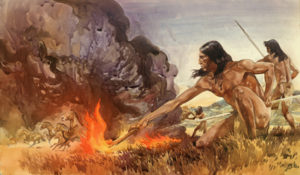
    The art of making fire

    After many years of labor an inventor discovered the art of making fire. He took his tools to the snow-clad northern regions and initiated a tribe into the art—and the advantages—of making fire. The people became so absorbed in this novelty that it did not occur to them to thank the inventor who one day quietly slipped away. Being one of those rare human beings endowed with greatness, he had no desire to be remembered or revered; all he sought was the satisfaction of knowing that someone had benefited from his discovery.

    The next tribe he went to was just as eager to learn as the first. But the local priests, jealous of the stranger’s hold on the people, had him assassinated. To allay any suspicion of the crime, they had a portrait of the Great Inventor enthroned upon the main altar of the temple; and a liturgy designed so that his name would be revered and his memory kept alive. The greatest care was taken that not a single rubric of the liturgy was altered or omitted. The tools for making (ire were enshrined within a casket and were said to bring healing to all who laid their hands on them with faith.

    The High Priest himself undertook the task of compiling a Life of the Inventor. This became the Holy book in which his loving kindness was offered as an example for all to emulate, his glorious deeds were eulogized, his superhuman nature made an article of faith. The priests saw to it that the Book was handed down to future generations, while they authoritatively interpreted the meaning of his words and the significance of his holy life and death. And they ruthlessly punished with death or excommunication anyone who deviated from their doctrine. Caught up as they were in these religious tasks, the people completely forgot the art of making fire.

    Postscript – if you are offended, perhaps you value the book more than the invention!

    It has happened with many religion in the world that we started value of the book than what was the actual useful method. This approach has resulted in a lot of conflict and is resulting in the conflicts.

    Imaginations was the topic for the week for LBC (Loose Bloggers Consortium). You can read other LBC authors opinions here – Maria, Rummuser and Shackman.

    Image source – http://listovative.com/top-11-inventions-changed-world-forever/

    Story source – The prayer of the Frog

  • Are You Enjoying What You Are Doing?


    I have been writing on Business to the Buddha for 6+ years, 325 or so blogs now. If you have read my previous posts and at times the title, you might have wondered, why such title? One reason you can read it on this link, and other is to look for a way how we can have a more inclusive, economically better and psychologically calmer society? The question of this post – “Are you enjoying what you are doing?” is directed towards that economics and psychological thought.

    What all do we do except our daily chores such as eating, sleeping etc? In those activities there are some mandatory activities and some forced and other times hobbies there are always choices and challenges. Some things we do not like doing yet we have to do, some times we like doing something but we have to postpone those. This is where many people think of such question.

    Long back precisely in Oct 2011, I drafted a blog “Do what you love doing”. Somehow I never completed that article, parts of that are produced below –

    …On this point, I had contention recently in a professional set-up. I also believe that if one does what he/she enjoys doing lot of issues of his/her life could be solved. Take an example – in Mumbai average a person travels 2 1/2 hours per day, works for about 9-10 hours, sleeps say 7 1/2 hours and whatever time is left she/he either stays with family, goes to social gathering or does domestic works. If more than 1/2 time daily goes in office related activities, why not someone do something which is relevant to the interest of the individual? This choice of ‘doing something which is of interest’ has to be a mature and personal decision of a person…

    This was with reference to a reward program in a company. My point of view was very opposite of what many other employees of that company believed in- though the management was appreciative of my opinion. I understood later why employee-employer relations are the way they are in many companies. My observation is – in many cases, beyond money there is a drive that makes a person get up in morning at go to a job. Until one reaches that level of awareness, person looks forward to the last day of month when salary will be credited. If someone has passion and purpose one finds time, energy and resources to do that activity. When this happens a person truly enjoys what he/she is doing.

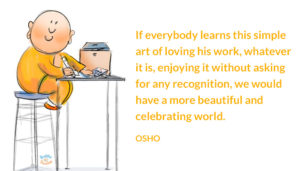
    This small point what Osho said – “If everybody learns this simple art of loving his work, whatever it is, enjoying it without asking for any recognition, we would have a more beautiful and celebrating world.” is very valid. If we would either start loving what we do, or we start doing what we love our economy and Human Development Index both will fare better.

    I raised this question to some of my email & blog friends, from that discussion the question became topic of Loose Bloggers Consortium. You can read thoughts of other two writers – Rummuser uncleji here and Shackman uncleji here.

    Image source – http://oshoinsight.com/tag/enjoy/

  • My Favorite Fictional Character


    Have you ever thought about fiction and reality? Fiction is something untrue, made-up or imaginary. How can I say that the Buddha or Krishna or Jesus was someone who actually walked the face of earth. Is it a possibility that these were imagination of someone? This thought puts me to another thought, what if I myself am is some imagination and a reality is somewhere, something else.

    Have you ever had a dream, Neo, that you were so sure was real? What if you were unable to wake from that dream? How would you know the difference between the dream world and the real world? Morpheus The Matrix

    What makes something real? Is it because I think, see, feel (perhaps smell or hear) and my mind makes me feel that this is something real because I can sense it? Or something is real because it exist without someone’s ability to sense it or no. Take an example of light – we cannot see light beyond a certain frequency range. Does it make the light non-existent?

    These questions remind me of a very interesting movie – The Matrix.

    “…The Matrix is everywhere. It is all around us. Even now, in this very room. You can see it when you look out your window or when you turn on your television. You can feel it when you go to work… when you go to church… when you pay your taxes. It is the world that has been pulled over your eyes to blind you from the truth…”

    I have had a couple of Morpheus in my life to teach me. I have written about almost everyone on this blog. I would want to be Morpheus too, for someone or few in future. I love the character of Morpheus from The Matrix the most. Morpheus is a believer, he courageous. The best part is, the kind of confidence Morpheus has in Neo, it makes me feel that I want to be Neo too. Laurence Fishburne played the role so well that I keep on watching his teachings (dialogs) whenever I feel I should. There are a lot of learnings in those dialogs – “Do not think you are, KNOW you are.” I have written on the movie (red pill) earlier too. I was so fascinated with the movie that I used to tell people that I am fine being a spot-boy for the movie – alas I am in India :(. The movie is so philosophical and spiritual to me that I repeatedly watch it.

    Instead of me talking (writing), I would want to share some videos of the movie (Youtube), not sure about the copyright permissions there.

    I see many of my teachers in Morpheus – they are indeed my Favorite (they are real) human beings, this blog post is dedicated to all of them. This was the title of this weeks Friday Loose Bloggers Consortium. Con You can read other LBC bloggers thoughts here – Rummuser and Shackman.

  • Free will


    I was watching this link of Time magazine – 100 photos of all time. These are 100 photos that are kind of defining in our recent past. These photos include photo from first man on moon and Mohammad Ali winning against Sonny Liston to Tank man (China democracy demand of late 1980s) to other atrocities based photos et al. These photos also include photos of AIDS victim, Somalia, burning monk & Terror of war (Vitenam war) and black power salute (against discrimination in the USA).mahatma-vs-hitler

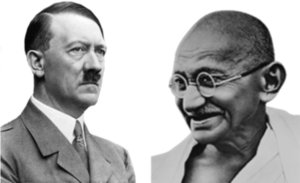
    After watching all these pictures, I could think of one thing – choice is always ours – should be dream of man to be on moon, or be a winner of games or winners of the games with demanding the respect a community deserves which the sports person belongs to. The choice is always ours if we want to demand peace, prosperity, development and compassion.

    Choice is always ours – to be the Mahatma or Mushroom Cloud creator Over Nagasaki. This is “free will”.

    Everything is perfect in this world (authors old blog post 🙂 the world is imperfect), only thing is we need to change our perspective. The choice is ours – if we want we can see beauty of the chaos or the order also seems meaningless & confusing.

    Whenever we talk about Free will, question of fate crops up. Concept of free will applies to our industries too – global warming and environmental damages are representation of our free will. The fate of our coming generation is at the cost of our present free will. This is why the emphasis on Business to the Buddha. I remember in one old talk by Guruji (Sri Sri Ravi Shankar) somewhere when he said – “All your past was your fate (Karma), all your future is free will.” Interesting, isnt it? There is a balance. So always choice is yours – take current action (free will) such that your fate (karma) becomes good for you.

    This week’s Loose Bloggers Consortium blog was titled – Free Will. I have written a couple of times on this title earlier too, read them . You can read other LBC bloggers thoughts here – – Rummuser and Shackman.

  • Lessons from animations

    In Three idiots, character of Aamir Khan says – “Sab jagah gyan bant raha hai, jahan se jitna man kare, le lo”

    In Hindi – सब जगह ज्ञान बाँट रहा है, जहाँ से जितना मन करे, ले लो

    Translation – Knowledge is everywhere (shared), whatever amount of it you want to capture, just grab it.

    It is correct that we can learn from everywhere. I shall take few examples from animation movies. These movies are generally made of entertainment of kids. I am not sure how much kids learn from these, however, we grown ups can learn a lot.

    We are all unique (to Marty in Madagascar), yet are engaged in exactly the same activities day in and day out (Scrat in Ice age). Eventually, individually we all will extinct one day (Ice age animation franchisee is based on extinction), yet until we are alive – we must live in NOW, with inner peace and continuously tryout new things (Kung Fu Panda). The lessons apply to us in everyday life, include business or professional life too.

    Watch all of them below. Source Youtube.

    All the Zebra’s to Marty “We are unique”

    We are really unique. But we have forgotten that. All of us are doing what Scrat in Ice age kept on doing starting Ice age 1 to the recent Ice age. We are doing this for generations. Its was initially for survival and now it is a fighting for your possession.

    I like these small movie clips, characters and their resemblance to us and teachings for us in general.

    Kung Fu Panda is one such character which has always (for at least past three consecutive movies) has surprised, made me think and engaged me is – Kung Fu Panda. I have written about the teachings earlier too. Here are some three good lessons –

    1. We are unique, we should not try to be copy of someone else. A leader should not try to make his/her followers or support staff a copy of self. Po says “I have to teach you to be you”
    2. If you keep on doing what you have been doing you cannot grow as a professional
    3. Time is just an illusion, there is only the Now

    Universe is full of such lessons, we just need to open our eyes, Isnt it?

    This week’s Loose Bloggers Consortium blog was titled – Your favorite cartoon character. As usual I changed it. You can read other LBC bloggers thoughts here – – Rummuser and Shackman.

    Copyright disclaimer: The videos are copyright of individual owners / producers. I am using the videos here for illustration purpose (driving home the point)!

  • Religion Vs Spirituality


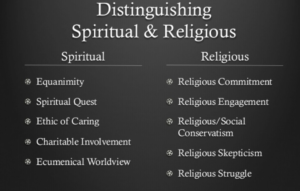
    There is nothing as “versus”, there is no fight. It is always “and”, togetherness a company. It is our perception that creates this division. My first impression on the title “Religion Vs Spirituality” was this. This was the title for last week’s LBC (Loose Bloggers Consortium) topic. You can read other LBC authors opinions here – Rummuser and Shackman.

    spirituality-vs-religionIt was a Diwali weekend so I came home and thus the delay. Wish my readers a very happy and prosperous Diwali and hope you inhaled less polluted air this Diwali.

    The title for this week was interesting, I met my art of living teacher Dr Shrikant Agashe; and asked him how he would define religion and spirituality. His answer was very clear and straightforward. He said – “There is some Truth, what that is, one does not know. Spirituality is experimenting and finding the Truth without getting biased; religion is accepting a path which is suggested by others with faith (and with perhaps assumptions) and trying to fine the same Truth.” In a way there is less opportunity of trials and exploration in religion whereas spirituality is full of experiments.

    I went on a very different line to define spirituality and religion. Excuse me for my words but this is how I defined it – Spirituality is like love and religion is like sex. There can be sex without love, but love has every flavor beyond sex too. Spirituality is like love, it can exist without religion. Spirituality is the essence of our existence wither religion exists or no.

    I reviewed couple of websites on evolution of religion and came to understanding that the Abrahamic religion (Christianity, Jews and Islam) and Eastern religion (Hinduism, Buddhism, Jainism et al) started / started evolving / documenting the teachings about 2500 BCE. What is a religion? It is “a specific fundamental set of beliefs and practices generally followed by its followers”. In the end, what remains or leads religion to the end is spirituality.

    According to some sources religion word is originated from Latin religare which means “to bind”, again a Latin words religio which means obligation or bond. This makes religions to be exploited such as present day terrorism is mostly based on interpretation (or misinterpretation) of Islam. There are religions that are no less than businesses. In many cases religion is distorted to such a level that it seems more of an organized crime. Thus, to sane people it becomes more important to either not get bound to the religious dogmas or experiment and find out own’s interpretation, way of life or truth.

    My take – The religion binds makes things (rituals) as obligations whereas spirituality liberates. That is where we may say versus. Yet, religion is a set of path followed by many (and suggested by some masters) towards spirituality towards liberation.

    Image source – SlideShare

  • Why Do You Do What You Do?


    I have written earlier too on the topic – why do we do what do we do? I asked this question to some other people – who are near and dear to me – too, the answer were never satisfactory to my curiosity or yearning. Yes I added curiosity in the sentence, it had all been yearning, however, when you read the end of the post you too may start asking these questions as curiosity.

    I came across this wonderful story thought to share it here. I have been asking many questions to myself and to my mentors. Some questions are specific and some questions are general and few others are completely useless. You can put those useless questions into any category – specific or general. Either ways those questions seem either too complicated or too deep; instead these questions could be nothing more than “actually useless”. Instead of asking ourselves or someone else these questions – who created the world, does God exist, why do we do stuff; we must do something else! What is that something else? Read it below.

    Poison Arrow

    seung-sahnZen master Seung Sahn said to an assembly of students, “Many people think that intellectual understanding can help them, and help this world. But that is not possible: intellectual understanding is only someone else’s idea about something. Whatever you read in books and hear in lectures, that’s not your thing. If you understand things only intellectually, then you will not understand this world, as it is. Then you will suffer, and make suffering for others”

    “You’ve heard about how the Native Americans dipped arrowheads into poison, and then shot them at something? Having too much intellectual understanding is like being hit with one of these poison arrows. You have to pull it out quickly, correct? But most people who have this arrow stuck in them only think about the arrow, instead of pulling it out” ‘Where did this arrow come from?’Who shot it?’ ‘How was it shot?’ ‘How was it made?’ ‘Is this arrow like other poison arrows?’ ‘What kind of wood is this?’ ‘How tall was the shooter?’ ‘Was his nose long, or flat?’ Lots of thinking, thinking, thinking.”

    “But soon the body will die! This thinking and analyzing are not necessary – first pull out the arrow, and then the poison cannot spread any further/ But many people won’t take out the arrow of suffering that is in their minds; they only spend time and money energy analyzing and thinking and reading about it! ‘Where did this arrow come from?’ ‘Who made it, and who shot it?’ ‘Where was it shot from?’ ‘Why was it shot?’ ‘Why was it shot?’ ‘How does an arrow move through the air?’ ‘How fast did it travel here?’”

    “That kind of mind is like most human beings: ‘Why is there suffering?’ ‘Were does suffering come from?’ ‘Why is this world so complicated?’ ‘What does so-and-so write about it?’ All this checking, checking, checking and not one bit of ‘What am I” They do not look into their not-knowing mind. People don’t realize that this don’t-know mind already cuts off thinking, already pulls out the arrow. If you first take out the arrow, then a thinking mind is no problem. But if you don’t take it out, then any kind of thinking and checking mind that appears will kill you. And everybody dies, because everyone is checking their mind like this. Only very few people actually try to take out this arrow, so you who do meditation are all very special, very lucky. Your ‘What am I?’ cuts through this poison.”

    So many a times the conclusion was – Just do it… ok try it. Life is a trouble only death is not, To be alive is to undo your belt and *look* for trouble. Still the intellectual mind keeps on bothering.

    The topic of LBC – Loose Bloggers Consortium was a question I posed to my fellow twelve authors. Currently only two write regularly, read their take on this topic at Ramana uncleji and Shackman uncleji.

    Story Source – Wanting Enlightenment is a Big Mistake: Teachings of Zen Master Seung Sahn

    Image source – Twitter @ZMSeungSahn