Tag: interdependent co-arising

  • Entrepreneurship and interdependent co-arising

    Over time, I have been analyzing socialism and capitalism from the lense of spiritual professional. Mostly, people think combination of words “spiritual” and “professional” sound as an oxymoron. No it is not. A spiritual person can be more thoughtful, it is not necessary that a spiritual approach only suits in Himalayas. On a lighter note – I do not intend to state that I am thoughtful. My looking at socialism and capitalism has also come from practically looking at people be it Aarti Amma or Shaku bai.

    Well, slowly I have made a centrist approach, though leaning right. At least capitalism gives everyone an opportunity to become rich, understand the futility of being ultra rich and become a philanthropist. We can argue till cows come home about the eyewash of this philanthropy in many cases. There are many of these new gen millionaires in India, they are doing their bit of philanthropy in a different manner. They are helping other startups with funding or advice.

    In last more than a decade, India probably has seen many young, competitive, hungry for more and problem solver millionaire. The list is long from Bansals of Flipkart, Ritesh Agarwal of Oyo, Vijay Sharma of PayTm, Byju Raveendran of Byju’s to others. The best part is, the list is very long. This kind of opportunity was less likely in India before 1990’s. This new entrepreneurial energy and problem solving for Indian and global context lets me lean to the right.

    If we take examples of Sarla or Kishore, there is surely a better way of making everyone work towards becoming self dependent. This opportunity is better offered by capitalism – as much good as you can make good for yourself and society you can be better off and in return you are helping the society too. In a way capitalism gives you an opportunity to be more practical in implementing interdependent co-arising. If you are solving a pressing problem you will get buyers, you make buyers life easy, they will pay you.

    Now, I see entrepreneurship also from an spiritual perspective. I believe that there will be someway and someone who will help Aarti Amma and Shaku Bai to grow beyond their limited means. Though when I look at socialism and capitalism I still emphasis, socialistic approach is needed in some cases such as healthcare, education and food safety. Here too a Public Private Partnership is fine. At one time or the other interdependent co-arising will work for Aarti Amma and Shaku Bai too with some entrepreneur helping them and make a financially viable business solution.

  • Societal impact of Interdependent Co-arising

    Interdependent co-arising is a very fascinating concept of Buddhism. I could relate to it deeply, in fact inception of this blog website lies in that. We are “social animals” and thus interdependent co-arising is no foreign concept to us. However, off late many of us have become too greedy, self-centric and indifferent to others that we forget we are social animal, we create hierarchy in society itself or we create a circle of community, economic strata or any other such characteristic be it race, religion or for that matter line of thoughts (left vs right) etc.

    On 31st May, we concluded a Bal Chetna shivir. It is an Art of living initiative for under privileged children. The volunteers involved in the course included Nalini, Siddharth, Dhruv, Deepshikha, Soumya, Megha and Shweta. This course was conducted at Durgadevi Sharma Marathi School. The energy of these kids is outstanding. It becomes difficult at times to manage them! It was a wonderful experience. Thanks to the social service initiatives of Ms Gauri Bhasin who is founder and president of the Seed Foundation that we could do the course there. She has been engaged in social service for a long time now, her dedication speaks through her work, action and words. I heard her on 30th May and that clicked me to write this blog.

    Bal Chetna Shivir Art of living

    We were discussing about the initiative, our background and what we are trying to achieve. She very eloquently said that “If we want a peaceful society, we must help each other, more so to these underprivileged children. If we impart right education and involve them in our society, chances of them becoming antisocial reduce significantly. We must work towards inclusion and helping them feel we are there and we – as a society – care. It is good for our social well-being at large to help these kids.”

    I could instantly relate to these words with interdependent co-arising. Everything is dependent on another. My definition of interdependent co-arising is – “we all grow when we help each other to grow whether it is our subordinates or our competitors.” A more technically correct (according to the philosophy of Buddhism) meaning is “everything depends on something else for its existence”.

    As a society we are all dependent on each other, none of us as an individual can exist without the others support him/her. Ms Bhasin very easily put it out in a societal context. A peaceful society needs a peaceful, socially accepted and involved individual. We need to make everyone feel that they are part of us be it from any social strata, race, religion or line of thought.

  • I want to be the winner

    Couple of weeks back, I was reading a psychology based assessment and relevant review of the same. In the review, I found one particular pointer – “I want to be the winner”. I read it, then re-read it. This stuck me and I paused.

    Winning in corporate battle or academics

    I have always been a very competitive person. However, this time when I was reading this statement it looked too complicated to define a person. So I re-read the statement – “I want to be THE WINNER”. Yes it is always a wish to be a winner, but THE WINNER! This drifted me from the overall review and psychology stuff to a general social issue.

    Are we really making youngsters competitive or we are pushing them to be a “CUTTHROAT”. Just read the word again – cut throat. In another words it means kill!

    So, the psychology questionnaire and its review had my attention even more. What defines a person as most likely or least likely for “I want to be the winner”. If someone is reading it in a passing reference, it will be just a statement, however if you look that statement in a social, personal, academic or professional context this statement may be very fatal.

    This can be fatal when we think everyone wants to be the winner. Our education system makes us compete at times when it is not required! I have written on this reference earlier – the problem of top 5%. Why top 5%? Because I was never in top position in academics :). When I look back at myself 20 years when I was in 12th, I realize that what kind of damage I might have done to the class in which I studied. Now, when I look back I feel most of the times, it is about collective growth rather than me over you. After reading about interdependent co-arising I have always believed in collective growth. Even the economy cannot survive if only some people grow – bad precedent is trickling down economy, that is a mirage.

    I believe, life is like a team sport, take an example Football. When you play, you play with a team on your side, you are competing to score a goal, it is not likely that a football team goalkeeper will score, but if the team wins, the goalkeeper naturally is one of the winners.

    There is no problem in being a winner, wanting to be a winner, however “THE WINNER”?

  • Grass grows by itself


    For last couple of years, I have been buying stuff (mostly grocery and vegetables) from where I get a bill (invoice), even if I have to pay a bit more. Reason has been straightforward – I am fine paying more because presumably the one who gives me bill pays tax. It reduces burden on my tax and thus country can improve and prosper. Straightforward logic. However, another thought runs in mind – things are getting automated, be it agriculture or industries. Technology based jobs are likely to get automated too. This will create a scarcity of jobs. We should support roadside vendors otherwise how will they sustain their livelihood.

    Next level challenges for Governments and even for private sector will be job creation at grass root. The other thought says possibly there would not be a need of job creation. Things will happens automatically due to automation. On a philosophical level as Ramana uncle keeps on quoting – Sitting quietly, doing nothing, spring comes and the grass grows by itself. ~ Basho. This no one would require to do job, the same possibility suggested by Keynes.

    The world thus would be a kind of utopia, we hopefully wont require ruling over the other. It would be a time of soul searching, digging inside doing inner revolution. I strongly believe prosperity of each individual is the best way to reach the Utopian world. Economics, fails at such Utopian world, because where there is scarcity there is demand and supply. However, if everyone is prosperous probably no one will feel wealthy. Feeling of being wealthy at that time would be defined by some other measures – not necessarily by money. Currently too we are on the verge of redefining wealth, money is not what you have in your pockets or home is no more the only wealth. Wealth is – stocks you have, count of zeros in your accounts, may be in future we would look at bitcoins in your electronic wallets.

    Possibly, the Buddha was disillusioned by wealth – he was a prince after all, wealthiest of kingdom – when he saw a sick old man, a dead body etc. Likelihood of seeing a Buddha like person is far higher in prosperous economy. India was at peak of its economic, scientific and spiritual knowledge. The world now and in future needs to think about spirituality and economics in same plane. The world we are creating for our coming generations should have growth, livelihood, sustainability and spirituality together. This requires learning a couple of concepts of Buddha’s teachings deeper – i. interdependent co-arising ii. the middle path and iii. righteousness (speech, action, livelihood,efforts, mindfulness, concentration, view and resolve).
    I think we need to think beyond jobs creation, wealth, we need to think about a holistic development of human race because the grass grows by itself.

    Happy Buddha Purnima, may everyone become The One soon.

  • Earth day


    Today is Earth day. Actually everyday should be The Earth Day, its ok at least we human have given recognition to earth that one out of the 365 days is celebrated as Earth day. Perhaps we have taken the liberty to pollute earth for 364 days after celebrating one day in the remembrance. If we keep our act as it is currently, the remembrance will soon become “remembrance” only. More precisely worst we wont be there to observe the remembrance either.

    Is there something that we can learn from Earth? Many! Just stick to the two here. It gives without any expectations. Thanks to the Earth, every cell in our body is made up of earth. We did not bring anything and would not take anything back with us. Can we learn to reduce our expectations?

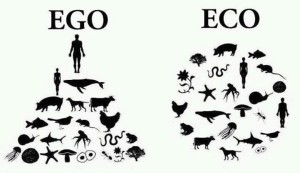
    It holds us all without any ego that “you exist because of me”. We get into this kind of me, my opinion and my way of living (religion) better than yours faster than we learn to exist on this earth. Humanity is fighting for small little opinions for centuries, its lately that we have realized the value of Earth to at least celebrate the day. In fact this Earth day is a lesson to all of us – that we need to give up our dominion. This image represents it far better than words can.

    We believe we are free to take our actions, we forget that the consequences are also there. These consequences are not just for us but for everyone around us. Some of the species are extinct already other few are in line. The whole world is interdependent on each other. If we miss this point we wont exist sooner rather than later. I read it once – If all bees die, humans will die soon too.

    Let us celebrate this earth day with respect to the mother earth and to each and every creature on the face of the earth. Otherwise for long we have been the “takers“.

    Forget businesses and countries, humans wont survive if we do not learn the lesson of interdependent co-arising. No wonder we need to learn the lessons taught by previous spiritual masters – compassion, Non-attachment, Nonviolence, mindfulness and gratitude.

  • Interdependence and insurance


    As it had been for last 10 years, this February also, I abhorred writing a fat cheque to my insurance company. I hated the agent who had sold me those policies and almost made a fool out of me. Yes I always felt that he duped / robbed me by selling these policies and just for the sake of saving taxes I had to pay so much as premium. I never wanted to learn from my MBA class of financial accounting on managing risks.

    Social SupportNot just that, I have received N number of calls from so called WHO, which asks for funding heart, eye, kidney etc surgery of a baby boy or a girl. These calls have always been met with a cold no, or suggesting that I have assisted in other such causes or “I am a DND registered customer why are you calling me?” These calls sound spurious so there are interesting crowd funding support system such as – Watsi, Ketto Milaap etc.

    Recently, one of my family member had to be admitted to hospital and undergo a surgery. Thankfully, this person was covered under insurance. I realized the value of insurance. I revisited the concepts of insurance. Insurance is distribution and transfer of risk. In our case, we had been paying premium for last couple of years (during this time it looks as if the amount is gone in vain). Eventually, we needed this risk manager to take charge.

    What insurance companies do is pooling and redistributing of risks. It sounds very weird. What pooling of risk means is going to many people covering them under insurance at a premium by charging some money. This premium amount is invested in different investment instruments. Whenever someone amoungst the insured faces the risk (under which the insured is covered), insurance company pays the amount as per their terms – this is called as redistribution.

    I am healthy, so for me it is a “cost” I know I wont fall sick and I am also sure that I wont die sooner, so why pay this premium and get covered for something that is not going to happen to me? This is the point young people ask themselves. But you never know when you need such assistance. There are circumstances when you may need such help. I drive safe, what is the guarantee the other person wont jump signal and bang my vehicle?

    I am not trying to sell any insurance. I am here to explain a very interesting concept that we all do support each other when we buy an insurance. If I do not and would not need that money, I am sure someone else in the pool is going to be benefited by the money which I have helped create – interdependence!

    This concept of interdependence is not new to me or to Indian philosophical system. The Buddha talked about it as one of the lessons – Interdependent co-arising. In fact when I was reading about insurance I came across this (source Insurance Regulatory Development Authority India) –

    In India, insurance has a deep-rooted history. It finds mention in the writings of Manu (Manusmrithi), Yagnavalkya (Dharmasastra) and Kautilya (Arthasastra). The writings talk in terms of pooling of resources that could be re-distributed in times of calamities such as fire, floods, epidemics and famine. This was probably a pre-cursor to modern day insurance. Ancient Indian history has preserved the earliest traces of insurance in the form of marine trade loans and carriers’ contracts.

    Is not it an interesting thing? That we support each other even without knowing and help ourselves too. The challenge comes when insurance companies reject your claim and money and greed becomes primary focus instead of helping someone in need even after covered under insurance. This blog post is already very long, so I hope reader will understand the challenges in this industry and greed seeping in the system.

    Image source – http://excusercise.org/social_support.htm

  • Millennials and the future


    Old days our ancestors used to communicate using sign language. Historians have found out wall painting in many civilizations and have discussed about usage of sign languages. We humans evolved, grew and became intelligent so started speaking, reading and writing when languages were born. Or perhaps the signs were difficult to remember over a period of time, thus language was born. We have evolved. With time, a lot of developments have happened. Now we communicate across the globe.

    Development happens in cycles, so now after so much of development we have again started speaking in sign language. We call this sign language – smiley. Many a times one has to refer to the ‘dictionary’ to understand what is the meaning of that smiley. Specially that is the case with older generation (I am a part of that). Millennials are different species – well that is how media, marketeer and many people think. Millennials understand these sign language with ease. Though as per definition I should be part of millennials but I dont understand the sign language.

    Many studies state that Millennials are different compared to the older counterparts. I am of the opinion that every generation is more evolved compared to previous one. Generation of my parents were busy settling down. My generation is little adventurous, millennials are freer, more connected and apparently they have more concerns for society.

    There are many studies on Millennials, because they are going to be the biggest spender & biggest target audience for marketeers. Some studies say that Millennials are more concerned about environment, more connected, driven by sharing, more inclined towards social justice & balance and are more spiritual than religious One study. Now organizations also care for CSR, however shallow that could be. Hopefully this will be true one day – let them fake CSR until they make it. I am sure millennials will make this transition sincere with time.

    When I read about millennials I thought in another direction. Sheer size of this generation is making us note these characteristics. Of course these are key traits of this generation, but still the sheer volume is making us notice this. There must have been people in previous generation who had similar thoughts but the numbers, perhaps the ability to measure was less at that time. There are very contrary analysis also done – Millennials less spiritual and less religious too, Millennials less religious but more spiritual either these are really contrary findings or it has been the norm for generations; earlier it was not measured now it is.

    Yuga – Sadhguru. Isha Yoga

    According to Indian philosophy, the generations evolve, this happens in a cyclic fashion. Yes perhaps therefore we are moving towards spirituality now. I came across an interesting video by Sadhguru on this same thought, the video is not available now but the article is, read it here.

    If I try to connect the dots of what Sadhguru said and that of characteristics displayed by the millennials, we are likely to see a more interconnected society and more compassion and empathetic time to come. Wish my this prediction comes out to be true and terrorism stops, not by guns perhaps by the power of interdependence.

    This was last weeks title for LBC, unfortunately I could not write last week as I had two sessions on IPR – one for faculty development and one for startups those two sessions took precedence over my weekly commitments. So I missed writing. Read other’s who write on LBC here – Rummuser, Shackman.

  • Interdependence & Carbon emission


    I have written on interdependent co-arising often. In the name of growth we are industrializing. In industrialization we are harming the environment. Today or tomorrow some or the other generation has to either take the brunt of it or change the course. If not we, who else?

    The air I breath, you breath it too. If the air is polluted both will suffer. If the climate is changing it is not just New York in USA or Mumbai in India or Guangzhou in China is in trouble. We all would get affected.

    This video is a must watch for those who are even remotely interested to understand carbon emission and interdependent coarising.

    I would urge you to watch this video. A parting though we must ask ourselves is – what are we doing? We at least can reduce – driving needlessly, usage of AC or any other thing that increases our carbon footprints. Isn’t it?

  • Inclusive growth, How?


    There is income inequality. Agree? If no check this – IMF Publication

    …increasing the income share of the poor and the middle class actually increases growth while a rising income share of the top 20 percent results in lower growth—that is, when the rich get richer, benefits do not trickle down…

    If businesses want to earn good profits in long term; businesses need to improve purchasing power of poor. Why? When people will have enough money to buy products/services, then only profits will increase at a better rate. Isn’t it? The simple explanation to this is – once poorer population gets resources (buying power) market size for companies increase multiple times. The increase would not be for one company but for every company in the market. One example of that could be involvement in CSR activity wherein poor can get good basic facilities and opportunities to earn. Once the poor can earn, they can spend too! Of course a caution here is – CSR is not charity, it should not become charity where it may lose its meaning.

    If this logic is clear – shouldn’t business be investing in making people prosperous? Once we do this we would solve a big problem – poverty. Hopefully, we will be able to not only grow the businesses but also grow every strata of society. Isn’t it? This is interdependent co-arising.

    Let me share a store, a very old & cliche, but I think that can drive home the point.

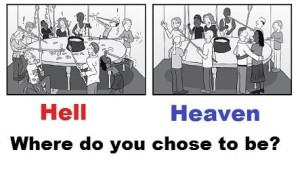
    Heaven HellLong ago a person wanted to see how heaven and hell were. An angle obliged and granted the wish. Person was blindfold and was sent to hell first.

    When the blindfold was removed, person was standing at the entrance to a great dining hall, full of round tables piled high with delicious foods of all kinds.

    The person noticed that, people seated around those round tables but their bodies were thin, and faces gaunt and creased with frustration. Each person sitting on dinning table held a spoon though their arms had no elbows and the spoons were four feet long. These people could reach the food on those platters, but could not get the food back to their mouths.

    Next the person was sent to the heaven. In the heaven the entrance to the dining hall was big, it too had round tables with piles of lavish feast as hell had. Here too people did not have elbows in arms and they were holding long spoons about same length as the hell. The person noticed that the people in heaven were plump and happy, the dinning hall was full of joy and laughter. Situation in both – Heaven and Hell were similar, however there was difference in the milieu, the reason?

    The difference between heaven and hell was – the people in heaven were using those long spoons to feed others so effectively everyone was full, plump & happy.

    Source of the story is AnomalyBeta and LinkedIn

    So, if we take the concept of interdependent co-arising as the core of growth, capitalism or communism or any economic structure we follow we will surely have inclusive growth. The catch here will be – value of money will decline, and exclusivity (as marketing or demand / supply concepts of economics) will play in different fashion. In whatever case at least the basic necessities hopefully be fulfilled.

    Other blogs on inequality – The Price of InequalityNot so trickling down!, Economics concepts and equality and Has the time for this idea come? and Inclusive growth

  • Kanhaiya to Mallya why lessons from Buddha Prevail!


    Recently India saw two very poles apart events and both can make us learn – the Middle Path of the Buddha. One incident was of JNU – ultra leftist & anti establishment – and the other was bank NPAs (one example of Vijay Mallya) – ultra rightist & Crony Capitalistic. I did not write anti-national as those who read news or biased towards one side would find my opinion biased even before reading the post fully, so ‘anti-establishment’ was the word used.

    The backdrop of Javaharlal Nehru University row is this – students union of JNU requested for a cultural event. Well, for those who do not know JNU is a University in Capital city of India. JNU students union is a leftist union. This event turned sloganeering against India. The slogans – besides anti India – included supporting terrorist who (in rarest of rare capital punishment in India) was hung during previous Govt. The previous Govt was run by the  parties currently in opposition – including left front. In twists of the whole drama a hero emerged named Kanhaiya Kumar. When I searched and heard one Professor of JNU, I came to know more about left front. They seem to support the whole drama where slogans were raised against India. This support goes deep down in the intellectual class sitting in news channel studios in Delhi.

    Domestic helpThough anti-establishment word sounds weird because where was the class of Kanhaiya Kumar for last 10 years? Where were they when there were a lot of corruption cases? Suddenly that class is demanding Azadi (freedom), well freedom from whom and what? If you demand freedom from poverty – work! Isn’t it a better solution? Azadi from toot-phoot (breakup) – better you do not do it, isn’t it? Currently who is involved in toot-phoot (look at parts of India where Maoists are active & killing). Azadi from terrorism – better you support or join security forces isn’t it? Why were student’s slogan in support of Afzal Guru (a terrorist)? Azadi from Manuwad & Brahmanwad (it is related to caste system of India) – I too am against caste system. Would it be better to do something at a grass-root level instead of sloganeering ‘against India’? Azadi from suit boot (economically better off) – isn’t it good if you do any of the other things listed above you would get in suit boot? Perhaps someone else will raise voice against you! But does it mean you and the other economically better off should leave everything and become poor in support of you to have Azadi from suit boot? The logic of communism is at question here – to bring affluence or wealth to less privileged is a better approach rather than making everyone equally poor to bring equality. Isn’t it? Read about Aarti Amma here these people should learn from her.

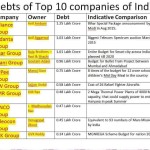
    Indian Big Corporations debtOn the other hand there is another class in India – capitalists. They are those who either mend rules or get rules created to favor themselves. According to some reports the amount of debt big corporate houses in India have goes in lacs of crores (of trillion INR). The example of top 10 debtors is below in image. These corporate houses are those who keep close relations with the law-makers (political parties – either in opposition or in power). So, these debtors enjoy the debt money lavishly. Once they kind of run out of money, they get debt restructured (happens to big companies only). There is a fancy word for that – Corporate Debt Restructuring. One such example in India is Dr Vijay Mallya of Kingfisher Airline. We’ve heard of his lavish birthday bashes and Calendars; he owes 7000 cr (70 Billion INR) to banks. His airline is defunct and he recently fled; banks has declared him willful defaulter a couple of months back.

    So in recent times, India has seen extremes of both the sides – failure of overly capitalistic system where crores of rupees are usurped by organizations without remorse and there are overly leftist those who want to overthrow the establishment itself. We have seen an example of USSR failing and we have seen repeated recession / bankruptcy. These examples teach us same the lessons again and again. There is a middle path that we need to follow, No left or no right. There has to be a balance.

    The solution? Once again it is the eight-fold path –

    1. Perfect Vision,
    2. Perfected Emotion,
    3. Right speech,
    4. Right action,
    5. Right livelihood,
    6. Right effort,
    7. Right mindfulness, and
    8. Right meditation

    All of these have to come from within, outside perspective will contaminate these. Meditation is a one single solution, it may provide each one of us from Kanhaiya to Mallya ‘tranquility’ that will help reduce the fascination to revolt or predilection to cheat. Because if we start following this eight-fold paths we would realize – ‘we all are connected’, ‘we all are interdependent‘ and if we want Azadi, this azadi would be from whom? If we want to cheat the banks, it is in turn cheating with someone who is a family of ours.