Category: Misc

  • Me too in Buddha’s life

    In recent days #MeToo has been talk of the town in India. I do not intend to hurt sentiments of the affected girls. In fact in my social circles whenever such discussions came I supported the girl’s story. Yet, when I am writing this post, I know there has to be a balanced approach, when I vehemently supported them there were always questions – why now? why so late? etc etc. So, here is a story that happens in the life of The Buddha.

    During the time of the Buddha, there was a similar incident. Though, I am not trying to justify or deny harassment cases in of Me Too as fake or if the cases / stories are coming out to malign people unnecessarily. In fact, the Bollywood is notorious for such incidents (casting couch) etc, however, someone has spoken openly about it after a long time. In fact, there were cases of journalists (read Vinod Dua) and when a Tehlka founder-editor (read Tarun Tejpal) was accused by a girl – of the age of his daughter – about molestation. Long and short journalism is not sacred either. In fact in the recent times the way journalism is getting exposed – be it Radia tapes or AugustaWestland news for cash cases – is shaking faith in print / other media itself.

    There was a CD that came in public for a very short duration wherein a very prominent politician had sex in his parliament (a sacred place for democracy in India) building room. The reason for the quid pro quo was to become a judge in a high-court in India. The woman lawyer compromised for becoming a judge. Off late a news is making rounds that Chief Justice of India (CJI) harassed his staffer some time. Another politician – died recently – was dragged in court for DNA test to prove he is the biological father of an adult – recently that son of the politician died.

    In essence many systems where power plays a key role are not clean – be it limelight based Bollywood or fancy journalism or being a politician or judiciary. In another such power system is spirituality and religion, a bishop in an Indian church is accused of raping nuns. The result? Nuns are in question not the bishop! Even though the nuns have come out in open! This is not just one case in isolation, there were many such harassment cases, only few were / are reported.

    As the case is with Churches, the power center in olden days in India used to be the spiritual teachers. The Buddha was also accused of raping a women. What happened there may not be the case in general with above mentioned cases of recent times. Let me narrate this story from the book – Old Path White clouds.

    Story from Old path white clouds

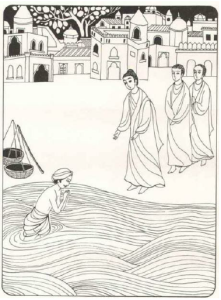
    During the time of the Buddha, his teachings were becoming powerful. There was a big challenge to the establishment of that time. So some people conspired to falsely accuse the Buddha of sleeping with a woman and making her pregnant. They found an attractive, young woman and told her that the Buddha had caused a rapid decline in the faith of their ancestors by luring many young men to become his disciples. Anxious to protect her faith, she agreed to the plan.

    Every day she went to Jetavana dressed in a beautiful sari and carrying a fresh bouquet of flowers. She did not arrive in time for the Dharma talks, but waited outside the Dharma hall as people left to return home. At first, whenever anyone asked her where she was going or what she was doing, she only smiled. After several days, she answered coyly, “I’m going where I’m going.” After several weeks of such vague comments, she began to answer, “I’m going to visit Monk Gautama.” And finally, she was heard to exclaim, “Sleeping at Jetavana is delightful!”

    Such words burned the ears of many people. Some laypeople began to feel doubts and suspicions, but no one said anything. One day, when she came to one of the Buddha’s Dharma talks. Her belly was noticeably round. In the middle of the Buddha’s discourse, she stood up and loudly said, “Teacher Gautama! You speak eloquently about the Dharma. You are held in high esteem. But you care nothing for this poor woman made pregnant by you. The child I carry is your own. Are you going to take responsibility for your own child?”

    A wave of shock passed through the community. Everyone looked up at the Buddha. The Buddha only smiled calmly and replied, “Miss, only you and I can know whether or not your claims are true.”

    The Buddha’s calm smile made this woman feel uneasy, but she retorted, “That’s right, only you and I know whether my claims are true.”

    The community could no longer suppress their astonishment. Several people stood up in anger, the woman suddenly felt afraid the people would beat her. She looked for a way to escape, but in her panic, she ran into a post and stumbled. As she strained to stand back up, a large round block of wood fell from where it was tied onto her abdomen, and landed on her foot. She cried out in pain and grabbed her crushed toes. Her stomach was now perfectly flat.

    A sigh of relief rose from the crowd. Several people began laughing and others derided the woman. Bhikkhunis stood up and gently assisted this woman out of the hall. When the two women were gone, the Buddha resumed his Dharma talk as if nothing had happened.

    Summary

    The life in current times is not that easy to prove innocence or guilt. Court cases are long drawn and at times the one with influence wins. Many girls / women will be facing defamation suits in the battle of right vs wrong. Many cases may be correct however the point is – how to prove the allegations?

    The intentions of this post is not to support or oppose the accused or complainant. Because there may be prima-facie the cases such as Megha Sharma where girl seems to be the culprit.

    The point is every generation faces such moral bankruptcy. Some end up on the side of one gender some on the other. This is an opportunity to sensitize everyone that what is inappropriate in discussions, the same must be avoided in actions too.

    It is incorrect to ask woman to hide from head to toe, not go out alone, how to dress or they invite rape if wear small cloths! We must teach the boys to respect girl. I believe that only spirituality and practices taught by Indic religion Buddhism, Hinduism and Jainism can help our societies. In particular Brahmacharya (celibacy), Aparigraha (non-possession).
  • Utsav movie


    I was speaking about Utsav, a Bollywood movie, with my wife. I liked that movie and asked her what your take is? She said it was ok. I asked her to watch it again. She was curious – what was so special in in movie that you are asking me to watch it again? I told her –

    In the movie there was a thief – Sajjal. Nothing apparently to learn from an outlaw. However, he was a creative thief. Wherever he stole from, he made creative designs of breaking-into a home. When he goes to steal, the hole he makes in wall is in some design. If he is not satisfied he improves it and once that is done, he proceeds to his actual job of stealing. Creative person can be creative in whatever situation. Not just that, when Sajjal was hired to rescue one of the leader of revolution (Aryak), there too Sajjal did things creatively. The hirer – Kulbhushan Kharbanda – had his heart in his mouth but the thief does not change his attitude and approach.

    Kharbanda – one of the revolutionary – makes team out of some very random gems, the other lesson was this to me. Interestingly many of his team members were outlaws or for example – a chronic liar (Annu Kapoor) and the thief.  This liar creates stories to save himself from his tough situations – such as once he saves himself at Vasantsena’s (Rekha) the courtesan brothel by telling a lie about being a representative of Charudutt. I think there is another perspective –revolutionaries are always considered as outlaw! Isn’t it? What Annu Kapoor learns from this incident is another lesson in itself – Annu Kapoor learns – “If a man’s name can save him from going to jail, reciting almighty God’s name will surely save him from live and after lives and so on.

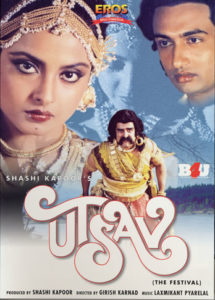
    Vasantsena has another interesting lesson to teach us. She falls in love with Charudutt a poor artist – who is already married and have a small baby boy. The last scene of the movie is the most stunning to me. Vasantsena is pursued by Samsthanak (Shashi Kapoor). Shashi Kapoor played the role of a mad lover of Vasantsena so well that I hated him in the movie, also I could not recognize him until I saw the list of artists. In the poster he is seen above the title of movie.

    Samsthanak is so madly in love that he keeps on repeating her name at his various appearances on screen. However, Vasantsena is scared of him, she wants to run away from him – in Charudutt she finds solace. Both kind of fall in love, however, in the end when Charudutt is released from the death sentence – on the gallows literally – he runs to his family. Both his wife and Vasantsena are also running happily to hug him; he grabs his wife and not Vasantsena. It kind of breaks Vasantsena, what she learns from this is – i. accepting that Charudutt has a family, ii. She must accept their family and do not get into it, iii. She must love what she has and accept the love showered on him by Samsthanak. The last scene is very touching. After the revolution, Vasantsena’s brothel is empty. In last scene she opens the door and takes Samsthanak in – who has been beaten by citizen. Love needs to be unconditional, if there is a desire thats not love, that is business.

    Needless to talk about Amjad Khan who plays the role of Vatsyayan author of Kama Sutra, he acted contrary of his image of a villain. Vatsyayan is searching for his different Kama Sutra asanas and therefore he is at the brothel. Indian philosophy had immensely different perspective even on super consciousness. Vatsyayan’ was from sex to super-consciousness. He says once – “Love, for me, is contemplation and not indulgence

    What did you learn from Utsav?

  • Time


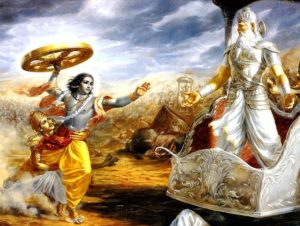
    In the war of Mahabharata, there were days when one or the other side was looking at the sun to set as soon as possible. The rules of the war were set that war will happen between sunrise and sunset. When Arjuna took oath to kill Jayadrath before the next day’s sunset or immolate himself, Kaurava’s were waiting for day to end sooner.

    On the other hand when Bhishma was the supreme commander of Kaurava’s army everyday was a mayhem for Pandava’s army. Bhisma killed thousands of soldiers and hundreds of chariot warriors everyday. Krishna’s frustration (though frustration cannot be the right word here) was at peak, when he felt that Arjuna isn’t fighting with Bhishma with all his capabilities and took weapons in his hands to kill Bhishma – Krishna had vowed not to fight from either side, but was a Charioteer for Arjuna.

    At this Arjuna requests to Krishna not to break his vow, and he promises to fight with his full might to not just defeat Bhishma but also end the war today itself “only if the sun does not set (as fast for the day)!” Arjuna even if was a great student yet had missed occasionally – Krishna’s loudest message to him in the whole of Geeta was perform your duties, do not think of results. Arjuna kept on missing this during these 18 days. Once here and other time at Jayadrath’s killing, Arjuna wanted the sun to be bit slow – Time to stop. I wish he had remembered the beginning of the war when Krishna was teaching him the Geeta – time must have stopped at that time, how can time fly when the god himself is speaking about the truth. Perhaps time must have not even existed when the Bhagvad Geeta was narrated.

    Time is a difficult concept to explain, oxford dictionaries define it as – “the indefinite continued progress of existence and events in the past, present, and future regarded as a whole.” What is the start and end of time? There seems to be none. In Indian philosophy time is defined as Kala. Kala has a lot of small to large measurements, that is for some other day. However when I thought about Time as a topic for LBC I could think of two things – one commentator of was Old Hindi TV Serial Mahabharat, and other a consultant saying – time is the commodity I sell. It is the most precious commodity I have, I cannot get it back once it is gone.

    The commodity is really very important and extremely perishable plus nontransferable, it cannot be restored once gone or consumed. The best thing is each one of us have the same amount of it – unlike any other commodity. What use we make of it is something to be decided by each one of us.

    We all want the time to move slowly when we are happy and to just vanish when we are in trouble. However, we always feel that when we are elated time elapses fast and vice-versa. Isn’t it? The following I wrote long back when I was doing my engineering (about 2 decades back, 1998-99 – my god I am old!) Hindi and English translation side by side

    स्वर्ग भी है यहाँ, नर्क भी है यहीं Heaven and Hell are ‘here and now’
    तुमने जैसे जिया जो पल The way you pass each moment
    तुम ही परिभाषित करोगे, कि तुम जो स्वर्ग याकि नर्क मे You define whether you are in Heaven or a Hell.

    Ramana uncleji suggested this topic for the weekly LBC blog posts. You can see what the other writers perspective is on this topic at their respective blogs Maria, Ramana and Shackman uncleji.

    Image source – http://sathyasaiwithstudents.blogspot.in/2013/06/bhakti-part-1-story-of-bhishma.html

  • Dalits in India, Dividing work, birth or none?


    Perhaps in middle school (6th to 8th), we learnt a lesson on why crows are our best friends and what we can learn from them. They eat dead animals and therefore keep our surrounding clean. We need to learn from them that whenever they see something to eat they always invite their fellow crows and all of them eat it together – what camaraderie, isnt it? But alas! as we grow we forget these small things we learnt as kids.

    Perhaps Krishna knew it all, he suggested Draupadi (Panchali) to reject Karna and thus Panchali said – Karna is a son of lower caste and I wont accept him as my husband. This – for my readers who have not heard of Mahabharat or know the context – was an India where girl (if not all, at least daughters of Kings), had the freedom to decide who she wants to marry. This was called Swayamvar – or a competition – where husband was selected by his capabilities by the girl. This kind of Swayamvars are recorded in history – be it Rama or Prithviraj Chauhan (12 century AD). Compare it with arrange marriage system of say two generations back when such decision was not that easy to offer to girl. This was an India where even if Krishna (God in human form as per Indian scriptures) was alive, abilities of Karna was proved secondary than caste (family’s profession).

    We have heard many such incidents in Indian history when a untouchable became center of discussion – be it Shabari who fed Rama only sweet berries by tasting those first. Here untouchable was first tasting the fruit and than offering it to Rama. Or be it a story of Eklavya. He approached Dronacharya (Drona) who refused him, later asked him to chop off his thumb to offer it as fee of teaching. Or the story of Sunita during time of the Buddha.

    I dislike the concept of caste system of India to the core. Slowly I moved away from the ritualistic religion to spiritual part of religion. I read parts of Bhagavad Geeta too. When I read Chapter 4 verse 13 of the Geeta I interpreted it in my own way, thank god at least Hinduism offers differing with the pandits; I can have my owns interpretation of the scriptures (ref recent controversy of Irrfan Khan).

    (Sanskrit) चातुर्वर्ण्यं मया सृष्टं गुणकर्मविभागशः । Sunita “Lord, I do not dare come closer. I am an untouchable.”
    तस्य कर्तारमपि मां विद्धयकर्तारमव्ययम्‌ ॥

    (Transliteration) catur-varnyam maya srstam, guna-karma-vibhagasah
    tasya kartaram api mam, viddhy akartaram avyayam

    I infer this as follows – “I created four sub-division of society based on work and attribute. Even after doing this I am above and beyond this division.” Remember Krishna does not say that the division is based on birth, it is based on work and attribute of work.

    Listen to other language translation here, I cannot say it this translation reflects my opinion.

    In whatever ways Indian society has misinterpreted the concept completely. This whole caste system implementation has gone awry. I believe the concept could have been, teach kids and when they grow up their abilities will put them to different works and thus their work in society will be divided in four sub-divisions! Even if this sounds justification of the caste system, I still dislike the caste system. Everyone must have his/her fair opportunity to learn and try what and how one wants to work in the society. I hope the capitalistic economics and current open access to opportunities will offer an evolved society. Currently it is just a hope, as we read the news about atrocities against Dalits. It has been close to 70 years, but if we still see these news in media either there is something wrong with our society or media is giving coverage to it only now!

    Just fresh graduate from college and I’d just joined my first job, where I was selected through campus interview. I resigned within few weeks stating I’d have done this work after my 10th, if I were to do it. My brother taught me at that time – “no work is bad, low or menial. Do not look at your resignation from your first job as an ego issue. Accept it ‘you would not have enjoyed doing it.‘ If you want to start a company, it is upto you, if you want to study further, be into R&D be it. Even if you are gardening, be the best of the gardener you could be. Do it to the best of your abilities, no work is low or menial and never forget this lesson.

    I could relate to his lesson in many sense, be it a crow’s nature to clean our surrounding inadvertently or our society having different people performing different acts, we have to balance and accept that everyone does what best he/she can do for the society. There may be instances when one’s abilities are not utilized (as was in my first job); at that time he/she has to decide to move on and do what makes more sense to him/her. In today’s world when a person makes competitive strategy – he/she is Kshtriya (warrior clan in Indian caste system). When the same person presents his concept or shares his knowledge he/she is Brahaman (Pundit, teacher clan in Indian caste system). As a startup CEO (Chief Everything from dusting room to meeting clients to executing tasks) when one cleans his desk, prepares tea, drives somewhere or designs product/service he/she is Shudra or Vaishya (lower caste or businessman clan in Indian caste system). In current social and economic setup we cannot rely on the definition of works of previous times. We need to either define things in newer manner or perhaps just get rid of the division itself.

    There may have been roads paved with good intentions (by dividing work & caste system), but could not have lead to heaven at least. We started dividing society not on work but on birth. We decided one work is better than the other – but this is be good.

  • Pets


    “Pets” as a topic to a blog sounds weird, especially when it is put on a blog site titled – Business to the Buddha. Well the topic reminded me of my old blog – Master is servant’s servant, Lessons from Twitter etc.

    The defiDognition given at Dictionary.com for Pet is – “a domestic or tamed animal or bird kept for companionship or pleasure.” Can we push the envelope of this definition and define pet without the word ‘animal’? Because we see many people also behaving like animals – anti-social ways and as pets (perhaps like sycophant) both! Though, I feel when animal’s show affection it is not necessarily sycophancy the way humans do. Well, if you ask a person who shows the characteristics of a sycophant, he/she would say – in business/professional life one has to do it. Wonder if the other is not a professional (perhaps not a successful professional).

    In my case Internet and specially Twitter sounds more of a pet than any animal. Or its the other way round – I am a pet of Internet / Blogging / Twitter et al.

    Pet reminds me of my very first and only pet a dog – Snoopy – I had when I was 12 years. It was more of a responsibility for my mother than for me. Snoopy was more of a toy to me; a cute little 7 day old pup. My mom told me to leave it with its mother because Snoopy is too young. I agreed and that ended my small stint with a pet. However, that small period taught me that animals too have emotions & their requirements. Affection of mother was more important to Snoopy than anything else. Alsroseo, my pleasure was not the only thing that was important, it was wish, willingness of that small dog was equally important. Mostly we forget the second lesson in our interaction with fellow humans too. That turns out to be possession. The other person becomes a pet & your affection becomes a cage for him/her. This I am writing on Valentine’s Day, so hope few people will learn some lesson from here. Furthermore, if people learn from pet’s that love does not necessarily demand anything in return or any favor we would have a better world.

    Happy Valentine’s Day.

    Spread love to every living being and everything equally. World would become a happy peaceful place automatically, isn’t it?

    Image source – Dog – http://www.furballfitnesspetcare.com/ Rose – http://flowers-earth.blogspot.in/2012/04/rose.html

  • Defining intolerance


    IntoleranceWe have been listening to “intolerance” a lot these days in India. This has become a point of debate on a regular basis I think for last couple of weeks. The consistent point is – India has become intolerant, especially off late when the Narendra Modi led BJP Govt has come in power.

    It’s obvious to have opinions, I too have my views on the same. Before, I scrutinize the subject further – I have been feeling that the intolerant India is more of a figment of few minds who are breaking their bread on this.

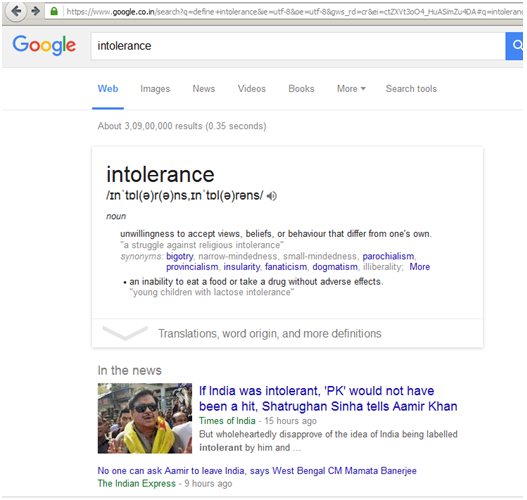
    Before, going any further on my analysis I thought to get a definition of intolerance. No doubt I searched on Google (actually dictionary) for meaning of intolerance. Here is a Google screenshot of the definition – “Unwillingness to accept views, beliefs, or behaviour that differs from one’s own.” The definition on Dictionary.com is – “unwillingness or refusal to tolerate or respect persons of a different social group, especially members of a minority group.

    Based on the above two definition I started scrutinizing current state of affairs. The killing of Mr Kalburgi in Karnataka falls under the definition of intolerance. The Dadri incident happened in UP recently also falls in that category (both the definitions). I had criticized the same earlier – Tolerance. These could be stray incidents, and also how can we make Centre Govt liable and responsible for state level incidents? Especially when these have happened in states where Govts are of opposition parties?

    In recent past I did not see any such incidents that were anything new. We are tolerant to many encroachments by Mandirs, Masjids and organizations affiliated to political parties. We are too insensitive to many things including terrorist attacks to killing of animals or people trying to save them. Surprisingly there was no hue and cry recently when a person (of one community) was killed by a group of people (from another community), who was trying to raise voice against cow slaughter in Karnataka (news link).

    The next question is – if it is intolerance; do the minority groups feeling insecurity across India? Perhaps they are feeling as they have been for last so many years. Well, the other apt question could be – how do you define minority? According to census of India 2011 (Population distribution), there were few religions namely; Hindu, Muslim, Christian, Sikh, Jain, Buddhist and 2 options no religion & others, effectively making eight divisions. So, if we divide 100% population by 8 divisions it comes out to be 12.5%. The definition of minority should accordingly be – religious group which has population <=12.5% is minority. According to this definition in 12 States & UTs Muslims are not minority (includes UP), in 8 Christians are not minority, Sikhs in 2 and Buddhists in 1. So, should we ask questions about how other groups (minority) are feeling in these states?

    Also, before anyone concludes that I’m a BJP sympathizer I had been India Against Corruption enthusiast and therefore for many AAP supporter. However, I have kept my abilities to analyze open and have no political affiliation.

    Here are two recent examples and therefore I think this could be termed as intolerance

    China – China bans Ramadan fasting in mainly Muslim region

    Switzerland – Switzerland overwhelmingly votes for burqa ban with £6,500 fine for Muslim women who rebel

    So, I in this post, I tried to define intolerance, made my opinion on the same. Also, since the definition of intolerance had “minority group” in it, I tried defining that too. In the end I gave example of what could be termed as “intolerance”. Certainly that kind of thing has never happened in India since ages. Only remembrance of that historically is when Aurangzeb applied Jazya tax. Read details here – Jazya Wiki and Aurangzeb Jazya tax.

    I posted on twitter

    Penalty of apostasy in Islam is Death! That is intolerance. I do not see any intolerance in India.

    Here is a link of discussion I am having with one of my childhood friends. We studied together, we were in Engineering together.

    https://www.facebook.com/krdpravin/posts/10153691538450149?ref=notif&notif_t=comment_mention

    My point is simple define intolerance first and than ask if India has changed in last so many years or last 2 years?

    My take – India has not become intolerant as discussed by many!

  • Terrorism – Silent Majority doesn’t count – Solution please!


    If you are unwell, you cannot think of anything better, do anything better. So it become very important to get well first. If we as a humanity needs to grow, we cannot talk about spirituality in isolation. We have to find a solution to the problem of terrorism. A hungry man should not be taught religion – he needs food, a sick person needs a doctor / medicine.

    I think, In my previous blog the premise was completely incorrect. Fanatic followers of anything do not listen to the argument of others. I was trying to find a solution of Islamic world through the Buddhist teaching. However naive that attempt was, it was a genuine and earnest attempt. Somewhere fundamentalist and even other moderates need to learn from the Buddha.

    I have been thinking about solutions with reference to terrorism. A small guy, sitting in one corner of world wonder how many and who would listen though – yet thinking about a solution! We cannot talk about business, economics, human development or spirituality if we are facing a threat to life on a daily basis. So a solution to terrorism is of paramount importance. For argument sake – lets assume whole world becomes Muslim. The next question will be – which Muslim? Shia or Sunni or Ahmedi? There are 70+ different division of followers of Islam. So don’t you think the next fight would be who is a “True Follower”? Well, the stream of questions would be endless.

    Recently someone sent me a video on whatsapp, it was worth a thought. I can’t corroborate the statistics so I am not commenting on the same. Question is excellent and so is the answer worth introspection.

    The point in this video is – Silent majority does not count. So whoever it is (currently the whole Muslim community) needs to think. The Buddha taught to “question and experiment with everything, once you are convinced accept it otherwise do not”. When I read about the Buddha’s life story I read – he told his followers to even refute and go away if they are not convinced.

    Here Richard Dawkins says the same (the following video was a suggested video when I searched for above video). I am impressed with the point of view of Mr Dawkins (55 sec onwards).

    I know people – specially Muslims friends – will question about what is happening in Myanmar. Muslims are being killed there so is it what the Buddha taught? Well the Buddha did not teach that and Buddhism has no history of violence, lets ask about other religions, does any other religion – except Jainism – has similar roots of non-violence? Certainly Islam spread through violence – Indian history is full of that.

    If you’re a silent majority – in this particular case of Terrorism and Islam – you do not count! Raise your voice and teach your fellow followers what is wrong with them. The whole humanity is at risk who knows these random acts of terrorism will convert into full blown world war and every person will have to take side? Last word – Raise your voice.

  • Instructions – Sleep


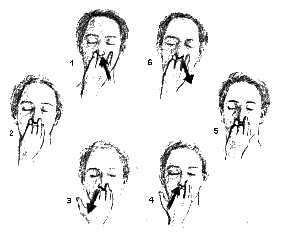
    1. Put your left hand in Chin mudraanuloma
    2. With your right hand thumb close right nostril
    3. Middle two fingers of right hand on forehead
    4. Ring finger of right hand on left nostril
    5. Close left nostril and open right nostril
    6. Breath in with right nostril
    7. Close right nostril
    8. Open left nostril
    9. Breath out with left nostril
    10. Breath in with left nostril
    11. Close left nostril
    12. Open right nostril
    13. Breath out with right nostril
    14. Breath in with right nostril and repeat the process

    When I heard these instruction while doing alternate nostril breathing (Anulom Vilom Pranayam) I was thinking these instructions sound so complicated and small but too many to follow. Yet when you practice this it is very simple.

    At times it is easier to DO than following instructions or even listening to them, isnt it?

    I read on a website that (Source) – “it (alternate nostril breathing) is a calming centring practice that will help you to unwind from your daily activities”. Another website which lists 12 benefits of this Pranayam states that it helps improve your quality of sleeping. (Source). The last sentence I want to reiterate is – at times “one must just do it

    The topic of LBC Sleep (Generally, I change these topics a bit) suggested by Padmum for the weekly Friday Loose Bloggers Consortium where currently eight of us are supposed to write on the same topic every Friday (This time too I am bit late). The seven other bloggers who are expected to write regularly are, in alphabetical order, AshokgaelikaaLin, Maxi, Padmum, Rummuser and Shackman. Do drop in on their blogs and see what their take is on this week’s topic. Since some of them may post late, or not at all this week, do give some allowance for that too!

    Image source – http://www.indovacations.net/yoga/anuloma-viloma.htm

  • Mumbai’s Vada pav


    This video I checked a couple of weeks back somewhere. If you do not understand Marathi, read the subtitles perhaps watch twice.

    Liked the video thought to share it here.

    Source – Pocket Films – Short Films Channel

  • Convenience or simplicity


    I had just landed from a developed nation back to India. The first experience at Mumbai airport was as usual – Humidity! I came out from the airport and boarded taxi to home. The driver – though driving taxi in Mumbai for about 2 decades – took a longer route. Exposed me to very shabby roads and potholes etc. I reached home to find out that there is some issue in water distribution pipeline of Municipal corporation. Corporation would not do any work until end of the rainy season! Just imagine – there is water all over on roads but not at home. All this made me almost utter to myself – “What the #@%^&*#” you know what I mean?

    Drop meeting OceanThough, this thick skin got in the groove of the problems quickly – actually there was no option :). I told my wife (her name is ‘Simple’) and in a way to myself too – “Simple, during summers, I – as a teenager – used to go about 1/2 KM or more to bring about 50 lts water on my bicycle about 4 times daily. We are far better off now, don’t worry this time will pass. Also, the quality of water we use to flush our toilets is far better than potable water at some places!” The real problem was storing water when our society ordered for tankers. We did not have more than 2 buckets – 15 lts each. When we shifted to this locality we were told there is water 24X7 here, so there was no need either.

    These things connected a number of dots in my mind. I did not write last week about it because of our Independence Day. At times I wonder – how long we (average citizen) will try to save these corrupt politicians in the name of patriotism. Just imagine countries of northern hemisphere have a lot of snowfall, but their roads don’t have potholes, their airport function. Wonder what happens when the temperature is in negative, how does water supply work in there during winters? In India that – too one of the most developed city – in Mumbai we observe – water on runway so flights are delayed, its raining so we wont fix pipeline!

    The other thought was – before my marriage I was more of a nomad total stuff I had with me were my 3 C’s (cloths, consumables and certificates) and 6 carton books. After marriage I started buying required things e.g. a bike, washing machine and fridge. Now, when we faced water shortage I realized this list will grow and the things we will own will include things we never imagined we will buy. One is here – water container. Now, next time if I get robbed – read what happened last year – and this water container is missing I know someone needs it more than I do and municipal corporation is responsible for this.

    These seemingly different points – comparison of India & other countries and my owning up things (at times having limited usage in my life) made me think about convenience and living life with simplicity. The water container was a requirement, which sooner or later may not be. I have learnt – from Mahavir and the Buddha – “no hoarding, no stealing etc. They taught that we have forgotten, we will leave everything here but still we want to own stuff.” Now, I am calling all those things written above as – “convenience”, “required to make life easier”. But how long we would keep on mending the definition of convenience?

    This blog relates to LBC (Friday Loose Bloggers Consortium) blog topic but not exactly the same – simplicity. Other bloggers who write regularly are, in alphabetical order – Ashok,  gaelikaa,  Lin,  Maxi, Padmum,  Ramana Uncleji,  Shackman and The Old Fossil. Do drop in on their blogs and see what their take is on this week’s topic. This time I was the one who posted very late, do visit blogs of others they must have posted their opinions too.