Category: Buddha

  • Constraints and contradictions


    This blog from business to the Buddha was started when I was completing my MBA. Few of the sessions on economics, marketing, Organizational behavior and supply chain made me realize that there is more common to business, economics, management and spirituality; in particular concepts of Buddhism than what we think. Though I used to feel it since I moved to Mumbai a decade back in 2006. This thought moved into a wordpress blog – business2buddha.wordpress.com because MBA gave me not only a formal education in management but also time to think about the relationship. At that time, I never thought that this choice of writing can be such that I keep on writing for 7 long years. Of course there was a hiatus in 2017 due to some other personal commitments. My thoughts have always been on finding out relationship between business / economics concept to spirituality (in particular Buddhism). The fascination makes me feel that we are on a path of moving from “me” to an “us” society. A society from competition to co-existence, from Business to the Buddha. I wish this comes out to be true.

    Off late I am hearing a lot about “mindfulness”. Some months back Harvard Business Review wrote about it. Initially it made me happy. I was thinking that mainstream is accepting the concept which I had been writing about for some time. Occasionally, I feel that this “mindfulness” thing has become more of a buzzword than a real practice. Hope it does not end up being – six sigma, innovation, analytics and big data type hype. The purpose of mindfulness is for “self”, in effect helping organization and society. Hope mindfulness does not end up like the other buzzword of management jargon; hope people do not end up making it a business and “whats in it for ‘business‘” alone and keep it more practical and individual practice than a corrupt practice of survival of business.

    The contradiction here has been the approach. I have moved from Business to the Buddha. The movement from business to the self and self realization and coexistence. The approach of management jargon seems to be the other way round. Making business out of the mindfulness or possibly trying to get “competitive advantage” or some sort of “benefit” for business from the path.

    I am optimistic about the move from business to the Buddha. In fact when I realized that I might be making a mistake of showing or possibly thinking of a movement from Business to Buddha I bought a domain – www.SaintInSuit.com though I am yet to write on that. I am thinking that I will let people write on the website – their experiences, their relationship between business, management and spirituality. The idea is not to restrict to the Buddha alone. There are other methods, thoughts, concepts and teachings on the path of spirituality that have strong affinity to business. Though I personally can recount more examples on business and spirituality with Buddhism than other religion.

    The concept of Saint In Suit is a thought of middle path, the method that says one can be spiritual without renouncing. One can do business without negatively affecting his/her personal choice of following spirituality. We (predominantly in India) think that there is a constraint between business and spirituality, however we miss out – Saint Kabir was a businessman, so were many others just few examples Gora Kumbhar or even the worst you can think of Kanhopatra was a prostitute. Even the Buddha at a later stage of his life accepted that – one does not necessarily renounce to self-realize.

    There is neither contradiction nor constraint of being a saint yet a businessman. Though, I am worried if people make business of mindfulness specially when it is a showoff than for real change.

    Constraints was a topic for LBC in Sept 2017, as usual I changed the topic a bit and wrote on it well past the week when it was due. You can see what the other writers of the LBC have to say in their respective blogs.  Maria, Ramanna Uncle ji, Ashok and Shackman.

    Image source – first image my creation and second image – Image source – http://www.bravefury.com/six-reasons-men-should-do-yoga/

  • Decision making


    One can make a decision or gets into a situation of decision making only when one has choices. Choices at times spoil us or confuse us.

    I would not want to write much when I have a great video to share in relation of this topic – it is about life, choices and decisions.

    Decision making is (LBC topic) Loose Bloggers Consortium topic where MariaRummuserAshokShackman and I write. You can visit their blogs and read their thoughts on the topic.

  • Future shock – watch our act


    I have forgotten why world war I started. One needs to read and remember history for that. However, I do remember that after the war there were some very heavy penalties on the losing side. These penalties eventually resulted in world war II, isn’t it? At times it comes in this little mind that our present actions determine possibilities of what twist future might take – perhaps that is what is future shock.

    Let us take another example – wars are not good for anyone, everyone knows this, yet countries (specially the politicians of the countries) create such situations – be it North Korea or United States, these days China is pressurizing India. I wonder why politicians want to control people and their mind – specially in China – and to own land and other things?

    I – though not a political analyst – see it as diverting India’s attention from Pakistan orders where China is making CPEC, to move away Indian troops actions against Kashmiri terrorists. I wonder if all these events convert in any disaster of war, because everyone will start taking sides in such cases to provoke world to an almost extinction. All these are present shocks and not future shocks.

    A shock is always in the present, not in future! Let us take an example of end of world war II, the nuclear explosion was a present moment shock and loss. We may argue that it was a possibility. However, I still maintain, shocks are always in the present, in fact any experience is in the present. Take an example of climate change, recently US president rejected it in G-20 summit.Climate change is a present shock a truth that we are facing on a daily basis. As a society we never looked at it by asking ourselves what are we doing? We were running behind growth, cutting trees, polluting air, water and soil. I came across this video some years back thought to share it here

    Our past acts become our future shocks, yet these ‘past’ acts were ‘present’ when performed and the future shock is observed in the ‘present’ again. So any future shock is a mirage, everything happens in the present, only thing that we can do is – watch our act! Be it climate change, or owning the world (winning landmass or controlling others)

    On this note – I leave you with these two videos –

    Future shock was (LBC topic) Loose Bloggers Consortium topic where MariaRummuserAshokShackman and I write. You can visit their blogs and read their thoughts on the topic.

    PS – Author knows there is a book with the same title, he hasn’t read it though. author knows the definition of future shock by Alvin Toffler, yet tried defining and understanding future and shocks in his own manner.

  • Hidden potential


    I had inflammation of gums recently and was not able to eat properly. Instead of looking for solution first, I started looking for causes why I had this swelling? Root cause of the same of my eating roasted corn. So, next time onwards I will be careful when eating roasted corn. Currently, I am having backache, all due to wrong postures while working in office seating in office.

    We do not even notice small integral parts of our body such as gums or back until we have a trouble with them. These parts exist and function as per their role in the physiology of our body, yet we are in oblivion of them, until those have some issue – for us those are almost nonexistent until they let us know they exist and have some limits, in my case it was backache and gum’s swelling. I had kept on noticing gums every time I put something in my mouth, back is reminding me of it’s existence until now.

    What is hidden? Hidden – to us human beings – is something that we cannot perceive. The gums and back was something hidden until I had troubles there, it existed physically, I knew it existed but I did not notice it.

    Perceptions are another limitation, our perceptions are limited to our five senses. If something exist beyond these senses we may not know of it’s existence such as noise beyond a certain range.

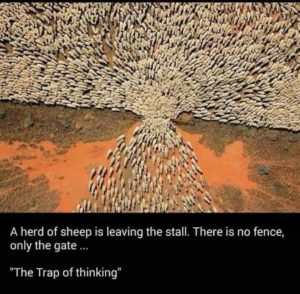
    We cannot see air, it does not mean it does not exist, we know air is there because our sense of touch can feel it – breeze or cold. A seed has a possibility of become a tree, that is it’s hidden potential. We cannot see it manifested and thus we do not believe in it; that is our problem. Our perceptions are actually created by our previous learning. In the image here, there is no gate or fence, it is all in the minds of sheep.

    I have written on it earlier on perceptions and specially here what I learnt from Sai kaka, about our past impressions –
    Sanskar yukt chaitanya jab (संस्कार युक्त चैतन्य जब)
    1. chintan karata hai to usko chitt kahate hai (1. चिंतन करता है तो उसको चित्त कहते है)
    2. manan karata hai to usko man kahate hai (2. मनन करता है तो उसको मन कहते है)
    3. nirnay karata hai to usko buddhi kahate hai (3. निर्णय करता है तो उसको बुद्धि कहते है)
    4. asmita ka bhan karata hai to usko aham kahate hai (4. अस्मिता का भान करता है तो उसको अहं कहते है)
    inme se sansakar nikal jaye to jo bachata hai vo shuddha chaitanya hai (इनमे से संस्कार निकल जाए तो जो बचता है वो शुद्ध चैतन्य है)

    A rough English translation of the same is –

    When a conscious filled with rituals (or say the lessons learnt about ‘way of living’, include religion)

    1. thinks we call it mind (imagination)
    2. contemplate we call it Mind [there is a difference between Chitt and man which I am not able to translate in English]
    3. makes a decision we call it intellect
    4. perceives pride we call it Ego

    Now when the rituals, religion or ‘way of life’ learnt, get out of this conscious mind, what is left is the pure consciousness.

    It means “pure consciousness” is blurred by our different (Sanskara) learning about life. Therefore in some cases religion becomes a problem.

    This is the problem of our perceptions such as we think East is far different from the West. Can we try experimenting – a kid born in Say US should be reared in India and vice versa. Would these kids grow up to behave in similar manner such as US born kid raised in India, would behave like any kid born and raised in US and vice versa? When we talk about East Vs West our perception are based on the “sanskar”, at times those are the hidden potentials.

    Hidden potential was an old LBC topic, I wrote on it today. Loose Bloggers Consortium is where MariaRummuserAshokShackman and I write. You can visit their blogs and read their thoughts on the topic.

    Image source – unknown currently.

  • Education


    I and my wife were rushing to our offices on our two wheeler. This a routine happens daily (include Saturday for her). Actually, this race to office is common place in Mumbai. Many go without interest and many others like us go not only with choice but also to make a difference. Yes, sounds strange – what difference one person can make? But this is how I and my wife take our jobs “very seriously”. This race starts in the morning at about 7:30 AM and ends at about 7:30 PM in evening or later. Now, do not ask – how much difference we have made in our respective companies or our own life. When I ask this question to my self – at times I feel as if we both are running on a treadmill. We are running very fast but are not reaching anywhere on a treadmill.

    This day was no different, we were on our two wheeler, it was not raining. Rain had played a lot of games with us recently. Whenever we were wearing raincoat, it didn’t rain. It was bit sunny and therefore we thought its may not rain today, hopefully by we reach office. Suddenly it started raining and raining like anything, yes this was shocking but happens. So instead of rushing I stopped our vehicle at a bus stop shed and we both wore our raincoat, besides we waited for rain to subdue – it was not very cloudy so we knew it wont rain for long. Ten minutes and it stopped, we started our rush to office again, this time we did not take off our coats.

    In these ten minutes I learnt something interesting – some times, “it is ok to stop in life instead of rushing.” On the contrary it was good to take that break in this particular situation rain stopped.

    When are we going to teach such things to our coming generation? I thought that we teach many things to our children however most of the time, it is for economics returns and not necessarily for living a fulfilling life, just an example – instead of rushing and running just being. An after thought of this question is this – education is a very formal approach, whereas learning is informal. Learning is – stop somewhere instead of rushing; on the contrary education – that is a formal one – makes one assuming rushing to the destination is the solution. Before anyone makes any opinion about my thoughts – I am not trying to undermine education (certificate based formal teaching), it is required to help an individual to be economically better off and help the society take an example of Kashmiri stonepelters – if they get a regular job they wont unnecessarily go out to support terrorists.

    Education was last week’s LBC topic where Maria, Rummuser, AshokShackman and I write weekly. You can visit their blogs and read their thoughts on the topic.

  • Melting pot


    I am sure when we read the title we all will speak about culture and nation. My take apparently is no different. India as a country, culture and in terms of way of life has been a melting pot of thoughts. If we look at Mahabharat time – there were many kingdom fighting from one side or the other in the war. The range goes from present day Afganistan to South East Asia and Kerala.

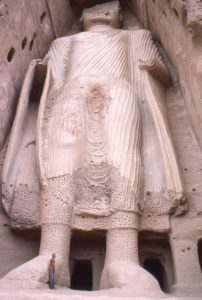
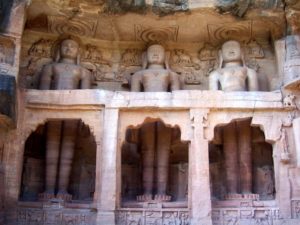
    Afganistan reminds me of Bamiyan Buddha statues. The smaller statue was so big, check photo (sourced from Wikipedia), that a man standing at the foot measures only till the ankles. The statue reminds me of Gwalior fort Jain tirthankar’s statues. No wonder, when I saw them some had disfigured heads.

    The Buddha was basically from Nepal. He came to India for his quest of spirituality. India at that time too, was a confluence of different ways of life. Buddha studied with same master’s who were worshipers of fire, some teachers were of Yoga and Indian philosophies. After learning so many things we was still not self realized. After six years of hardwork, following many different teachings – including fast he was emaciated and almost on the verge of death. That day he was enlightened. Lord Mahavir was his contemporary – he had a different teaching. Both the teachings blended in Indian culture.

    Indian culture basically accepts many different approach of spirituality and religion. The best blend you can see is Bhagvad Geeta. It talks about Bhakti, Gyan, Dhyan and Karma yoga etc. Every chapter in the book is a type of Yoga – yoga means addition. What does a melting pot do – it mixes everything. Right? That is what Yoga is. I have written on Yoga earlier too – including a debate and court case in the US – whether Yoga is Secular or no!

    The question on secularism moves me to another dimension of India. We are secular, and in last couple of years Indian intellectuals (apparently others are equally intellectuals but are considered lesser) have returned awards for lynching of a Muslim Indian citizen. It was a sad incident in the state of Uttar Pradesh during Akhilesh Yadav Government (Samajwadi Party, which apparently is more Muslim centric political party). Recently, another lynching happened – a police officer was killed – muslim Indian citizen – in the state of Jammu & Kashmir, this time state Government is a coalition with BJP (more Hindu tilting political party). Last time the intellectuals returned awards, this time no one came forward! This is all economics of power.

    Economics reminds me of an interesting fact of Indian politics. The best economists – Mr Manmohan Singh and P Chidambaram – came up with farm loan waiver in last decade. When a non economics expert can understand that it is not a solution why a renowned economist takes such a decision – a melting pot you see. The decision was a confluence of politics in economics.

    All the above thoughts are in a melting pot here. My thoughts mostly are  multi-directional – so this blog moves from socialism to capitalism and spirituality to business etc. The melting pot includes few dreams I have – one is here, add to it wish to help Sindhutai Sakpal‘s Orphanage, Art of Living foundation projects and rainwater harvesting in Malwa region of MP. I wrote to one District Magistrate, never received a response, not even from CM’s office – is this a participative government?

    Melting pot was this week’s LBC topic where Maria, Rummuser, Ashok and Shackman write weekly. You can visit their blogs and read their thoughts on the topic.

  • Sunrise or sunset


    Though sunrise and sunset are human perception, yet if with this limited perception we look at the concept we can learn – 1. something that has a beginning has an ending and 2. every coin has two faces.

    Our perceptions are illusions in this case the setting of sun or rising of the same. These perception create our reality even if half truth. Remember watching matrix? At one place in the first part of the movie, a kid says – Remember, there is no spoon! In the matrix there was no spoon, in the context of sunset and sunrise there was the concept of only visibility. Isn’t it? We only see setting sun because it’s not visible to us once it is set from our side of world. Whereas in reality it is on the other side.

    When writing this blog I came across a video on illusion, here it is (source unknown).

    After watching this video you would realize that there were many things that you perceived were put in specific manner but were not the reality when camera angel change. Our perception of reality many times are the same.

    Our such perceptions make us relate to everything in binary such as sunset and sunrise or bad and good . Just imagine if we start living at north or south pole, in these poles there is day or night for 6 months. Would not it be weird? Specially for those who live around the equator when we are used to seeing relatively even duration based day and night. This is why it is better to have a day and night, sunset and sunrise, good and bad everything happening around us. Otherwise life may become monotonous. Imagine how can we value lord Rama if there were no Ravana? In all these perceptions and illusions, the goal is to go beyond the false perception and be unflapped.  I cannot get a word for that in English – the word unflapped in negative of something (un-). I can just hope the meaning is conveyed.

    Sunset or Sunrise was the topic of LBC. I always miss out on OR in such type of blog titles of LBC, I am kind of integrative – I read the topic as AND. You can see what the other writers of the LBC have to say in their respective blogs.  Maria, Rummuser, Ashok and Shackman.

  • Perceptions and illusions


    Off late, I have – kind of – become forgetful. One of my friends shared someone’s phone number with me, a couple of days later, I bet with him that I ddin’t get that number. We checked Whatsapp, SMS, emails and not to miss address book too. I almost won the bet, thankfully it was not a monetary bet. I still kept on searching – in my “notes” app too I could not find. My friend told me the whole incident and I got a hunch, I think he did share the number! But to my utter surprise I could not find the number anywhere.

    Well, I asked him that number again, he was bit annoyed yet gave me the number. I recalled – he had shared such number once – though I did not remember the whole number. It made me think about what happened in this situation? This incident made me understand that many a times we take things for granted, we tend to ignore many things. When we ignore things we are likely to be bodily at one place and mentally at another – in some fantasy or illusionary world. Isn’t it? The illusion we create through such mental images either become our perception or mend it and thus our limited (or at times incorrect) realities are created. For example – my forgetting my friend’s sharing the number with me as “You didn’t share the number”. If such incidents are not realities how do we know what is reality? In fact I think we need to ask ourselves – what is reality?

    Life is simple – the illusions we assume as reality make it difficult. The fantasy we create are based on our perceptions or our belief of some reality. Our perceptions make our life difficult isn’t it? Let us say – an illusion – “our religion is under threat!” If a religion is one of the biggest in terms of number of followers – what is the threat?

    We are so preoccupied with our own illusionary world that we miss many small things needless to say important or that which are the realities.

    I suggested this topic for LBC, however for last couple of weeks I was not able to write regularly. You can read my fellow bloggers post on this topic at – Ramana uncelji, Shackman and Maria. I am trying to catch up with my backlogs of weekly blogs on spirituality, management and business.

    Related blogNo judgement – its all about perception

  • The Supernatural


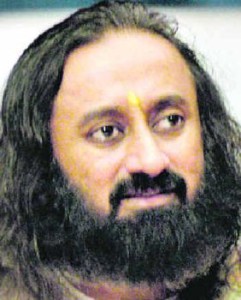
    I follow the art of living foundation and have done a couple of courses of Art of Living. The founder Sri Sri Ravi Shankar (fondly called as Guruji) keeps on sharing his wisdom on many topics, one such ‘Ishavasya Upanishad’. You can search on Wiki or Google about what are Upanishads, a summary can be found here.

    The following commentary by Sri Sri on Ishavasya Upanishad is very interesting and profound, was shared with me by someone recently.

    Tena bhunjitha

    …The world is there to enjoy but not clinging on to it, renouncing it, letting go, you relax. When you relax, you are able to enjoy better.

    Ma grdhah kasyasviddhanam

    Don’t covet other’s possessions.

    When everything is done by God, what is the purpose of my living? This question on the purpose of life passes through every mind, the so called intelligent mind, at least. If you consider yourself intelligent , this question must come to you at some point or the other. It should have bugged you actually. Is life just eating, sleeping and doing your routine? Is that it? What is the purpose? What am I here for? I am sure this question has come into your mind. What’s the purpose of life? The seed has started sprouting. Don’t be in hurry. It is very good. This question must pass through your mind. It invokes the Spirit in you. But hold on. Though you don’t want to do anything at that time and nothing seems interesting, the Upanishad says

    “Kurvanneveha karmani”

    Keep doing your work and live for 100 years.

    “Kurvanneveha karmani jijivisecchhatam samah Evan tvayi nanyathetosti na karma lipyate nare”

    (Let every man wish to live for a hundred years while performing karmas in this world. Other than this, there is no way; karmas do not bind the man)

    There is no other way you have to. There is no other way. You can’t take your life off. Knowing that all this is permeated by the Divine, keep engaged in activity and live for 100 years. When you are doing an action for yourself, for gaining something, it is painful but when your action is just the sake of action or for contributing something to the Existence because you are here to contribute, then it will not bind you. If your focus is only on you, if you are a taker, how much can you take? That is when the mind gets tired.

    But if you are a giver, if you are here only to give, the action does not bind you. When you take, you feel the obligation. When you give, you feel the freedom. Keep acting and live for 100 years. Your wish should be to live for 100 years. There is no other way. You are born and till your death, you have to keep acting…


    We are mostly takers, we just enjoy possession. If we learn only the above part of Ishavasya Upanishad life will become very easy, isn’t it? We are supernatural, we have forgotten that.

    The process of learning, unlearning and relearning keeps on happening, I was robbed and I learnt something. Later on, I again started hoarding (owning up things), the execution, plan and reality keeps on messing up in the path of spirituality and business both! We may be supernatural – as the masters, mystics, messiah – but we miss it by millions of miles.

    The supernatural is title of the Loose Bloggers Consortium. Other bloggers who write regularly are, Ramana Uncleji, Shackman and Maria. Do drop in on their blogs and see what their take is on this week’s topic.

    Source – Sri Sri talk on Ishavasya Upanishad.

  • Imaginations, ‘The holy book’ & religion


    Occasionally I read some or the other story from the book – Prayer of the frog by Father Antony de Mello. The book is available in two volumes Prayer of the Frog Volume 1 and Prayer of the Frog Volume 2. The books have small and very interesting stories. One of the story I read recently is somewhat brazen, I must warn you – you may feel offended. So, read keeping your sword, words and hatred for me or late Father de Mello aside. Feel free to comment on the story.

    Stories are nothing but imaginations, some write book based on imaginations, other write blog :). There are few that are worth contemplating. One must always be inquisitive, that inquisitiveness gives opportunity to grow, learn and do something worthwhile.

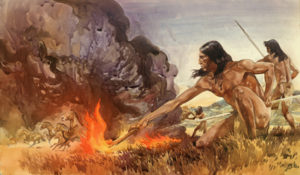
    The art of making fire

    After many years of labor an inventor discovered the art of making fire. He took his tools to the snow-clad northern regions and initiated a tribe into the art—and the advantages—of making fire. The people became so absorbed in this novelty that it did not occur to them to thank the inventor who one day quietly slipped away. Being one of those rare human beings endowed with greatness, he had no desire to be remembered or revered; all he sought was the satisfaction of knowing that someone had benefited from his discovery.

    The next tribe he went to was just as eager to learn as the first. But the local priests, jealous of the stranger’s hold on the people, had him assassinated. To allay any suspicion of the crime, they had a portrait of the Great Inventor enthroned upon the main altar of the temple; and a liturgy designed so that his name would be revered and his memory kept alive. The greatest care was taken that not a single rubric of the liturgy was altered or omitted. The tools for making (ire were enshrined within a casket and were said to bring healing to all who laid their hands on them with faith.

    The High Priest himself undertook the task of compiling a Life of the Inventor. This became the Holy book in which his loving kindness was offered as an example for all to emulate, his glorious deeds were eulogized, his superhuman nature made an article of faith. The priests saw to it that the Book was handed down to future generations, while they authoritatively interpreted the meaning of his words and the significance of his holy life and death. And they ruthlessly punished with death or excommunication anyone who deviated from their doctrine. Caught up as they were in these religious tasks, the people completely forgot the art of making fire.

    Postscript – if you are offended, perhaps you value the book more than the invention!

    It has happened with many religion in the world that we started value of the book than what was the actual useful method. This approach has resulted in a lot of conflict and is resulting in the conflicts.

    Imaginations was the topic for the week for LBC (Loose Bloggers Consortium). You can read other LBC authors opinions here – Maria, Rummuser and Shackman.

    Image source – http://listovative.com/top-11-inventions-changed-world-forever/

    Story source – The prayer of the Frog