Category: Buddha

  • How do you define winning?


    I am trying to keep pace with my work and personal life. It is difficult to get time to read books these days. So, whenever something comes up I read it, not necessarily a book. Here is one interesting read for you –

    —–

    An experiment was done with fourth grade children (reference The Payoff Principle) in a school – a game of stomping balloon. Each child was tied a balloon on his/her leg. The objective of the game was to pop others balloon while saving your baKid-Balloonlloon. The person who is left with intact balloon would be declared winner.

    The children in one group played the game with full commitment and stomped balloon of others as quickly as possible. It was a battle of being pushy, offensive and powerful to get others out of the game. Within no time all the balloon were stomped.

    This same game was played in a different school with special children. They were given same explanation as the previous group, but this group played the game very differently. Since it was a group of differently abled children perhaps they were not clear of instruction. This group understood the game like this – “we have to pop the balloons”. These kids were concentrating on balloon to pop and move on to next rather than saving their own and the other child as the target.

    These kids started helping each other pop the balloons. For example – one kid took his balloon and held it in hands so that other can pop it. Once that was popped, the other kid took the balloon tied in his leg and held it, someone popped that balloon. In some time, all balloons were stomped. It went on like this for some time until the balloons were popped, in the end every child cheered and every child won!

    The author concludes – ” …we tend to think another man’s success as one less opportunity for us to succeed. …in our world we have one top dog…” “…If we ever find yourself in that enviable position, we will fight like a mad man to maintain our hold on it… How are you playing your game?”

    This is where the difference comes into play. The concept of this blog Business to the Buddha is similar, we need to change the perspective of our world, our own-self and things will change only to improve.

    Image source – https://pixabay.com/en/balloon-happy-child-infant-kid-154183/

    Story source – The Payoff Principle (Google Books sample)

  • Profit based healthcare


    Every business or industry remains in business if and only if it provides some solution to the society. Isn’t it? Guns and grenades are there for providing security to borders of country, however bad it sounds when some mad-man opens fire injuring or killing innocent people but the industry and its prime motive remains. Healthcare is a similar industry which tries to save – as against the concept of weapon manufacturing industry – lives.

    “Profit based healthcare” is interesting point to ponder upon. There is a saying in Hindi – “Ghoda agar ghaas se dosti karega to khayega kya?” I dont know the exact idiom for this in English, but we may say – “deer and tiger can not walk together” or “what will a tiger eat, if it befriends a lamb?” It is interesting to write on healthcare and profits. It is a perfect conflict. It is fine to have profit when doing business, that profit makes one live life comfortably. The point of a moral dilemma is – how much is too much? What should one select social good vs individual benefits? Social requirement vs greed! If there is no possibility of profit, would anyone consider getting into this industry? Would the industry survive? If this industry does not survive can we as human survive? Effectively, it is a circular logic and therefore a dilemma too.

    health-is-wealthBefore getting into these questions let us first know healthcare and profits a bit. Healthcare is defined as maintenance or improvement of health of human being. This could be done by any means right from diagnosis to treatment. Healthcare involves health professionals and other health related professionals include – pharmacists, medicine producing companies and insurance companies – in some ways specially where cost of healthcare insurance is a huge business. Profit is excess over the revenue or the money a firm / individual saves after all the expenses incurred to generate some revenue.

    As per some data healthcare industry is one of the fastest growing covering as much as 10% of GDPs of developed countries! At the same time healthcare is a basic necessity. The 10% of GDP and industry growth rate makes healthcare a lucrative business instead of a social / welfare work. No question on running a business successfully and making money, no one can  argue on that, but making a hotel out of a hospital (many large private hospitals in India), charging exorbitant fees, prescribing expensive (or a preferred brand) medicine are the questions one may ask on expensive healthcare and thus making healthcare more of profit based curse on society than a basic necessity.

    Last month, one of my family member underwent an operation, insurance cover helped us to a large extent. Currently, also I am writing this blog post sitting in hospital. Insurance is another thing which is good but again at times makes healthcare expensive. Though, health insurance is good to have in India. India also happens to be relatively cheaper compared to developed world.

    In India another difference is that Doctor’s write brand name of medicine which makes Doctors as primary customers of pharma companies a news here (Doctor’s junket). There is a different turf on which the pharma world is contesting in India that is IPR a much talked about case in India Novartis Vs Union of India WSJ news. Recently, couple of doctors were imprisoned in Mumbai for running a kidney racket (Hiranandani Hospital Powai). Is it what we call healthcare? Nope that is criminal or only profiteering there is no health “care” in that. But if we are talking about expensive healthcare, there has to be a discussion on how much is too much?

    I have only understood these concepts for live and profession – moderation, balance and compassion, what have you? Check Ramana uncleji’s and Shackman uncleji’s opinion on Profit based Healthcare on their blogs.

    http://business2buddha.com/2012/12/03/for-profit-businesses/

    http://business2buddha.com/2013/06/25/marginal-analysis/

    Image source unknown.

  • How do you identify your mojo?


    This LBC (Loose Bloggers Consortium) blog title was suggested by yours truly. It was not a suggested topic in real sense, it was a question raised in mail to all the 12 long time authors of LBC; though only a few write on LBC now. When this question was sent, I was under an impression that Mojo means – your one or few passions that you can do best or something you enjoy doing or something you would do without cheating even if no one is watching you.

    The topic sounds strange when you replace mojo with my assumed meanings. How do you identify your passion, or how do you identify what you enjoy doing? Does not it sound weird. You dont find these things, you just know it!

    Ready to Race

    My problem had been different – I had enjoyed many of the things. As a kid whenever I took something up I took it up very sincerely and seriously, an example is improving mathematics. When I played I played just to win (more here). When I was in NCC I did everything possible to be the best cadet. Anyways. So, mostly if I got involved with something, I was involved passionately. Thus came this thought, how does one find out one’s passion? I did whatever I did with complete sincerity and commitment so I think I dont know what is that something I am passionate about intrinsically. So how can one find one’s passion. This was the question I asked my fellow authors! Do I know what I am passionate about? For example writing on management & spirituality is that I am passionate about? Because besides this I do other things too, so can I learn from others that how do I identify my passion. This was the reason the blog title came into existence.

    So the question itself was incorrect if I review the dictionary meaning of Mojo, which is influence, charm or magic spell. I do not know what is my magic spell. I think I need to go back to few of the potential alliances whom I met for my marriage proposals. I know few of them rejected me – perhaps they can tell me what is not “that good” in me! I am surely going to ask my wife about it.

    Now, when I am looking back at the topic, I am wondering – why should one know about one’s mojo? Do what you enjoy doing or find what you enjoy doing and just do it.

    This knowing / doing point at times confuses me – knowing my mojo (passion or charm) is one thing, utilizing it for achieve something is another. In conclusion on this conundrum I would like to quote a Zen master

    “…The significance of our life is not experienced in striving to create some perfect thing. We must simply start with accepting ourselves. Sitting brings us back to actually who and where we are… Self-acceptance is the hardest thing to do. If we can’t accept ourselves, we are living in ignorance, this darkest night. We may still be awake, but we don’t know where we are. We cannot see. The mind has no light…”

    Missed it earlier – read thoughts of my fellow blogger’s on this topic at Shackman and Rummuser.

  • Thoughts are the Vehicle


    Have you watched / read “Alice in Wonderland”? We will comeback to that soon :). “My Favourite Vehicle” was a kind of banal topic to write on still I thought about it.

    What do you use vehicles for? For traveling, isnt it? Well, before going further, I thought to look at meaning of Travel. Travel means to make a journey, to go from one place to the other (Webster and Dictionary). I have traveled on/in many vehicles right from bicycle to airplane, including horse-cart too. I used to look up to horse-carts when I was a kid, I loved horses always. Where all have you traveled?

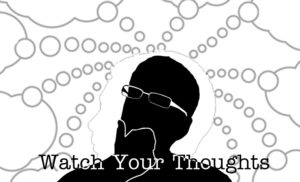
    watch-your-thoughtsI thought about vehicles and travel, aha! I had an insight. My favourite vehicle is – rather I would say my favourite vehicles “are” – my thoughts. They take me anywhere I want to go irrespective of space and time. In fact many times they take me wherever they want to take me. Last year this time I was in Canada, my wife came later. We have been talking / thinking about our wonderful time in Canada.

    Do I have a control on my thoughts? The answer is Yes and No both. Many a times I control them (as right now, when I am writing) and some time the thoughts take me anywhere they could connect the dots. Thoughts are most powerful vehicles we have. They not only have the power to take us to a wonderland (Alice’s wonderland) but also have the power of imagining future and innovate. Look at what I started off and what I am writing now – My favourite vehicle to Alice in wonderland! Isn’t it true that our thoughts are the best vehicle to take us anywhere? Even for that matter, my blog title “Business to the Buddha” I was told once, you connect the dots that seem very disconnected (paraphrase). This is the power of thoughts.

    Thoughts, imaginations and vision create the foundation for what we want to achieve.

    Thoughts, imaginations and vision create the foundation for what we want to achieve. Vehicles (means) help us reach there, isnt it? For example – a thought to go hiking can help you make a plan, take action, suit-up for it and go do it. Imaginations can help you think of making Star wars (in 1977 – hats off Mr Lukas) actions here become your vehicle to achieve it. Similarly a vision of a leader (business or social / political) can help a group decide to do the unthinkable. These are some representatives of thoughts. However, here I am talking about the thoughts themselves as vehicles. The Buddha had said “Your worst enemy cannot harm you as much as your own unguarded thoughts.” So board the vehicle of thoughts carefully.

    [Tweet “Your worst enemy cannot harm you as much as your own unguarded thoughts.”]

    If it comes out to select a vehicle which is my choice, that is difficult. Because I base my choices based on situations – if I am taking a leisure ride I am fine walking or with a bicycle, but if I have to go attend a meeting or some function – I may be fine taking a car, bus or scooter who knows a plane.

    Just realized that this blog title (Loose Bloggers Consortium) was for last month and my thoughts took me in Aug! May be my mind had a late spark. So now do you know the vehicle? It took me to Aug and here are some thoughts on my favourite vehicle. Check out few other blogger’s (Shackman, Rummuser) favourite vehicle. I am sure you would love to read their take on favourite vehicle. How do you commute? What is your choice of vehicle?

    Image source – http://www.theprasanthireporter.org/2015/01/watch-your-thoughts/

  • Purpose of life


    targetHe wanted to become an engineer since his childhood, perhaps even before reaching his teens. It was not easy to get into an Engineering college those days so he had to toil, stop his extra curricular activities and concentrate on studies. The hard-work paid off, now, he was pursuing his engineering and it was a dream coming true. He asked himself now what? Well, let us enjoy this education and become an engineer what else?

    With passage of each year, the question of “now what” became more prominent. He wondered what next? He thought to take up administrative services as his next goal. He filled the form, UPSC responded – instead of the admit card they had sent a letter – “your age is less than 20 years as of 31st July so you cannot take this exam in the current year.” He could have waited one more year but then his father was about to get retired in few years so except finding a job nothing could come to his mind. So, he set another goal, crack campus interview. By grace of God or he was lucky or may be because of his abilities he could secure a job on campus without much difficulty. He still had couple of months on campus to complete his final year. He was happy he got what he wanted. Thoughcliparti1_dream-clip-art_04.jpg this pleasure was short lived, his mind started playing tricks with him again – “Now, you have a job what next?”

    He was a dreamer, ambitious and committed person. So, he kept on feeding to his mind – “I will work hard, prove myself.” So, the mind probing – “You have achieved what you set as your goals without much of difficulty so sure you will get those too, but what next?” He responded to the mind – “well, I would get promoted faster than anyone else!” Mind was in no mood to end the questioning – “What after that?” He said – “I will buy Hyundai Santro. Work hard, get promoted, buy Honda City. work harder buy a house. Work hard, get promoted buy a bigger house.” He couldn’t think beyond these simple cycles of Work hard, get promoted buy car, buy house and again go back to work hard. So the mind said – “Ok! you would get retired one day doing all this, isnt it?” What after that? Why are you going to do all this? What is the purpose? Can’t one survive in smaller house? Can’t one be happy in smaller home? Can one go beyond becoming a CEO? What next? Is there an end to your carving? Is there a full stop? Why are you doing or planning to do everything? What is driving you? He slept questioning this to himself.

    He started asking himself – “Why I do what I do?” “What is the purpose of my life?” He came and asked me – “Dada (elder brother in some Indian languages), whats happening? Why we run around, except filling two square meal in stomach, do we have any bigger goal in life? Is there something beyond the physical world that we should strive for?”

    I asked him – What is the purpose of your life? He said – “I wanted to be an engineer, now I am completing engineering. Next thing came in my mind was a job. Thankfully I got that too in campus interviews, but now I am questioning myself what next? Why? How? What for?”

    I told him – there are various reasons you are running from one goal to the other. These can be put in bigger buckets such as – emotions, social acceptance, materialistic wealth. I cannot say why you wanted to be an engineer but when you set that goal you attached your emotions to that goal – you were “Happy” or you got a “sense of satisfaction” when you achieved it. Than that was in your hand, you didn’t bother about becoming an engineer – because you were doing engineering and there was no way you couldn’t get it any further. So your mind wandered – what next? The next thing came to you was social acceptance as in, job security. Than materialistic goal of car and home and bigger cars & homes. Your mind kept on pursuing these thoughts – that is great. Most of the time people never think beyond first level (“of owning a car to what next”) of these thoughts. But it was good that you could somehow get confused and couldn’t get to the end of your running around. Even if you think you would be satisfied, happy and socially respected when you get something, become somebody that happiness or satisfaction will be short-lived.

    Green-PastureI added – let me try to put these in further perspective – when you decided about a goal you feverishly ran to just get their. You missed the pasture in the race by just checking the milestones – “how much is left? Instead of enjoying the beauty of where you were standing.” I believe purpose of life is not just running from one point to the other making them as your goals. If you think of doing this; your goal will always be a moving target. No doubt you should have some or the other target, why not? But the purpose of your life should be being in present, staying satisfied with whatever you have, doing what best you could do to achieve your goals and yet you should not be feverish about your targets. When you die, you will leave everything here – your Hyundai Santro or Honda City or for that matter the big home you think you will buy when you are 55 (perhaps 34 years in the future!). You know Krishna said in the Geeta –

    कर्मण्येवाधिकारस्ते मा फलेषु कदाचन।
    मा कर्मफलहेतुर्भूर्मा ते सङ्गोऽस्त्वकर्मणि॥ २-४७
    Romans
    Karmanye vadhikaraste Ma Phaleshu Kadachana,
    Ma Karmaphalaheturbhurma Te Sangostvakarmani
    Meaning
    You’ve a right to perform your prescribed action, but you’re not entitled to the fruits of your action. Never consider yourself the cause of the results your activities, and never be associated to not doing your duty.
    ———————————

    So just do things, enjoy your journey, dont be feverish about collecting flags, batches or medals. Because whenever you have some medal as your goal, your subtle wish is happiness or satisfaction of getting that. So, basically your purpose is more to be happy or be satisfied. My learning in all these years has been – happiness and satisfaction cannot be achieved while your mind runs outside. You can be happy and satisfied when you are in the NOW.

    Your purpose in life can be anything – set the target, plan and execute. Why worry about future, be in the present, be happy and satisfied. Happiness and satisfaction lie in the present not in the future not in achieving the goal.

    Disclaimer – Please do not make a goal of bothering anyone else. Actually teachings of many religion – a very strong teaching of  Jainism – is not to harm others. So when you set a goal (or try to make a purpose of life) do not set it as killing others becoming a e.g. terrorist, at least consciously.

    Purpose of my life – be Zorba the Buddha. Be in the present, enjoy life to the fullest and yet be completely aware about it. It is not something to be achieved, it is something to be lived. That is what I think “enlightenment” is.

    This is an LBC (Loose Bloggers Consortium) blog post, check  Ramana Uncleji’s take on this weeks topic here and another perspective from Shackman uncleji is here Link.

    Image source -Target https://pixabay.com/en/target-goal-business-icon-logo-1151287/

    Dream – http://clipartzebraz.com/files/1/24044_dream-clip-art.html

    Pasture http://cdn.c.photoshelter.com/img-get/I00008ApAOrqwYQI/s/900/900/Green-Pasture.jpg

  • Happiness – how?


    There have been more than 10 blog posts related to happiness on my site. These posts included – ego, money, work we do, peace of mind etc. Recently, I came across a research – old one -by Dr Eric L. Zielnski. His research states that – about 50% of happiness levels of an individual is governed by genetic set, 40% by intention or say a desire and about 10% by circumstances of an individual.

    Isn’t it interesting? If we assume this research is representative we are sure to be happy if we prepare ourselves. An article on this research added that genetics can be modified by our thoughts and actions. Awesome, if we decide to be happy we can be happy at least 90% of the times, isnt it?

    I remember, when I met Dr Anand Saxena – my engineering professorsaxena-sir-25dec12 – in Dec 2012 he told me this –

    गो धन, गज धन, काज धन, सबे रतन धन ख़ान|
    जब आवे संतोष धन, ये सब धुरी समान||

    Go dhan, gaj dhan, kaaj dhan sabe ratan dhan khan
    Jab aave santosh dhan ye sab dhuri saman.

    Meaning:

    It is true that owning cattle, jewels or kingdoms is mine of wealth
    But when you own wealth of contentment (satisfaction) those mines (cattle, jewels etc) of wealth become worthless (like dust)

    To be happy one needs to be content. I think that is how the Buddha professed the four truths. There is misery, there is cause of misery and there is a way out. This way out is – being content and thats pretty much it, isnt it?

    Lastly, what I think was – the Buddha taught the path just alter that 90%, created the Sangha or community to remove that 10% chance of circumstantial challenge. Hope after joining the community people didnt get into competition of being the first to be enlightened 😀

  • Interdependence and insurance


    As it had been for last 10 years, this February also, I abhorred writing a fat cheque to my insurance company. I hated the agent who had sold me those policies and almost made a fool out of me. Yes I always felt that he duped / robbed me by selling these policies and just for the sake of saving taxes I had to pay so much as premium. I never wanted to learn from my MBA class of financial accounting on managing risks.

    Social SupportNot just that, I have received N number of calls from so called WHO, which asks for funding heart, eye, kidney etc surgery of a baby boy or a girl. These calls have always been met with a cold no, or suggesting that I have assisted in other such causes or “I am a DND registered customer why are you calling me?” These calls sound spurious so there are interesting crowd funding support system such as – Watsi, Ketto Milaap etc.

    Recently, one of my family member had to be admitted to hospital and undergo a surgery. Thankfully, this person was covered under insurance. I realized the value of insurance. I revisited the concepts of insurance. Insurance is distribution and transfer of risk. In our case, we had been paying premium for last couple of years (during this time it looks as if the amount is gone in vain). Eventually, we needed this risk manager to take charge.

    What insurance companies do is pooling and redistributing of risks. It sounds very weird. What pooling of risk means is going to many people covering them under insurance at a premium by charging some money. This premium amount is invested in different investment instruments. Whenever someone amoungst the insured faces the risk (under which the insured is covered), insurance company pays the amount as per their terms – this is called as redistribution.

    I am healthy, so for me it is a “cost” I know I wont fall sick and I am also sure that I wont die sooner, so why pay this premium and get covered for something that is not going to happen to me? This is the point young people ask themselves. But you never know when you need such assistance. There are circumstances when you may need such help. I drive safe, what is the guarantee the other person wont jump signal and bang my vehicle?

    I am not trying to sell any insurance. I am here to explain a very interesting concept that we all do support each other when we buy an insurance. If I do not and would not need that money, I am sure someone else in the pool is going to be benefited by the money which I have helped create – interdependence!

    This concept of interdependence is not new to me or to Indian philosophical system. The Buddha talked about it as one of the lessons – Interdependent co-arising. In fact when I was reading about insurance I came across this (source Insurance Regulatory Development Authority India) –

    In India, insurance has a deep-rooted history. It finds mention in the writings of Manu (Manusmrithi), Yagnavalkya (Dharmasastra) and Kautilya (Arthasastra). The writings talk in terms of pooling of resources that could be re-distributed in times of calamities such as fire, floods, epidemics and famine. This was probably a pre-cursor to modern day insurance. Ancient Indian history has preserved the earliest traces of insurance in the form of marine trade loans and carriers’ contracts.

    Is not it an interesting thing? That we support each other even without knowing and help ourselves too. The challenge comes when insurance companies reject your claim and money and greed becomes primary focus instead of helping someone in need even after covered under insurance. This blog post is already very long, so I hope reader will understand the challenges in this industry and greed seeping in the system.

    Image source – http://excusercise.org/social_support.htm

  • Ambitions, selfishness or fear?


    I was watching Gulal (A Hindi Movies by Anurag Kashyap) yesterday, somehow, it is available on Youtube.


    That movie revolves around State of Rajasthan, kings of that state and their wish to get independent Rajasthan – independent from India. At first it sounds very weird, as the story unfolds different characters start playing their strategies for their own benefits. Whatever happens in the movie, that movie reminded me of Brexit – British Exit from the European Union.

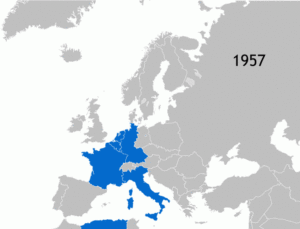
    After watching the movie, I was going through the documents of European Union. EU came into existence after two consecutive world wars. The wars which involved almost the whole world but centered around Europe. Just imagine a Europe between 1920 to 1938 (between the two world wars, or the Europe just after 1945. There was enmity, conflicts and the fight for economic dominance. This all actually ended with economic agreement! Isn’t it interesting?

    The foundation of EU was more on economic development, social development – let me call it human development. Quote from EU website – “The EU regional policy starts to transfer huge sums of money to create jobs and infrastructure in poorer areas.” Such a wonderful concept that people can cross man-made borders, do business without trouble and follow one set of rules yet their countries do not lose their identity. Just imagine all European countries making a team to compete in Olympics or Fifa world cup!

    The EU regional policy starts to transfer huge sums of money to create jobs and infrastructure in poorer areas.

    EC-EU-enlargement_animationThe union started 21st century with a couple of aims – Peace in member states, Citizen’s security, economic and social solidarity. Such lofty goals require enormous efforts. These efforts at times become lobbying for one or the other. No doubt there may have been political and business interest groups who might be trying to get better deals or benefits for themselves. This type of lobbying – or cheating in some ways – can only be stopped when there is genuine connect to develop others and heartfelt desire to help those in need. EU adds close to 20% to the world GDP, what is more important to note is – its population is only is only 7% of the world population.

    Just imagine if we get to see such geographic unions in other parts of the world, such as South East Asian Union or South American Union. These type of geopolitical, economical and social unions would require building trust first. A caution the union must only be on two fronts – economic development and social welfare. No! don’t even think of religion – religion is and must be an individual pursuit, those who make religion a group’s belief they mostly want to gain power. Also, religion is only used mostly for generating fear in the heart and mind of followers.

    The movie Gulal had a very selfish and political motive. Can we compare that story of Gulal with British Exit from European Union? At times my mind says yes and other times no. No because it was a democratic decision, based on votes from common people. The statistics says older people were not in favor of remaining in EU. Reason – they were getting affected in many respect on personal level. By the way, these old people are the same who had benefited some or the other ways from being a part of EU.

    My mind says yes because who says canvassing was not done? Who says there was no political motives, selfish goals? Who can deny all these? It has repeatedly proved that we select being individually smart and therefore we are collectively dumb – British exit from EU is an example of the same. Though we may argue that parts of Britain was against it and 51 to 49 cannot be generalized.

    Also heard that those who voted against were fearful of immigrants. I wonder how big is the problem of immigrants in Britain! Of late, the fear of immigrant is evident in a way – every morning I am waking up to a city trending on twitter. There is some or the other attack at some place, European Union was built for peace and social uplifting – not for terrorist attacks.

    My question came a full circle from the movie Gulal to British Exit to Gulal again – What drives people? What drives an individual? Ambition, selfishness or fear? I wish in future we would not be driven fear and selfishness and, in future we would see such union and countries coming together to prosper together, instead of people terrorizing and killing fellow human beings. This wish includes economic and social development – religion is a very personal affair, it should not come on streets and should not be forced.

    Disclaimer – Author supports such collaboration and unification as done by the European Union. Such unions would one day make our world more connected and the interdependence will help us embrace each other with our respect, trust and support to each other as fellow human being rather than black or white, European or Asian or for that matter capitalist or socialist. We indeed are interdependent.

    Image source – Wikipedia

  • Happy Guru Purnima Day


    Who taught you first lesson in your life? Your parents, right? They are special. Who taught you the basics to you? Your teacher, right? They are special too. In Indian culture a teacher has a special place. The one who helps you in self-realization is called Guru in Indian cultures & religions be it Jainism, Buddhism or Hinduism. This Guru is considered even more important than the Gods themselves. Saint Kabir said –

    Guruji(Hindi) गुरु गोविन्द दोऊ खड़े, काको लागूं पायं।
    बलिहारी गुरु आपने, गोविन्द दियो बताय।।

    Translitaration

    Guru gobind dou khade, kaake lagoon paay
    Balihari guru aapne, gobind diyo batay

    (A simple translation) – Almighty (the God) and Guru both are standing right here, who should I bow to? Oh master (Guru) I bestow/pray/offer to you; you showed me the path to the almighty.

    Guru is special because he showed you the path to the almighty.

    This is somewhat confusing way – yet very interesting – of Saint Kabir, he says Guru you showed me to bow to the almighty (when the disciple reached the destination). The other is I (the disciple) bow to you because you showed me the path.

    Dada GavandBoth ways this is a wonderful cuplet of saint Kabir.

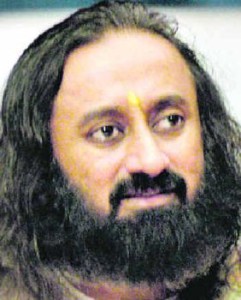
    I had the privilege of meeting few enlightened masters in my life. It has been my experience that when you are near the master (Guru) your questions dissolve. You do not have anything to ask anything to complain about. This happened to me whenever I met Dada ji (at least three times in my life time). I happened to meet Guruji (Sri Sri Ravishankar) last year. When you get to meet an enlightened master at least for the time being when you are around him/her you wont have any questions and desires that feeling is out of the world.

    Happy Guru Poornima.

  • Millennials and the future


    Old days our ancestors used to communicate using sign language. Historians have found out wall painting in many civilizations and have discussed about usage of sign languages. We humans evolved, grew and became intelligent so started speaking, reading and writing when languages were born. Or perhaps the signs were difficult to remember over a period of time, thus language was born. We have evolved. With time, a lot of developments have happened. Now we communicate across the globe.

    Development happens in cycles, so now after so much of development we have again started speaking in sign language. We call this sign language – smiley. Many a times one has to refer to the ‘dictionary’ to understand what is the meaning of that smiley. Specially that is the case with older generation (I am a part of that). Millennials are different species – well that is how media, marketeer and many people think. Millennials understand these sign language with ease. Though as per definition I should be part of millennials but I dont understand the sign language.

    Many studies state that Millennials are different compared to the older counterparts. I am of the opinion that every generation is more evolved compared to previous one. Generation of my parents were busy settling down. My generation is little adventurous, millennials are freer, more connected and apparently they have more concerns for society.

    There are many studies on Millennials, because they are going to be the biggest spender & biggest target audience for marketeers. Some studies say that Millennials are more concerned about environment, more connected, driven by sharing, more inclined towards social justice & balance and are more spiritual than religious One study. Now organizations also care for CSR, however shallow that could be. Hopefully this will be true one day – let them fake CSR until they make it. I am sure millennials will make this transition sincere with time.

    When I read about millennials I thought in another direction. Sheer size of this generation is making us note these characteristics. Of course these are key traits of this generation, but still the sheer volume is making us notice this. There must have been people in previous generation who had similar thoughts but the numbers, perhaps the ability to measure was less at that time. There are very contrary analysis also done – Millennials less spiritual and less religious too, Millennials less religious but more spiritual either these are really contrary findings or it has been the norm for generations; earlier it was not measured now it is.

    Yuga – Sadhguru. Isha Yoga

    According to Indian philosophy, the generations evolve, this happens in a cyclic fashion. Yes perhaps therefore we are moving towards spirituality now. I came across an interesting video by Sadhguru on this same thought, the video is not available now but the article is, read it here.

    If I try to connect the dots of what Sadhguru said and that of characteristics displayed by the millennials, we are likely to see a more interconnected society and more compassion and empathetic time to come. Wish my this prediction comes out to be true and terrorism stops, not by guns perhaps by the power of interdependence.

    This was last weeks title for LBC, unfortunately I could not write last week as I had two sessions on IPR – one for faculty development and one for startups those two sessions took precedence over my weekly commitments. So I missed writing. Read other’s who write on LBC here – Rummuser, Shackman.