Tag: Jainism

  • Cost of poor quality

    Cost of poor quality (CoPQ)

    In operations improvement, Cost of poor quality is a common management term. Sum total of all the costs that are generated due to defective material produced by a system is CoPQ. There are various costs defined in management systems for this. You can read more about CoPQ at iSixSigma.

    A naive example
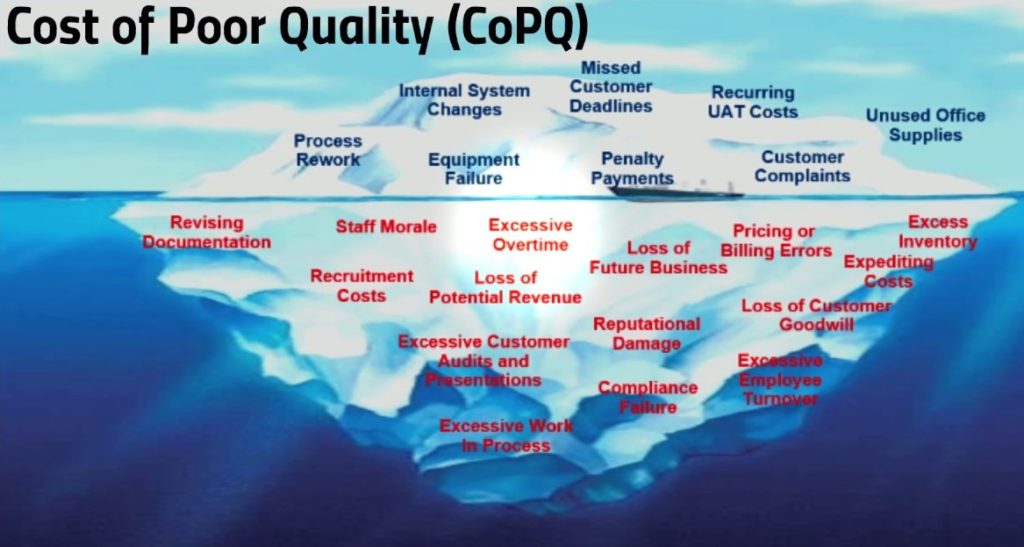
    cost-of-poor-quality

    Since, management example for CoPQ can be complicated by jargon. So, I am taking liberty of making it very layman with few variations in explanation. The context is very India-centric here. There is lot of corruption in road construction projects in Indian cities. Almost every year during rain (otherwise too at some places), these roads are full with potholes. Some people say – you need to search road within the potholes. Why go to any other city – Mumbai is a living example of the same. These roads result in – untoward events (possible serious accidents), high cost of vehicle maintenance and repairs, poor vehicle mileage and at times backache to the travelers even with good quality shock-absorbers of the vehicle.

    The evident cost, in case of Mumbai roads alone, is repairing same patch of road in single season at least 3 times.

    Example of CoPQ In life

    Terrorists – they are an example of CoPQ to society, they waste their life as well as killing other people. Say one of the person’s killed is an educated, married person with a child in his 30s. Death of this person is a loss to the Society, a talent who added to the GDP. The loss to the GDP is for about 20+ years the person could do. Family and child lost a support system. This loss of support could eventually result in inability to blossom and become a better contributor to the society. Society can be better off if a terrorist commits suicide without causing any other damage. Though it is a loss again to the society that a person is dead without adding any value to the society, however it is better than the trouble that person could be to the world.

    Depression of an individual is CoPQ for self and society. The society is losing time and skills of this depressed person. Actually, interdependent co-arising plays an important role in our society. CoPQ can be derived from interdependent co-arising too. If we understand the concept of interdependent co-arising society can reduce terrorists and depression patience.

    How to reduce CoPQ for society?

    When I was thinking about what we humans ban do to reduce the cost, I came back to the same old point – meditation, spirituality and teachings of Buddha and Jain Thirthankars. Both Jainism and Buddhism emphasis on concepts such as non-violence, non-stealing, fidelity etc. Corruption is a type of stealing and terrorism is violence. If one gives proper heed to the virtues, roads will be of good quality and if one meditates regularly his quality of live will improve multi-fold. In essence, practicing these principles the Cost of poor quality can be reduced drastically.

    Image source – Cost of Poor Quality – pt4 youtube video
  • Life is a celebration


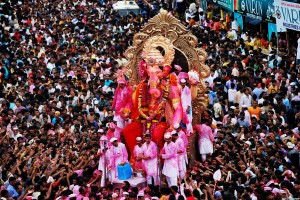
    I was doing regular weekly followup at an Art of living center today morning. While breathing, I realized Something. Probably it’s nothing new for many – the moment I took the breath in, it became me! The air I breath became me and I was nothing without it. We become a part of something be it breath, food or the environment. As a kid, I enjoyed many festivals Ganeshotsva was one of them. Slowly I started feeling it is more political than social. I was disenchanted and grew over it. After coming in Mumbai, I connected to this festival once again. Slowly I this season and festival has become a part of me.

    This festival has been teaching a lot of things to me. Have you observed something special? Almost whole year we have some or the other festival and celebration in India. We go out to submerge the deity with full funfair dancing. This is going to happening once again predominantly in Western India (Maharashtra). Every year during this festival I learn – and forget later – that life is celebration.

    Similar worship will start in few weeks in Eastern India (West Bengal) also in Gujarat. The god on the other side would be – Devi. Imagine, a deity brought home with full reverence, worshiped twice a day and in the end submerged.

    I get quiet surprised, in Indian system there is no particular festival (occasion) of mourning unlike another predominant religion. Shraddh paksh is there, but it is not exactly about mourning. Shraddh paksh is about paying respect and homage to the departed ancestors and remembering them. Probably the reason for not mourning is that we – most Indian religion – presume that there is coming back. So, why to mourn? We have to pay homage to our ancestors because of them we are here. However, they too will come back until Moksha.

    If there is no end, why be sad? Why be disappointed? Why not celebrate every moment? Had there been Ganesha, he would have loved these last 10 days, and would have danced on the way for submerging – he too would know – life is celebration. Life is a celebration, better we realized it earlier in our life time. A celebration with awareness, if not realized, “life is a trouble… death is not“.

    Whatever, good or bad I / you take in (be it food, thoughts or breath) becomes me / you. So it is a good idea to “be a celebration”.

    Moksha – attainment of self-realization, liberation from the cycle of life and death.

  • Teaching virtues to Adviti


    We were blessed with a baby girl a couple of months back. We have named her Adviti. Adviti from a Hindi / Sanskrit word Advitiya which means unparallel, peerless or no other can be like her (him). As they say in Chinese catch them young, now, I am parenting Adviti and teaching her virtues.

    In last couple of months life has changed. A lot has changed for me and specially for my wife – Simple. Having a baby is a huge responsibility and taking care of her has changed us both in many ways. A dimension is added in all these personal, psychological and emotional changes – how do we provide good upbringing to Adviti?

    Being bit spiritual, though she is just turning six months, I started reading Jatak tales to her. At times I laughed at myself – I am reading these stories to her in English. I wonder if she understand Hindi (native language) forget about English (non native language). Isn’t it difficult to figure out approach for correct (better) upbringing of kids? Has anyone figured it out?

    When I started reading these stories to her, I asked myself, should I teach certain virtues – taught in the stories – to her? I wonder in next couple of years how our society will change.

    As a kid I lived around a lot of Jain followers. During those days not eating onion and garlic was natural to me. In fact I am trying to practice their eating habits now too. Besides other concepts, the Jain philosophy teaches a concept – Asteya meaning non stealing. However, in today’s society where morally corrupt make the law and loot are mostly legalized, what is the meaning of a parent teaching such lessons to his/her children?

    I have examples of previous 70 years of corruption cases of India alone, forget about the rest of the world. The law gets bent such that corruption – even though it is evident – of these lawmakers become legally correct. It is so difficult to prove – something that looks so evident – that many corruptions happened but we cannot prove it easily – case in point is – case on son of previous finance minister. Our (specially Indian) legal system is so slow and lopsided that it takes 20+ years to get someone jailed (read Sanjay Dutt or Lalu Prasad Yadav) and prove someone innocent (A postman).

    Here, it is needless to say that Indian film industry tried proving Sanjay Dutt innocent with all the flaws. Isn’t it possible someone in future will try to paint these current politicians also as innocent? If our culture is getting a narrative that is distorted parents may have doubt in teaching virtues to their kids. Asteya – non stealing – is it just a good concept in books or religious sermons? Does it make sense to teach virtue’s to our next generation?

  • Imaginations, ‘The holy book’ & religion


    Occasionally I read some or the other story from the book – Prayer of the frog by Father Antony de Mello. The book is available in two volumes Prayer of the Frog Volume 1 and Prayer of the Frog Volume 2. The books have small and very interesting stories. One of the story I read recently is somewhat brazen, I must warn you – you may feel offended. So, read keeping your sword, words and hatred for me or late Father de Mello aside. Feel free to comment on the story.

    Stories are nothing but imaginations, some write book based on imaginations, other write blog :). There are few that are worth contemplating. One must always be inquisitive, that inquisitiveness gives opportunity to grow, learn and do something worthwhile.

    The art of making fire

    After many years of labor an inventor discovered the art of making fire. He took his tools to the snow-clad northern regions and initiated a tribe into the art—and the advantages—of making fire. The people became so absorbed in this novelty that it did not occur to them to thank the inventor who one day quietly slipped away. Being one of those rare human beings endowed with greatness, he had no desire to be remembered or revered; all he sought was the satisfaction of knowing that someone had benefited from his discovery.

    The next tribe he went to was just as eager to learn as the first. But the local priests, jealous of the stranger’s hold on the people, had him assassinated. To allay any suspicion of the crime, they had a portrait of the Great Inventor enthroned upon the main altar of the temple; and a liturgy designed so that his name would be revered and his memory kept alive. The greatest care was taken that not a single rubric of the liturgy was altered or omitted. The tools for making (ire were enshrined within a casket and were said to bring healing to all who laid their hands on them with faith.

    The High Priest himself undertook the task of compiling a Life of the Inventor. This became the Holy book in which his loving kindness was offered as an example for all to emulate, his glorious deeds were eulogized, his superhuman nature made an article of faith. The priests saw to it that the Book was handed down to future generations, while they authoritatively interpreted the meaning of his words and the significance of his holy life and death. And they ruthlessly punished with death or excommunication anyone who deviated from their doctrine. Caught up as they were in these religious tasks, the people completely forgot the art of making fire.

    Postscript – if you are offended, perhaps you value the book more than the invention!

    It has happened with many religion in the world that we started value of the book than what was the actual useful method. This approach has resulted in a lot of conflict and is resulting in the conflicts.

    Imaginations was the topic for the week for LBC (Loose Bloggers Consortium). You can read other LBC authors opinions here – Maria, Rummuser and Shackman.

    Image source – http://listovative.com/top-11-inventions-changed-world-forever/

    Story source – The prayer of the Frog

  • Morality, who is the judge?


    There is an after life, actions in past life have decided your current birth (Prarabdha) and future life will be a function of what you do in this life time. Does this philosophy remind you of something?

    The above is concept of re-birth, of almost all religion founded in India – be it Buddhism, Jainism or Sikhism no doubt Hinduism too. So, there are many questions around this. Personally, I believe in concept of rebirth but I have not understood the concept fully. What defines morality and who defines it, who and how my actions will be judged for next life? All these questions puzzled me, for few months.

    Just to give you a perspective here are few examples. 1. Say I eat non-veg (I don’t). But I don’t kill, I buy “Godrej” packed chicken. I never killed the chicken, who would take the blame of this killing? The poor fellow who killed that chicken; did it for his survival. Who would judge this situation. 2. A company does experiments on animals comes up with a cancer drug, animals are killed but many human lives are saved (prolonged to be more precise). Who to blame – the patient who fell sick of the disease of cancer (due to his misdeeds), the company (researchers, investors) or whole humanity? 3. Now replace cancer with AIDS. 4. Extra-merital affair, who to blame, if it is consensual who would decide the “punishment” for next life? etc

    I have been wondering about this, who decides what wrong I/someone did for decision on next life etc. At times, I say to myself “forget it! we get fruits of our deeds in this life time only, don’t worry about next life.” Than what happens to the belief of rebirth? Well, these questions are currently beyond me, while puzzled, I came across this video of Sadhguru so hope this question of morality dies here! Which actually has not died yet. May be I’d write on this in future too.