Category: Business to Buddha

  • Circumstances – are you a victim or a victor?

    Circumstances – are you a victim or a victor?

    Every decision you make (or do not make) in life is either driving you towards a default future or a future you want to create. Every small or big decision you make can make you a victim or a victor of circumstances. Are you a Victim or a victor of the circumstances?

    Have you ever noticed your reaction or response in different situations? If not, try to remember and re-live one of your best or worst times. Think about how you reacted and what actions did you take? Now, think as a disinterested person how could you respond to that situation differently?

    The three laws of performance
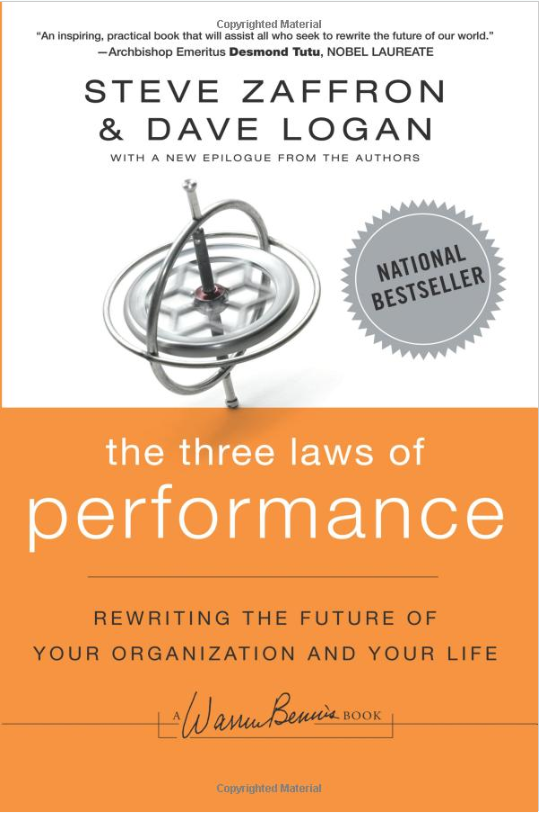
    The three laws of performance - Victim to Victor

    Let me share some of my examples and learnings about how you can either be victims or victors of circumstances and how situations can make or break you. In other words, circumstances define us if we do not learn from them.

    I am reading a book – The three laws of performance. It is an incredible – but complex – book. A word of caution – it requires a lot of deliberation and thought to work on action items.

    In one of the chapters, the authors narrate a small incidence.

    Colin Wilson, the prolific and influential British writer, was born to working-class parents from a relatively poor community in Britain. Although his ambition was to become the next Albert Einstein, he was forced to quit school at age sixteen.

    Working as a laboratory assistant, he fell into despair and decided to end his own life by drinking hydrocyanic acid. At the moment before what was to be his final act, he came to a realization. There were two Colin Wilsons, it was like two people living in the same body. One was an idiot boy filled with self-pity. The other was his “real self”.

    The idiot boy, he realized, was about to kill them both.

    From that moment on, Colin Wilson occurred to himself in a new way. He saw himself as the “real Colin Wilson” instead of the unsuccessful lab technician. He later wrote that from that point, “I glimpsed the marvelous immense richness of realized, extended to distant horizons.”

    The authors conclude in their words – When “how a person occurs to himself alters”, everything else shifts as well.

    The language of “occur” is peculiar to the authors. I tried simplifying it at the beginning of the blog.

    Did you realize anything? Out of frustration, the prolific British writer was about to kill himself. Many a time, you become victims of circumstance and take actions that you must not. Predominantly, such decisions define you. Let me share my personal experience to drive home the point.

    My personal experience – once a victor once a victim

    I was damn bad in Mathematics up to standard 5. Teach me a concept in the morning, and by evening I have entirely forgotten it. I wanted to become an engineer, though I did not know one needs to studying Mathematics to become an engineer.

    Thankfully, in standard five, I learned that I need to study Math to become an engineer. I started writing tables daily. Within a month, I could write, recite and answer multiplication till 27 verbally. I gained confidence. I started solving problems of Mathematical reasoning. Thanks to my cousins, they had competitive exams preparatory books. Within months of realizing the importance of Math for my dream, I became the victor of Math-phobia.

    Finally, I was a rank holder in the state Pre-Engineering Test.

    This situation defined me. It can help you too.

    Cut to my standard 9th and 10th. I was a very good sprinter and long jumper. No wonder, I wanted to be athele too. I was at a crossroads – dream one of becoming an engineer and dream two of becoming an athlete. At that time we Indian respected only Cricket none others as such. I left the athletics and concentrated on 1st dream. Surprisingly, I never went to practice on tracks for at least 3.5 years, my one decision, and I had completely stopped running. In fact, when I went to the track, I used to feel ashamed of even touching it forget abou running.

    I was the victim of the situation I left one dream whereas I could pursue both in the longer run. Did you realize how our situations define us and our decisions make or break us?

    There is one good thing about being an athlete at a young age. Whenever I go to a doctor, invariably doctors ask – “are you an athlete or do you play sports regularly?” Initially, I used to ask “why are you asking – I was an athlete as a teen, but not now”. They responded – “Your heart rate and BP are on a lower side. It is common for sportspersons.”

    Circumstances in business – victim to a victor

    Making no decision is also a decision. I heard this regarding previous Prime Ministers of India – PV Narasimha Rao and Manmohan Singh.

    On a lighter note – you can afford to be indecisive for political and larger reasons such as a country. Though, this is a sad thing to say or write. However, in business, one cannot be that lax. You are judged every day for your past and upcoming quarter results and long-term success. You have to perform or perish, you cannot bribe board members or shareholders to elect you the CEO again and again :). Although, it is possible to form Governments in democracy!

    In general, the decisions you make define you or define the course of the organization you are building. The decisions you make affect the near and dear – stakeholders of your life and business. Let me elaborate.

    The business world is full of case studies after case studies regarding how companies made or broke themselves. Nokia was leading the mobile revolution in the ’90s. In 2005, Sony launched Walk-man mobile phone series W. Apparently, it was a competition to Nokia. Had Nokia learned something and Apple not caught on to it and continued with its iPod – both Nokia and Apple would have been history. Apple reinvented the communication industry, whereas Nokia became a history.

    Did Apple become the victim of the competition? No. It sailed through this time with a rather winning product – iPhone. I can go on and on – be it the digital camera vs Kodak, reinvention of Domino’s in the last decade, or the Ice harvesting industry of the 1900s.

    Conclusion

    If you have seen the sailboat, It sails in different directions with the help of wind. It is up to the sailor how he wants to navigate and decide the direction of his journey.

    In every walk of life – personal or professional – we face defining moments. If we do not decide, we move towards the “default future” – as the book The three laws of performance states.

    What is a default future, you may ask? Well, the default future is – “Unless you do something radical to alter your course, the future that is approaching you is the default future.” If you take some radical path it will alter your future. In my above personal examples, it was improving Math and leaving athletics.

    In summary, the circumstances will always pose questions or force you for decisions; how and what decisions you make will define whether you are a victim or victor. Do you want to live in your default future or want to course correct to make a better future for yourself? Let me know if I can be of any help from your journey from a victim or a victor.

  • Virtue of integrity – a story

    Long back I received this story – Virtue of integrity. I liked it so kept it sharing on the blog, unfortunately missed publishing it. Now I don’t know the source where I read it, a Google search gave me this link, so assume this is the source. No copyrights claimed. Without further ado, here it is.

    Virtue of integrity

    A successful businessman was growing old and knew it was time to choose a successor to take over the business. Instead of choosing one of his Directors or his children, he decided to do something different. He called all the young executives in his company together.

    He said, “It is time for me to step down and choose the next CEO. I have decided to choose one of you..”

    3-small-lessons-from-;leader

    The young executives were Shocked, the boss continued. “I am going to give each one of you a SEED today – one very special SEED… I want you to plant the seed, water it, and come back here one year from today with what you have grown from the seed I have given you. I will then judge the plants that you bring, and the one I choose will be the next CEO.”

    One man, named Jim, was there that day and he, like the others, received a seed. He went home and excitedly, told his wife the story. She helped him get a pot, soil and compost and he planted the seed. Everyday, he would water it and watch to see if it had grown. After about three weeks, some of the other executives began to talk about their seeds and the plants that were beginning to grow.

    Jim kept checking his seed, but nothing ever grew.

    Three weeks, four weeks, five weeks went by, still nothing.

    By now, others were talking about their plants, but Jim didn’t have a plant and he felt like a failure.

    Six months went by — still nothing in Jim’s pot. He just knew he had killed his seed. Everyone else had trees and tall plants, but he had nothing. Jim didn’t say anything to his colleagues, however. He just kept watering and fertilizing the soil – He so wanted the seed to grow.

    A year finally went by and all the young executives of the company brought their plants to the CEO for inspection.

    Jim told his wife that he wasn’t going to take an empty pot. But she asked him to be honest about what happened. Jim felt sick to his stomach, it was going to be the most embarrassing moment of his life, but he knew his wife was right. He took his empty pot to the board room. When Jim arrived, he was amazed at the variety of plants grown by the other executives. They were beautiful — in all shapes and sizes. Jim put his empty pot on the floor and many of his colleagues laughed, a few felt sorry for him!

    When the CEO arrived, he surveyed the room and greeted his young executives.

    Jim just tried to hide in the back. “My, what great plants, trees, and flowers you have grown,” said the CEO. “Today one of you will be appointed the next CEO!”

    All of a sudden, the CEO spotted Jim at the back of the room with his empty pot. He ordered the Financial Director to bring him to the front. Jim was terrified. He thought, “The CEO knows I’m a failure! Maybe he will have me fired!”

    When Jim got to the front, the CEO asked him what had happened to his seed – Jim told him the story.

    The CEO asked everyone to sit down except Jim. He looked at Jim, and then announced to the young executives, “Behold your next Chief Executive Officer!

    His name is Jim!” Jim couldn’t believe it. Jim couldn’t even grow his seed.

    “How could he be the new CEO?” the others said.

    Then the CEO said, “One year ago today, I gave everyone in this room a seed. I told you to take the seed, plant it, water it, and bring it back to me today. But I gave you all boiled seeds; they were dead – it was not possible for them to grow.

    All of you, except Jim, have brought me trees and plants and flowers. When you found that the seed would not grow, you substituted another seed for the one I gave you. Jim was the only one with the courage and honesty to bring me a pot with my seed in it. Therefore, he is the one who will be the new Chief Executive Officer!

    Summary

    The author summarized the story as below

    • If you plant honesty, you will reap trust
    • If you plant goodness, you will reap friends
    • If you plant humility, you will reap greatness
    • If you plant perseverance, you will reap contentment
    • If you plant consideration, you will reap perspective
    • If you plant hard work, you will reap success
    • If you plant forgiveness, you will reap reconciliation
    • If you plant faith in God, you will reap a harvest

    So, be careful what you plant now; it will determine what you will reap later.

    Basically, the virtue of integrity, honesty, loyalty, etc is too expensive to expect from any person. Only those who are valuable and value-conscious they keep it and can offer it.

    “Whatever You Give To Life, Life Gives You Back”

  • Half knowledge

    We learn things slowly. Slow learning is ok, however continuous learning is important otherwise the knowledge becomes half knowledge. The baby steps we take make us learn, yet at the same time, if we stick to the only what is written in the book without using our brain, we may get constricted and end up knowing only what we read – result – half knowledge. It is detrimental.

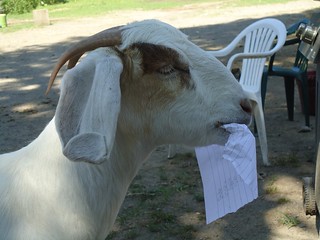
    Half knowledge is lie goat eating a piece of paper
    Source Flickr

    Half knowledge is equivalent to goat eating a piece of paper that had information. Goat would digest the paper but not the knowledge on that paper. I will share some examples.

    H for Hen ‘and much more’

    My daughter – Adviti – is learning alphabets – both Hindi and English. She has difficulty in saying ‘R’ and few other Hindi alphabets so she mixes up few things. In alphabets, she says E for Hathi. Because she knows the photo and she knows the name of the animal in Hindi. She used to say H for Tap tap (for horse). She found pronouncing Horse difficult so she said tap tap because horse runs with that kind of sound. We found it funny, but we wanted to correct it. Now we teach her H for Hen. Once we were teaching her and for something I said Hand. She got confused H for Hand or H for Hen! This is a learning process, we slowly understand that H for Hen was just for us to learn the alphabet H. H has many more alphabets be it a noun or otherwise. Imagine Adviti restricting herself to H for Hen alone! She will miss a multitude of things in life (more than 33000 words starting with H included). Half knowledge can restrict one’s horizons.

    Knowing book by page number is not knowledge

    The second incident is about half-knowledge but knowing some stuff to the T. I loved Chemistry subject, in standard 12, and especially a textbook ‘Comprehensive Chemistry’ the most. My special liking was Organic chemistry. I read the book multiple times such that I remembered the page number, the image of the page, and the content of the pages. Even after a year, when someone asked me a question, I responded – open Comprehensive Chemistry, go to page 236, it is on the left side of the book, in the center, there is a picture just below the picture read 2nd para (say the last para) you will get the concept. The answer to your question is – “XYZ”. Do not search for the book and pages now – I am talking about 1998, many things might have changed by now in the textbook :).

    Knowing such details of the book (One book precisely) did not make me an expert in Chemistry for sure. Because all that was mostly bookish knowledge with few experiments in Chemistry lab of School. At best, I had a photographic memory – not expertise in Chemistry, isn’t it? Even a Ph.D. may not say (s)he knows the fundamental subject line Chemistry / Physics completely.

    Hathiphant

    The other incident happened with my cousin brother and my eldest sister. They were talking about the education system of India. My cousin brother said there are downsides to teaching kids a medium (language) that is not the mother tongue. He recalled a neighbor who used to call an elephant – ‘Hathiphant’. This coined word is a mix of two words; Hathi a Hindi word for Elephant and part of Elephant – Phant. Merge these words and you will get Hathiphant. This confused toddler learned both words at home and in confusion made the Elephant a Hathiphant. Half knowledge can make one jumble multiple things and make a conclusion that may be incorrect.

    This has happened to me too when I was a student. We learned something and later that something became another thing (Hathi to Elephant). Let me tell you how can q kid get confused. I learned – I live in Dhar (a small city in India). Later, I learned- I live in Madhya Pradesh, lastly, I learned- I live in India. How is that possible? A 6-year-old cannot understand why and how can one person be in three different places? Later it was clear what living in three docent paves meant?. In 3rd we had nine planets, later Pluto was removed from the list, funny isn’t it?

    Half-knowledge

    Well, no it is not funny. We keep on learning. If we stop learning and improving our knowledge becomes half knowledge. This half-knowledge is harmful. Our learning makes us understand that our knowledge is limited and we are consistently adding to our body of knowledge. Alas! Some people, knowing one book, feel as if they’ve known everything. Reciting few books by page number and chapter plus paragraph didn’t make us intelligent or omniscient.

    I had a photographic memory of the Chemistry book, but I wasn’t fully aware of the field of Chemistry, isn’t it? Well, but why am I talking about it here? This applies to spirituality too, have you heard people reciting verses from books? Do they have the knowledge, mostly no? They at best have a photographic memory to vomit words from a reference book. Knowledge and experience on the spiritual path are pristine, once you hear those enlightened masters you quickly get connected. I have met a few of such masters in person, I have that first-hand experience of witnessing the presence.

    Similarly, in businesses too, not all business grads become successful managers or entrepreneurs. Becoming a successful business person requires more than the degree, knowledge, isn’t it?

    The point is, be it the path of spirituality or business, or a toddler learning language, we keep on learning and experiencing new things. Every experience is unique and thus, if we assume that photographic memory of any certain book is the knowing everything; it is – in effect – detrimental to not just one person but everyone around. On the path of spirituality and religion it a disaster for sure.

    Every situation demands a unique set of tools. I think that is why Krishna was needed on Pandavas’s side during the Mahabharat war. Yudhisthir – and all Pandava brothers were – (was) predictable. They went by the book, defeating Pandava’s won’t have been tough for Kaurava’s because they knew Pandava’s would go by the books all the time, besides having a bigger army. That is where unpredictability and Krishna’s intelligence came in handy. Experience of bending the rules could play in the hands of those who understand the situation and learn from experience. Those who learn from and are ready to learn from the experiences do not have half the knowledge. Be ready for learning, implementing, experiencing, and continuing it lifelong.

    Image source – Flickr

  • Impermanent and trifling or forever and important

    I was playing with Adviti in our building’s parking area. There were some small dead branches of a tree. On the face of it, it looked an impermanent and trifling item to me. I took it in my hand, showed it to Adviti. We started talking, I told her this was a branch of the tree above. It had leaves, that nourish the tree. Well, I did not go up to photosynthesis, Adviti is only three years currently. I questioned myself with the chain of thoughts – are things Impermanent and trifling or forever and important?

    Smiling-Baby

    Deep inside, I started feeling multiple things, one as if the branch and leaves had their own life. What I mean is – the life of a tree and the life of a leaf or branch were separate. It was a strange thought, this is like saying my hair, or skin, or nails have a separate life other than my own body. It becomes even weirder from here. How do I know that I have only “This Life” that I perceive? I have written earlier – and we all know – our body hosts umpteen living organisms. I cannot experience them therefore they are separate or they do not even exist for me, is it?

    All these thoughts were going on with the disturbing news of deaths due to Covid. I came home after the small walk with Adviti and started re-reading a chance chapter of Old Path White Clouds book. It was luck that the chapter was based on interdependent co-arising, the concept of Buddhism I love the most. news of death makes one feel a void, and question the existence. At the same time, the thought of the impermanent and trifling nature of our life comes to mind. At the same time when I think from a larger perspective, our life seems forever and important.

    Let me share some paraphrase parts of the philosophy of the Buddha on “Impermanent & trifling” vs “forever and important”.

    While The Buddha was meditating he was a Pippala leaf. Looking deeply at the leaf The Buddha perceived the leaf had a presence of The Sun, the stars, and the Moon. Without the sun, without the light and warmth, the leaf could not exist. Similarly, the leaf contained the clouds, without the rains this leaf could not exist. Similarly, the earth, time, space all were present in the leaf. The entire universe existed in the leaf. The leaf was a manifestation, it existed before and it will exist even after the physical form is gone. Impermanence is the very basis of growth.

    Impermanent and trifling or forever and important

    The Buddha’s perception concludes with these thoughts – “To accept life means to accept impermanence and emptiness of self. The source of suffering is a false belief in permanence and the existence of separate selves. There is neither birth nor death, production nor destruction. These false distinctions are created by the intellect. If one penetrates the empty nature of all things, one will transcend all mental barriers, and be liberated from the cycle of suffering.”

    Everything is Impermanent and trifling or forever and important. It is the perception with which we look at things. My understanding of interdependent co-arising makes me conclude that even the speck of sand is also forever and important – only form changes.

  • Behind our eyebrows

    The world that we see is not outside, it is behind our eyebrows unless we can qualify what we see accurately. Many times, what we see may not be the reality, it is a reflection of what we think we are seeing. Ashtavakra’s explanation is “the rope on the ground is seen as a snake because your mind thinks it is a snake”.

    Shut the mind off

    Mumbai has hardly any winter. This was Feb thankfully we were not sweating after our bath – as we do now in Apr. Thus, we feel good in whatever winter Mumbai has. As usual, this morning also I was doing my daily morning Sadhana (meditation practice). My daughter – Adviti – had just learned to enjoy a toy that moves, throws light, and plays song alongside. She had this toy with her for over a year. When we tried it a year back, she got frightened with the light, sound, and movement of this toy. However, off late, she accepted the toy, and now she keeps on playing with it. A drawback with this toy is – it does not have a volume control option.

    Adviti-with-me-Pranayam

    I was meditating and she was dancing around with the noise of the toy. After a while, I felt that I should go and stop the toy so that I can peacefully practice today’s Sadhana. Meditation aside, this thought followed up with others. First, it was a noise for me, music for her. She was unaware – as my wife and parents were too – that the sound was uncomfortable for me. The toy was the world for her, she was enjoying it with her heart and soul dancing around it, giggling, and inviting her mother and grandparents to join her. Generally, you feel elated when your child or grandchild is happy. My wife and parents were also engrossed in Adviti’s joy. At the same time for me, meditation was my world. In the same room, we were in two different worlds.

    This happened for a couple of days with me. Somehow, I could keep on continuing my practice without asking for stopping the toy. Within few days, I realized my meditation is my practice, it should not be impacted by external factors. If our mind feels something is a problem we can analyze it with disinterested reasoning or shut the mind off because it creates unnecessary noises behind our eyebrows that we do not even realize.

    The summer has set-in in Mumbai, now after the bath, we start sweating. We do not complain, we cannot change it. Every Mumbaikar has a response for summer of Mumbai – “accept it” – either put an AC at home or apply deodorant.

    Behind our eyebrows

    It happens with all of us. We end up creating our own problems. The mind makes us feel or believe something that may not necessarily be correct. Before assuming something or making a perception a verification can help.

    In March, someone accused me of a thing that neither I intended nor I did. In fact, I had no role in what was going on in this gentleman’s mind! The bigger surprise is – “I was not even the actor in what he though Mr X did, but I was the accused!” I was literally a third party, Mr X, the gentleman and I (one who had no active or passive role in actions of Mr X). I tried justifying myself to him. When I realized the mindset of the other person; I stopped defending myself. Since I had just learned a lesson with Advity’s playing with the toy I could relate the learning. I moved on thinking “if your mind is corrupted, you would be responsible for the words, actions, and consequences. How can someone help you until you are open to listening?”

    Actually, the thought in Hindi was this – “Agar tumhare dimag me bhusa bhara hai to aag bhi dimag me hi lagegi, koi aur uske liye kya kare?” अगर तुम्हारे दिमाग में भूसा भरा है तो आग भी तुम्हारे दिमाग में ही लगेगी, कोई और उसके लिए क्या करे? It would be great if someone can help me translate this effectively in English.

    Everyone lives in his own world. This world is made up of what we live in our minds. What we see is not ahead of our eyes, it is behind our eyebrows.

    After writing the blog, I searched if some enlightened master’s comment is available on these thoughts, I found a pertinent one from Sadhguru.

  • Politics, self-interest and the results

    I started writing on self-interest. However, the larger scheme of things conspired to include politics in it. Most of the time, self-interests do less good than the general betterment of everyone. All of us apply self-interest in many ways. At times, the actor is unaware that his/her actions are driven by self-interest. However, most of the time actions are more motivated with the expected end result in mind – self-interest. Self-interest that is called profit maximizing approach in game theory. However, in game theory you’ve an opponent; here the case we’re going to discuss is related to self vs the larger public good.

    A humble Indian farmer

    Recently, a final closure of Brexit has happened, we have seen farmer protest in India and even the western countries are talking about it as if the law impacts their farmers.

    Self-interest

    The king was talking to his confidant. The confidant was none other than his younger brother. He told his brother – why are you just a spectator in the courtroom? We have studied together, you know the subjects, law, and Ethics as much or better than the other ministers. You must take part in day-to-day activities and decision making discussions.

    The confidant was very insightful; he knew the functioning of the courtroom, decision makings of the kingdom, and a great deal about the ministers. A great observant, yet a humble right-hand man of the king. He responded – you are correct my brother, it is not that I have limited understanding. In the courtroom, many have their self-interest ahead of other things. Many times decisions are not made in the best interest of the kingdom but in the self-interest of the most powerful in that regard.

    I will quote a recent example. It is regarding our dispute with the neighboring kingdom for the distribution of water of the common river. Our ministers proposed a solution either based on incomplete information, or the detailed information was not shared with the committee. The reason? Our minister wanted to influence the decision in support of the other kingdom, reasons may be best known to the minister. The whispers are that minister’s brother-in-law lives and own the land touching the river and could benefit most from our agreement. The minister is corrupt and it is not unknown in the whole ministry; am I right, brother?

    The King knew all of this. He took a pause and responded. At times, you have to close an eye for the larger good of society. Let us assume we had not budged on the water agreement, it might have resulted in a war – however, limited it could be.

    The confidant said – that does not absolve you of your duty as a king, you have the power to get rid of the minister! The minister, though was not as powerful as the king, knew the inner workings of the ministry so he could rebel. At last, the king was also working in the self-interest of staying in power.

    Results

    This is how even the less powerful control the kingdom. This is how democracy undermines good governance too. An example is recent farm law protest in India. Though personally I could not make my mind for or against it as such. At times this is how organizations are at the ransom of these less powerful yet resourceful people. At times these insiders can damage the organization more than the benefit they may offer. Greed and self-interest can make a kingdom or government or an organization average or at worst failed one. There are umpteen examples of this – the Kuru clan in Mahabharat, most likely Pakistan (or other examples of the Middle East of the early 2010s) in coming years or read the HBR article. 

    In essence, though I find it difficult to write – “politics is not bad”. I may not be particularly good at it. However, the self-interest that drives many actions and decisions end up making few organizations or kingdoms average or moderately successful if not a failure. And lastly, self-interest defeats the concept of interdependence – interdependent co-arising.

  • The trusted friend

    We all have friends around us. Some friends are closer than others. A trusted friend is one who can guide us. The guidance can be about our capabilities and strength or out of our unpleasant behavior. I happened to hear a case study recently and could relate to multiple things regarding trusted friendship. A child trusts her parents. Therefore, as parent, the responsibility is immense to help a child believe in herself. A guide is important to help you realize your powers to cross the ocean – of life or spiritual progression. Read further to see how trusted friends are key to personal growth.

    3-small-lessons-from-;leader

    Trusted friend in mythology

    The whole army of Sugriva – the money king – was at the tip of southern India. The army was stuck! There was no clear path from here to the Lanka – where Lord Rama’s wife was. It is at this time that Jambvant told Hanuman what infinite power he has. He can fly, he can change his size, and he is invincible.

    How did it happen that Hanuman was unaware of his powers? Well, the story goes like this – when Hanuman was a kid, he was mischievous. His mischief created a lot of trouble. To everyone’s surprise, he was invincible, so however small he was, no one could fight with him. Besides this, he was anyways a child. Who would want to fight with a child, right? One day when he bothered some community again, a sage cursed him – “you will forget all the powers you have until someone reminds you of these again.”
    Just one sentence and Hanuman became Hanuman we know. Isn’t it interesting? We all need such friend and guide in our life who can make us believe in ourselves and remind us of our powers.

    Trusted friend for child

    We experience the same too. As a child, we hear more of what “Not” to do and what is wrong and avoid it. I am experiencing this whenever I tell Adviti – my daughter – not to do A or B thing. Oh yes, she is mischievous. I get the impression that when we tell kids about No and Nots, we create a virtual limitation in their subconscious mind. These limitations create a boundary that they start making around their capabilities and strength. Otherwise, almost every child is like Hanuman – except the flying and changing the size bit.

    This is a learning experience for me. I must change how I should communicate with Adviti. She needs to learn how to believe in her capabilities and utilize those to do certain things that “are acceptable” as non-mischievous 🙂 A trusted friend for a child is parents, isn’t it? Watch this brief video from the movie Kung Fu Panda, the lesson is You Must Believe. I just love this movie, it has many lessons in less than 100 minutes.

    Trusted friend for professional

    I was talking to one of my close friends about one of his case studies of a course. In this case study, there was a certain new employee in a company. Even though he was new his passion helped him learn technical and non-technical aspects of the job quickly. In no time, he could successfully argue about the technical stuff with his seniors and convince about his point of view to almost all. His skill set helps him climb the ladders quickly. When there is passion, supporting leaders, and no fear of failure one can grow faster. None of his seniors cut him off or short ever to let him feel about his being new, inexperienced, or anything else. This kind of environment can help a person grow professionally too. Isn’t it?

  • Dependent co-arising

    Interdependent co-arising is a very key concept of The Buddha’s teachings. The other interesting names of this concept are dependent co-arising and dependent origination. Dependent co-arising is a deep concept. The depth requires an understanding of the concepts of Buddhism. So, I keep writing at a very shallow level examples to drive home the point. Whenever I read the book – Old path white clouds by Thich Nhat Hanh I get itched to this very concept. He explains this concept in easy words – “From interdependent origins, all things arise and all things pass away.”

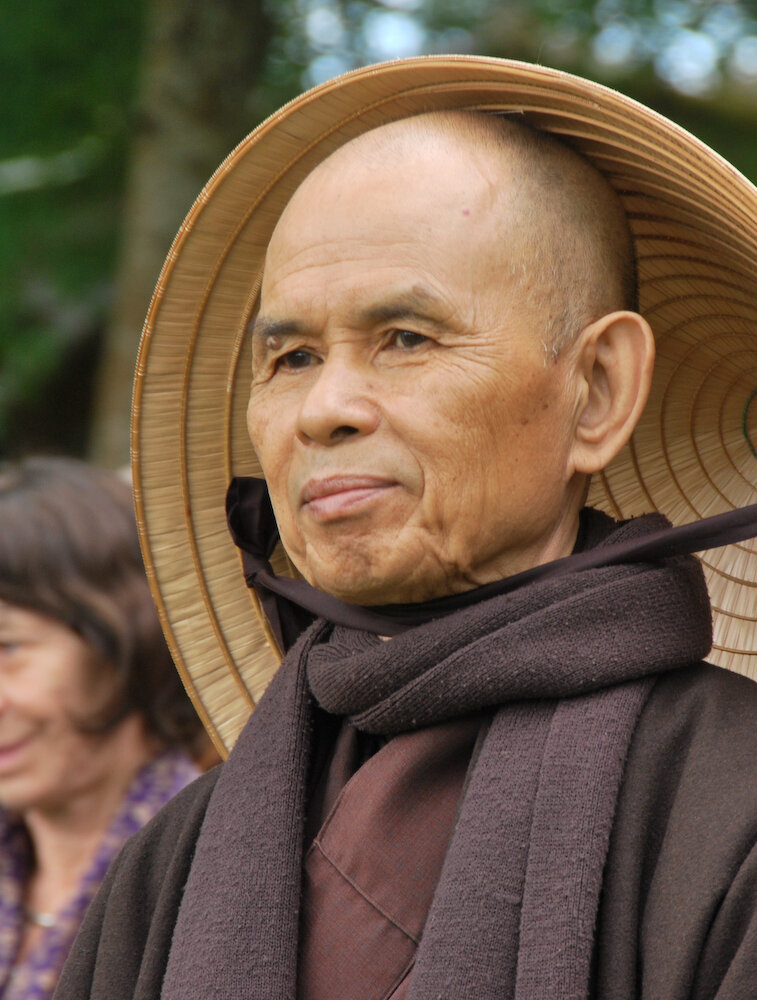
    Thich Nhat Hanh

    I have shared multiple examples specifically for dependent co-arising on my blog. These examples were shallow yet practical relationship between the teachings of the Buddha and the present-day Business.

    Here are some examples

    Vaccination and interdependence (pulse polio elimination initiate of Govt of India)
    Societal impact
    Interdependent co-arising a farmers example
    Entrepreneurship
    Intra-country example and macro-economic example

    Whenever I try to interpret this concept; besides the interdependence, this concept touches on another concept of Hinduism (or Indic religions) – the concept of Karma. Karma gives us a guiding principle of cause and effect. It is easy to understand with the help of an English proverb – as you sow; so shall you reap. A very easy example of the cycle of Karma can be seen in an episode – Lucky penny – of How I met your mother.

    However small we think we’re as an individual, we’ve the power to make an immense impact on the world. You may have heard – if a butterfly flutters its wings in Amazon forest, it may cause a hurricane in Japan. I came across this interesting Domino effect video. I could relate it to the butterfly effect and thus to dependent origination.

    Watch this and relate the accumulated energy of the bar to Karma, the first piece as the butterfly fluttering wing and in effect interdependence of everything as a cycle.

  • Deepavali, rangolis and a lesson

    Diwali is the biggest festival in India. As a kid, I used to love Rangolis the most besides other interesting stuff such as sweets. During Diwali season, making Rangoli was a morning and evening ritual for about a month from the beginning of Dussehra till Bhaiduj. I used to ask my elder sisters to make one Rangoli each that too twice a day – in the morning and the evening. Those were some days! Recently, watched a video rangoli and a lesson dawned on me.

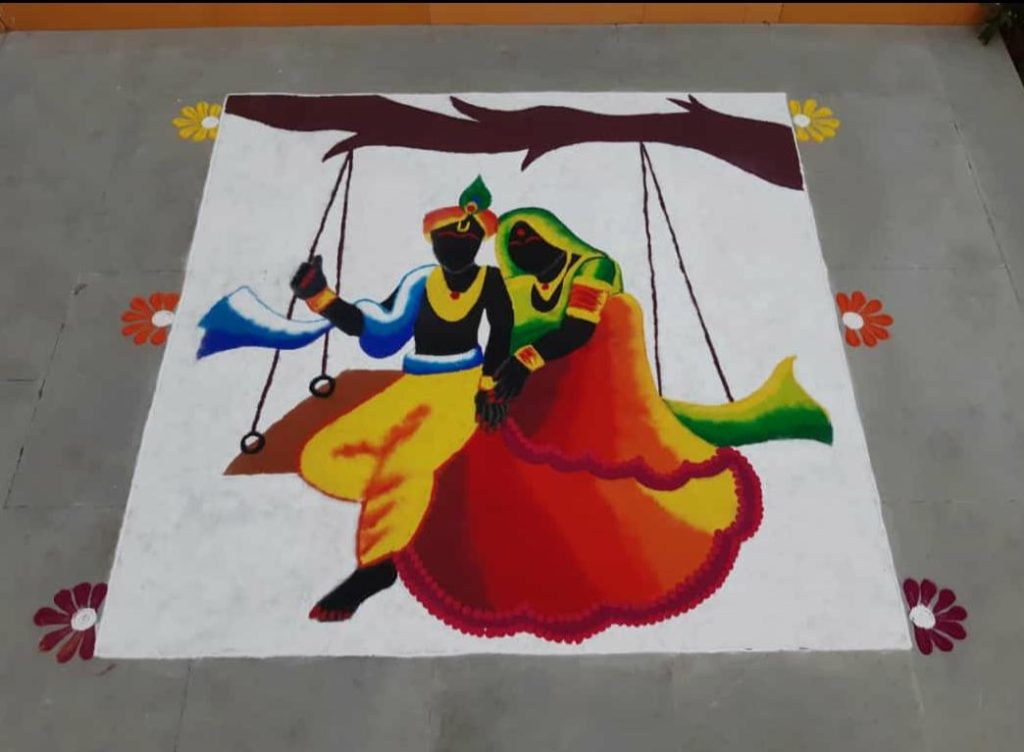
    Source – Rangoli by my friend’s niece

    Rangoli making was an elaborate process. First, bring some bricks and arrange them in a square or rectangular format. Second, fill it with mud, mostly made using cow dung. Let it dry. This is our platform for making Rangoli. We bought different colors, sample Rangoli design books, and some stationery. Further, the creation of dots required another list of activities. We bought a large piece of paper, an A0, A1 or A3 size. Then we made horizontal and vertical lines on it. Once this table or grid-line is prepared made holes on intersections with incense sticks. This paper becomes our grid-line or ruler. During the festival, clean old Rangoli every time, spread cow dung mud on the platform, let it dry for some time and start Rangoli making. Rangoli making started with making dots using the grid-line.
    About a month back, Youtube gave this link on my timeline. It is a famous Rangoli channel with millions of views for many videos. I watched one of the videos. I still like Rangolis though we do not make it in our apartment as we used to in Dhar.

    Yesterday happened to go for my yearly health check up in a hospital. This is a big hospital and during Covid, it is designated hospital too. The staff there was full with energy and making Rangoli, wearing traditional cloths, and after decorating their department they lit diyas too. In such a tough place they were full of life, and enjoying the activity. All this while, I went to different departments for check-ups and was happy to see the staff engrossed in the celebration. Even during such tough time and treating Covid patients these people were celebrating. I was very happy to see that.

    Deepavali, Rangolis and a lesson

    I was watching one Rangoli on the channel, staff in hospital, and my childhood. A thought struck me instantaneously. Rangoli making can teach life lessons. Every day morning, you clean your verandah. Sprinkle water and make Rangoli. In the evening, clean the same Rangoli that you made with a lot of interest, and love. This is a daily chore at least in many rural areas in India, especially in south India. If one has to clean it in the evening, why make it? Or why make it so beautifully? The creator knows it; in the evening after making it, within a few hours no one will be there to watch it. Still, the creator makes it with interest. The creator also knows that tomorrow morning it will be cleaned. The lesson is – even if you know you have to leave the elevator, and everything is impermanent whatever you do, do with interest, love, and full devotion.

    Happy Diwali

  • Connectedness

    The world is divided into countries, races, religions, and god knows how many different factions and sections. There may be valid reasons for such sections. However, everything and everyone is connected. Problem to one results in problem to everything else around it. We have to learn the lesson of connectedness, be it hard way or easily.

    Connectedness

    Once different body parts were annoyed with the stomach. They were unhappy that they had to procure food and bring it to the stomach while the stomach itself did nothing but devour the hard work the parts did.

    In a meeting, all body parts decided they will stop bringing food to the stomach. The hand won’t lift it to the mouth, teeth won’t chew and throat won’t swallow it. This would force the stomach into doing something.
    After all, they were part of the whole. They had forgotten this basic reality. The decision to stop bringing food to the stomach resulted in making the body weak, feeble, and brought the body to the death bed.

    In the end, they all learned a lesson that in helping one another they were really working for their own welfare.

    Interdependence

    I had written about witnessing an incident of rioting firsthand. The learning from that incident was that we must learn managing our emotions. We can learn this by learning meditations. In fact, meditation brings compassion too. Result – more balance and peaceful response to situation instead of rioting – “Connectedness“.

    https://business2buddha.com/2019/05/heart-mind-action-awareness-meditation/
    https://twitter.com/SVNewsAlerts/status/1299458895396646915
    Protest should be representative not damaging public property

    Recently, I heard of the news of riots in a city in Sweden. Similar things occurred in two of the biggest cities in India – Delhi, and Bangalore. In our selfishness, if we miss the connectedness we end up harming not just ourselves but the whole surrounding. In our shallowness, we may consider ourselves as different or separate from the other however this aloofness ends into troubling everything.

    Note – Story source – Father Anthony de Mello, Prayers of the frog