Category: Business to Buddha

  • Reigniting Interest: 7 Evidence-Backed Ways to Feel Alive Again

    It is third blog in my 4-part exploration of why we lose interest in personal and professional life, what it reveals about our inner alignment, and how to rekindle purpose through a blend of introspection, systems thinking, and spiritual grounding.

    In the first blog we explored, passion slipping away, with conclusion that “The war outside mirrors the war within.” How to know if it is burnout, boredom or an opportunity for a breakthrough.

    In the second blog we closed on The mind wants clarity. The soul speaks in signals.

    So you’ve paused. You’ve listened. You’ve realized you’re not lazy or broken; you’re just “misaligned”. Now what?

    How do you go from “I don’t care anymore” to “I can’t wait to start”?

    The good news: neuroscience, psychology, and ancient wisdom (read spirituality) all offer clues. Reigniting interest isn’t about forcing motivation. It’s about reconnecting with what makes you feel alive.

    Here are 7 research-backed ways to do just that:

    1. Rewire with Novelty
    2. Reconnect with Purpose
    3. Practice Mindful Micro-Moments
    4. Reframe the Mundane
    5. Find Your Tribe
    6. Build Something That’s Yours
    7. Reconnect with the Inner Witness

    1. Rewire with Novelty

    The brain thrives on novelty. Study from the University of California show that exposure to new experiences increases dopamine, the neurotransmitter linked to motivation and pleasure.

    – Try a new route to work.

    – Read a genre you usually avoid.

    – Take on a micro-project outside your domain.

    Small shifts can spark big energy.

    2. Reconnect with Purpose

    A McKinsey study found that employees who feel connected to a deeper purpose are 5X more engaged and 2X more likely to stay.

    Ask yourself:

    – What impact do I want to create?

    – Who benefits from my work?

    – What would I do if money wasn’t the driver?

    Purpose isn’t found. It’s remembered.

    3. Practice Mindful Micro-Moments

    Just 10 to 15 minutes of meditation a day can reduce emotional fatigue and increase focus, according to research from Harvard Medical School. In fact, at times one must take time out (I did last week therefore this blog is delayed) go for a 5 day or 10 day retreat.

    – Start your day with 3 deep breaths.

    – Pause before switching tasks.

    – End your day with gratitude journaling.

    Stillness isn’t a luxury; it’s fuel.

    4. Reframe the Mundane

    Cognitive behavioral research shows that how we interpret tasks affects our motivation more than the tasks themselves.

    Instead of “I have to write this report,” try:

    – “I get to clarify ideas.”

    – “This helps someone make a better decision.”

    – “This is a prep in my leadership gym.”

    Meaning is often a matter of framing.

    5. Find Your Tribe

    A Gallup study (with multiple articles) revealed that having a best friend at work is one of the strongest predictors of engagement. In fact, in Indian spirituality, it is called “Sangachhatvam” walking together.

    If you’re surrounded by energy-drainers, even meaningful work can feel heavy. But one aligned conversation can reignite your why.

    Seek out people who challenge you, cheer for you, and call you out.

    6. Build Something That’s Yours

    Whether it’s a side project, a blog, or a community; creating something from scratch activates intrinsic motivation. For me, it has been this blog series and I have recently created a B2B marketing framework. In fact I feel excited talking about these with like-minded people.

    It doesn’t have to be monetized. It just has to be yours.

    Ownership breeds energy. Creation breeds clarity.

    7. Reconnect with the Inner Witness

    In Vedantic thought, the “Sakshi”; the inner witness; is the part of you that observes without judgment. When you reconnect with it, you stop being tossed around by moods and start seeing patterns.

    Try this:

    – Sit in silence for 5 minutes.

    – Watch your thoughts like clouds.

    – Ask: “Who is watching this?” In fact this is one of the deepest mediation taught by “Ramana Maharshi”, I am a huge admirer of him.

    Sometimes, the most powerful way to reignite interest is to remember you’re not your thoughts. You’re the one watching.

    Reflection

    You don’t need to wait for a sabbatical, a new job, or a life crisis to feel alive again.

    You just need to reconnect; with novelty, with purpose, with people, and with presence.

    In the final blog of this series, we’ll explore how spirituality; not as religion, but as inner alignment; can become your compass in a noisy world.

  • Burnout, Boredom, or Breakthrough? Decoding the Inner Signal

    It is second blog in my 4-part exploration of why we lose interest in personal and professional life, what it reveals about our inner alignment, and how to rekindle purpose through a blend of introspection, systems thinking, and spiritual grounding.

    First blog is – https://business2buddha.com/the-silent-drift-when-passion-quietly-slips-away/

    Not all disengagement is the same.

    Some days, you feel like you’re sprinting on a treadmill that is exhausted, overcommitted, and emotionally drained. That’s burnout.

    Other days, you’re staring at the screen, uninspired, underwhelmed, and wondering, “Why am I even doing this?” That’s boredom.

    And sometimes, you feel a quiet discomfort, not from too much or too little, but from the sense that you’ve outgrown your current orbit. That’s the beginning of a breakthrough.

    But how do you tell the difference?

    Burnout and Boredom

    A 2024 study published in the British Journal of Guidance & Counselling found that boredom at work can lead to emotional exhaustion and cynicism, much like burnout, but the path is different.

    Burnout is typically caused by overload, too many demands, too little control, and chronic stress.

    Boredom, on the other hand, stems from underload that is monotony, lack of challenge, or misalignment with personal growth.

    Interestingly, both states lead to disengagement, but the emotional texture differs:

    StateEmotionCauseSymptom
    BreakthroughRestlessnessInner evolution, misalignmentThere must be more than this
    BurnoutExhautionOverload, lack of recoveryI can’t do this anymore
    BoredomApathyOverload, lack of recoveryI don’t care anymore

    Why This Distinction Matters

    Misdiagnosing boredom as burnout can lead to the wrong solution. If you’re bored but think you’re burned out, you might take a break; only to return feeling just as empty.

    But if you’re on the edge of a breakthrough, the worst thing you can do is numb the discomfort. That restlessness is your soul’s way of saying: You’re ready for the next level.

    From Signal to Strategy

    Here’s how to decode your state and respond:

    • Your Energy level: Are you depleted (burnout) or disengaged (boredom)? Or are you restless with ideas but no outlet (breakthrough)?
    • Your Calendar (Busy-ness): Too many meetings and no time to think? Burnout. Too many repetitive tasks? Boredom.
    • Your thoughts: “I’m tired” = burnout. “I’m stuck” = boredom. “I feel called to something else” = breakthrough.

    The Breakthrough Path

    I started off this exploration with boredom and burnout. But when I realized there is a possibility of Breakthrough as well, I started thinking and here was what that search resulted in:

    • Micro-pivots: Can you shift your role, audience, or medium without quitting everything?
    • Creative friction: Lean into the discomfort. Journal. Talk to mentors. Let the questions breathe.
    • Spiritual grounding: Practices like meditation, self-inquiry, or even reading the Gita can help you distinguish ego-driven escape from soul-driven evolution.

    The mind wants clarity. The soul speaks in signals.

    Burnout says, “You need rest.”

    Boredom says, “You need challenge.”

    Breakthrough says, “You need truth.”

    In the next blog, we’ll explore how to reignite interest. It is not forcing motivation, but by reconnecting with what truly matters.

  • The Silent Drift: When Passion Quietly Slips Away

    It is a 4-part exploration of why we lose interest in personal and professional life, what it reveals about our inner alignment, and how to rekindle purpose through a blend of introspection, systems thinking, and spiritual grounding.

    Read my old blog on the similar concept. Circumstances – are you a victim or a victor?

    This was one of my learnings based on an interesting book The Three Laws of Performance.

    You don’t wake up one day and say, “I’m done.” 

    It’s subtler than that.

    It starts with a skipped morning ritual. A meeting you once led with fire now feels like a checkbox. The work you once loved becomes… well, tolerable. And slowly, without alarms or announcements, the inner engine stalls.

    I’ve seen this in boardrooms and classrooms. In CXOs and students. In myself.

    But why does it happen?

    The Psychology of Disinterest

    Research in behavioral science calls it anhedonia – the loss of interest or pleasure in things that once mattered. But in real life, it’s rarely clinical. It’s cumulative.

    • Micro-disappointments: A string of unmet expectations; promotions that didn’t come, ideas that weren’t heard, relationships that frayed.
    • Misaligned values: When what you do daily drifts too far from what you believe in.
    • Over-optimization: When life becomes a spreadsheet of KPIs, and joy is nowhere on the dashboard.

    We don’t just burn out from doing too much. We burn out from doing too little of what matters.

    Is It Really Disinterest or A Deeper Insight?

    Here’s a contrarian view:  What if losing interest is not a failure – but a signal?

    A signal that your inner compass is working. That your soul is whispering, “This isn’t it.” That your current path, while logical, no longer feels meaningful.

    I’ve seen leaders who walked away from high-paying roles not because they were weak; but because they saw something others didn’t. They sensed the cost of staying misaligned. And they chose differently.

    The First Step Back: Awareness

    Before we talk about solutions, let’s pause.

    If you’re feeling disinterested, don’t rush to fix it. Sit with it. Ask:

    • What part of my life feels heavy?
    • Where am I pretending to care?
    • What would I do if I wasn’t afraid?

    Sometimes, the most strategic move is to stop performing and start listening.

    A Hint of the Spiritual

    In the Bhagavad Gita, Krishna doesn’t tell Arjuna to quit the battlefield. He helps him see it differently. The war outside mirrors the war within.

    Maybe your disinterest isn’t a dead end. Maybe it’s a doorway.

    Losing interest isn’t the problem. Losing awareness is. When we stop noticing the drift, we normalize the numbness. But when we notice it, we reclaim choice.

    In the next blog, I’ll explore how to decode this disinterest – how to tell if it’s burnout, boredom, or a call to evolve.

    Until then, pause. Listen. The silence might be saying more than you think.

  • Value for Money: From Balloons to the Breath of Life

    In the rush of boarding school bus, after the Delhi blasts in of early November 2025, a simple conversation with my seven-year-old daughter Adviti unfolded like a gentle teaching from the Buddha himself. She wondered why I hesitated over certain toys and things she adored. I struggled to convey the essence of “value for money”. A delicate balance where investment yields joy, utility, and lasting worth. My complex mind was thinking in jargons and like the economic principle of optimizing resources for maximum benefit.

    I thought for a while and was failing to get to the concept. Suddenly an idea came to mind to make this real for her young mind. Drawing from our market stroll few weeks ago, I told her about the big balloon we bought from market at 25 rupees: “What if it bursts right away, leaving no play, no laughter? Those 25 rupees vanish like mist, offering nothing in return.” Her eyes lit up with understanding, grasping in an instant what eludes many adults.​

    Value: in professional sense

    This conversation happened with Adviti as I lit the diya in our home temple. My thoughts moved to a parallel world. The balloon transformed in my mind into the fragile vessel of life itself; our prana (or life), fleeting human form, so easily burst by carelessness or violence.

    Yet this shift does not diminish the drive of daily dharma; my thoughts move to the spirituality. Though, it does not mean that professionally, I take life easily. I am competitive compared to many I see. I always strive to do things that make a difference, with a simple life goal that people remember me as a professional who punched above his weight. This is an ambition of leaving legacy, yet it naturally flows into deeper inquiry. But after that, the next step always is spirituality.

    Thus, weaving the threads of marketplace and mandir, I tried balancing these thoughts. In business, value for money demands efficiency, quality, and impact; in spirituality, it calls us to question the true return on our life’s investment. Hinduism’s karma and Buddhism’s Right Livelihood urge us to create positive ripples – for self, family, society – turning every action into Dhyan and Dana, selfless giving that endures beyond the transaction.

    Shadows of Wasted Value

    These positive waves can quickly turn into chaos when bad events disrupt our peace. I was thinking all these things and at the back of my mind, the recent Delhi blasts brought back painful memories of the Mumbai attacks I saw in 2006, 2008, and 2011, making me think how ignoring life’s value affects everyone around us.

    Terrorists squander their own lives and others’, blind to the sanctity of existence. A doctor, trained to heal, choosing instead to destroy, was completely beyond my comprehension. At the same time, I was angry, no one holds the right to burst another’s balloon, for in ahimsa (non-violence) lies true value addition for generations. Imagine channelling that education into service, not harm; this is enlightened management, where economic prudence meets spiritual awakening, fostering communities of compassion over chaos.​

    Child’s Wisdom, Adult Awakening

    Adviti, at seven, embraced value for money through play; when will the learned among us awaken to the same concept to “value of life”, the life’s greater worth?

    Invest mindfully, act ethically, live purposefully. In blending business acumen with Buddha’s wisdom, we ensure no burst leaves us empty, only enriched, connected, eternal.
    Let this simple lesson from the balloon stay with us all, like a quiet reminder during our morning aarti. It shows us how to move from everyday buying-selling to real, lasting change in life; the kind that touches our atma and stays forever.

  • My 4 Pillars of Health: Staying Fit at 45+

    My 4 Pillars of Health: Staying Fit at 45+

    I turned 45 recently! But my annual health report shows that it looks like the report is of someone in his 30s.

    I’m neither a gym freak nor a marathoner. In fact, it is evident that I do not have bulky muscle! I’d like to soon start at least light gym or exercise.

    I’m just like any professional who is fairly at senior position – juggling work, deadlines, targets, city traffic, finding difficult to get time for self or family and any other sort of stress. Additionally, I have gained 3 KGs in last couple of months.

    People asked me – how do you manage to look younger, fitter, healthier than your age? At times, I only thought of my physical appearance, and I responded lightheartedly “looks can be deceptive” and dismissed the question.

    When this question was asked too often I started thinking about possible reasons.

    When I looked deeper, I found four big levers of health:

    1. Genetics – no control, thanks Mom and Dad.
    2. Lifestyle – long hours, stress, traffic, only partly in our hands.
    3. Food – this one matters. At home, we eat balanced, mostly fresh meals. Think dal, sabzi, whole grains, fruits, nuts, everyday real food. Rarely junk. That credit goes to my wife.
    4. Spirituality – my daily anchor, 20+ years of Art of Living practices.

    My this deeper analysis has given me this insight – what could be different in many others vs what I do is combination of above. I have control on some of these and some are God’s gift. I mean parents and wife :).

    What is complete in my control is part of life style, food I eat and my Daily practice of Art of Living Sadhana. I’ve been pretty regular with it since 2004. For the past 20 years, I’ve practiced Sudarshan Kriya, pranayama, meditation – every single day. That consistency has been my anchor. It keeps my stress low, my energy high, my mind clear – and yes, those health numbers reflect it.

    You don’t need extreme diets or punishing workouts. If you anchor yourself in two things – simple, mindful eating and consistent spiritual practice – it can transform your health and your life.

    I would seriously and sincerely recommend – Art of Living Happiness Program and regular practice of the same after the course.

  • Business and the Buddha – Does It Still Stand?

    In 2010 when I started the blog Business to Buddha, my hypothesis was simple – there is a connection between business, economics, management and spirituality. At that time, I found it very logical. But today, I sometimes stop and ask myself – does it still stand true? Or was it only a nice thought to start a blog?

    I go back to Buddha’s teaching of dependent co-arising – we grow when others grow. In business language, this looks like collaboration, co-innovation, ecosystem play. One company wins, but not at the cost of the other, rather both become stronger in the process. In my first blog, I had taken the example of BMW launching Z3 with James Bond movie. Or even in racing – Ferrari and Honda compete, but they push each other to make better cars. Competition, yet mutual growth.

    That is why I felt Business to Buddha makes sense.

    But where does it not work? The reality of quarterly numbers, investor pressure, market share fight – these are not spiritual conversations. Here sometimes compassion or equanimity takes a back seat. You can’t tell your board, “let’s wait for the muddy water to settle before we act.” In these moments, spirituality looks like a luxury.

    Krishna’s Wisdom

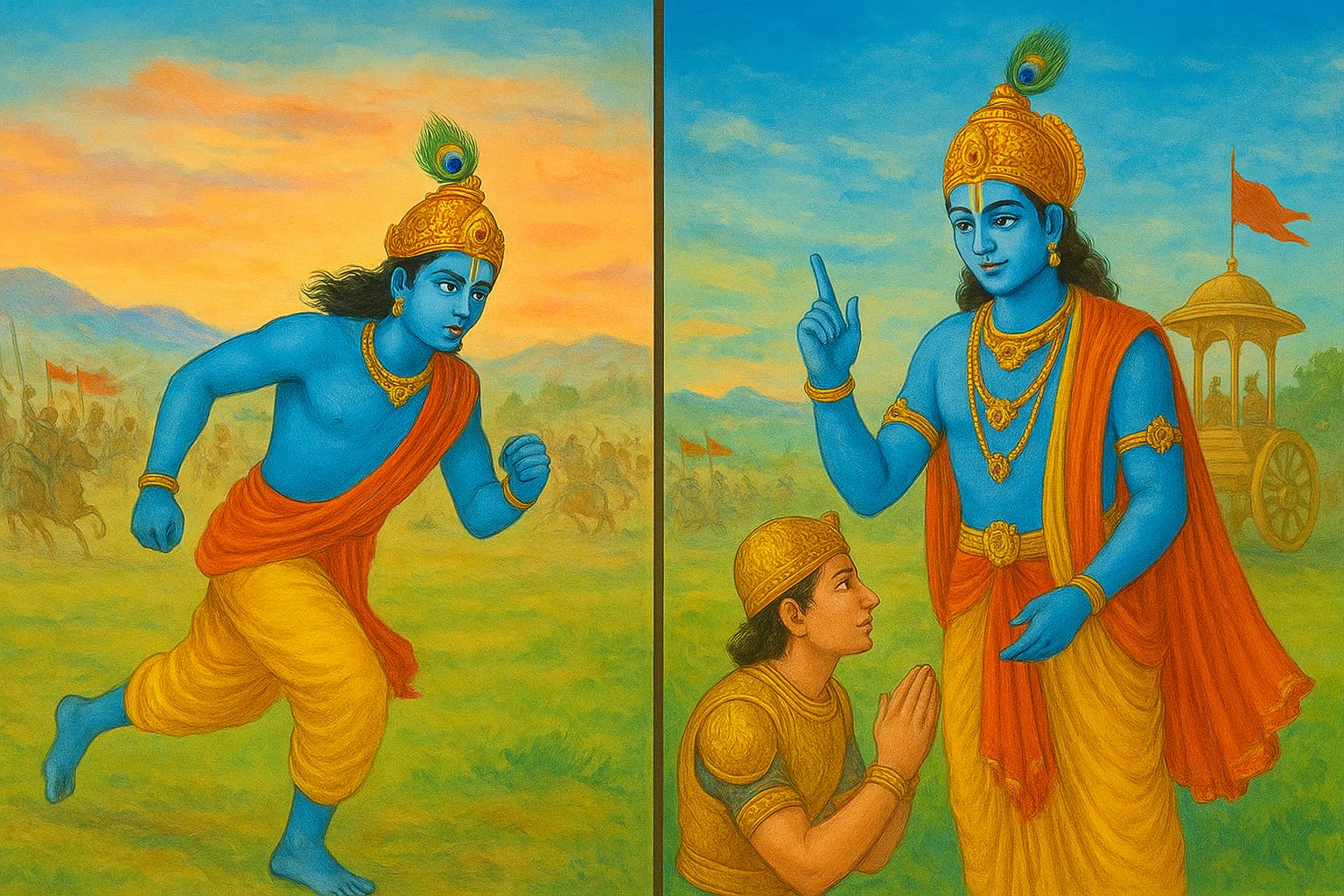
    This is where I feel balance is important. If you see Mahabharata – Krishna himself ran away from one war (Jarasandh and Kalayavan, if I recall right) but later encouraged Arjuna to stay and fight at Kurukshetra. Same Krishna, two different situations, two opposite responses. Business also needs that balance. Sometimes retreat, sometimes full action. The wisdom is to know when to do what.

    Chanakya also wrote – artha (economics) and dharma (ethics) go hand in hand. If either is missing, the state collapses. Maybe that’s what we miss today – we run only for artha and leave dharma behind.

    So does Business to Buddha still stand? I’d say yes, but not as a formula, more as a reminder. It is not that every board decision must sound like a sermon of Buddha. Rather, it is about remembering there is a middle path – between hard business realities and human values. Between quarterly pressure and long-term trust.

    The Buddha said walk the middle path. Krishna showed both – running away once, fighting another time. Chanakya tied economics with ethics. Somewhere in between these, lies the balance for us – in boardrooms, in markets, and in our lives.

    Maybe that’s why this blog continues. Not because I have answers, but because I still feel the question is valid – can we connect business with the Buddha? For me, yes – because life itself is this balance.

    Image generated using AI model

  • Hanuman in Ashoka Vatika: A Lesson in Stillness

    Occasionally, I share stories from Indian culture with my daughter – Adviti. Though, we’ve not watched the recently released movie Mahavatar Narsimha, but I have read the story of Bhakt Prahalad in the form of Amar Chitra Katha for her. I wish I get more time with her to explore, once she grows up, it would be the other way round, probably she would not have time for me.

    Last December when we went to couple of cities in Tamil Nadu, we saw strange carving of animals, seeing those I and my sister were discussing – perhaps our ancestors knew genetic modification or mutation etc thus they had animals with body of horse, head of lion and hands of humans etc. These thoughts have been very unique experience for us. My sister and I were discussing probably Indian culture was too evolved with science (say mutation) and inner science – a balance between physical realm and meta physical realm.

    These fascinating ideas are making me read further more Amar Chitra Kathas with my daughter, plus other books on Indian spirituality. I think even more about what can be additional deeper lesson in these stories? So, here is one.

    Hanuman’s wait

    After leaping across the ocean in search of Sita, Hanuman finally finds her – under the Ashoka tree, distressed and surrounded by demons. He’s done the hard part. He’s made the impossible journey.

    But now comes the real test.

    Despite his strength and speed, Hanuman doesn’t leap into action. He doesn’t rush to speak, fight, or “rescue.” Instead, he climbs a tree and waits. Silent. Still. Observing.

    He watches. He listens. He reads her state of mind. He becomes a witness, not a reactor.

    And when the moment is right – when she’s ready – he gently steps forward, offering only what’s needed: a sign of hope.

    Catch the beautiful song from that moment in the animated film Ramayan.

    The Business Parallel

    Sometimes in business, not acting immediately is the most strategic thing you can do.

    • The product is ready, but the market isn’t
    • A deal is in motion, but approvals are stuck
    • The team is tired, and pushing harder will do more harm than good
    • There are conflicts, but you have to wait – like Buddha told Ananda: wait for the water to flow, only then can you fill the flask with fresh and clear water

    The instinct is to jump in, solve, fix, escalate.

    But good leadership often means holding steady. Watching. Listening. Reading the moment before making the move.

    Just like Hanuman did in Ashoka Vatika.

  • Flow Over Fixation

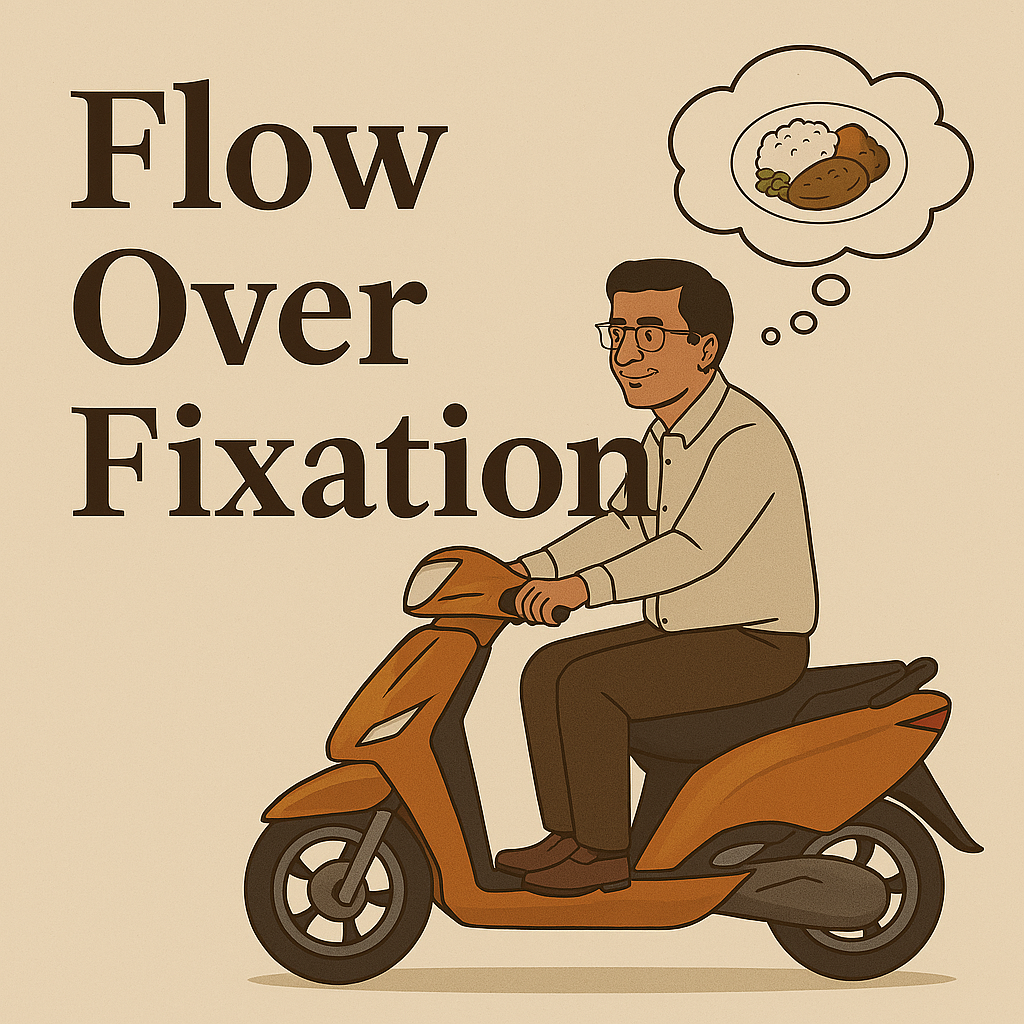
    Mind’s chatter rarely stops. On that fateful day more than a year ago, even though I was riding my two-wheeler, mind was rambling, 9:05 am I will reach home. We will have breakfast, by 10:00 am or so we will take a stroll in the society. By that time Adviti will be back from her dance class. We would get ready by 11:00 am spend some time at home and start for social gathering followed by lunch.

    It was about 9:00 but my mind had already reached lunch time. They say plans are useless but planning is important. I was preparing this plan in my head and in three minutes I was on the ground! Met with a minor accident, or that is what I thought it was. At the hospital I realized it was not a small accident.

    That one thing changed me to a great extent. I make plans, of course I worry for many things too however, I know now that in next second things may change completely. This incident reminded me of my Senior Division NCC days. I was Senior Under Officer of my company 3MP CTI. It was one of the best learning experiences as a leader. I had heard many adventurous stories shared by our trainers and Commanding Officers. One insight stayed with me: even when a plan is thoroughly prepared for field operations, the leader must remain flexible. The officer in command understands that about 70% of the plan is predetermined. The remaining 30% must be adapted based on the situation at hand. So even after planning they keep room for improvisation and course correction.

    If in a life and death situation they can keep their plans fluid, in our day today professional and personal life too we should have that wiggle room for change. However, in our daily rut we miss out on this kind of small yet very important lesson. Take an example, when you go to office on a daily basis, do you change your route often? I recall, I had to fill my car and in the self-chatter while driving I completely missed this small yet very useful thing. We become so mechanical that we miss out on things.

    That two-wheeler ride turned out to be more than just a commute – it became a quiet lesson. In that one moment, life shook me out of the mechanical rhythm we all fall into. Buddhist practice often speaks of mindfulness – being in the now, not being dragged into what’s ahead or behind. That morning, my mind had already reached lunchtime, while my body was still dodging traffic at 9:00 AM.

    We make plans, and we should. But we must also remind ourselves: plans aren’t permanent. I remember my NCC days – our commanding officers always said, “Plan for 70%, keep 30% flexible.” It wasn’t just about military drills; it was deeper. Whether in business strategy or daily life, that 30% flexibility is vital. It’s space for awareness, for course correction, for growth.

    As professionals, as leaders, and even as commuters, the lesson is the same: don’t get locked into habit. That minor looking accident taught me something major – presence matters. Even an ordinary ride can turn into an extraordinary insight, if we’re tuned in.

    We must live with awareness. Not just by the clock or calendar, but by being present to what is.

  • “When you get to the end of your rope…

    “When you get to the end of your rope, tie a knot and hang on”. This was one of my MBA batchmate Rachita’s status message. I am talking about 2010-11. I asked her, what is the meaning? Why have you put it?

    She explained it to me, the context was our tiring coursework and demanding content. I kept it in my blog drafts and I loved the concept, finally returned and writing this after 14 years!

    During MBA, at times it was difficult to even comprehend and we needed extra-classes. Later in the course, we used to discuss that MBA is all about commonsense. We laughed at ourselves and for few things we discussed how easy was the concept and we were confused!

    Many times, when we do not comprehend things in life, we find ourselves completely lost, but when the aha! moment happens the concept becomes so easy.

    Let me explain it with a story of A Potter.

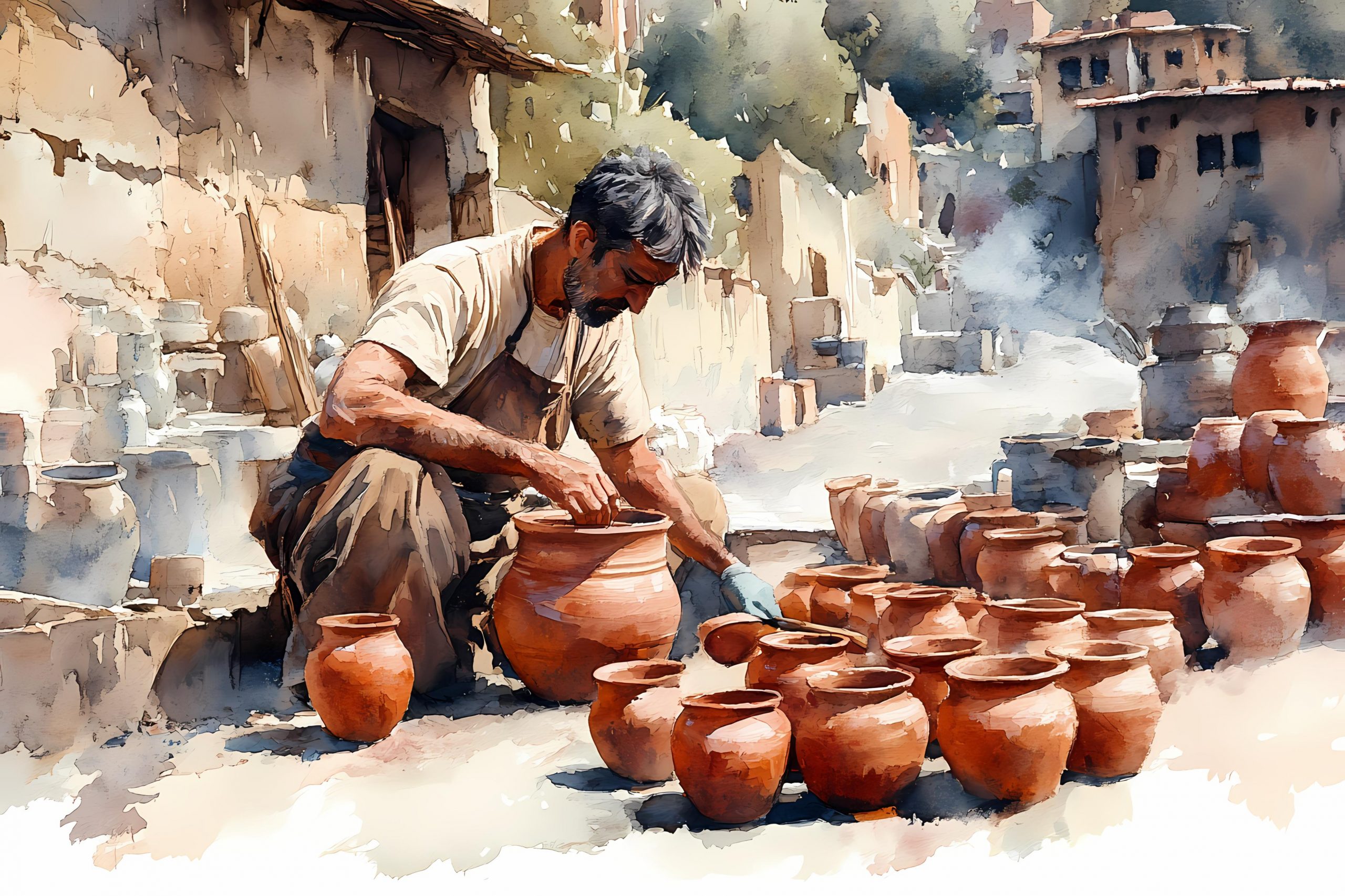
    The Potter from Banaras

    Long ago, in the ancient city of Kasi, lived a humble potter. He wasn’t learned, rich, or respected – just a quiet man who made clay pots by the Ganga. Business was erratic. Sometimes, the rains ruined his clay. Sometimes, he couldn’t afford to buy food after a day’s work.

    One monsoon season, his kiln collapsed in a storm. His year’s savings – gone. His cart broken. For a while, he tried everything: borrowing money, seeking help from traders, selling small items door-to-door. Nothing worked.

    One evening, standing alone by the riverbank, he muttered:

    “Why is this happening to me? I did nothing wrong.”

    There was no answer. Just rain, river, silence.

    He returned home. And the next morning, he did the only thing he could: he sat with his broken pots, gathered bits of salvageable clay, and began again. Slowly. Quietly. He built his business once again brick, by brick, by brick.

    He stopped chasing fast fixes. He rose each morning, meditated by the river, shaped one pot at a time – sometimes selling none, sometimes one. He became known not for his success, but for his stillness.

    Years passed. He never became famous. Why care for his becoming famous or rich, what he gained is the inner peace. But many came just to sit with him. He listened more than he spoke. His calm presence became a space of peace.

    A young boy once asked him, “Why didn’t you give up when your kiln broke?”

    The potter smiled and said, “Because sitting with the mud was all I had. And somehow, it was enough.”

    Business and Spiritual Parallels

    Economically, he faced collapse: no income, no capital, no safety net.

    Managerially, he shifted from problem-solving to process-living – focused on what he could still control: rhythm, presence, patience.

    Spiritually, he became what the Gita calls a Sthitapragna – a still-minded person, unmoved by success or failure.

    So always remember – “When you get to the end of your rope, tie a knot and hang on”.

    Picture source: Freepik.com AI generated image

  • Finding Balance: Between Focus and Flow

    The past few months have been intensely demanding. Even when I wanted to write or reflect, I simply didn’t have the time. Ironically, the only quiet moments came while taking a bath—and during those moments, I often wished for a wireless connection to my brain, just to download my thoughts directly.

    This constant “busy-ness” wasn’t just professional; it touched every part of my life – personal, familial, and work-related. Of the three, my professional commitments were the most overwhelming, often pushing me to the edge and sidelining everything else.

    I found myself caught in a strange conundrum: needing to focus deeply on one task while simultaneously juggling dozens of minor issues. It felt like trying to stretch myself across too many roles, while still hoping to give each one my full energy. It was exhausting – and, honestly, it felt impossible.

    In moments of reflection, I kept thinking of one person: my eldest sister. A retired defense officer, she managed a high-pressure career that took her across almost every state in India, yet she remained deeply rooted in spirituality. No wonder she was an academic and extra-curricular superstar. It was she who introduced me to the Art of Living. Throughout her career, she displayed a rare ability: to fully engage with the task at hand, while somehow managing multiple responsibilities with grace and presence.

    Last week, during our weekly Art of Living follow-up session, something profound happened. Our teacher concluded the session by reading a knowledge sheet from Guruji. One line from it struck a deep chord in me:
    “The balance between the focused mind and expanded consciousness brings perfection.”

    That single sentence felt like an answer to what I’d been grappling with for months. I’ve been struggling to maintain focus – constantly pulled from one meeting or deliverable to the next. Each time I start concentrating, I get interrupted. And when I finally return to the task, it feels just out of reach. Then I jump to the next priority. It’s a frustrating, never-ending loop.

    Thinking back, I remembered how my sister once pushed me – literally from Kolkata – to enroll in the Art of Living course. She was persistent, calling me multiple times to register. Yet, even with her packed days, she handled her responsibilities with calm and focus. She meditated regularly and gave herself space to unwind.

    It’s like threading a needle – you focus intensely, get the thread through, and then move on. You don’t hold on to the needle, praising yourself endlessly for a job well done. You complete the task, then flow into the next.

    That’s the kind of balance our work and life demand: focus when needed, detachment when the task is done.

    Of course, this is easier said than done. I’ve only experienced this state of balance when I’ve been truly present. But in a world of competing priorities and endless to-do lists, staying present isn’t easy. Each demand pulls at us, scattering our attention. Still, I know this balance – this dance between focus and flow – is possible. I’ve seen it in others. I’ve felt it briefly myself.

    I hope to return to it with more ease. And maybe, this time, I’ll stay there a little longer.