Category: Buddha

  • Chinu and the pebbles


    My little niece – Chinu – is about three years old. When I see her picking up small pebbles I remember my childhood. I used to do that – “Wow this stone is very smooth.” “That stone is of very different color”, I will keep this with me always, no one can find such beautiful stone anywhere.

    I used to pick up stones the way Chinu does now. Now, I am grown up (may be!) and now I care for different kind of stones :). As many of you must be doing now.

    When I compared Chinu’s activities with my current actions. I wonder my father, Saxena Sir (or Rajagopaul Uncleji) must be thinking – hey this kid (for them I may be still a kid) is growing up! One day he won’t care for all these stones!

    I am going to ask these elders of mine – what have they really earned in life? How do they measure success now? What they crave for now? And how do they feel about my or any young ambitious persons running around?

    I see Chinu and think of my childhood and my small world. What would it be when I’d be say 60. Sitting around and smiling or still running around for something else? I wonder!

    I wrote this blog in November, posting it now. Saxena Sir told me what I wrote in previous blog – Money worth earning! He taught not to even run behind earning satisfaction.

    Related blog –

    When will we stop?

  • Money worth earning


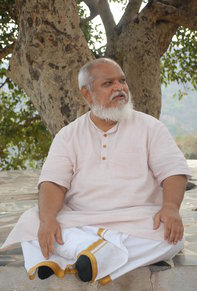
    Recently, I met my Engineering College Professor Dr Anand Swaroop Saxena (in picture). He was my Engineering degree Major project guide, actually a guide in many ways. We were discussing something and he shared the following  lines (in Hindi these are called Doha).

    गो धन, गज धन, काज धन, सबे रतन धन ख़ान|
    जब आवे संतोष धन, ये सब धुरी समान||

    Go dhan, gaj dhan, kaaj dhan sabe ratan dhan khan
    Jab aave santosh dhan ye sab dhuri saman.

    Meaning:

    It is true that owning cattle, jewels or kingdoms is mine of wealth
    But when you own wealth of contentment (satisfaction) those mines (cattle, jewels etc) of wealth become worthless (like dust)

    Note – In old days cattle used to be a measure of wealth of a person, therefore go (cow) and gaj (elephant) in this doha.

    I thought about it and added two points –

    1. This does not mean we should block our owns progress in the name of contentment.

    2. Point 1 makes everyone think – when should we stop? Because if someone should not block his/her progress, that slowly converts into greed and running behind many things (at time unnecessary things).

    I thought that one should always try to utilize one’s capability to the hundred percent in doing whatever one is doing. This thought let me to Famous shloka of Geeta

    कर्मणयेवाधिकारस्ते मा फलेषु कदाचन।
    मा कर्मफलहेतुर्भूर्मा ते सङ्गोऽस्त्वकर्मणि।

    Meaning: “You’ve a right to perform your prescribed action, but you’re not entitled to the fruits of your action. Never consider yourself the cause of the results your activities, and never be associated to not doing your duty.”

    And I felt contentment (satisfaction) is in becoming content (satisfied) and not in running behind anything, not even the desire to become content (satisfied with anything).

    Related blogs –

    When will we stop?

    Swasthay – dwelling in oneself

    What more you need?

    Source of Geeta shloka meaning – Deeds, not words, should speak

  • Do what is right in perpetuity


    The class was nostalgic, remembering the last couple of days of sessions of Operations Management with Prof Moradian. Today we were attending his last session of Operations Management. We all enjoyed each session, the quick wits and learnt a lot. We were attending his last session and thus all that was coming to an end for Operations Management.

    That session was very special, I could still hear his one statement very clearly that – “…in your career whenever you have to take any decision, always do what is right for your company in long term…”.

    When I recollect those words from Prof Moradian – “… do what is (make decisions which are) right for the company in perpetuity…” that makes a lot of sense to me. That one statement made me speak couple of tough truths in my career, but it feels good when you consider big picture vis-a-vis to your personal interests.

    An organizations need to learn the art of balancing between the short term sustainability and the long term growth OR short term profit and long term uncertainty. In current economic scenario short term sustainability seems the way to survive, let alone long term growth or profit for that matter. Message seems clear to me – Do what is right for the company in perpetuity.

    Actually this statement equally applies to each individual in life too – we should do whatever is right for us and others – IN PERPETUITY.

    Related blogs –

    Balancing Act – Professor Mankad shared this story of Balancing act with me earlier.

    Fruit will arrive in its season

  • Evening news


    As usual, I was sitting in the Best bus, coming back home from office. The day was same and everyone was tired dozing off in the bus itself. I put in my ear plugs and – after ages – started radio on my mobile. FM gold – Govt run FM channel – was playing an old, inconspicuous and lesser known song. Since the song was sung by Manna De Sab, I stopped and listened to it. The lyrics of the song made me share it here. Systems would remain the same, this song is of 1979 – that time Politician used to say “…eradicate poverty”, still the same.

    In fact today itself heard Sheela Dixit (CM of Delhi) said INR 600 is enough for family of 5 to survive for a month. I think she means perhaps all would die in the cold of Delhi during December and therefore 600 would help buy stuff for last rites.

    At one place the singer says – “…izm aata to leader na bantaa”, we are indeed dividing people in the name of isms – socialism, religionism etc that was true even before I was born. Strange but true. It reminded me of my old blog – When Buddha dies, schools are born.

    Very insightful statement in the song – “…Ego ka jhagada” fight of ego.

    There is a saying in English – History repeats itself – “…naam aur tareekh ka chakkar hai doston varna har khabar laut kar aati hai is sansaar mein” The lyrics of the song state the same, read a news paper without date, and you would be able to relate news to something or the other.

    History repeats itself, really! One news stated is similar to what happened in the time of Mahabharat (about 5000 years ago). “…bhai ki saali | bhagaa kar le gayaa ik bhai

    Watch, listen, read and enjoy the song – Evening news, by Manna De, Lyrics Sudarshan Faakir, Music – Jaidev Movie – Doorian.

    [youtube=http://www.youtube.com/watch?v=c8MP4GIgstE]

    [youtube=http://www.youtube.com/watch?v=U6sB5aUVVSg]

    Lyrics (courtesy – Atul song a day blog

    evening news
    eeevening news
    evening news

    evening news
    evening news
    evening news
    evening news
    evening news
    evening news
    ek baar news with
    evening news
    evening news
    eeevening news

    bees bees paise nikaalo bhai
    bees paise only
    aao dekho kyaa likha hai
    aaj ke akhbaar mein
    kaun jeeta kau haara
    duniya ke bazaar mein
    aao dekho kyaa likha hai
    aaj ke akhbaar mein
    kaun jeeta kau haara
    duniya ke bazaar mein
    evening news
    evening news
    eeeevening news

    ye khabar aayee hai
    PTI se
    jalse mein mantra ji boley
    desh se gareebi hataani hai
    desh se gareebi hataani hai
    ek boodhaa gareeb bola
    mantri ji
    ye khabar to bahut hi puraani hai
    (coughing sound)

    evening news
    evening news
    eeeevening news
    chhote noton ka hai bolbaala
    bade noton ka hai munh kaala
    chhote noton ka hai bolbaala
    bade noton ka hai munh kaala
    isse kahte hain
    socialist
    socialist nahin
    haany
    socialism
    arre bhai itna aata to leader na banta
    bees paisa nikaalo
    bees paisa
    haan lo
    evening news
    evening news
    eeeevening news

    kahin maar dhaad
    kahin dangaa fasaad
    kahin hartaal
    kahin bhauchaal
    khoon kharaaba
    kahin shor sharaaba
    kahin daaka
    kahin chori
    kahin laathi
    kahin goli
    kahin pyaar ka lafdaa
    kahin pyaar ka lafdaa
    to kahin ego ka jhagdaa
    ego ka jhagdaa
    naam aur tareekh ka chakkar hai doston
    varna har khabar
    laut kar aati hai is sansaar mein
    aati hai
    jaati hai
    aati hai
    jaati hai
    jaati hai
    aati hai
    aati jaati
    jaati aati
    aati jaati
    har khabar phir
    laut kar aati hai is sansaar mein
    evening news
    evening news
    eeeevening news

    dil ka rogi chalte chalte mar gayaa
    pataa nahin
    mar ke gira ya
    gir ke maraa
    parantoo
    isey kehte hain
    moderrrrn death
    akasmaat mrityu
    evening news
    evening news
    eeeevening news

    ram swaroop ne qatal kiyaa
    parinaam swaroop pakde gaye
    kyaa. . .
    bhai ram swaroop ne qatal kiyaa
    aur parinaam swaroop pakde gaye
    isey kehte hain
    confusion
    confusion nahin
    confusionism bolo
    arre babu
    kitne izm
    izm aata to leader na bantaa
    bees paisa nikaalo bhai
    aur
    ye lo
    evening news
    evening news
    eeeevening news

    aur ye filmi khabar dekhiye
    actor thhey saare top
    lekin phir bhi film flop
    yaani ke top flop
    phalswarpp ?? janjaal mein
    aur producer aur direction
    aspataal mein
    evening news
    evening news
    eeeevening news

    lijiye suniye
    khabar ye aayee hai
    udti chidiyaa ne phailaai hai
    bhai ki saali
    bhagaa kar le gayaa ik bhai
    kya kya
    kya kahaa
    bhai ki saali
    bhagaa kar le gayaa ik bhai
    lo apni khabar bhi chhap gayee
    arre nahin baba
    aisaa to panipat mein bhi huaa thhaa

    naam aur tareekh ka chakkar hai doston
    varna har khabar
    har khabar phir
    laut kar aati hai is sansaar mein
    aati hai
    jaati hai
    aati hai
    jaati hai
    jaati hai
    aati hai
    jaati aati
    aati jaati
    aati jaati
    har khabar phir
    laut kar aati hai is sansaar mein
    har khabar phir
    laut kar aati hai is sansaar mein
    evening news
    evening news
    arre bhai
    paanch paise mein hi le lo
    evening news
    evening news
  • Tender coconut


    I live in a place where there are many coconut trees nearby. No doubt we get tender coconut on a regular basis. In fact for months I had been playing with my niece – Chinu – with those tiny coconuts by helping her throw them in the sea. What I never noticed while helping her play with those tiny coconuts was – “how it grows from a nothing to so many things!” That blossoming of coconut from just a tiny coconut with nothing to a tender coconut with water and coconut with oil and thick shell with husk and so on made me think.

    Source - indiaheals.blogspot.com
    Tender Coconut
    Source – indiaheals.blogspot.com

    Recently, I went to our regular tender coconut milk joint. I saw some completely ripe coconuts kept in the shop. That made me thinking. I have seen those small non-entity coconuts. I started wondering, how come this thing gets water? Slowly that water converts into a shell. The same shell then helps create the outer cover of a ripe coconut (brown in color), coconut and the outer husk. Where does the husk on that green outer cover come from? Even in a ripe coconut the husk is not visible!

    See it is very interesting, the same content converts into many forms. The tree is the same, its receive same nutrients from ground and sunlight. Tree does the same activity but different parts grow in different ways. Everything is so perfect at its place, making that non entity to a perfect coconut.

    I was lost in my thoughts that nature has strange ways to convert one thing into other. More deeper in thoughts, I started thinking about us – Humans. We also are from the same source. We get our energy, color and share everything from the contents of the earth, right! In a unique way we are different but at a macro level we are humans. If we think about future we would leave everything here – the iron of our blood, calcium of our bones and water of our body. We got everything from the earth and we would leave everything behind when we would die. Still we fight when we are alive!

    This tender coconut helped me realize this clearly that we are made from same contents. Though in my mind I always knew it, perhaps everyone of us knows this. Yet we generally think it as “obvious” and overlook it.

    Related blogs –

    Blogs on Interdependent Co-arising

    Death

    Death is inevitable

  • For Profit Businesses


    Businesses are made for profit making, is there a question in this assumption or argument? For the time being, I am assuming there is no doubt about the argument that business exist for making profit.

    I have been thinking about the topic of “measuring growth” I wrote recently. People may say there are businesses as “Not for Profit Businesses”. This concept of “Not for Profit” in many cases is about reinvesting profit in business rather than giving dividends to the shareholders/investors.

    There are other businesses which are “social enterprise”, I wrote on such businesses with reference to a book “I have a dream”. These are businesses which exist for making profit; however their primary reason of existence is social upliftment with moderate profits. I wanted to ask myself – why not all For Profit Business be like that?

    In my previous career engagement, a couple of times I had a chance to meet CMO of a big Mutual Fund house. In one interaction he told my boss – “you do X, Y and Z; Calculate your cost; add your 20% profit on that and charge me. I need this X, Y and Z done.” This statement was very liberal to hear. I had seen many organizations trying to squeeze their service provider. Thus the statement became a guide for me to think about such clarity and about fair co-existence. I relate the same to the previous post of “measuring growth”. When I tried understanding Islamic banking and asking the feasibility of the system, I saw contrary view points. I read somewhere Islamic banking does not call “interest” (on debt) as interest whereas terms it as profit sharing (say 20%). So there may be businesses so clear and there could be predictability in cost, profit and growth of business and economics.

    This kind of approach is very simple. However, the above case is very simplistic and everything (many things) would become very predictable – how would finance experts – involved in complex transactions and certificates  – would be able to manipulate market? There can still be demand and supply gap and market may run into a relatively predictable and stable equilibrium.

  • What are you searching for?


    My little niece – we call her Chinu – has a couple of  videos and books. In some of the videos and books there is a story, in this story the main character – Lenny (in one story) – is searching/waiting for a friend. The idea is – Lenny wants a friend did not know how to identify the friend. Some of the dialogs of the story –

    …”Oh Sorry! cheeped a little voice”

    “Never Mind,” growled Lenny.

    “My name is Tweek. And yours?” cheeped the voice.

    “My name is Lenny, but I don’t have time to stop and talk,” Explained Lenny. “I have to get home and wait for a friend”.

    “May I wait with you?” asked Tweek.

    “If you want to, but don’t disturb me,” replied Lenny.

    “So what does your friend look like? when is he coming?” asked Tweek.

    “Don’t know,” said Lenny.

    Believe it or not, the search/wait is on…. everyone of us is searching for something. TV channels are searching for next sensational singer or dancer. News channels are searching for next breaking news. Box office is searching for its next bigger hit or super star. Citizen of India in general for good governance and so on. Whatever said and done, search is on.

    Ideal Final Result

    When we turn to individual, the search is for a better friend, good house, better life style, peace of mind, love or a superior job. No doubt search is on. Many a times what is observed is that the search is on but one does not know what is that he/she is searching for.

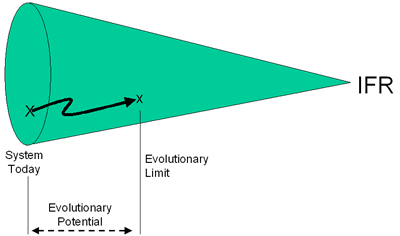
    When an organization is on the journey of innovation, not knowing what is required becomes a very big problem. In my innovation consulting and TRIZ learning I used to have a framework for removing the problem of not knowing what are we searching for. The method is Ideal Final Result (IFR). The concept of IFR seeks the destination or best solution in the beginning itself. This method helps identifying what are  looking for and where we want to go?

    So what are you searching for?

    By the way, when the Buddha was searching (enlightenment), he could not attain that. However, when he even dropped the idea of “searching” he achieved it! To start off – the Buddha knew what he is searching for.

    Image source – TRIZ Journal, article by Simon Dewulf and Darell Mann

  • Sai kaka


    I met Sai Kaka about 4 1/2 years back. He is from Sangli, a city in Maharashtra.  I read a book on him (in Hindi) Pooja Ka diya and quickly had an opportunity to meet him. I was  impressed with his straightforward and practical approach. Take an example Sai Kaka says “Religion is an individual choice, in groups it is not a religion but a community and where there is community there can be communalism!” What we see in India or world over, maximum wars are fought over in the name of religion, right? More about Sai Kaka is on his website. The most important lesson he taught to me was this –

    Sai KakaSanskar yukt chaitanya jab (संस्कार युक्त चैतन्य जब)

    1. chintan karata hai to usko chitt kahate hai (1. चिंतन करता है तो उसको चित्त कहते है)

    2. manan karata hai to usko man kahate hai (2. मनन करता है तो उसको मन कहते है)

    3. nirnay karata hai to usko buddhi kahate hai (3. निर्णय करता है तो उसको बुद्धि कहते है)

    4. asmita ka bhan karata hai to usko aham kahate hai (4. अस्मिता का भान करता है तो उसको अहं कहते है)

    inme se sansakar nikal jaye to jo bachata hai vo shuddha chaitanya hai (इनमे से संस्कार निकल जाए तो जो बचता है वो शुद्ध चैतन्य है)

    This in English means –

    When a conscious filled with rituals (or say the lessons learnt about ‘way of living’)

    1. thinks we call it mind (imagination)
    2. contemplate we call it Mind [there is a difference between Chitt and man which I am not able to translate in English]
    3. makes a decision we call it intellect
    4. perceives pride we call it Ego

    Now when the rituals or ‘way of life’ learnt, get out of this conscious mind, what is left is the pure consciousness.

    It means “pure consciousness” is blurred by our different (Sanskara) learning about life. Therefore in some cases religion becomes a problem.

    Thanks to http://www.quillpad.in I could write in Hindi and http://hindi-english.org for translation help.

  • Currency for the future?


    In his class, Prof Mankad asked us “what is money?” He answered – “Money is what is accepted as money”. Very apt definition. Here I am taking small freedom to change it a bit. I am changing the word “accepted” to “trusted”. Of course trust is a very heavy word. We have built a concept “of money” on trust. The question is where is trust? On a lighter note – There was a time when banks did not trust each other (recession of 2008). I have heard this idiom – “put your mouth where the money is.” Should money be replaced with “trust”.

    I was watching 3 idiots last Sunday and thought that kids like Rancho (character played by Amir Khan) – who could solve problems of class 10th while studying in class 6th – are not that rare in India. You go to Super 30 in Bihar, or any institute in Kota (Aakash, Bansal etc) you would encounter many such kids. Then what happens? Why don’t we see such extraordinary kids as stars of tomorrow? Because in future all these kids realize that the only measurement stick (metric) this world has is – Money! See the video of Staffi Graph – how much money do you have? Well, I am not blaming Staffi for that. This is just a representative video of our society. The measurement of success is how much money do you have? Not how did you get it. Also, the measurement is not how satisfied or happy you are?

    [youtube=http://www.youtube.com/watch?v=PlA_hL3NyyU]

    When these extraordinary kids get out of college, are paid enough and more so that they do “what the company wants them to do”, not what they would want to do. Most of them choose to accept that offer because measurement metric for the society is – Money.

    Let us flip the coin and say “Trust” is the currency. What would happen? Those who have hoards of currency may be the most bankrupt people on the earth. Perhaps, a business of trading of trust would start (Bomday Trust Exchange or National Trust Exchange). Would the world be a different place then when currency would be mutual trust (well not necessarily Mutual such as DLF and Robert Vadra ;))

    The day I started writing this blog I also had a brief discussion with Mr Shreekant Shiralkar and he was of the opinion – Money becomes immaterial after a certain time, what you do, what satisfaction you get from work and the trust you build is important. When he said Trust his thoughts were different compared to what I am presenting here. However, what I feel is the currency for future should be trust you build, the good you do to the society and how satisfied and happy you are.

  • Death!


    Is death the ultimate truth? I asked this question to myself a couple of times during last weeks. I wrote a tribute to Dadaji on his birthday as he passed away in Jan 2012. I met with Rajgopaul uncleji recently; his father also expired recently so did my maternal uncle.

    I learnt a great deal from my uncle. He was very active and hardworking. The most critical lesson to learn from him was – working with complete responsibility, commitment and without much of expectations. I saw his this ethic resulting in fruition always. He did few businesses and was very successful. He also inculcated these ethics in my cousins. A hundred bows to my uncle. I cannot forget him and his subtle and effective teachings without teaching those extrinsically to us.

    My uncle’s death made me think very seriously about death – “Is death the ultimate truth?”. I have heard that our cells die every second and thus in a couple of months we are completely a new person. It is true that physically we change. In fact the reality is – the day we are born we start dying. (I think Osho said that). So physically, I am not the same Pravin who started writing these blogs about 2 years back. The one who used to write earlier and the one who is writing today is different. Yet, there is still a connection, I personally know that I am the same Pravin who used to blog, is blogging and hopefully keep on blogging at “business2buddha @ wordpress”.

    The question to ask is – what is that which does not change even if physically we change a lot? “That something” which does not change keeps us the same, perhaps it does not die. So with death does it die too? I believe the concept of Soul or Atman in Hindi, has evolved from the same question.

    I wonder if death is the ultimate truth, but I believe that there is something which defines an individual – something beyond the physical being.

    Books I read on Related topics –

    Same Soul Many Bodies

    Many Lives, Many Masters

    Only Love Is Real