Tag: Thich Nhat Hanh

  • Dependent co-arising

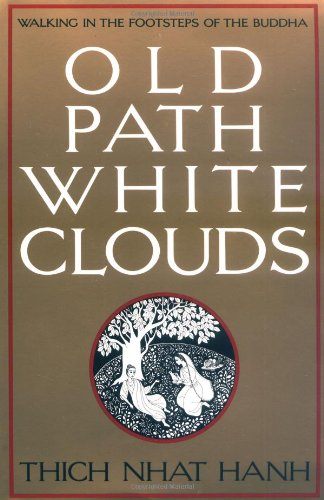
    Interdependent co-arising is a very key concept of The Buddha’s teachings. The other interesting names of this concept are dependent co-arising and dependent origination. Dependent co-arising is a deep concept. The depth requires an understanding of the concepts of Buddhism. So, I keep writing at a very shallow level examples to drive home the point. Whenever I read the book – Old path white clouds by Thich Nhat Hanh I get itched to this very concept. He explains this concept in easy words – “From interdependent origins, all things arise and all things pass away.”
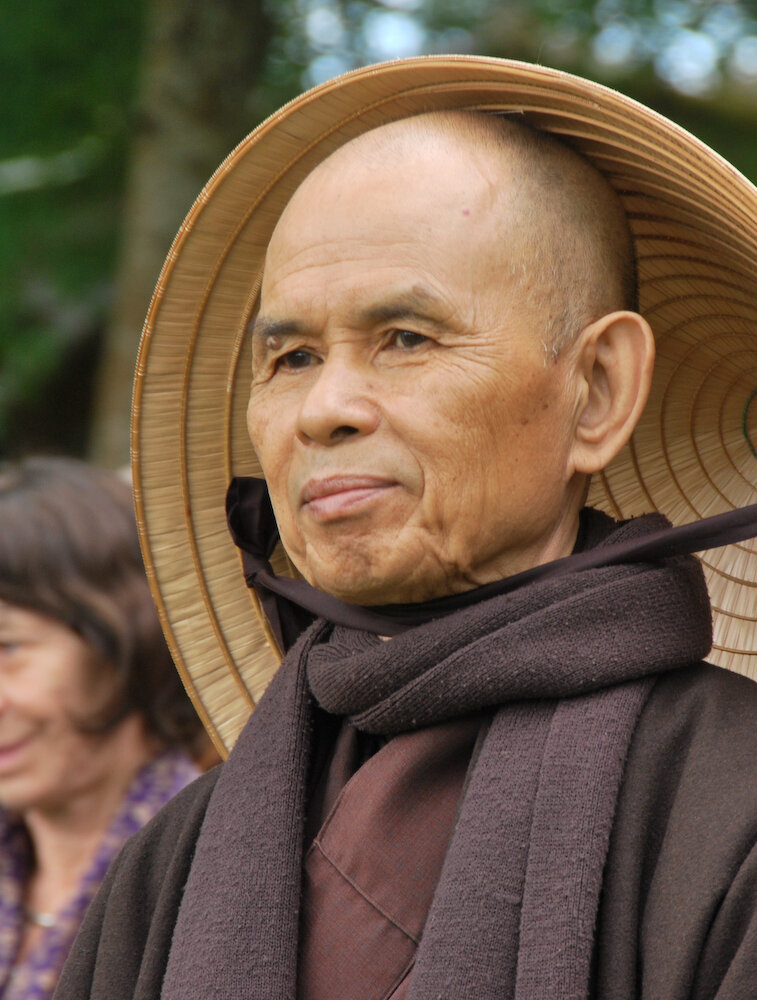
    Thich Nhat Hanh

    I have shared multiple examples specifically for dependent co-arising on my blog. These examples were shallow yet practical relationship between the teachings of the Buddha and the present-day Business.

    Here are some examples

    Vaccination and interdependence (pulse polio elimination initiate of Govt of India)
    Societal impact
    Interdependent co-arising a farmers example
    Entrepreneurship
    Intra-country example and macro-economic example

    Whenever I try to interpret this concept; besides the interdependence, this concept touches on another concept of Hinduism (or Indic religions) – the concept of Karma. Karma gives us a guiding principle of cause and effect. It is easy to understand with the help of an English proverb – as you sow; so shall you reap. A very easy example of the cycle of Karma can be seen in an episode – Lucky penny – of How I met your mother.

    However small we think we’re as an individual, we’ve the power to make an immense impact on the world. You may have heard – if a butterfly flutters its wings in Amazon forest, it may cause a hurricane in Japan. I came across this interesting Domino effect video. I could relate it to the butterfly effect and thus to dependent origination.

    Watch this and relate the accumulated energy of the bar to Karma, the first piece as the butterfly fluttering wing and in effect interdependence of everything as a cycle.
  • Autumn Leaf

    I received this story Autumn leaf on WhatsApp from my sister. According to the message this is by venerable Thich Nhat Hanh. He is a very famous Buddhist monk from Vietnam. In fact my blog is inspired by his book Old path white clouds. Without any further ado, here is the story.

    Thich Nhat Hanh

    Autumn leaf

    I asked the Autumn leaf if it was frightened because it was autumn and the other leaves were falling.

    The leaf answered, “No. During the whole spring and summer I was completely alive. I worked hard to help nourish the tree, and now much of me is in the tree.

    I am not limited by this form. I am also the whole tree, and when I go back to the soil, I will continue to nourish the tree. So I don’t worry at all.

    As I leave this branch and float to the ground, I will wave to the tree and tell her, ‘I will see you again very soon’.”

    That day a wind came blowing, and a while later, I saw the leaf leave the branch and float down to the soil, dancing joyfully, because as it floated it saw itself already there in the tree.

    It was so happy. I bowed my head, knowing that I have a lot to learn from the leaf.

  • Waves of peace


    Last week I wrote (The fish will fly in next birth) about a research done at Stanford University on Buddhism. This research was on impact of Buddhist concepts on individuals irrespective of their belief system. Though, I tried being little “story teller” type in writing which might have gone awry – some people did not understand what the whole blog is all about. The story and its title got precedent over the point of view of research. Here is another incident I want to share regarding the same. First a brief on the research –

    Old path white cloudsSome researchers did a research on the impact of Buddhists words on individuals irrespective of the religious background these participating individuals have. Participants included – Western Christians, Westerners who practiced Buddhism and Taiwanese with a Buddhist/Taoist. According to that research, if people are exposed to Buddhists concepts people reacts to things positively more often.

    Why this research seems plausible to me has another story besides the story of Fish. My wife has not been very spiritual person. After our marriage in Dec, she had opted for leave. In this leave period she read about 1/3rd of the book Old Path White Clouds.

    When I used to comeback from office I started noticing that she is very calm and used to get into silence. Yes literally that was the case, it was obvious, no extra efforts required to notice it.

    Initially when I was worried about what went wrong she said nothing, and that bothered me even more. I asked her to go out for walk, meet people in our building, go to nearby Gurudwara and go to market just to get mingled. She was new to Mumbai so her being silent worried me further, whether she is nostalgic or not happy [both cases seemed improbable because of her demeanor]. Yet that worried me.

    Her silence had depth, I observed for a couple of days then I asked her what is the reason, and she showed me the book – she said I get into kind of meditation when I read this book page by page. I have become so calm and at peace!

    I first read Old path white cloud in 2007, since then it has become a treasure for me. I have donated this book to a couple of people. I am not a Buddhist, and in fact I somehow try to avoid getting attached to any -ISM (religion).

    The Stanford research has – time and again – proved to me [without that research itself, any reference of priming or social psychology] that there is something in the teachings of the Buddha that brings positive changes to an individual.

    Related blog –

    Old path white clouds

    Why this title? [of the blog Business to the Buddha]

    Eating for the sake of eating?

  • Eating for the sake of eating?


    I was reading blog of Thich Nhat Hanh – a Vietnamese Buddhist Monk. It is an irony that I’m an Indian, however this Vietnamese monk introduced me to the Buddha in true sense. I read his book Old Path White Clouds and I came to know the Buddha I know now.

    In his blog – The Value of Being Together when I read the point of Happiness, I remembered an incident of my life, sharing here.

    Once, I went to a restaurant – Annapoorna Bhojanalya – in Indore with one of my friends Vijay Sharma. It is a rajasthani/Gujrati thali style joint at Jail road in Indore. Its quality of food is very good.

    We sat and ordered our thali. I was eating very slowly, not noticing anything. I was enjoying the food. I was completely into the process of eating. Well, may be that is called meditation. After some time (usually time in which a sane person should complete eating his meal) almost every second person was looking at me. I was still eating, slowly and in all likelihood mindfully. On a lighter note, I did not over eat! 🙂

    I remember, while going out after the dinner Vijay told me “…what was happening?” I didn’t understand the question. He said everyone was looking at you the way you were eating. I had no idea what that meant. Well, he completed the sentence by saying – “…that was not in any derogatory terms. Something was different than usual while you were there.” This was what was happening there “…we eat as slow as we can so we can enjoy our freedom. . We can listen to the taste in our mouth.” (from Thay’s blog)

    Do we eating for the sake of it or we’d do this also completely, in meditation?

    Disclaimer– Author is neither Buddhist, nor a seasoned practitioner, just an explorer of the path; not authority on meditation either.

  • Cast(e)ing doubts – everyone’s tears are salty


    I am not an admirer of the caste system of Indian society. The special love affair for that (aversion) goes to the Lingayats (disclaimer – I am a born Lingayat). I am going to write a series (on and off) of blogs on – against – the caste system of India (include black skin for other parts of the world). Here is the first such blog. This story is from Chapter 43 of the book Old path white clouds by a Vietnamese monk Thich Nhat Hanh. The book is on the life of the Buddha.

    In brief – The Buddha accepted an untouchable named Sunita, to his Sangha (in India 2500 years ago). It created a lot of uproar in Kingdom of King Pasenadi (Kosala) who was a devoted follower of the Buddha.

    Everyone’s tears are salty
    When The Buddha and his bhikkus were passing by the river Ganga they saw an untouchable person – Sunita (a person carrying nightsoil). when the Buddha started walking towards him, he ran farther away from the Buddha. When Sunita could do no more, he kept the nightsoil buckets on one side and hid in the river.

    Sunita “Lord, I do not dare come closer. I am an untouchable.”
    Lord, I do not dare come closer, I am an untouchable

    The Buddha walked right up to the water’s edge and said, “My friend, please come closer so we may talk.”
    Sunita, joined his plams, protested, “Lord, I don’t dare!”
    The Buddha asked – “Why not?”
    Sunita replied – “I am an untouchable. I don’t want to pollute you and your monks.”
    The Buddha said – “On our path, we no longer distinguish between castes. You are a human being like the rest of us. We are not afraid we will be polluted. Only greed, hatred, and delusion can pollute us. A person as pleasant as yourself brings us nothing but happiness. What is your name?”
    Sunita said – “Lord, my name is Sunita.”
    The Buddha asked – “Sunita, would you like to become a bhikkhu like the rest of us?”
    Sunita said – “I couldn’t!”
    The Buddha – “Why not?”
    Sunita – “I’m an untouchable!”
    The buddha – “Sunita, I have already explained that on our path there is no caste. In the Way of Awakening, caste no longer exists. It is like the Ganga, Yamuno, Aciravati, Sarabhu, Mahi, and Rohini rivers. Once they empty into the sea, they no longer retain their separate identities. A person who leaves home to follow the Way leaves caste behind whether he was born a brahman, ksatriya, vaisya, sudra, or untouchable. Sunita, if you like, you can become a bhikkhu like the rest of us.”

    King Pasenadi was asked by his ministers to protest and reason for this act of the Buddha. The King visited the monastery, while walking in the monastery he saw a few monks sitting under a tree and one monk sharing the teachings of the Buddha. The King was impressed with the monk who was teaching. The monks face radiated great peace and wisdom. This sight was such that King stopped for a while to listen to the monk.

    The King was so impressed with the monk that first question he asked was who was the monk teaching under the tree? The Buddha replied – “Sunita, he was once an untouchable”. King was embarrassed, the Buddha continued – “In the Way of Liberation, there is no caste. To the eyes of an enlightened person, all people are equal. Every person’s blood is red. Every person’s tears are salty. We are all human beings. We must find a way for all people to be able to realize their full dignity and potential. That is why I welcomed Sunita into the sangha of bhikkhus.”

    Even after 2500 years, we still have widespread caste system. At that time there was only Hinduism now you have many religion in the world! Every religion has many sub-sub categories. You have color of skin to differentiate, what more you need?

    Related blogs –

    We the societies

    When Buddha dies schools are born

    Reference in the index of the book – Fo Pen Hing Tsi King (T. 190); Fang Kouang Ta Tchouang Yen King (T. 187); Lalitavistara.

    Image source Old path white clouds