Tag: Prof Boman Moradian

  • Guru poornima


    I have had privilege of meeting at least three enlightened masters in my life (until now), mentors and coaches. Some of the mentors may be enlightened masters and I am not aware about those. However, rest three I am sure – Sai Kaka, Dada ji and Guruji. It is difficult to have very close day-to-day meeting with the enlightened masters. The mentors have a special place they guide, encourage, handhold, and challenge, I have been fortunate that I have a long list of mentors.

    I received a wonderful story on whatsapp “Importance of Guru” or mentor or coach in life.  Without much ado here is this wonderful story on Guru Poornima.

    ——————

    Once upon a time, a cow went out to graze in the jungle. Suddenly, she noticed a lion racing towards her. She turned and fled, fearing that at any moment the lion would sink his claws into her. The cow desperately looked for someplace to escape and at last, saw a shallow pond. Barely evading the lion’s reach, she jumped into the pond, and in the heat of the chase, the lion blindly leaped after her.
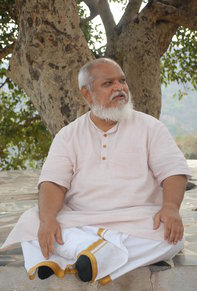
    Sai KakaTo the surprise of them both, the pond was extremely shallow yet filled with deep recesses of mud. After toppling over each other, the cow and the lion found themselves a short distance apart, stuck in the mud up to their necks. Both had their heads above water but were unable to free themselves no matter how much they writhDada Gavanded.
    The lion repeatedly snarled at the cow and roared, “I am going to enjoy the sound of crunching your bones between my teeth!”

    He thrashed about in fury but soon became fretful as he found no prospect of escape.

    The cow thoughtfully laughed as the lion struggled to free himself and asked him, “Do you have a master?”

    The lion disdainfully replied, “I am the king of the jungle. Why do you ask me if I have a master? I myself am the master!”
    The cow said, “You may be the king of the jungle, but here all your power has failed to save your life.”

    “And what about you?” Retorted the lion. “You are going to die here in this mud too!”’

    The cow smiled mildly and said, “No, I am not.”

    “If even I, the king of the jungle cannot free myself from this mud”, snapped the lion, “Then how can you, an ordinary cow?”

    The cow gently replied, “I cannot free myself from this mud, but my master can. When the sun sets and he finds me absent at home, he will come looking for me. Once he finds me, he will raise me up and escort me home sweet home.”

    The lion fell silent and coldly glared at the cow.

    Soon enough, the sunset and the cow’s master arrived. He immediately recognized the plight she was in and lifted her to safety. As they walked home, the cow and the master both felt renewed gratitude for one another and pitied the lion they both would have been happy to save if only the lion had allowed them.

    The cow represents a surrendered heart, the lion represents an egoistic mind, and the master represents the Guru. The mud represents the world, and the chase represents the struggle for existence therein.

    —————————————–

    Its good to be independent and not rely on anyone. But don’t take it to an extreme, you always need a partner/coach/mentor who will be always on the lookout for you.

    Having them does not mean you are weak, it’s just that you can be stronger with their help.

  • Constraints and contradictions


    This blog from business to the Buddha was started when I was completing my MBA. Few of the sessions on economics, marketing, Organizational behavior and supply chain made me realize that there is more common to business, economics, management and spirituality; in particular concepts of Buddhism than what we think. Though I used to feel it since I moved to Mumbai a decade back in 2006. This thought moved into a wordpress blog – business2buddha.wordpress.com because MBA gave me not only a formal education in management but also time to think about the relationship. At that time, I never thought that this choice of writing can be such that I keep on writing for 7 long years. Of course there was a hiatus in 2017 due to some other personal commitments. My thoughts have always been on finding out relationship between business / economics concept to spirituality (in particular Buddhism). The fascination makes me feel that we are on a path of moving from “me” to an “us” society. A society from competition to co-existence, from Business to the Buddha. I wish this comes out to be true.

    Off late I am hearing a lot about “mindfulness”. Some months back Harvard Business Review wrote about it. Initially it made me happy. I was thinking that mainstream is accepting the concept which I had been writing about for some time. Occasionally, I feel that this “mindfulness” thing has become more of a buzzword than a real practice. Hope it does not end up being – six sigma, innovation, analytics and big data type hype. The purpose of mindfulness is for “self”, in effect helping organization and society. Hope mindfulness does not end up like the other buzzword of management jargon; hope people do not end up making it a business and “whats in it for ‘business‘” alone and keep it more practical and individual practice than a corrupt practice of survival of business.

    The contradiction here has been the approach. I have moved from Business to the Buddha. The movement from business to the self and self realization and coexistence. The approach of management jargon seems to be the other way round. Making business out of the mindfulness or possibly trying to get “competitive advantage” or some sort of “benefit” for business from the path.

    I am optimistic about the move from business to the Buddha. In fact when I realized that I might be making a mistake of showing or possibly thinking of a movement from Business to Buddha I bought a domain – www.SaintInSuit.com though I am yet to write on that. I am thinking that I will let people write on the website – their experiences, their relationship between business, management and spirituality. The idea is not to restrict to the Buddha alone. There are other methods, thoughts, concepts and teachings on the path of spirituality that have strong affinity to business. Though I personally can recount more examples on business and spirituality with Buddhism than other religion.

    The concept of Saint In Suit is a thought of middle path, the method that says one can be spiritual without renouncing. One can do business without negatively affecting his/her personal choice of following spirituality. We (predominantly in India) think that there is a constraint between business and spirituality, however we miss out – Saint Kabir was a businessman, so were many others just few examples Gora Kumbhar or even the worst you can think of Kanhopatra was a prostitute. Even the Buddha at a later stage of his life accepted that – one does not necessarily renounce to self-realize.

    There is neither contradiction nor constraint of being a saint yet a businessman. Though, I am worried if people make business of mindfulness specially when it is a showoff than for real change.

    Constraints was a topic for LBC in Sept 2017, as usual I changed the topic a bit and wrote on it well past the week when it was due. You can see what the other writers of the LBC have to say in their respective blogs.  Maria, Ramanna Uncle ji, Ashok and Shackman.

    Image source – first image my creation and second image – Image source – http://www.bravefury.com/six-reasons-men-should-do-yoga/

  • My Favorite Fictional Character


    Have you ever thought about fiction and reality? Fiction is something untrue, made-up or imaginary. How can I say that the Buddha or Krishna or Jesus was someone who actually walked the face of earth. Is it a possibility that these were imagination of someone? This thought puts me to another thought, what if I myself am is some imagination and a reality is somewhere, something else.

    Have you ever had a dream, Neo, that you were so sure was real? What if you were unable to wake from that dream? How would you know the difference between the dream world and the real world? Morpheus The Matrix

    What makes something real? Is it because I think, see, feel (perhaps smell or hear) and my mind makes me feel that this is something real because I can sense it? Or something is real because it exist without someone’s ability to sense it or no. Take an example of light – we cannot see light beyond a certain frequency range. Does it make the light non-existent?

    These questions remind me of a very interesting movie – The Matrix.

    “…The Matrix is everywhere. It is all around us. Even now, in this very room. You can see it when you look out your window or when you turn on your television. You can feel it when you go to work… when you go to church… when you pay your taxes. It is the world that has been pulled over your eyes to blind you from the truth…”

    I have had a couple of Morpheus in my life to teach me. I have written about almost everyone on this blog. I would want to be Morpheus too, for someone or few in future. I love the character of Morpheus from The Matrix the most. Morpheus is a believer, he courageous. The best part is, the kind of confidence Morpheus has in Neo, it makes me feel that I want to be Neo too. Laurence Fishburne played the role so well that I keep on watching his teachings (dialogs) whenever I feel I should. There are a lot of learnings in those dialogs – “Do not think you are, KNOW you are.” I have written on the movie (red pill) earlier too. I was so fascinated with the movie that I used to tell people that I am fine being a spot-boy for the movie – alas I am in India :(. The movie is so philosophical and spiritual to me that I repeatedly watch it.

    Instead of me talking (writing), I would want to share some videos of the movie (Youtube), not sure about the copyright permissions there.

    I see many of my teachers in Morpheus – they are indeed my Favorite (they are real) human beings, this blog post is dedicated to all of them. This was the title of this weeks Friday Loose Bloggers Consortium. Con You can read other LBC bloggers thoughts here – Rummuser and Shackman.

  • Why do we educate our kids?


    Rat raceWhen I visited my sister last time, I asked her this question – What is the purpose of education? She is a teacher, she was the best person to ask this question.

    I felt pity on my nieces, so I asked this question. My nieces (one just 4.5 years other 10 years) go to school even in April! I went there to spend some time with them and they went to schools! This is their age to try new things – painting, playing different sports, learning some music. Let them find what they enjoy doing rather than forcing them to sit in the classroom in the summers.

    My sister’s answer reminded me of Prof Mankad’s Macroeconomics class of my MBA. His exams used to be unique (not disclosing it though). His reasoning for such unique exam was- Information is accessible now a days; I want you to think, I want you to cultivate abilities to connect the dots of various subject matters you come across and develop ability to make decisions, opinion and inferences. These theories should not be crammed. You can make these graphs / search them any day / any time while you work. Practice of using these theories in making your opinions etc is what I want you to develop.

    Surprisingly, many Google search terms “Exam paper of Professor Mankad” and “Exam paper of Prof Boman Moradian” have ended up on my blog post. Here I never wrote about what they ask in their exams. I feel strange some students search such things also!

    So my sister – who teaches Science – answered – “I want students to see things for themselves, to experimeReady to Racent; science is something which will help them develop analytical skills”. My sister and Prof Mankas’s answers were not what I see the approach of marketing any school – B-School to Medical School to the Public school for K-12 levels. Our B-Schools & Tech-Schools talk about post education Salaries as benchmark for success! In fact, IVY league guys went to jails because of bigger crimes e.g. insider trading; and if not in jails they caused more troubles to an average human being than a pickpocket who also goes to jail for small crimes for troubling one average human being at a time.
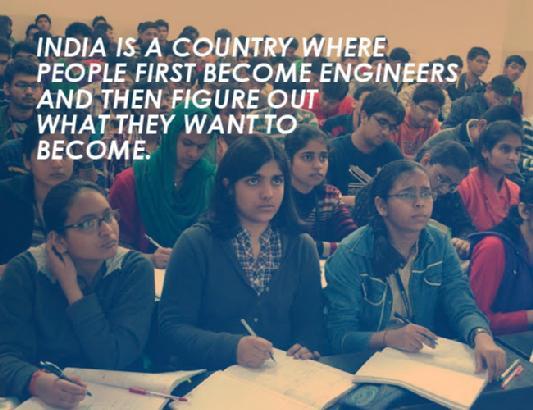
    Why should we educate kids? Don’t you think that the purpose of education be set first. At least we have been doing this for executing businesses well. At least ask the kid what he/she wants to do – after a certain age – instead of making everyone an Engineers or Doctor?

    Related blogs – Showjumping, Race – never ending, Entanglement of an undergarment, Neeraj in Kabir’s style

    Image source – Alka Arya’s article http://hillpost.in/2012/04/revised-rate-race/44257/

    Here is what I found on LinkedIn – Engineers in India

  • Do what is right in perpetuity


    The class was nostalgic, remembering the last couple of days of sessions of Operations Management with Prof Moradian. Today we were attending his last session of Operations Management. We all enjoyed each session, the quick wits and learnt a lot. We were attending his last session and thus all that was coming to an end for Operations Management.

    That session was very special, I could still hear his one statement very clearly that – “…in your career whenever you have to take any decision, always do what is right for your company in long term…”.

    When I recollect those words from Prof Moradian – “… do what is (make decisions which are) right for the company in perpetuity…” that makes a lot of sense to me. That one statement made me speak couple of tough truths in my career, but it feels good when you consider big picture vis-a-vis to your personal interests.

    An organizations need to learn the art of balancing between the short term sustainability and the long term growth OR short term profit and long term uncertainty. In current economic scenario short term sustainability seems the way to survive, let alone long term growth or profit for that matter. Message seems clear to me – Do what is right for the company in perpetuity.

    Actually this statement equally applies to each individual in life too – we should do whatever is right for us and others – IN PERPETUITY.

    Related blogs –

    Balancing Act – Professor Mankad shared this story of Balancing act with me earlier.

    Fruit will arrive in its season

  • Conflict of interest


    Disclaimer – Author himself is an MBA in Marketing (has been and is in the business of – kind of – selling dreams) and has worked as operations management consultant (has been and was/is/has been facing the challenges faced by operations department)

    I was comparing ourselves as an organization. I am an organization in myself, so are you and Ms Y. I was wondering about the departments Marketing and Operations. Marketing is selling dreams and Operations is capabilities. What I dream to be, could be the job of marketing department and what my capabilities are is the reality of operations.

    There is nothing wrong in dreaming, in fact it is good. At the same time knowing the capabilities is also important, that would help us realize the true potential and opportunities of improvements. Though, how often we dream then review our current potential and then think of building future capabilities to achieve potential? That’s where I think Marketing and Operations Department lock horns.

    An incident reminded me of a lecture of Prof Moradian, long term Vs short term and conflict between Marketing and Operations departments. I started seeing more reasons for conflicts between Marketing department and Operations Department.

    Marketing and Operations lock horns with each others. Because generally Marketing team communicates moon, Sales team sells the idea of “reaching the moon as a reality” to prospect and Operations finds it difficult to do that. Why? Because Operations had the capabilities and was supposed to put the prospect in the sky (not necessarily on moon). Thus, challenges faced by operations and promises made by marketing are different.

    The second issue is Marketing and Sales team lives on quarter on quarter (Q-o-Q). They have to show the revenue which is the goal for any organization. On the contrary Operations team cannot take decision for one quarter. For example – operations may not say we need infrastructure for one quarter and not in other quarter and thus make huge investment in one quarter and sell those equipment back in next.

    A branding expert told us that marketing managers (brand manager) want to start new brand building exercise (to gain in short term for writing on their resume – ‘I started this initiative’) and move to next level. New manager comes he/she too does the same. Short term gains are there for the marketing manager; yet for long term the brand is diluted perhaps no one knows what would the brand stand for in future.

    This was/is the case of 2008 melt down. Decisions were made on short term with one phrase in each agreement – “systemic risk”. BFSI industry created various certificates (CDR) etc to sell junk to make big buck in short term. Dreams were sold without real fundamentals. In other words, operations did not have the capabilities of generating the kind of returns promised – with a rider of systemic risk – to prospects.

    This is what is conflict of interest for us as individuals – our dreams Vs our realities. The same is true with Organizations – their marketing Vs operations. This is also true for us as economy – our dreams Vs the reality of systemic risk and capacity of economy to fulfill the dreams.

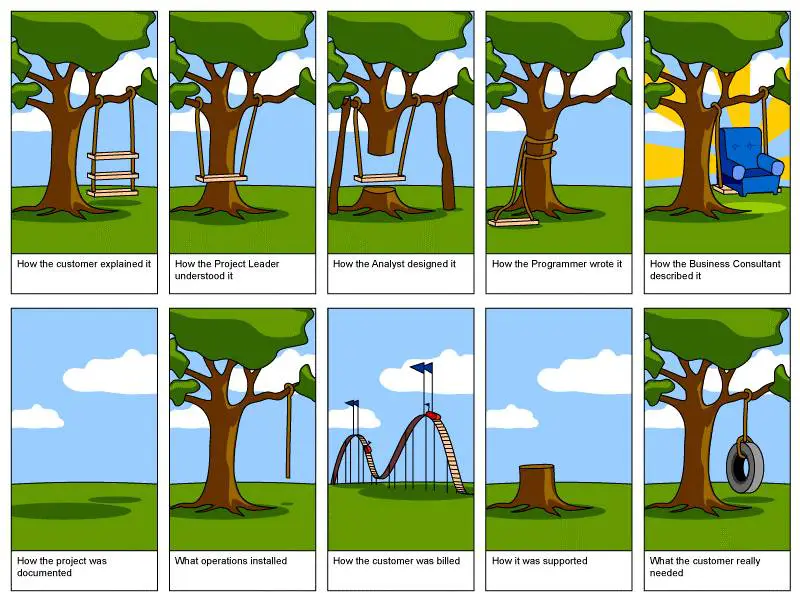
    Image source – http://www.cravingtech.com/blog/wp-content/uploads/2007/11/project.jpg

  • Theory of constraints


    Prof Moradian taught us concept of the Theory of Constraint. He also suggested us to read a book by Eliyahu Goldratt – The Goal. In the novel, protagonist is struggling with the operational inefficiencies of his plant and therefore facing a constant fear of management decision to close the plant.

    Well, what is this theory of constraints (ToC)? In brief ToC states that “A chain is no stronger than its weakest link”. I was thinking that this concept is applicable to our society too. We are evolving, we are constantly developing some thing or the other, society is a sort of factory. And the concept of the ToC applies equally to our life. Look at it this way if rich becomes richer the poorer would become weaker link of the society. Have you heard that during recession crime rate increases? This is ToC for our society. Lately, lot of demonstrations are happening across world by the title Occupy Wall Street. This is where I think that ToC can be applied in the society.

    I thought about interdependent co-arising and the Theory of Constraints in conjunction. My understanding of interdependent co-arising is that – we are all dependent on each other and for growth of each individual other has to necessarily grows. In other words, if society wants to evolve, everyone in the society has to evolve. The weakest link of the society may hamper the growth of society in total. Here I see a solution to the constraint, perhaps a socialistic one. We as a society have to help each other to grow (strengthen the weakest link), otherwise we would see increasing “Occupy Wall Street” kind of movements or increasing crime rates in future.

    I shared these thoughts with Prof Moradian and he said the idea is good why don’t you think about throughput and operating expenses and develop this concept of ToC in society further? This made me dig deeper. It is said that ‘a stitch in time saves nine’. If we rewind to 2008, after months of searching for alternatives Mr Barnanke, Mr Paulson and others had to bail-out banks of USA. Why not we start doing something now and for future. I see the operating expenses of this approach as deferred expense of brand building (building society) exercise for future. The throughput of the exercise would be availability of competitive, capable and intelligent work force for companies. These capable people would be the spenders of tomorrow – moving the wheel of consumerism forward – effectively, the solution may not be as socialistic as I think.

    Related blog – Ideate – save the sinking ship

  • Fruit will arrive in its season…


    We talk about long term sustainability, but want to gain in short term. Shareholders want quick dividends as well as long term performance of the company. If reserves and surplus (R&S) are given in dividends where would company get money for growth. In such cases our actions and desires conflict. I initially thought about the Japanese currency crises in similar fashion (common cause Vs individual gain). Though later Prof Mankad told me that the reason of the appreciation of Japanese Yen could be the computer triggered buying/selling, the way people put stop loss trigger in share trading.

    In operations, different departments try to optimize their performance, what happens to the overall performance? It is synergy that matters rather than the individual performance. Thats where ‘Theory of Constraints’ plays an important role to achieve global optimum against the local optimum.

    I was thinking about the same for some time in a different fashion. What is long term goal of an organization and an individual? How do both the goals meet and how to build synergy between individual’s aspirations and organizations perpetuity? Why did the question arise at the first place? A branding expert told us that marketing managers want to start new brand building exercise (to gain in short term for writing on their resume – ‘I started this initiative’) and move to next level. New manager comes he/she too does the same. Short term gains are there for the marketing manager; yet for long term the brand is diluted perhaps no one knows what would the brand stand for in future. I believe, Sataym fiasco started similarly – to show the investors that Satyam is growing, numbers were made up.

    Effectively, the question to ask is – how many times we look at the bigger picture? The question goes back to Why are we doing what are we doing? I recall Prof Lopez digging deeper and probing us to the fundamental reasons and the importance of asking right questions. Where does the bug stop?

    In school we learnt couplets (termed as Doha in Hindi) of a mystic Kabir, one of them was –
    धीरे धीरे रे मना धीरे सब कुछ होय
    पानी सीचे रे घणा ऋतू आये फल होय
    Literal translation (courtesy) of the same is –
    O mind! everything happens at its own pace, slowly
    Gardner may water a hundred buckets, fruit arrives only in its season.

    I am hopeful that some day those questions would be answered and we individually and collectively would balance between the long term Vs the short term perspective. there would not be much (if not any) of opportunism. We as human beings will evolve. I am optimist, “…fruit will arrive in its season…” and we are nearing the season.

  • I will only show you the path…


    (A correction, in the title ‘I’ stands for ‘the teachers’ and ‘you’ stands for me or ‘the students’.)

    I have had privilege of meeting Prof Mankad recently, it is always a pleasant experience meeting him. I realized he always has something very meaningful to share and his opinion are always very well thought off, I have a lot to learn from him. While talking to him I realized that many good teachers have given a message – ‘I will only show you the path; YOU have to walk through the road.’ When the Buddha told the story ‘Finger is not the moon’ the message was –

    1. Do not stick to the finger e.g. me, because this (finger) is only a way to show you the path
    2. Get directions and pave your path. It was a message for Ananda – app dipo bhava (in Pali language) Meaning ‘Be a light unto yourself’ when you are done with identification of path
    3. Walk through the path

    Prof. Mankad taught us Macroeconomics, gave us an Financial Times in the exam to write about any current affair why? To make us start reading FT. Prof Moradian made a statement in a class ‘I will only show you the path, you have to walk through it’ (which is the title of the blog). Prof. Lopez gave us inputs on life beyond books and ‘learn to see’, e.g. did you go to Vivocity (a mall in Singapore)? Did you see this or that? What can you infer from that? Prof Ram Kumar gave us assignments wherein we had to go to market and see the performances of brands on ground. Prof Sohan Shah, gave us sleepless nights (believe me we all enjoyed the grind) while giving us assignments on marketing communication, I am pretty sure that each student of the class (perhaps some non marketing students too Ankit Jain and Rahul Krishnan) can independently workout a plan on integrated marketing communication. They have showed us the path, its our responsibility to walk through the road.

    *What I understand is the Buddha was not in favor of a religion; even it happened in case of many more spiritual masters. Why? Because as time passes the directions become rituals, systems you see! When rituals become the ONLY path to be followed it creates conflicts in individuals mind and actions. Therefore the best thing is – to learn the lessons critically and walk through the road towards the goal keeping lessons in mind rather than the literal content of the message.

    I thought to write about four noble truths and eight fold path, then I asked myself, does it make sense to connect everything of Buddhism to Business or literal Buddhism to Business? Is not it important to concentrate on messages and see whether it fits in the business context?

    * Apologies, if I hurt someone’s belief, though I didn’t intend to do anything like that.

  • Learn Non Stop, continued…


    In continuation of my earlier blog on the mistakes I made in my MBA and what I learnt, I received responses from my friends specially would want to mention two here – Sanjan and Prof Subba Iyer. Thank you both for taking time and responding to me. I talked to Sanjan and here is what he wrote to me (I liked it and asked if I can post that on my blog?), so here is what he write – …I have always believed that every mistake you make in your life is like a beacon which guides you constantly on to the right path; the only condition being you got to interpret that beacon in a correct way and bingo! There comes into play your prudence and judiciousness.

    Thank you Sanjan for the kind words. So here are next few mistakes and what I learnt from them.

    7. In management nothing is black and white (especially in marketing, the engineering mind with numbers always thinks in binary); learn to differentiate between gray and grayer (Prof Lopez, had a tough time teaching me – an engineer – this thing)

    8. Try to do the most challenging thing. I always thought since I didn’t watch TV for many years now, I cannot help making good advertisements. In the class of Prof Sohan Shah (Marketing Communication) making advertisement concept used to be a challenge and I used to shirk by doing other team assignments. The very next week of the end of Marketing Communication course our team (Ankit Jain, Kaushik Deb, Sandeep Shukla and I) was adjudged second-runner in Ad Mad competition.

    The reason I believe is, there was just one thought in our mind, we have to do this no matter what. We saw other teams making far better videos and we knew our team does not stand a chance in terms of videos, yet there was only one thought in our mind – we will stand there and present what we have in our mind. Thanks to the Branding Club (Swyl Saksena, Sahil Lihala and Neha Saini) you helped me imbibe a lesson.

    9. Consistency, this was the reason for being judged as the second runners in the event. Consistency matters in day-to-day life too. It does not mean that one has to be consistent wherever he/she is, consistency means improving consistently

    10. However small is the idea, stay with it, nurture it and try to explore possibilities. Our team (Neha Om, Murtaza Bakir, Shafaat, Tarun Kushwaha and I) worked on a business plan which prima-facie was “hum!”, “ok”, “yes we can think of this” at last won best business plan in an open competition

    11. Whenever something goes wrong; review, review and review what went wrong? Mistakes are the best tools to learn.