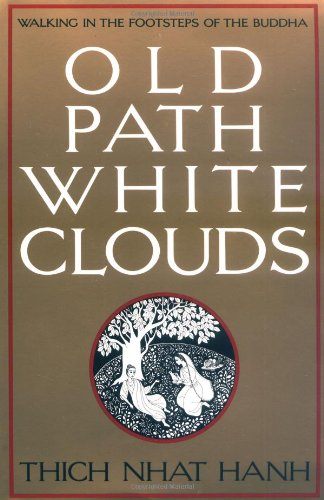
Interdependent co-arisingis a very key concept of The Buddha’s teachings. The other interesting names of this concept are dependent co-arising and dependent origination. Dependent co-arising is a deep concept. The depth requires an understanding of the concepts of Buddhism. So, I keep writing at a very shallow level examples to drive home the point. Whenever I read the book – Old path white clouds by Thich Nhat Hanh I get itched to this very concept. He explains this concept in easy words – “From interdependent origins, all things arise and all things pass away.”
I have shared multiple examples specifically for dependent co-arising on my blog. These examples were shallow yet practical relationship between the teachings of the Buddha and the present-day Business.
Whenever I try to interpret this concept; besides the interdependence, this concept touches on another concept of Hinduism (or Indic religions) – the concept of Karma. Karma gives us a guiding principle of cause and effect. It is easy to understand with the help of an English proverb – as you sow; so shall you reap. A very easy example of the cycle of Karma can be seen in an episode – Lucky penny – of How I met your mother.
However small we think we’re as an individual, we’ve the power to make an immense impact on the world. You may have heard – if a butterfly flutters its wings in Amazon forest, it may cause a hurricane in Japan. I came across this interesting Domino effect video. I could relate it to the butterfly effect and thus to dependent origination.
Watch this and relate the accumulated energy of the bar to Karma, the first piece as the butterfly fluttering wing and in effect interdependence of everything as a cycle.
In recent days #MeToo has been talk of the town in India. I do not intend to hurt sentiments of the affected girls. In fact in my social circles whenever such discussions came I supported the girl’s story. Yet, when I am writing this post, I know there has to be a balanced approach, when I vehemently supported them there were always questions – why now? why so late? etc etc. So, here is a story that happens in the life of The Buddha.
During the time of the Buddha, there was a similar incident. Though, I am not trying to justify or deny harassment cases in of Me Too as fake or if the cases / stories are coming out to malign people unnecessarily. In fact, the Bollywood is notorious for such incidents (casting couch) etc, however, someone has spoken openly about it after a long time. In fact, there were cases of journalists (read Vinod Dua) and when a Tehlka founder-editor (read Tarun Tejpal) was accused by a girl – of the age of his daughter – about molestation. Long and short journalism is not sacred either. In fact in the recent times the way journalism is getting exposed – be it Radia tapes or AugustaWestland news for cash cases – is shaking faith in print / other media itself.
There was a CD that came in public for a very short duration wherein a very prominent politician had sex in his parliament (a sacred place for democracy in India) building room. The reason for the quid pro quo was to become a judge in a high-court in India. The woman lawyer compromised for becoming a judge. Off late a news is making rounds that Chief Justice of India (CJI) harassed his staffer some time. Another politician – died recently – was dragged in court for DNA test to prove he is the biological father of an adult – recently that son of the politician died.
In essence many systems where power plays a key role are not clean – be it limelight based Bollywood or fancy journalism or being a politician or judiciary. In another such power system is spirituality and religion, a bishop in an Indian church is accused of raping nuns. The result? Nuns are in question not the bishop! Even though the nuns have come out in open! This is not just one case in isolation, there were many such harassment cases, only few were / are reported.
As the case is with Churches, the power center in olden days in India used to be the spiritual teachers. The Buddha was also accused of raping a women. What happened there may not be the case in general with above mentioned cases of recent times. Let me narrate this story from the book – Old Path White clouds.
Story from Old path white clouds
During the time of the Buddha, his teachings were becoming powerful. There was a big challenge to the establishment of that time. So some people conspired to falsely accuse the Buddha of sleeping with a woman and making her pregnant. They found an attractive, young woman and told her that the Buddha had caused a rapid decline in the faith of their ancestors by luring many young men to become his disciples. Anxious to protect her faith, she agreed to the plan.
Every day she went to Jetavana dressed in a beautiful sari and carrying a fresh bouquet of flowers. She did not arrive in time for the Dharma talks, but waited outside the Dharma hall as people left to return home. At first, whenever anyone asked her where she was going or what she was doing, she only smiled. After several days, she answered coyly, “I’m going where I’m going.” After several weeks of such vague comments, she began to answer, “I’m going to visit Monk Gautama.” And finally, she was heard to exclaim, “Sleeping at Jetavana is delightful!”
Such words burned the ears of many people. Some laypeople began to feel doubts and suspicions, but no one said anything. One day, when she came to one of the Buddha’s Dharma talks. Her belly was noticeably round. In the middle of the Buddha’s discourse, she stood up and loudly said, “Teacher Gautama! You speak eloquently about the Dharma. You are held in high esteem. But you care nothing for this poor woman made pregnant by you. The child I carry is your own. Are you going to take responsibility for your own child?”
A wave of shock passed through the community. Everyone looked up at the Buddha. The Buddha only smiled calmly and replied, “Miss, only you and I can know whether or not your claims are true.”
The Buddha’s calm smile made this woman feel uneasy, but she retorted, “That’s right, only you and I know whether my claims are true.”
The community could no longer suppress their astonishment. Several people stood up in anger, the woman suddenly felt afraid the people would beat her. She looked for a way to escape, but in her panic, she ran into a post and stumbled. As she strained to stand back up, a large round block of wood fell from where it was tied onto her abdomen, and landed on her foot. She cried out in pain and grabbed her crushed toes. Her stomach was now perfectly flat.
A sigh of relief rose from the crowd. Several people began laughing and others derided the woman. Bhikkhunis stood up and gently assisted this woman out of the hall. When the two women were gone, the Buddha resumed his Dharma talk as if nothing had happened.
Summary
The life in current times is not that easy to prove innocence or guilt. Court cases are long drawn and at times the one with influence wins. Many girls / women will be facing defamation suits in the battle of right vs wrong. Many cases may be correct however the point is – how to prove the allegations?
The intentions of this post is not to support or oppose the accused or complainant. Because there may be prima-facie the cases such as Megha Sharma where girl seems to be the culprit.
The point is every generation faces such moral bankruptcy. Some end up on the side of one gender some on the other. This is an opportunity to sensitize everyone that what is inappropriate in discussions, the same must be avoided in actions too.
It is incorrect to ask woman to hide from head to toe, not go out alone, how to dress or they invite rape if wear small cloths! We must teach the boys to respect girl. I believe that only spirituality and practices taught by Indic religion Buddhism, Hinduism and Jainism can help our societies. In particular Brahmacharya (celibacy), Aparigraha (non-possession).
Last week I wrote (The fish will fly in next birth) about a research done at Stanford University on Buddhism. This research was on impact of Buddhist concepts on individuals irrespective of their belief system. Though, I tried being little “story teller” type in writing which might have gone awry – some people did not understand what the whole blog is all about. The story and its title got precedent over the point of view of research. Here is another incident I want to share regarding the same. First a brief on the research –
Some researchers did a research on the impact of Buddhists words on individuals irrespective of the religious background these participating individuals have. Participants included – Western Christians, Westerners who practiced Buddhism and Taiwanese with a Buddhist/Taoist. According to that research, if people are exposed to Buddhists concepts people reacts to things positively more often.
Why this research seems plausible to me has another story besides the story of Fish. My wife has not been very spiritual person. After our marriage in Dec, she had opted for leave. In this leave period she read about 1/3rd of the book Old Path White Clouds.
When I used to comeback from office I started noticing that she is very calm and used to get into silence. Yes literally that was the case, it was obvious, no extra efforts required to notice it.
Initially when I was worried about what went wrong she said nothing, and that bothered me even more. I asked her to go out for walk, meet people in our building, go to nearby Gurudwara and go to market just to get mingled. She was new to Mumbai so her being silent worried me further, whether she is nostalgic or not happy [both cases seemed improbable because of her demeanor]. Yet that worried me.
Her silence had depth, I observed for a couple of days then I asked her what is the reason, and she showed me the book – she said I get into kind of meditation when I read this book page by page. I have become so calm and at peace!
I first read Old path white cloud in 2007, since then it has become a treasure for me. I have donated this book to a couple of people. I am not a Buddhist, and in fact I somehow try to avoid getting attached to any -ISM (religion).
The Stanford research has – time and again – proved to me [without that research itself, any reference of priming or social psychology] that there is something in the teachings of the Buddha that brings positive changes to an individual.
I was reading blog of Thich Nhat Hanh – a Vietnamese Buddhist Monk. It is an irony that I’m an Indian, however this Vietnamese monk introduced me to the Buddha in true sense. I read his book Old Path White Clouds and I came to know the Buddha I know now.
In his blog – The Value of Being Together when I read the point of Happiness, I remembered an incident of my life, sharing here.
Once, I went to a restaurant – Annapoorna Bhojanalya – in Indore with one of my friends Vijay Sharma. It is a rajasthani/Gujrati thali style joint at Jail road in Indore. Its quality of food is very good.
We sat and ordered our thali. I was eating very slowly, not noticing anything. I was enjoying the food. I was completely into the process of eating. Well, may be that is called meditation. After some time (usually time in which a sane person should complete eating his meal) almost every second person was looking at me. I was still eating, slowly and in all likelihood mindfully. On a lighter note, I did not over eat! 🙂
I remember, while going out after the dinner Vijay told me “…what was happening?” I didn’t understand the question. He said everyone was looking at you the way you were eating. I had no idea what that meant. Well, he completed the sentence by saying – “…that was not in any derogatory terms. Something was different than usual while you were there.” This was what was happening there “…we eat as slow as we can so we can enjoy our freedom. . We can listen to the taste in our mouth.” (from Thay’s blog)
Do we eating for the sake of it or we’d do this also completely, in meditation?
Disclaimer– Author is neither Buddhist, nor a seasoned practitioner, just an explorer of the path; not authority on meditation either.
I read a book on the Buddha – Old Path White Clouds. Really, the path is very old. We are still struggling after many centuries. The book starts with a young Bhikku – Svasti a buffalo tending boy. The Buddha had tried hard to bridge the gap pervading in society at that time. During the time of Mahabharat (even before the Buddha) Karna had to face it (as son of a charioteer, check Wiki). I am talking about the societies we have formed. We are divided by race, religion, nationality, region, caste and sub-castes. Therefore we are not a society we are ‘societies’.
I read two news items and thought to write about them. Though personally I feel religious belief is a personal matter and therefore no ‘group’ should interfere with beliefs of individuals. However, we have made religious belief system an organization which now has become a business as well as tool to discriminate. Anyways, the first news item was – First whiff of justice for Gujarat riot victims and the second was – Dalits enter Madurai temple after two long decades. In northern part of India people feel that southern states are far less discriminating, is that true? This news item shows different picture.
At the time of the Buddha there was only four divisions of Indian society (as only Hinduism existed). Now we have many religion, languages, states, castes and sub-castes. The task of bridging gaps has become difficult in our times. Take an example of one belief system of India. The concept of this system was ‘a casteless society’, within 1000 years of its existence there are about 16 different sub-caste in this single belief system! The number is alarming because old Hindu system has only 4 castes (of course 4 are then sub divided) and this example less than 1000 year old has 4 time more sub divisions. I have heard Islam has 70+ sects, Buddhism has at least 3, Christianity has a few. Phew! how long will we divide as well as fight the so called holy wars?
If we see at a macro level – we are divided in nation we live in, language we speak, color of skin, economic status for that matter brand of car we use. I am sure no spiritual master had meant to use his/her teachings as a tool to discriminate. We are humans and is not that enough to thrive, survive and grow physically, mentally and spiritually? ‘The path’ is really very old, we are still not able to understand it. We are ‘societies’ and we do discriminate, why?
I was watching a movie “Do Aankhen barah haath”, a very old Hindi movie directed by V Shantaram and also the lead role played by him. Since it is a very old movie acting is melodramatic, could be questioned and people can find many faults too, however as I wrote earlier in one of the blogs “Lost in translation” what is more important message or the presentation? So, you can watch the movie for the message.
I related the movie to a part of the Buddha’s life. Many of us must have heard the story of Angulimala, a bandit. However, how many know the story of him before he became Angulimala and after the meeting with the Buddha?
Angulimala was a bandit, killer of people just to get their fingers and make a garland. Yes thats what is known about him. The real name of Angulimala was “Ahinsak” or “Ahimsak“, a Sanskrit/Pali word meaning “nonviolent”. The pre Angulimala view about Ahinsak is on the link. What happened to him after he met the Buddha? When he met the Buddha, he became a Bhikku.
The following part is from the book Blog – Old path white clouds (Book – Old Path White Clouds). Soon after he became a Bhikku he died, how? As a Bhikku he went to the same village where he killed people for making the garland of fingers. People attacked him to take the revenge, not noticing that he is a Bhikku, completely changed person now and he is not even reacting to the attack. The message of the attack reached the Buddha, he rushed to the place. Severely wounded, Angulimala, died in the laps of the Buddha.
Similar situation arrives in the movie “Do Aankhen barah haath”, I could relate those sequences to the story of Angulimala.
My Engineering college professor Dr Anand Swaroop Saxena told me way back (in 2001 some time) – “inherently people are not flawed, situation drive people to react in the way they react.” Dr Saxena taught me a great deal, I worked with him on my undergraduate project (published in a national journal :)). He always intrigued me with his simple, profound and ruminating words. For one question he said “…situations are responsible.”. Later I met a Sant Sai Kaka, he too said almost the same thing with more details and profundity. The reaction part comes from the prior experience (sanskar) one had in life. These statements changed the paradigm for my thinking. Yet it is the responsibility of the person to control oneself not to be driven by the situation/sansakar/prior experience.
Two points to make here – 1. inherently people are not flawed, situation drive people to react in the way they react and 2. past experiences are the milestone you have left behind while you drive to a destination. You cannot drive car looking at the rear view mirror – is not it right!
Three or four years back when I was reading the book – Blog – Old path white clouds (Book – Old Path White Clouds), I started looking at businesses with a changed mindset. In India, there are small stalls on roadside. The stalls could be tea stall, paratha stall, idly dosa stall, Sandwich or others. What I observed was, at many places these stalls were near each other e.g. tea stall near the sandwich stall or the idly stall. This is so common that we overlook such arrangements of shops.
What is the reason of them being next to each other? The reason is roughly 50% of the buyer of sandwich would buy a cup of tea or the other way round some people buying tea would order for a paratha. These offerings are seemingly different for the stall owners, they are selling a refreshing drink or a breakfast however, from the point of view of a customer it is a wholesome offering – tea with paratha/sandwich.
Well the point I am trying to make with the example is one and the same. In terms of business Prof Mohan Sawhney (of Northwestern University) says ‘Metamarket’ and in Buddhism they called it interdependent co-arising.
Representation of porters five forcesIn organized retail, there are two parties catering to the end customers. One the manufacturer and the other retailer. Here too, we would see the collaboration or the dependence of one on the other. If I relate the concept of interdependent co-arising further with the very basic management lessons – Porters Five Forces – we would observe few things. Earlier the manufacturers had power (suppliers power) and now the retailers are gaining power (buyers power), and this cat and mouse game would continue. This power would shift to the ultimate buyer – the customer – perhaps it will happen in the future.
How can the forces be balanced? Well, when we look in the basics we would learn. The idea in any game theory based dilemma (Prisoners dilemma) is that when each one starts co-operating everyone wins. That would apply in long term. Net net – we would have to be on the basics – the concept of interdependent co-arising.
I was inspired by the book “Old Path White Clouds” and learnt a lot about Buddhism and the Buddha from the same. The concept of the blog also came from that understanding. So, here in this blog I am posting what I felt while I was reading the last chapters of the book –
When I was reading the last 3-4 chapters of the book, I stopped and was not willing to continue because I did not want The Buddha to die. I was so much connected to the book that I was not reading the book – “I was living the book”, and so I was not willing to let the time reach when The Buddha had to depart. In other words I did not want the Buddha to die (even in the book), it is worth appreciating the way the last chapters have been compiled and written. I realized later –
1) This (what I was reading) has happened 2500 years ago
2) The book itself says at various places (repeat various places) that
i. the thing which has a start will eventually end, if there is birth there is death. So, why am I worried that The Buddha will die or to complete it? Or am I thinking that The Buddha will die when I read those chapters (of course when I was living the book i.e. reading the book, I was in that mindset)?
ii. Our body is only one manifestation rather a physical manifestation and if the body dies it does not mean we cease to exist
And I continued to read and completed the book. The book has become a treasure for me, and I have started looking at business from a different perspective. If you want to know about the Buddha and Buddhism the book is a must read.