Tag: Long term

  • What would you do in long term?


    In the long run we all are dead – John Maynard Keynes

    I was talking to my boss. He throws interesting questions – what do you think of next disruption? Ok do not talk about bitcoins, healthcare and analytics has already plateaued! Hum! That is a challenge. Wish I knew what is next disruptive business, technology or industry.

    I asked myself, is there lack of cloths that people die of severe cold in winter in India? Is there lack of food on earth that people die of hunger in world? If there is lack of cloths or food, why are our retail stores full with cloths, and food wastage is ~33% or so (National Geographic).

    My mind goes in a very long term when such questions come to mind. I believe in next hundred or hundred and fifty years or may be sooner, we would not need money (currency) or any such thing. This is very surprising for the financial system, businesses or capitalistic mind to believe. Let me elaborate. Have you seen Uber? Has Uber made ownership of car redundant for many people?

    What if our all basic requirements are fulfilled in the same manner – for example, I have some cloths in my wardrobe, I do not wear them all in a day. I wear only one at a time. Why should I have so many cloths? What if we can just select what to wear, wear it and return at some location when we are done! You may ask a question – then how would people earn money or offer services? Uber ride requires cash, card or wallet payment. Let us think of a future – car is driven by machine, cars are run by electricity, electricity is produced automatically by nuclear power and cars are manufactured by machines. No need of a human being for anything. Remember Keynes idea of working 4 days a week or lesser. Actually our capitalistic mind does not approve of this. People must work to earn their living. The best thing is – only capitalistic approach of running for better, more, improved can help us reach the state of future which is imagined here.

    When everything happens automatically, so what would humans do to earn, or say passing time? Can you relate the first part of previous sentence with the nature? Everything happens automatically for animals and they just pass time, they do not need to earn their living. Just think the phrase “Earning your living”! Does not it sound surprising thing, you just live, is not it? You do not need to earn it. I know you might have felt offended when you read automatically and comparing humans with animals. There will be a difference – our evolved sense of self and ability to think. This ability will force us to think about our existence. Our most of the time will be involved in thinking about our existence. This may take some time, when people will get fad-up with their pleasures – perhaps the way Gautam the Buddha got disenchanted. In that world we would not need money, we would not have a lot of possession, yet we will have everything on our finger tips.

    Just look at housing in Tier-1 cities in India. There are many unused inventory kept, most is out of budget for many people to afford. I see a future where whole world will be a rambling place and a type of hotel, where you can stay when you end your day. These houses will be built by machine and thus we would not need to buy or rent them either. Money as a concept will vanish. When you would have whole world at your feet, you would not steal, you would not look for possession. You would be lighter as Mirdad said in ‘The book of Mirdad“Less possessing – less possessed”.

    Here in above paragraphs we spoke about basic needs – cloths, food and shelter. I am sure humans will evolve to self-actualization phase – of Maslow’s need hierarchy – if the above happens (Ok give and take few carnal desires). In the short term, I would want to make that type of world envisioned above. In the longer term, I would want to be self-actualized or say enlightened in this life itself.

    What would you do in long term? was the topic for the week for LBC (Loose Bloggers Consortium). I had suggested this to the group where – Maria, Rummuser and Shackman also write. You can read other LBC authors opinions on their respective links.
  • Do what is right in perpetuity


    The class was nostalgic, remembering the last couple of days of sessions of Operations Management with Prof Moradian. Today we were attending his last session of Operations Management. We all enjoyed each session, the quick wits and learnt a lot. We were attending his last session and thus all that was coming to an end for Operations Management.

    That session was very special, I could still hear his one statement very clearly that – “…in your career whenever you have to take any decision, always do what is right for your company in long term…”.

    When I recollect those words from Prof Moradian – “… do what is (make decisions which are) right for the company in perpetuity…” that makes a lot of sense to me. That one statement made me speak couple of tough truths in my career, but it feels good when you consider big picture vis-a-vis to your personal interests.

    An organizations need to learn the art of balancing between the short term sustainability and the long term growth OR short term profit and long term uncertainty. In current economic scenario short term sustainability seems the way to survive, let alone long term growth or profit for that matter. Message seems clear to me – Do what is right for the company in perpetuity.

    Actually this statement equally applies to each individual in life too – we should do whatever is right for us and others – IN PERPETUITY.

    Related blogs –

    Balancing Act – Professor Mankad shared this story of Balancing act with me earlier.

    Fruit will arrive in its season

  • Conflict of interest


    Disclaimer – Author himself is an MBA in Marketing (has been and is in the business of – kind of – selling dreams) and has worked as operations management consultant (has been and was/is/has been facing the challenges faced by operations department)

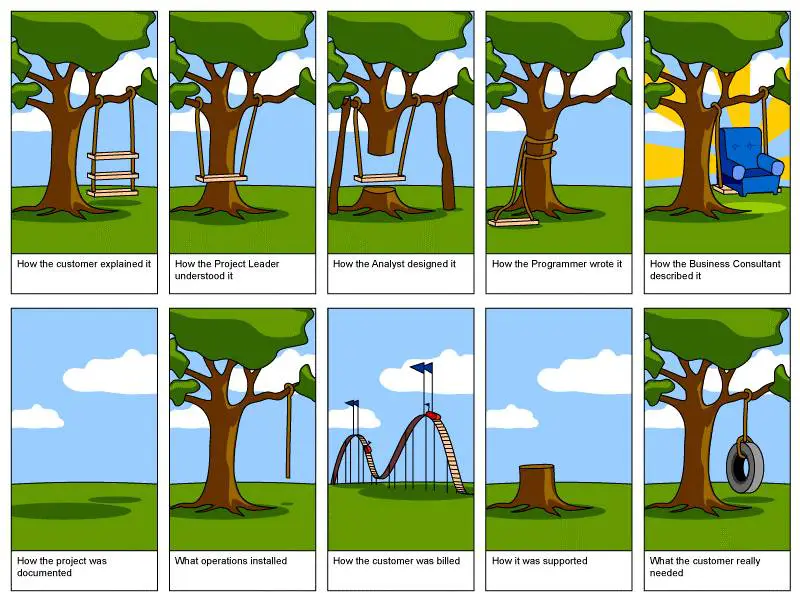
    I was comparing ourselves as an organization. I am an organization in myself, so are you and Ms Y. I was wondering about the departments Marketing and Operations. Marketing is selling dreams and Operations is capabilities. What I dream to be, could be the job of marketing department and what my capabilities are is the reality of operations.

    There is nothing wrong in dreaming, in fact it is good. At the same time knowing the capabilities is also important, that would help us realize the true potential and opportunities of improvements. Though, how often we dream then review our current potential and then think of building future capabilities to achieve potential? That’s where I think Marketing and Operations Department lock horns.

    An incident reminded me of a lecture of Prof Moradian, long term Vs short term and conflict between Marketing and Operations departments. I started seeing more reasons for conflicts between Marketing department and Operations Department.

    Marketing and Operations lock horns with each others. Because generally Marketing team communicates moon, Sales team sells the idea of “reaching the moon as a reality” to prospect and Operations finds it difficult to do that. Why? Because Operations had the capabilities and was supposed to put the prospect in the sky (not necessarily on moon). Thus, challenges faced by operations and promises made by marketing are different.

    The second issue is Marketing and Sales team lives on quarter on quarter (Q-o-Q). They have to show the revenue which is the goal for any organization. On the contrary Operations team cannot take decision for one quarter. For example – operations may not say we need infrastructure for one quarter and not in other quarter and thus make huge investment in one quarter and sell those equipment back in next.

    A branding expert told us that marketing managers (brand manager) want to start new brand building exercise (to gain in short term for writing on their resume – ‘I started this initiative’) and move to next level. New manager comes he/she too does the same. Short term gains are there for the marketing manager; yet for long term the brand is diluted perhaps no one knows what would the brand stand for in future.

    This was/is the case of 2008 melt down. Decisions were made on short term with one phrase in each agreement – “systemic risk”. BFSI industry created various certificates (CDR) etc to sell junk to make big buck in short term. Dreams were sold without real fundamentals. In other words, operations did not have the capabilities of generating the kind of returns promised – with a rider of systemic risk – to prospects.

    This is what is conflict of interest for us as individuals – our dreams Vs our realities. The same is true with Organizations – their marketing Vs operations. This is also true for us as economy – our dreams Vs the reality of systemic risk and capacity of economy to fulfill the dreams.

    Image source – http://www.cravingtech.com/blog/wp-content/uploads/2007/11/project.jpg

  • Fruit will arrive in its season…


    We talk about long term sustainability, but want to gain in short term. Shareholders want quick dividends as well as long term performance of the company. If reserves and surplus (R&S) are given in dividends where would company get money for growth. In such cases our actions and desires conflict. I initially thought about the Japanese currency crises in similar fashion (common cause Vs individual gain). Though later Prof Mankad told me that the reason of the appreciation of Japanese Yen could be the computer triggered buying/selling, the way people put stop loss trigger in share trading.

    In operations, different departments try to optimize their performance, what happens to the overall performance? It is synergy that matters rather than the individual performance. Thats where ‘Theory of Constraints’ plays an important role to achieve global optimum against the local optimum.

    I was thinking about the same for some time in a different fashion. What is long term goal of an organization and an individual? How do both the goals meet and how to build synergy between individual’s aspirations and organizations perpetuity? Why did the question arise at the first place? A branding expert told us that marketing managers want to start new brand building exercise (to gain in short term for writing on their resume – ‘I started this initiative’) and move to next level. New manager comes he/she too does the same. Short term gains are there for the marketing manager; yet for long term the brand is diluted perhaps no one knows what would the brand stand for in future. I believe, Sataym fiasco started similarly – to show the investors that Satyam is growing, numbers were made up.

    Effectively, the question to ask is – how many times we look at the bigger picture? The question goes back to Why are we doing what are we doing? I recall Prof Lopez digging deeper and probing us to the fundamental reasons and the importance of asking right questions. Where does the bug stop?

    In school we learnt couplets (termed as Doha in Hindi) of a mystic Kabir, one of them was –
    धीरे धीरे रे मना धीरे सब कुछ होय
    पानी सीचे रे घणा ऋतू आये फल होय
    Literal translation (courtesy) of the same is –
    O mind! everything happens at its own pace, slowly
    Gardner may water a hundred buckets, fruit arrives only in its season.

    I am hopeful that some day those questions would be answered and we individually and collectively would balance between the long term Vs the short term perspective. there would not be much (if not any) of opportunism. We as human beings will evolve. I am optimist, “…fruit will arrive in its season…” and we are nearing the season.