Tag: Krishna

  • Business and the Buddha – Does It Still Stand?

    In 2010 when I started the blog Business to Buddha, my hypothesis was simple – there is a connection between business, economics, management and spirituality. At that time, I found it very logical. But today, I sometimes stop and ask myself – does it still stand true? Or was it only a nice thought to start a blog?

    I go back to Buddha’s teaching of dependent co-arising – we grow when others grow. In business language, this looks like collaboration, co-innovation, ecosystem play. One company wins, but not at the cost of the other, rather both become stronger in the process. In my first blog, I had taken the example of BMW launching Z3 with James Bond movie. Or even in racing – Ferrari and Honda compete, but they push each other to make better cars. Competition, yet mutual growth.

    That is why I felt Business to Buddha makes sense.

    But where does it not work? The reality of quarterly numbers, investor pressure, market share fight – these are not spiritual conversations. Here sometimes compassion or equanimity takes a back seat. You can’t tell your board, “let’s wait for the muddy water to settle before we act.” In these moments, spirituality looks like a luxury.

    Krishna’s Wisdom

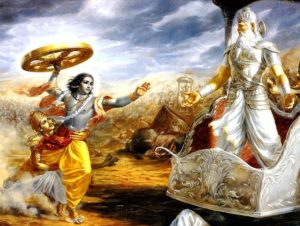
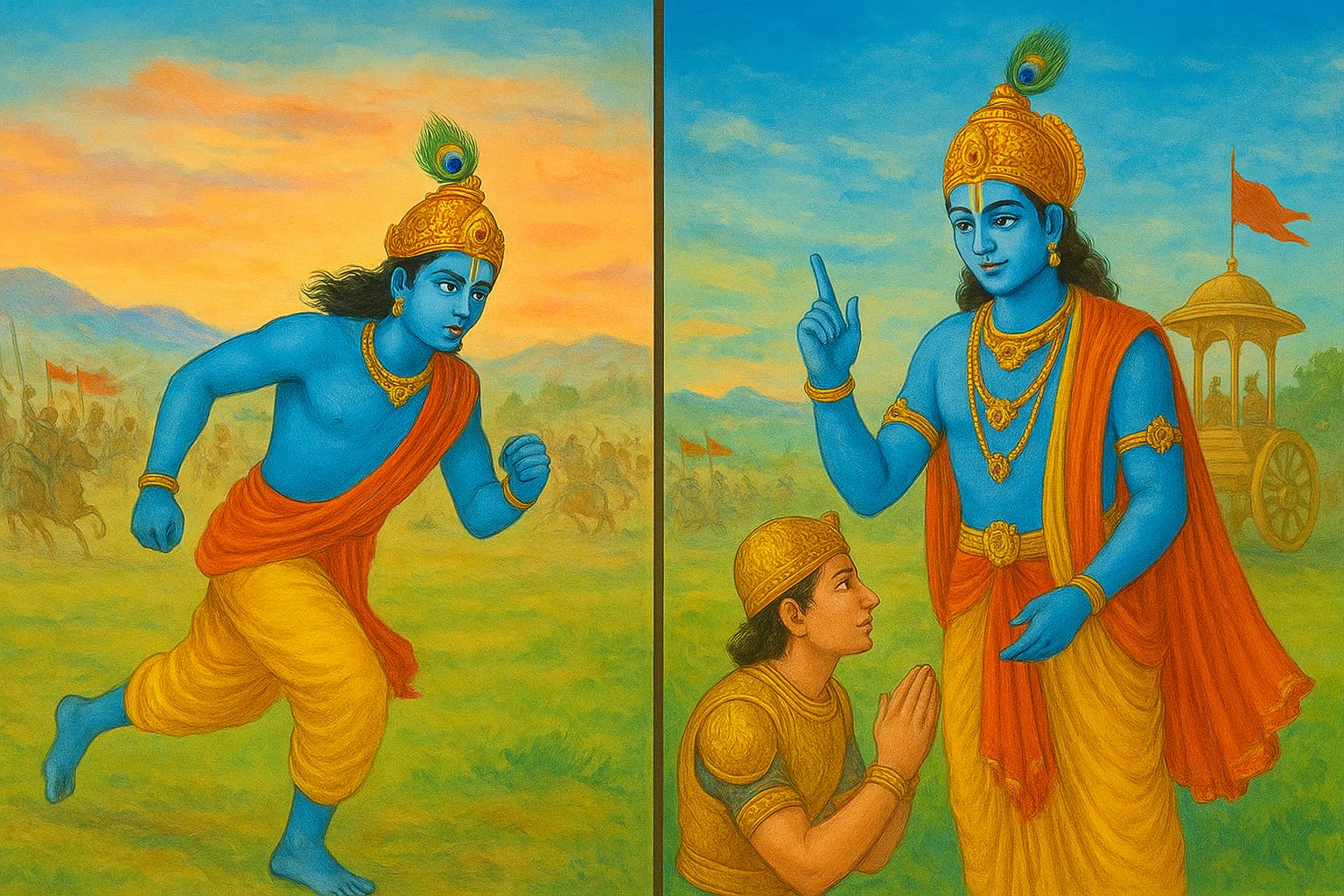
    This is where I feel balance is important. If you see Mahabharata – Krishna himself ran away from one war (Jarasandh and Kalayavan, if I recall right) but later encouraged Arjuna to stay and fight at Kurukshetra. Same Krishna, two different situations, two opposite responses. Business also needs that balance. Sometimes retreat, sometimes full action. The wisdom is to know when to do what.

    Chanakya also wrote – artha (economics) and dharma (ethics) go hand in hand. If either is missing, the state collapses. Maybe that’s what we miss today – we run only for artha and leave dharma behind.

    So does Business to Buddha still stand? I’d say yes, but not as a formula, more as a reminder. It is not that every board decision must sound like a sermon of Buddha. Rather, it is about remembering there is a middle path – between hard business realities and human values. Between quarterly pressure and long-term trust.

    The Buddha said walk the middle path. Krishna showed both – running away once, fighting another time. Chanakya tied economics with ethics. Somewhere in between these, lies the balance for us – in boardrooms, in markets, and in our lives.

    Maybe that’s why this blog continues. Not because I have answers, but because I still feel the question is valid – can we connect business with the Buddha? For me, yes – because life itself is this balance.

    Image generated using AI model

  • Gyani in professional life

    The Bhagvad Geeta defines who is a gyani (sage) as follows – “One who remains unattached under all conditions, and is neither delighted by good fortune nor dejected by tribulation, he is a sage with perfect knowledge.” It is very difficult to implement in life. The practical approach for trying is – “Pandemic has happened, we are in lockdown. This is our current reality. We cannot change it, isn’t it? What we can do now is detach ourselves from this reality and look at what can we do as a professional and as a person.” If we approach situations in this manner we can be Gyani in professional life – a saint in suit. Here is a very small example with me how I failed in it recently and learnt a lesson.

    My recent experience

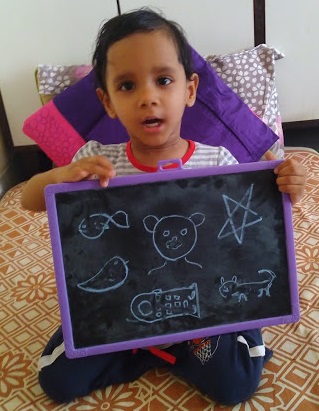
    My daughter – Adviti – has been kind enough to teach me some lessons on a regular basis. She reminded me of a Shloka of Bhagvad Geeta – “who is a Gyani (sage)?” Recently we gave her a slate and chalk so that she can scribble some things on it. She is too young – 2 years only – to write something useful. So, to keep her entertained, I make caricatures, animals or some drawings. It is a slate; it needs cleaning to scribble something next time. I am a very terrible painter, this has been a learning experience for me how to make something worth its salt. Slowly,2 I started drawing things that at least have some resemblance to the original. Now, I have started making something which is of at least some value – or I feel it is so.

    Adviti-Drawing-Lesson-Who-is-Gyani

    Initially it was ok for me, the drawings were awful and she was rubbing stuff. Yesterday I copied one of the drawings from her coloring book. I fell in love with that and as usual Adviti rubbed it clean. I tried to stop her, because I was very happy with the drawing. Probably for her there is no definition of beauty or ugliness. For her everything is equal. In fact there is a probability that the drawing I made was not worth it but I fell in love with it because I made it. So it was a lesson for me to let go and be equanimous in such situations. By the way, the picture on the side is about 2 month old, I make better drawing now 😀 😉

    http://business2buddha.com/2011/07/when-will-we-stop/

    Who is a Gyani (sage)?

    दु:खेष्वनुद्विग्नमना: सुखेषु विगतस्पृह: |
    वीतरागभयक्रोध: स्थितधीर्मुनिरुच्यते || 56||

    duḥkheṣhv-anudvigna-manāḥ sukheṣhu vigata-spṛihaḥ
    vīta-rāga-bhaya-krodhaḥ sthita-dhīr munir uchyate

    One whose mind remains undisturbed amidst misery, who does not crave for pleasure, and who is free from attachment, fear, and anger, is called a sage of steady wisdom.

    य: सर्वत्रानभिस्नेहस्तत्तत्प्राप्य शुभाशुभम् |
    नाभिनन्दति न द्वेष्टि तस्य प्रज्ञा प्रतिष्ठिता || 57||

    yaḥ sarvatrānabhisnehas tat tat prāpya śhubhāśhubham
    nābhinandati na dveṣhṭi tasya prajñā pratiṣhṭhitā

    One who remains unattached under all conditions, and is neither delighted by good fortune nor dejected by tribulation, he is a sage with perfect knowledge.

    I remember above shlokas of Bhagvad Geeta that she is effectively teaching me without even realizing. The lesson is “who is a Gyani (sage)?” I got too attached to the drawings – very trifling things – that would be gone over time. Whenever she wiped those I felt miserable, though I know these drawings are transitory.

    It is easy to relate to the slate and scribbling. It becomes difficult to apply this wisdom to our daily life. In our daily lives we are attached to the “bigger things” be it our certificates, designations or possessions. It’d be good if we learn this lesson for our daily life.

    Source – Bhagvat Geeta and the translation (Holy Bhagavad Gita).

  • Time


    In the war of Mahabharata, there were days when one or the other side was looking at the sun to set as soon as possible. The rules of the war were set that war will happen between sunrise and sunset. When Arjuna took oath to kill Jayadrath before the next day’s sunset or immolate himself, Kaurava’s were waiting for day to end sooner.

    On the other hand when Bhishma was the supreme commander of Kaurava’s army everyday was a mayhem for Pandava’s army. Bhisma killed thousands of soldiers and hundreds of chariot warriors everyday. Krishna’s frustration (though frustration cannot be the right word here) was at peak, when he felt that Arjuna isn’t fighting with Bhishma with all his capabilities and took weapons in his hands to kill Bhishma – Krishna had vowed not to fight from either side, but was a Charioteer for Arjuna.

    At this Arjuna requests to Krishna not to break his vow, and he promises to fight with his full might to not just defeat Bhishma but also end the war today itself “only if the sun does not set (as fast for the day)!” Arjuna even if was a great student yet had missed occasionally – Krishna’s loudest message to him in the whole of Geeta was perform your duties, do not think of results. Arjuna kept on missing this during these 18 days. Once here and other time at Jayadrath’s killing, Arjuna wanted the sun to be bit slow – Time to stop. I wish he had remembered the beginning of the war when Krishna was teaching him the Geeta – time must have stopped at that time, how can time fly when the god himself is speaking about the truth. Perhaps time must have not even existed when the Bhagvad Geeta was narrated.

    Time is a difficult concept to explain, oxford dictionaries define it as – “the indefinite continued progress of existence and events in the past, present, and future regarded as a whole.” What is the start and end of time? There seems to be none. In Indian philosophy time is defined as Kala. Kala has a lot of small to large measurements, that is for some other day. However when I thought about Time as a topic for LBC I could think of two things – one commentator of was Old Hindi TV Serial Mahabharat, and other a consultant saying – time is the commodity I sell. It is the most precious commodity I have, I cannot get it back once it is gone.

    The commodity is really very important and extremely perishable plus nontransferable, it cannot be restored once gone or consumed. The best thing is each one of us have the same amount of it – unlike any other commodity. What use we make of it is something to be decided by each one of us.

    We all want the time to move slowly when we are happy and to just vanish when we are in trouble. However, we always feel that when we are elated time elapses fast and vice-versa. Isn’t it? The following I wrote long back when I was doing my engineering (about 2 decades back, 1998-99 – my god I am old!) Hindi and English translation side by side

    स्वर्ग भी है यहाँ, नर्क भी है यहीं Heaven and Hell are ‘here and now’
    तुमने जैसे जिया जो पल The way you pass each moment
    तुम ही परिभाषित करोगे, कि तुम जो स्वर्ग याकि नर्क मे You define whether you are in Heaven or a Hell.

    Ramana uncleji suggested this topic for the weekly LBC blog posts. You can see what the other writers perspective is on this topic at their respective blogs Maria, Ramana and Shackman uncleji.

    Image source – http://sathyasaiwithstudents.blogspot.in/2013/06/bhakti-part-1-story-of-bhishma.html

  • How can I be liberated?


    The business of “I” is unique. We think that it relates to “me” but that the catch-22 situation. Whenever, I say this word “I” it reminds me of two consecutive chapters of The book of Mirdad. Mirdad is unique as his book, On one page he says – don’t use the word “I” it is forbidden word on the Noah’s ark; on the very next page he says “I” is the most creative word” (it is source and center of all things).

    When we say “I” it is largely the Ego talking, whereas when Mirdad says “I” (the creative word) it is the source of and frobuddhapixabaym the creator of the world. The question is – “Is ego ‘purpose of existence’ or a problem?

    Here is what The Buddha told Sariputta on the same.

    ————————-

    Sariputta came to Buddha.

    He asked Buddha, “How can I be liberated?

    Buddha said, “Do not come to me, go elsewhere – because I cannot liberate you, I can only liberate you from this ‘you’.”

    Buddha said further, “‘I’ is never liberated. One is liberated from the ‘I’. So if you are looking for your liberation, go somewhere else. But yes, if you want liberation from yourself, you have come to the right place. I will make you free from yourself. So do not ask how you will be liberated. You will not survive in your liberation. You should ask how to be free from this ‘I’ – how to be liberated from this ‘I’.”

    ————————-

    Liberated from what? If the “I” is dropped, the question ends, isn’t it!

    We can at most get attached to the actions we do, not the results. That is why I write about myself – “I’m passionate about my work and actions and empathetically careful, attached and committed to them.” Experts (read Lord Krishna) suggests do not even get attached to the actions! That is difficult, just imagine how difficult it is to detach from the “I”.

    Source – Osho, Finger Pointing To The Moon, Image source – Pixabay

  • Dalits in India, Dividing work, birth or none?


    Perhaps in middle school (6th to 8th), we learnt a lesson on why crows are our best friends and what we can learn from them. They eat dead animals and therefore keep our surrounding clean. We need to learn from them that whenever they see something to eat they always invite their fellow crows and all of them eat it together – what camaraderie, isnt it? But alas! as we grow we forget these small things we learnt as kids.

    Perhaps Krishna knew it all, he suggested Draupadi (Panchali) to reject Karna and thus Panchali said – Karna is a son of lower caste and I wont accept him as my husband. This – for my readers who have not heard of Mahabharat or know the context – was an India where girl (if not all, at least daughters of Kings), had the freedom to decide who she wants to marry. This was called Swayamvar – or a competition – where husband was selected by his capabilities by the girl. This kind of Swayamvars are recorded in history – be it Rama or Prithviraj Chauhan (12 century AD). Compare it with arrange marriage system of say two generations back when such decision was not that easy to offer to girl. This was an India where even if Krishna (God in human form as per Indian scriptures) was alive, abilities of Karna was proved secondary than caste (family’s profession).

    We have heard many such incidents in Indian history when a untouchable became center of discussion – be it Shabari who fed Rama only sweet berries by tasting those first. Here untouchable was first tasting the fruit and than offering it to Rama. Or be it a story of Eklavya. He approached Dronacharya (Drona) who refused him, later asked him to chop off his thumb to offer it as fee of teaching. Or the story of Sunita during time of the Buddha.

    I dislike the concept of caste system of India to the core. Slowly I moved away from the ritualistic religion to spiritual part of religion. I read parts of Bhagavad Geeta too. When I read Chapter 4 verse 13 of the Geeta I interpreted it in my own way, thank god at least Hinduism offers differing with the pandits; I can have my owns interpretation of the scriptures (ref recent controversy of Irrfan Khan).

    (Sanskrit) चातुर्वर्ण्यं मया सृष्टं गुणकर्मविभागशः । Sunita “Lord, I do not dare come closer. I am an untouchable.”
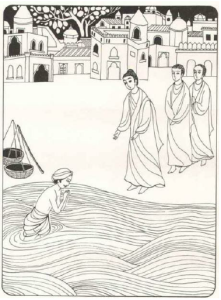
    तस्य कर्तारमपि मां विद्धयकर्तारमव्ययम्‌ ॥

    (Transliteration) catur-varnyam maya srstam, guna-karma-vibhagasah
    tasya kartaram api mam, viddhy akartaram avyayam

    I infer this as follows – “I created four sub-division of society based on work and attribute. Even after doing this I am above and beyond this division.” Remember Krishna does not say that the division is based on birth, it is based on work and attribute of work.

    Listen to other language translation here, I cannot say it this translation reflects my opinion.

    In whatever ways Indian society has misinterpreted the concept completely. This whole caste system implementation has gone awry. I believe the concept could have been, teach kids and when they grow up their abilities will put them to different works and thus their work in society will be divided in four sub-divisions! Even if this sounds justification of the caste system, I still dislike the caste system. Everyone must have his/her fair opportunity to learn and try what and how one wants to work in the society. I hope the capitalistic economics and current open access to opportunities will offer an evolved society. Currently it is just a hope, as we read the news about atrocities against Dalits. It has been close to 70 years, but if we still see these news in media either there is something wrong with our society or media is giving coverage to it only now!

    Just fresh graduate from college and I’d just joined my first job, where I was selected through campus interview. I resigned within few weeks stating I’d have done this work after my 10th, if I were to do it. My brother taught me at that time – “no work is bad, low or menial. Do not look at your resignation from your first job as an ego issue. Accept it ‘you would not have enjoyed doing it.‘ If you want to start a company, it is upto you, if you want to study further, be into R&D be it. Even if you are gardening, be the best of the gardener you could be. Do it to the best of your abilities, no work is low or menial and never forget this lesson.

    I could relate to his lesson in many sense, be it a crow’s nature to clean our surrounding inadvertently or our society having different people performing different acts, we have to balance and accept that everyone does what best he/she can do for the society. There may be instances when one’s abilities are not utilized (as was in my first job); at that time he/she has to decide to move on and do what makes more sense to him/her. In today’s world when a person makes competitive strategy – he/she is Kshtriya (warrior clan in Indian caste system). When the same person presents his concept or shares his knowledge he/she is Brahaman (Pundit, teacher clan in Indian caste system). As a startup CEO (Chief Everything from dusting room to meeting clients to executing tasks) when one cleans his desk, prepares tea, drives somewhere or designs product/service he/she is Shudra or Vaishya (lower caste or businessman clan in Indian caste system). In current social and economic setup we cannot rely on the definition of works of previous times. We need to either define things in newer manner or perhaps just get rid of the division itself.

    There may have been roads paved with good intentions (by dividing work & caste system), but could not have lead to heaven at least. We started dividing society not on work but on birth. We decided one work is better than the other – but this is be good.
  • Guide – Duel Between Mind & Heart


    Rarely, you get to see commercially successful yet very profound movies. ‘Guide’ is one such movie. It was a distinct movie by Dev Anand. Though he has made unique type of moives, but Guide is class apart. The end of the movie is a duel between the Bad Guy (within Dev Anand) and the Good Guy (within Dev Anand), this part discusses Bhagvat Geeta at extent and whole of Indian spirituality.

    If I write more it would be less, instead watch the video. Apologies I do not have English translation or script of the same. I will try and post that here some time.

    Watch online Guide (Movie), R K Narayan Novel – The Guide