Tag: Capitalism

  • Economics concepts and equality


    I was thinking about this strange experiment. What is we conclude end of day today that, everyone is given a new currency DMV (Digital Monetary Value) 2000. Any currency anyone has in his /her account is NULL except DMV 2000 after end of day today. Any other assets whatsoever are also NULL.
    maxresdefaultThis will bring everyone on the same economic level.Socialists want that, right? Next day onwards everyone has to work in DMV equivalents only. What would happen? Would we see equal socio-economic status of the world in say 20 years? Because everyone started off afresh with same amount of currency? Would the world be same as it is today (without DMV), after 20 years? The inequality will creep-in. Socialism seems to miss something in that sense of the world? The inequality in the world is not only because of the madness human-beings are involved with, but also because of the way soft things are build. The lobbying would continue, even after the DMV, and citizen’s representatives will make laws to favor few. Education will also make an impact the inequality generated. Relationships will play another role in creating the difference. Result? We would end up with the same The Price of Inequality.

    Capitalists will disagree to the starting point of the experiment itself. However, if capitalists understand the basic flaw of socialists approach they can understand last three sentences of the previous paragraph.

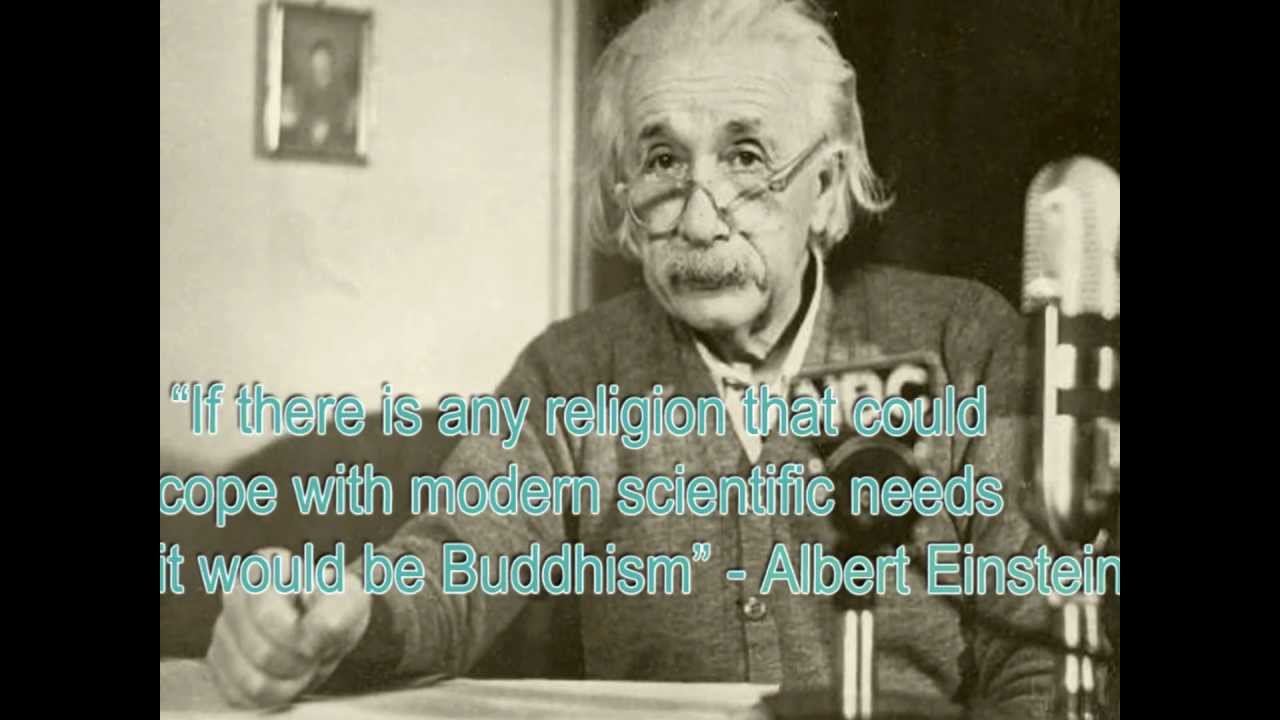
    I noticed on the net that If there is any religion that could cope with modern scientific needs it would be Buddhism. [Tweet “Albert Einstein said – If there is any religion that could cope with modern scientific needs it would be #Buddhism”] Though my opinion is – one must not even accept everything in Buddhism also as  panacea. I would suggest two point if not anything else of Buddhism – 1. compassion & knowing interdependent co-arising and 2. meditation.

    The problem is the way we think, we need to change the way we think (what we think we become) [Tweet “what we think we become”]. Here is an example – Asian shares climb after dismal U.S. jobs report. This is the situation when one side of the world is in trouble the other half enjoys and makes profit. Are we going to understand the true meaning of equality? Forget meditation for some time, are we going to learn – interdependent co-arising?

    Image source – http://i.ytimg.com/vi/hdr6vSYZXGo/maxresdefault.jpg
  • Has the time for this idea come?


    When I wrote Problem of top 5% blog I was little too concerned due to various reasons. One was, I – being a centralist – am not a good judge of the situation in completely capitalistic societies. Second was – I myself was at the center of the example. How can I judge myself. I may get biased was the very obvious possibility. I shared the draft with Prof Mankad, again various reasons. He knows me, he has lived in the US for many years, he is an economist etc. His response was –

    QUOTE# – The solution lies with top 5/10%. Regulators – teachers, principals – also bank on 10% and would not want to do anything to hurt them. (Refer to a very long article in Huffington* Post yesterday -26th Sept 2014 – on ‘culture’ at FED NY to ignore the trespasses of Goldman’s.)
    With current socioeconomic yardsticks of success, it will take time for the 10% to shed their arrogance. The society may attempt to generate a social consciousness to move away emphasis (not d-emphasise) top 10 %. Can we start with admissions to prime colleges? Take an honest, mathematically random system of selection of say 50 from top 500? Such a system would retain the academic standard and defuse the arrogance of top 50 and perhaps reduce the commercial exploitative practices of coaching classes.
    Same practice may be chosen in recruitment of employees. (And perhaps in selection of brides!) [that “bride” part a “late cut” – as Prof Mankad calls it 🙂 – on me]
    This would be revolutionary. Who will start the revolution? UNQUOTE


    So the possible solutions Prof Mankad suggested starts from the top. Top 5% or 10% need to shred their arrogance (read Problem of top 5% a figurative real life example of representing our society, economy and even schools).

    An interesting case happened recently in India. A Gujarat based Jeweler – Savji bhai – has gifted generously to his employees this Diwali. Apparently he is a standard 4th dropout! Mahatma Gandhi used to say what Prof Mankad suggested in his opinion – “…the wealth of the owners is distributed among the workers and when this situation is arrived at, only then would India grow in real terms…”

    According to reports Savji Bhai has given Diwali gifts based on a loyalty program, so even though he did not study typical “Employee Engagement” and “Loyalty Marketing” or any other jargon of an MBA. Additional interesting this is – he supports pilgrimage of his employees families, has made stadium in Surat.

    Just to conclude – Mahatma Gandhi said wealth distribution as the way for Swaraj, Top 5% are hoarding the wealth (reference Dr Joseph Stiglitz) and even Govts are afraid of top 5% so we have a creative solution which Savjibhai experimented with recently. Has the time for this idea come? Wish we see Business and the Buddha co-exist positively to make this world a better place to live and be enlightened.

    NDTV interview (I am yet to watch it though)

    Savjibhai in a brief speech (Gujarati) 2012 – when not many people knew him.


    Note –

    # The blog Problem of top 5% was published on 11th Oct, draft created was on 26-27th Sept. Prof Mankad shared his opinion on 27th Sept.

    * I read Huffington Post article which Dr Mankad referred, however currently not able to get that link, so here is related link – http://www.propublica.org/article/carmen-segarras-secret-recordings-from-inside-new-york-fed

  • Problem of top 5%


    screen shot 2014-09-28 at 2.32.00 pm.pngWhen I was studying in 12th, I had hoard of intelligent classmates. About 10% of the class was very good in Mathematics. We had completed a couple of chapters of 12th Math in advance. When these chapters were discussed in Math class session we did what we could do the best. We were wicked – as any smart fellow can be – we used to solve these problems in no time before rest of the 90% could even understand the concept. Than we used to start discussing the topic between/among ourselves. Our teacher used to be disappointed, she could not tell us anything – as we had solved the problem, we were discussing the problem (how to solve it faster and not a movie). She used to feel that she is missing on her responsibility of teaching the concept to the rest of the class.

    We were wicked, we were intelligent, we were brutal (for our other classmates) and we were trying to make as much out of our class time that we can be more competitive. The reason was whole of our class was preparing for State Pre-Engineering Test (MPPET) – 19 or 25 of us made it to Engineering out of 70 students  (which was a record for school). My friend and me were among some toppers! So, we were doing whatever we could do to get to the topics which were tough for us. One way was completing other topics faster [because we were not able to force the teacher to start topic of our choice].

    Just to give you an example – Teacher was teaching Probability theory, we used to solve the problems in no time, as most of us (the 10%) were good in that. Probability otherwise was not a simple thing, so 90% were trying to grasp the concept; we are already talking in class. The 90% used to get hassled & were not able to understand whats going on! Ma’am was little too supportive to us – we were at the top! We (the 10%) wanted to finish Probability quickly and go to Vectors and 3-D Geometry. We were learning that ourselves and wanted to support our learning with class sessions. This nonsense kept on happening starting Calculus to XYZ to Probability sessions. After a while, Ma’am realized that these guys are beating the system. The “probability” of same happening in Vectors and 3-D Geometry session was increasing day by day.

    One day before start of the mathematics class, she called us (the 10%) of the class in a different class room. She told us – in as simple words as she could – “I know you people are intelligent, I appreciate it. You are very good at Mathematics. But you know what? I have a responsibility to teach the other 90% of the class as well. I would suggest you people to abstain from class for next couple of days, because this will help your other classmates to learn better!”

    We were not able to understand her this very simple message or a very polite order. We felt she was being sarcastic. We started being more regular. Kept on beating the system. Even the Principal could not do much as everyone in our school knew – all these people are “actually” toppers whatever subject you take. This happened in 1996-97 during our class 12th.

    Now, I am revisiting that time and thinking to replace – teacher & whole school staff with the Govt of any nation. We (the 10% of us, toppers) with the top 1% or 5% of the wealthiest/powerful of that nation. Rest of the 90% of my classmates as rest of the population of the country. Did you see any ways the top seated people are beating the system? If no, please re-read the story I narrated above. Change the situation – now do you think the teacher/principal (Govt) needed (needs) to do something different? Something to perform their duty better and manage the wicked, intelligent, smart, brutal and selfish “we the top 10% students” (the top 1% or5%)

    This is the problem of top 1% or 5% or 10%, they want to maximize their own profits, most of the times beating the system. Sometimes, we need to think – if I produce something, there should be enough money in market so that my prospective buyer can buy what I produce.

    At times, its about collectively growing!

    Disclaimer – The author could – at best – secure 2nd position and remained in top 10% most of his academic career.

    Image source – http://static1.businessinsider.com/image/542851c7eab8ead666120b0a-619-457/screen%20shot%202014-09-28%20at%202.32.00%20pm.png

    If you have more time read this – http://www.businessinsider.in/Cash-Hoarding-Is-A-2-5-Trillion-Problem-In-Asia/articleshow/43753643.cms

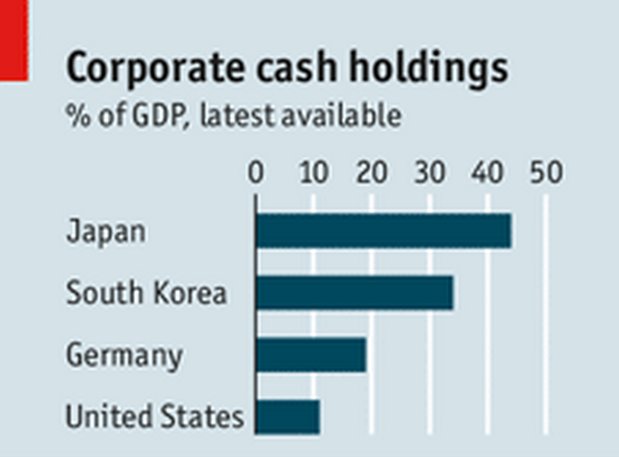
    Note – Check image above Corporate Cash Holding in Japan and Japan’s economy – read recent blog – Did Keynes fail Japan?

  • Aarti Amma


    Domestic helpAarti is in her mid 50’s if not in early 60’s. She came and settled in Mumbai when she was in her 20’s, with 3 kids and a couple of cloths that is it! She worked as a domestic help, her husband did different jobs. They taught their kids lived struggling with the ups and downs of the city. This struggle for them was “life” a survival stint.

    When I think about spiritual solutions to many problems, I have not thought about life from their level. At that level of existence survival itself is a blessing. Survival is the whole objective of life. When I am writing it I feel, the place is changed but we are still living in a jungle where animals are struggling for survival! The reasons are different though.

    So, our protagonist survived in city. Of course, one of the kids spoiled himself but other two are graduates. The best thing about this struggle is – one owns a house at the extreme end of the suburban city. Well, where is the house is not a question, one must be proud of the growth in 30 years from few cloths & nothing much to two graduates & a house in Mumbai – commendable!

    This is what I like about capitalism (no not entirety of capitalism!) – work hard and reap the rewards. I like the concept of financial freedom. Aarti and her family is still trying to get in the zone of financial freedom (even many of us).

    Aarti Amma has taught many lessons – one of them is hard work and other is managing relations. Both need a consistent practice, I am on it.

    Image for representational purpose, source Shunya’s notes

    Related blogs

    When will we stop?

    When will we stop?

    Dichotomy on happiness…

    Dichotomy on happiness…

  • The Price of Inequality


    I have read Dr Joseph Stiglitz. He is a Nobel prize awarded economist. The book I read first was Globalization and its discontents and recently I started reading The price of Inequality.

    I realized that Dr Stiglitz may not be the so called capitalist economist, he is capitalist but with a touch of a Just and relatively Equal society. So, when I started reading “The price of Inequality” I started wondering what kind of wealth difference exist in the US. Since, I have never been to the US so the picture of the USA I have always created is – no poverty, everyone having enough and more to not only survive but also a lavish life, a home with front garden, a car parking (of course too), wonderful interiors of the home etc. This picture is largely because of the Movies we watch – on a lighter note Hollywood is responsible for that ;).

    Well, while reading the book, I came across a video on Facebook (watch below).

    [youtube=http://www.youtube.com/watch?v=QPKKQnijnsM]

    Though, some may argue this video is shared for more socialistic reform e.g. healthcare reform, but that is not the point of contention for me. Watch Margin Call to understand the point of view of the bosses of the investment banks – well to sum up “They do not care! Everything will be fine in sometime.”

    My perspective is not a fight on any economic approach e.g. socialism Vs Capitalism, I favor inclusive growth and I believe for achieving that we need to follow a middle path wherein a mixed approach be used.

    Read my previous blogs related to the book – Globalization and its discontents

    Blogs here

  • Inclusive growth


    We’ve seen that socialism had it’s problem, capitalism is no less culprit. I’ve been thinking about both together and have written about it. Regularly I asked this questions of how to two of my MBA professors – Prof Harkant Mankad and Prof Arun Ramanathan. Prof Ramanathan suggested me to read functioning of Nordic countries – heavy tax but less social security. Once I shared this logic –

    Socialism & CapitalismIf we look at both simultaneously we see some good and some not so good practices. Socialism had social benefit at center but execution sucked. On the other hand capitalism has profit at center and execution is better, and also capitalism largely never considered social good as one of the concerns.

    The very bird-eye-view (yes MBAs use this kind of jargon) solution could be – What is we bring social benefit and profit together at center and use execution efficiencies of capitalism around? The profit does not necessarily become – extracting whatever available consumer surplus is there with consumer. Take an example of social entrepreneurship, that is one good approach. Here, I do not intend to say every business should be like that. Also, yesterday I tweeted and updated on LinkedIn – If you want to be social entrepreneur, remember funder of social enterprise has impact in mind+heart & investing in head, so impact weighs higher! those kind of initiative can help in inclusive growth.

    I see that PPP – Public Private Partnership – can also be great boon for inclusive growth. However, greed has created more problem in the Indian context than giving us Inclusive Growth.

    Take an example of MNREGA, it has been failing, benefits are not reaching where they should. How can political parties be kept away from execution? Politicians asking for bribe in such cases is nothing but extortion. How about giving the executioner tax benefits to get involved in it and ask for accountability? Audit Done periodically by people (an independent body monitoring). The people affected and benefited can vote for continuation or stopping that company from involvement. So this can be kind of election on performance of NREGA.

    What I think is – people want a respectable life and not bread thrown at them condescendingly. Inclusive growth is possible when we think more like a combination of socialistic -capitalistic society.

    This way we’d be capitalist but in a socialist manner where besides profit, social uplifting would be a core of philosophy and growth.