Tag: spirituality

  • The Spiritual Reset: When Strategy Isn’t Enough

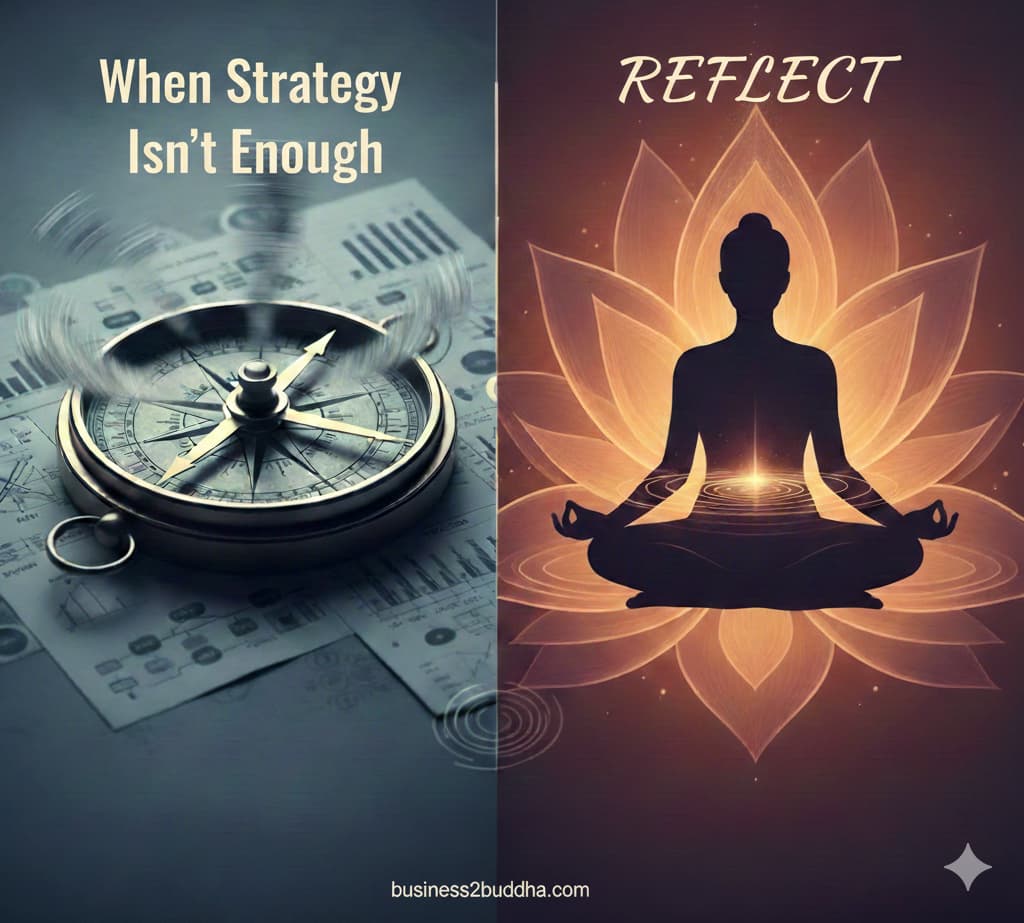
    It is the fourth and final blog in my 4-part exploration of why we lose interest in personal and professional life, what it reveals about our inner alignment, and how to rekindle purpose through a blend of introspection, systems thinking, and spiritual grounding.

    In the first blog we explored, passion slipping away, with conclusion that “The war outside mirrors the war within.” How to know if it is burnout, boredom or an opportunity for a breakthrough.

    In the second blog we closed on The mind wants clarity. The soul speaks in signals.

    In the third blog we looked at 7 different scientific methods of how to brake the chain of thought, rewire and reignite interest. The conclusion was “Sometimes, the most powerful way to reignite interest is to remember you’re not your thoughts. You’re the one watching.”

    When I was thinking about the blog series I was sure the third blog was conclusion. However, there remains few questions and therefore this blog.

    You’ve tried the frameworks.  You’ve optimized your calendar, redefined your goals, even taken a sabbatical. And yet, something still feels… off.

    That’s when you know: it’s not a tactical problem. It’s a spiritual one.

    When the logic hits the wall

    In business, we’re trained to solve problems with logic. But what if the problem isn’t external?

    A 2022 study in the Journal of Positive Psychology found that individuals with a strong sense of spiritual well-being; regardless of religious affiliation; reported higher resilience, lower burnout, and greater life satisfaction. Disclaimer: the research was on women, however I believe it applies equally on men too. Similarly there is another that was specifically done on Christian subjects and proves the same point (source: National library of Medicine).

    Why? Because spirituality offers what strategy can’t:

    • Perspective: You’re not your title, your to-do list, or your LinkedIn profile
    • Presence: You stop chasing outcomes and start inhabiting the moment
    • Purpose: You remember why you started in the first place

    What spirituality really is?

    Spirituality isn’t incense and mantras (though it can be). It’s the inner alignment between who you are, what you do, and why it matters. Indic philosophies has various methods for the same, be it Mantras to Meditation and Worship to Work, in Hindi – Dhyan, Gyan, Karm and Bhakti.

    It’s the quiet knowing that you’re not here just to perform but to participate in something larger. In Vedanta, this is called Swadharma, your unique path, your inner blueprint. When you stray too far from it, life feels heavy. When you return to it, energy flows.

    Swadharma is a Sanskrit word. Made out of two words; one Swa – means Self and another Dharma – means duty. It means duty of self. The purpose in some sense.

    Reset, not a retreat but a Reset

    You don’t need to quit your job or move to the Himalayas. You need to shift how you show up. In fact many times the thought drawn on me and every time I heard Guruji (Sri Sri Ravi Shankar) and Osho, and felt the path they teach is not to run away. Going to Himalayas sounds like running away. In fact krishna says the same thing to Arjuna, do perform your duty.

    Here’s how:

    1. Start with Silence: Even 5 minutes of stillness a day can help you hear what your mind drowns out.  Ask: “What am I avoiding by staying busy?”
    2. Revisit Your Inner Scorecard: Are you chasing metrics that matter to others but not to you? Redefine success in your own terms.
    3. Serve Without Attachment: The Gita teaches: Karmanye vadhikaraste ma phaleshu kadachana – you have the right to act, not to the fruits. When you serve without clinging, work becomes lighter.
    4. Find Your Sangha: Surround yourself with people who value depth over drama. One aligned conversation can reset your compass. We had this as one of the 7 methods in previous blog.
    5. Let Go to Let Flow: Sometimes, the breakthrough comes not from pushing harder but from surrendering smarter (Bhakti).

    When interest fades, we often look outward – new roles, new routines, new goals. But sometimes, the real answer is inward.

    Spirituality isn’t an escape from life. It’s a return to it with clarity, compassion, and courage. Getting back to our Swadharma.

    So if you’re feeling lost, don’t just optimize. Orient. Not to the next milestone but to the stillness within. Because when strategy ends, soul begins.

  • Reigniting Interest: 7 Evidence-Backed Ways to Feel Alive Again

    It is third blog in my 4-part exploration of why we lose interest in personal and professional life, what it reveals about our inner alignment, and how to rekindle purpose through a blend of introspection, systems thinking, and spiritual grounding.

    In the first blog we explored, passion slipping away, with conclusion that “The war outside mirrors the war within.” How to know if it is burnout, boredom or an opportunity for a breakthrough.

    In the second blog we closed on The mind wants clarity. The soul speaks in signals.

    So you’ve paused. You’ve listened. You’ve realized you’re not lazy or broken; you’re just “misaligned”. Now what?

    How do you go from “I don’t care anymore” to “I can’t wait to start”?

    The good news: neuroscience, psychology, and ancient wisdom (read spirituality) all offer clues. Reigniting interest isn’t about forcing motivation. It’s about reconnecting with what makes you feel alive.

    Here are 7 research-backed ways to do just that:

    1. Rewire with Novelty
    2. Reconnect with Purpose
    3. Practice Mindful Micro-Moments
    4. Reframe the Mundane
    5. Find Your Tribe
    6. Build Something That’s Yours
    7. Reconnect with the Inner Witness

    1. Rewire with Novelty

    The brain thrives on novelty. Study from the University of California show that exposure to new experiences increases dopamine, the neurotransmitter linked to motivation and pleasure.

    – Try a new route to work.

    – Read a genre you usually avoid.

    – Take on a micro-project outside your domain.

    Small shifts can spark big energy.

    2. Reconnect with Purpose

    A McKinsey study found that employees who feel connected to a deeper purpose are 5X more engaged and 2X more likely to stay.

    Ask yourself:

    – What impact do I want to create?

    – Who benefits from my work?

    – What would I do if money wasn’t the driver?

    Purpose isn’t found. It’s remembered.

    3. Practice Mindful Micro-Moments

    Just 10 to 15 minutes of meditation a day can reduce emotional fatigue and increase focus, according to research from Harvard Medical School. In fact, at times one must take time out (I did last week therefore this blog is delayed) go for a 5 day or 10 day retreat.

    – Start your day with 3 deep breaths.

    – Pause before switching tasks.

    – End your day with gratitude journaling.

    Stillness isn’t a luxury; it’s fuel.

    4. Reframe the Mundane

    Cognitive behavioral research shows that how we interpret tasks affects our motivation more than the tasks themselves.

    Instead of “I have to write this report,” try:

    – “I get to clarify ideas.”

    – “This helps someone make a better decision.”

    – “This is a prep in my leadership gym.”

    Meaning is often a matter of framing.

    5. Find Your Tribe

    A Gallup study (with multiple articles) revealed that having a best friend at work is one of the strongest predictors of engagement. In fact, in Indian spirituality, it is called “Sangachhatvam” walking together.

    If you’re surrounded by energy-drainers, even meaningful work can feel heavy. But one aligned conversation can reignite your why.

    Seek out people who challenge you, cheer for you, and call you out.

    6. Build Something That’s Yours

    Whether it’s a side project, a blog, or a community; creating something from scratch activates intrinsic motivation. For me, it has been this blog series and I have recently created a B2B marketing framework. In fact I feel excited talking about these with like-minded people.

    It doesn’t have to be monetized. It just has to be yours.

    Ownership breeds energy. Creation breeds clarity.

    7. Reconnect with the Inner Witness

    In Vedantic thought, the “Sakshi”; the inner witness; is the part of you that observes without judgment. When you reconnect with it, you stop being tossed around by moods and start seeing patterns.

    Try this:

    – Sit in silence for 5 minutes.

    – Watch your thoughts like clouds.

    – Ask: “Who is watching this?” In fact this is one of the deepest mediation taught by “Ramana Maharshi”, I am a huge admirer of him.

    Sometimes, the most powerful way to reignite interest is to remember you’re not your thoughts. You’re the one watching.

    Reflection

    You don’t need to wait for a sabbatical, a new job, or a life crisis to feel alive again.

    You just need to reconnect; with novelty, with purpose, with people, and with presence.

    In the final blog of this series, we’ll explore how spirituality; not as religion, but as inner alignment; can become your compass in a noisy world.

  • The Silent Drift: When Passion Quietly Slips Away

    It is a 4-part exploration of why we lose interest in personal and professional life, what it reveals about our inner alignment, and how to rekindle purpose through a blend of introspection, systems thinking, and spiritual grounding.

    Read my old blog on the similar concept. Circumstances – are you a victim or a victor?

    This was one of my learnings based on an interesting book The Three Laws of Performance.

    You don’t wake up one day and say, “I’m done.” 

    It’s subtler than that.

    It starts with a skipped morning ritual. A meeting you once led with fire now feels like a checkbox. The work you once loved becomes… well, tolerable. And slowly, without alarms or announcements, the inner engine stalls.

    I’ve seen this in boardrooms and classrooms. In CXOs and students. In myself.

    But why does it happen?

    The Psychology of Disinterest

    Research in behavioral science calls it anhedonia – the loss of interest or pleasure in things that once mattered. But in real life, it’s rarely clinical. It’s cumulative.

    • Micro-disappointments: A string of unmet expectations; promotions that didn’t come, ideas that weren’t heard, relationships that frayed.
    • Misaligned values: When what you do daily drifts too far from what you believe in.
    • Over-optimization: When life becomes a spreadsheet of KPIs, and joy is nowhere on the dashboard.

    We don’t just burn out from doing too much. We burn out from doing too little of what matters.

    Is It Really Disinterest or A Deeper Insight?

    Here’s a contrarian view:  What if losing interest is not a failure – but a signal?

    A signal that your inner compass is working. That your soul is whispering, “This isn’t it.” That your current path, while logical, no longer feels meaningful.

    I’ve seen leaders who walked away from high-paying roles not because they were weak; but because they saw something others didn’t. They sensed the cost of staying misaligned. And they chose differently.

    The First Step Back: Awareness

    Before we talk about solutions, let’s pause.

    If you’re feeling disinterested, don’t rush to fix it. Sit with it. Ask:

    • What part of my life feels heavy?
    • Where am I pretending to care?
    • What would I do if I wasn’t afraid?

    Sometimes, the most strategic move is to stop performing and start listening.

    A Hint of the Spiritual

    In the Bhagavad Gita, Krishna doesn’t tell Arjuna to quit the battlefield. He helps him see it differently. The war outside mirrors the war within.

    Maybe your disinterest isn’t a dead end. Maybe it’s a doorway.

    Losing interest isn’t the problem. Losing awareness is. When we stop noticing the drift, we normalize the numbness. But when we notice it, we reclaim choice.

    In the next blog, I’ll explore how to decode this disinterest – how to tell if it’s burnout, boredom, or a call to evolve.

    Until then, pause. Listen. The silence might be saying more than you think.

  • “When you get to the end of your rope…

    “When you get to the end of your rope, tie a knot and hang on”. This was one of my MBA batchmate Rachita’s status message. I am talking about 2010-11. I asked her, what is the meaning? Why have you put it?

    She explained it to me, the context was our tiring coursework and demanding content. I kept it in my blog drafts and I loved the concept, finally returned and writing this after 14 years!

    During MBA, at times it was difficult to even comprehend and we needed extra-classes. Later in the course, we used to discuss that MBA is all about commonsense. We laughed at ourselves and for few things we discussed how easy was the concept and we were confused!

    Many times, when we do not comprehend things in life, we find ourselves completely lost, but when the aha! moment happens the concept becomes so easy.

    Let me explain it with a story of A Potter.

    The Potter from Banaras

    Long ago, in the ancient city of Kasi, lived a humble potter. He wasn’t learned, rich, or respected – just a quiet man who made clay pots by the Ganga. Business was erratic. Sometimes, the rains ruined his clay. Sometimes, he couldn’t afford to buy food after a day’s work.

    One monsoon season, his kiln collapsed in a storm. His year’s savings – gone. His cart broken. For a while, he tried everything: borrowing money, seeking help from traders, selling small items door-to-door. Nothing worked.

    One evening, standing alone by the riverbank, he muttered:

    “Why is this happening to me? I did nothing wrong.”

    There was no answer. Just rain, river, silence.

    He returned home. And the next morning, he did the only thing he could: he sat with his broken pots, gathered bits of salvageable clay, and began again. Slowly. Quietly. He built his business once again brick, by brick, by brick.

    He stopped chasing fast fixes. He rose each morning, meditated by the river, shaped one pot at a time – sometimes selling none, sometimes one. He became known not for his success, but for his stillness.

    Years passed. He never became famous. Why care for his becoming famous or rich, what he gained is the inner peace. But many came just to sit with him. He listened more than he spoke. His calm presence became a space of peace.

    A young boy once asked him, “Why didn’t you give up when your kiln broke?”

    The potter smiled and said, “Because sitting with the mud was all I had. And somehow, it was enough.”

    Business and Spiritual Parallels

    Economically, he faced collapse: no income, no capital, no safety net.

    Managerially, he shifted from problem-solving to process-living – focused on what he could still control: rhythm, presence, patience.

    Spiritually, he became what the Gita calls a Sthitapragna – a still-minded person, unmoved by success or failure.

    So always remember – “When you get to the end of your rope, tie a knot and hang on”.

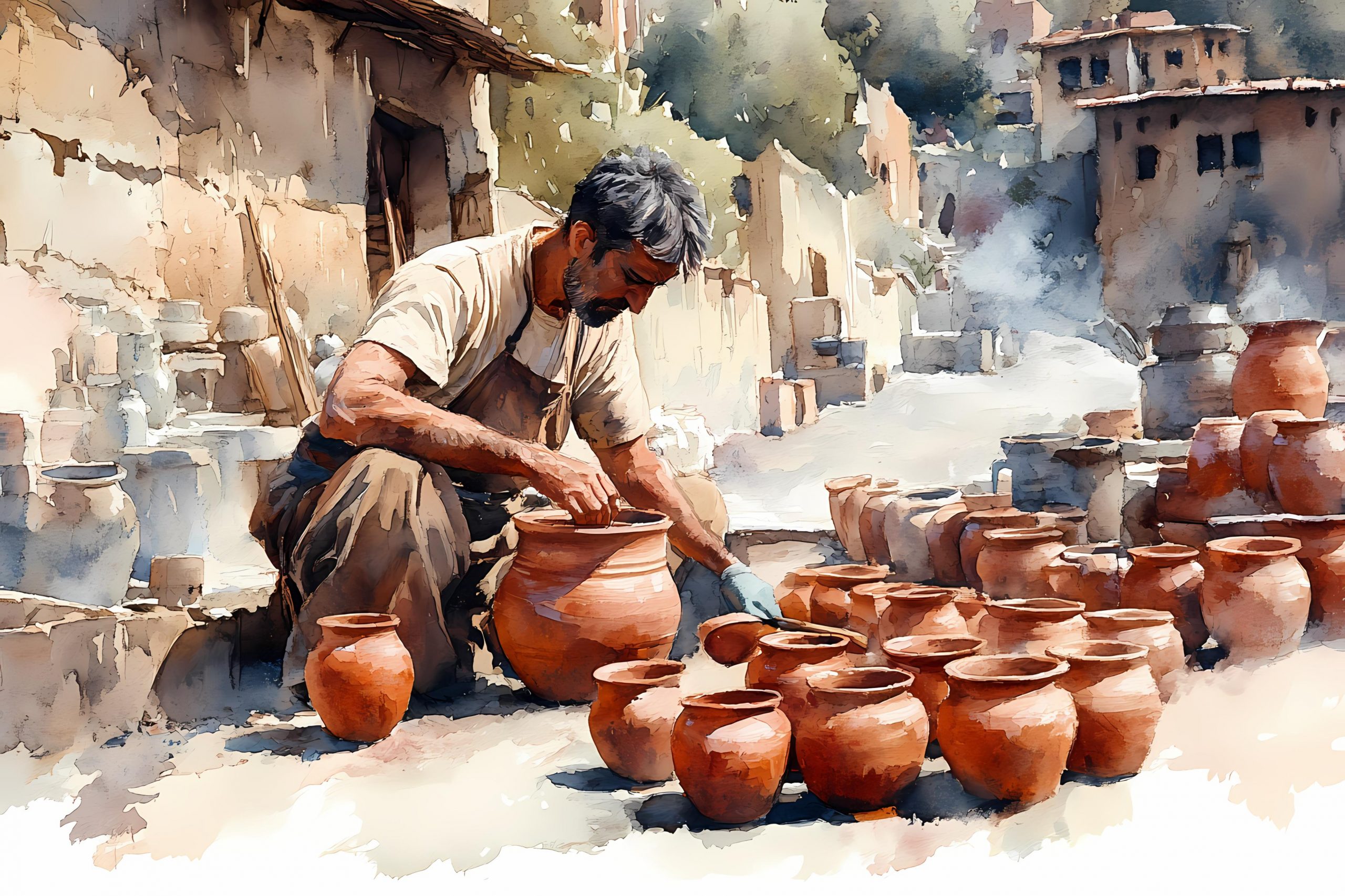
    Picture source: Freepik.com AI generated image

  • Coronavirus – Lock down? Stop and introspects

    Coronavirus has put many people across the world in a lock down situation. Many cities in Europe, China and US are standstill. In India also, some states govt or cities authorities have closed malls, cinema halls, schools etc. Who have got the luxury for them, it is a great time to sit at home to stop and introspect. People should not become couch potato at home and watch Netflix / Youtube day in and day out. This is a time to sit and introspect, what I did and what is my take? Here it is.

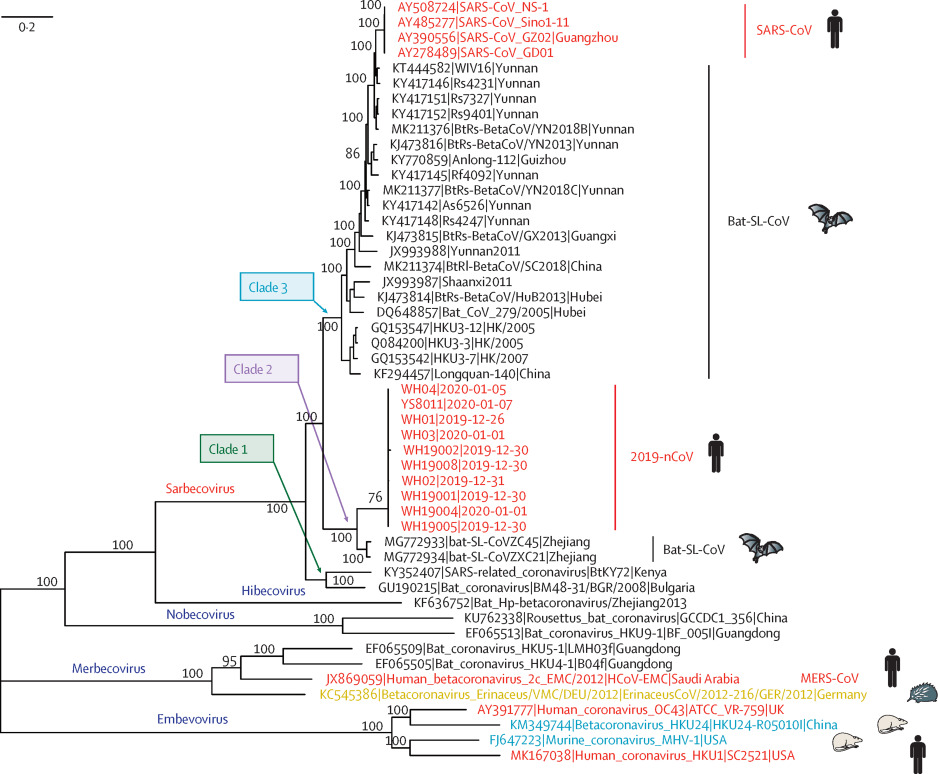
    Phylogenetic analysis of Coronavirus

    Introspection

    I started off with asking a question to myself – have we become dinosaurs of current times? Animals evolve, even the virus evolves check this last para of CDC website on Coronavirus – “…coronaviruses … can evolve….” This research by The Lancet states the virus has evolved and closely related – 88% – to two bat derived virus. Imagine how fast the virus is evolving from 2002 to now. It is an amazement that the tiniest virus evolves. How about human beings? How are we evolving? We’ve improved our healthcare system from outside, is this healthcare restricting us from developing our inherent immunity that has been there in every organism naturally? If your belief system does not allow you to accept the theory of evolution be it. However, this evolution is evident scientifically and being researched and discussed on the science fraternity widely.

    Dinosaur’s extinct one fine day, we are still struggling to hypothesize how this happened? Is it a possibility that something like Coronavirus happened with them too? I do not intend to scare with conspiracy of dooms day. My thoughts are still on introspection, we have developed a lot of technologies. Example is mobile phone, I have a 6 GB RAM mobile, I hardly require such configuration, My father has a smartphone too, he only accesses calling feature and one fitness app. Our technologies have grown multi-fold; many of us we do not even know how to use these. During this lock-down of cities, people are going to waste time on entertainment and create havoc on social media. Instead, we must spend this time with self sitting silently. It could be above conspiracy theories war, economy, healthcare and evolution.

    Conclusion

    I introspect on evolution and meditation. We spend time on how we can remain fit. Here is an interesting research done by Oslo University on a Breathing technique (Sudarshan Kriya) taught in Art of living courses. The research says Yoga Changes your Genes (Oslo university, Norway) and improve your immune system. Until the natural selection helps human beings evolve, practice Yoga and meditation it will help you – as the research states that “…changes in 111 genes expression patterns were observed, improving immune system…”.

    I leave you with this thought – stop, meditate and introspect.

    Image Source – The Lancet “Phylogenetic analysis of Coronavirus”

    Disclaimer – I am associated with the Art of Living foundation and practicing Yoga, Meditation and Sudarshan Kriya from 2004 onward.

    Related other blogs –

    https://business2buddha.com/2013/07/06/yoga-secular-or-not/
    https://business2buddha.com/2019/04/06/the-observer/
  • Businessman Buddha

    I was extrapolating to get into a mind. The mind of a person – who left everything and went to the Himalayas. What changed for him, how his mind responded to the alone-ness. What was going on in there – in the mind? Why he left the society and went to the hills? What conspired? How he changed there? Would he be the same changed person when – in case – he comes back to the society?

    Middle-Path

    Can one have the same mindset of a hermit of Himalaya, in the concrete jungles? Can one balance being a hermit in the concrete jungle? Is it true that people find peace of mind in Himalayas? What is different there and here in the worldly city?

    My recent experience of Art of living‘s Anand Utsav course has given me few more questions and dimensions. Last week I wrote about listening to the tik-tik of wall clock. My wife entered the room switched on the fan, I missed the tik-tik. This is what happens with us in our daily highly demanding and at times stressful professional life. We miss very many things in the noises of becoming someone, owning valuable things, money, designation etc.

    The long and short of all this is balancing the life with awareness and becoming a saint in a professional life. Do we really need to be a monk to be spiritual? Most of us are running to be someone or to achieve something. There is no problem in having ambition and goals; the point is ,it make one restless. Why to be restless and anxious? Is not it a possibility that a person can be centred and yet ambitious? Is not it a possibility of a person being spiritual, professional and successful? These questions have become easier for me to have a perspective after the Anand Utsav course. I would certainly repeat more courses of Art of living.

    Just-be

    One can follow the middle path of being an enlightened master without leaving everything. One can be an enlightened master without leaving family. I see future enlightened masters will be successful professionals. These future generation enlightened master would / may not even talk about high flying esoteric spirituality. They will do their work as any worldly person does. These masters will not leave everything for the Himalayas, they may not sell their Ferrari. I think that is what is the lesson of the Buddha – Middle path. I think that is why current generation enlightened master’s are bringing spirituality to masses and to the day to day life.

    As Osho said long back, many of the masters will be like the Zorba. Zorba the Buddha (Osho’s book) – “… Zobra is Love and Buddha is Awareness… when you are Zorba the Buddha, you have attained the greatest height that is possible in existence…”

    Image source of monk https://www.theguardian.com/technology/2011/apr/17/untangling-web-aleks-krotoski-religion

  • Unifying heart, mind and actions

    At times after office, I take my daughter – Adviti – for a walk. It was such usual day when after office I took her to the nearby market area where there were seats to sit and gaze the moving vehicles leisurely. She enjoys watching buses, whenever I see her look at bus or point at moving buses I start singing a nursery rhyme – “Wheels on the bus go round and round…”. Recently, this outing taught me – once again – how can one unify heart, mind, and action together.

    She is generally very observant – as with any infant – she also gets completely engrossed in the observation. This one day, I rediscovered and realized a very cliché known fact. She was sitting on a bench, watching the buses and enjoying the sight. After a while, an old man came and sat. A decent looking, in his mid-60s or early 70s, an old man who was new to both of us was sitting next to us. Adviti started feeling uncomfortable and started crying. I told her, see Advi he is like Aba (dadaji). She is too young to understand it. She kept feeling uncomfortable for some time. I tried diverting her attention and again showing her moving buses and singing the rhyme. The old gentleman too tried talking to her and pacifying her but to no avail.

    After a while when it was a bit irritating to the nearby people, I took Adviti to another bench. When we sat at new nearby she repeatedly looked at the gentleman intermittently. However, this time around I could divert her attention to the original purpose of our visit – leisure visit to the market, looking around vehicles and causal amusement.

    When she was happily looking at vehicles and had forgotten the incident, I revisited the event in my mind. Until she was focused she was completely engrossed in the activity. The moment she got a distraction she lost all her fun and joying. This happens with us also a lot of times. We get distracted with some or the other thing. It impacts our productivity in the office our personal life when we start looking at others rather than concentrating on what we do and enjoy doing. Small incidents teach us a lot.

    Earlier I had written on focus. I had put a point in that blog – “Distractions are felt if you are not centered”. The corollary is equally correct – If one is distracted it is difficult to be centered. I always feel that the solution for this is meditation and spirituality. Meditation helps improve awareness which eventually makes it easy to bring together the heart, mind and action together.

  • Me too in Buddha’s life

    In recent days #MeToo has been talk of the town in India. I do not intend to hurt sentiments of the affected girls. In fact in my social circles whenever such discussions came I supported the girl’s story. Yet, when I am writing this post, I know there has to be a balanced approach, when I vehemently supported them there were always questions – why now? why so late? etc etc. So, here is a story that happens in the life of The Buddha.

    During the time of the Buddha, there was a similar incident. Though, I am not trying to justify or deny harassment cases in of Me Too as fake or if the cases / stories are coming out to malign people unnecessarily. In fact, the Bollywood is notorious for such incidents (casting couch) etc, however, someone has spoken openly about it after a long time. In fact, there were cases of journalists (read Vinod Dua) and when a Tehlka founder-editor (read Tarun Tejpal) was accused by a girl – of the age of his daughter – about molestation. Long and short journalism is not sacred either. In fact in the recent times the way journalism is getting exposed – be it Radia tapes or AugustaWestland news for cash cases – is shaking faith in print / other media itself.

    There was a CD that came in public for a very short duration wherein a very prominent politician had sex in his parliament (a sacred place for democracy in India) building room. The reason for the quid pro quo was to become a judge in a high-court in India. The woman lawyer compromised for becoming a judge. Off late a news is making rounds that Chief Justice of India (CJI) harassed his staffer some time. Another politician – died recently – was dragged in court for DNA test to prove he is the biological father of an adult – recently that son of the politician died.

    In essence many systems where power plays a key role are not clean – be it limelight based Bollywood or fancy journalism or being a politician or judiciary. In another such power system is spirituality and religion, a bishop in an Indian church is accused of raping nuns. The result? Nuns are in question not the bishop! Even though the nuns have come out in open! This is not just one case in isolation, there were many such harassment cases, only few were / are reported.

    As the case is with Churches, the power center in olden days in India used to be the spiritual teachers. The Buddha was also accused of raping a women. What happened there may not be the case in general with above mentioned cases of recent times. Let me narrate this story from the book – Old Path White clouds.

    Story from Old path white clouds

    During the time of the Buddha, his teachings were becoming powerful. There was a big challenge to the establishment of that time. So some people conspired to falsely accuse the Buddha of sleeping with a woman and making her pregnant. They found an attractive, young woman and told her that the Buddha had caused a rapid decline in the faith of their ancestors by luring many young men to become his disciples. Anxious to protect her faith, she agreed to the plan.

    Every day she went to Jetavana dressed in a beautiful sari and carrying a fresh bouquet of flowers. She did not arrive in time for the Dharma talks, but waited outside the Dharma hall as people left to return home. At first, whenever anyone asked her where she was going or what she was doing, she only smiled. After several days, she answered coyly, “I’m going where I’m going.” After several weeks of such vague comments, she began to answer, “I’m going to visit Monk Gautama.” And finally, she was heard to exclaim, “Sleeping at Jetavana is delightful!”

    Such words burned the ears of many people. Some laypeople began to feel doubts and suspicions, but no one said anything. One day, when she came to one of the Buddha’s Dharma talks. Her belly was noticeably round. In the middle of the Buddha’s discourse, she stood up and loudly said, “Teacher Gautama! You speak eloquently about the Dharma. You are held in high esteem. But you care nothing for this poor woman made pregnant by you. The child I carry is your own. Are you going to take responsibility for your own child?”

    A wave of shock passed through the community. Everyone looked up at the Buddha. The Buddha only smiled calmly and replied, “Miss, only you and I can know whether or not your claims are true.”

    The Buddha’s calm smile made this woman feel uneasy, but she retorted, “That’s right, only you and I know whether my claims are true.”

    The community could no longer suppress their astonishment. Several people stood up in anger, the woman suddenly felt afraid the people would beat her. She looked for a way to escape, but in her panic, she ran into a post and stumbled. As she strained to stand back up, a large round block of wood fell from where it was tied onto her abdomen, and landed on her foot. She cried out in pain and grabbed her crushed toes. Her stomach was now perfectly flat.

    A sigh of relief rose from the crowd. Several people began laughing and others derided the woman. Bhikkhunis stood up and gently assisted this woman out of the hall. When the two women were gone, the Buddha resumed his Dharma talk as if nothing had happened.

    Summary

    The life in current times is not that easy to prove innocence or guilt. Court cases are long drawn and at times the one with influence wins. Many girls / women will be facing defamation suits in the battle of right vs wrong. Many cases may be correct however the point is – how to prove the allegations?

    The intentions of this post is not to support or oppose the accused or complainant. Because there may be prima-facie the cases such as Megha Sharma where girl seems to be the culprit.

    The point is every generation faces such moral bankruptcy. Some end up on the side of one gender some on the other. This is an opportunity to sensitize everyone that what is inappropriate in discussions, the same must be avoided in actions too.

    It is incorrect to ask woman to hide from head to toe, not go out alone, how to dress or they invite rape if wear small cloths! We must teach the boys to respect girl. I believe that only spirituality and practices taught by Indic religion Buddhism, Hinduism and Jainism can help our societies. In particular Brahmacharya (celibacy), Aparigraha (non-possession).

  • Work, games and spirituality

    It was a pleasant evening of  summer vacation in 1996. We were playing cricket as usual. We were about 15-16 boys and kids of our colony. Few of us were in teens, me and my friend used to lead and divide team and lead them to play against each other. My friend – an all-rounder – was a very sincere, serious and fully dedicated to the tasks given and therefore respected by all friends alike. I knew his this nature because we were together in NCC too. This event happened 20+ years back. Yet I remember the day, because it taught me about work, games and spirituality. Though it took me 20+ years to learn the lesson.

    That day in the very first match of 6 overs, we’re all out at 8 runs score. This was the first match for evening, my team discussed to lose this match and we will play next better. We’d given up even before beginning our bowling. I took the first over, and bowled slow delivery to my friend. He understood our thought process, instead of playing the ball, he caught the ball and threw it at me angrily. He said – if you want to play, play seriously! If you dont, either I or my team wont continue playing with you guys. Go back bowl like you would otherwise!

    Actually it hurt my ego. I felt humiliated and realized that they too deserve a fair play. So, this time around – knowing that we are going to lose – I bowled the best I could. In first over we took 4 wickets and gave away 2-3 runs. Our team size used to be 7-8 mostly. So, we realized we are in the game! But the problem was – my friend was still on the crease and we had weak alternative bowlers. We’d no chance, I gave the ball to my bowler and went to field at boundary (long on).

    I don’t know what was going on in my friends mind, whether it was his overconfidence or desperation to finish the game quickly he hit a big shot. I ran like mad to catch and jumped to catch the ball, bruised myself but my friend was out. This was the moment – similar to Sachin Tendulkar’s wicket in 90’s for Australia – we realized even with 8 runs score and 29 balls spare, we can win. It was just a matter of few more balls and we won.

    The lesson

    I learnt a lesson when I was reprimanded to immense humiliation. Though I could comprehend the learning only now when I read an interpretation of Bhagavad Gita Chapter 4, shloka 22 by Sri Sri Ravi Shankar (Guruji). A friend of mine from The art of living shared this interpretation with me. I am sharing a select part of the message which can help identify inference.

    यदृच्छालाभसन्तुष्टो द्वन्द्वातीतो विमत्सर: |

    सम: सिद्धावसिद्धौ च कृत्वापि न निबध्यते || 4.22||

    yadṛichchhā-lābha-santuṣhṭo dvandvātīto vimatsaraḥ

    samaḥ siddhāvasiddhau cakṛitvāpi na nibadhyate (4.22)

    “Being free of jealousy, having that equanimity of mind, Arjuna, do your job!”

    …When you don’t think whether you will succeed or not, you will be able to give your hundred percent. Often it is the result which makes you not give your hundred percent… If you know you are going to lose, then you will not be sincere about playing the game... When you don’t worry whether you win or lose, or you don’t even consider its effect, you give your hundred percent, that is really playing, that is a real game.

    “It is the same with work. Work has to be like a game.”

    A yogi considers even his work as a game, so be a yogi. Yogi means ‘one who does things in perfection.’ Every little thing he does will be perfect because he has that equanimity of mind. Only when you consider your work as a game, can you ever be detached about whether it is going to be successful or not. It doesn’t matter anyway.

    My friend taught me the above lesson – I learnt and understood that lesson recently.

  • Mumbai and ego

    Mumbai is a unique city. I was talking to a friend of mine and had a eureka moment. There is a relationship between Mumbai and ego. One can learn a lesson or two on spirituality from Mumbai.

    Ego puts itself at center and everything – including the world – around itself. Similar thing happens in Mumbai. Geographically Mumbai is in length, unlike many other cities. There is no way you can be in center of the city if you are in a corner.

    Map of Mumbai, Mumbai and egoMumbai has three railway lines – Central, Harbor and Western. Western line is of affluent people, Central line people feel they are in the center of city. Harbor line is of Navi Mumbai, one of the largest planned city in the world.

    Western line is very crowded, at times if you are stuck in traffic on western express highway you are immobile for an hour or so. When you talk to people of Western line, you will hear oh “western” is far better. It is centrally located, I get everything in my locality. Standard of living are simply incomparable with rest of Mumbai.

    Similar logic you get when you talk to people of central line. They will say trains run fastest on our line, eastern express highway is really a highway. We are centrally located and can reach anywhere easily. When you talk to people living on harbor line you will hear almost similar good reasons to be on harbor line. It is far more planned has a lot of space, wide roads and planned neighborhood unlike mainland Mumbai. Standard of living are far better than any other part of Mumbai – at least we have some space to live at home. These points are mostly by those who live in Navi Mumbai.

    Our ego also works in the same manner. We are centrally located, everything is centered around me. Ego tends to look at sunny side of self and possibly shortcomings of others.

    Whether you talk to a person living in Borivali (Western), Bhandoop (Central) or Chembur (harbor). Borivali is in north – similarly Bhandoop or Chembur. This is a unique learning you have from Mumbai. You consider yourself as the center and whole world is circling around you irrespective of whether it is so. It is like Shashi Throor hidden in all of us.

    Ego and Mumbai are one to one mapping, both of these show us how our mind manipulates us. We need to stop manipulation of self by the self.