Tag: competition

  • Improving self

    When you work somewhere ultimately who are you working for? A shallow answer is for the company or the client. The deeper answer is for the self. You are trading your skills to a company or a client to earn your bread, right? When you improve self who would benefit more? You ain’t it?

    improve

    I was thinking about developing oneself. I wrote a few sentences and continued from my previous blogs on the competition. When I reached the end of the second paragraph, I realized that I need to take the support of this one scene of the movie “Three idiots” to drive home the point. In this movie, a character goes for an interview and says ‘…I found this confidence after breaking 16 bones, I will be able to do something good with my life…”.

    https://www.youtube.com/watch?v=wkFS7lNnEMA

    This is right, everyone has the capabilities to do something worth it for his or her life. Why get in a race of anything? Especially when one understands, competition brings stress, stress causes mental or physical suffering. Why try to be a replica of someone else when one can be a better version of self?

    Improving self

    What best a person can do? Improve self isn’t it? Improving self requires looking at your own self, knowing owns strength and weakness, understanding the environment where you’ve to perform and working on these to get better results, that’s it. 

    I know people may have a point – how is that possible in a competitive world? Sales folks may say how will we bring in new business is we don’t compete with rivals? The point is – is now of learning and improving self. It is more about improving your product rather than just trying to sell a solution that may not be a good fit – your competitor’s product may be better. The point is followers look at leaders and compete with them. Leaders look at the customer best example is Amazon, isn’t it?

    In your case, you are the customer and you are the serving company.

  • Competing with ourselves

    Learning is learning, what is the scope or meaning of competition in that? Everyone has his or her level of comprehension and skillset. Some take more time to learn math but are wonderful at poetry others take less time but not good with creativity. Isn’t it common? So life is good when we try to be a better version of ourselves, competing with ourselves rather than trying to compete with everyone out there. I hope the new education policy, keeps this at its core rather than making kids slog to get more marks.

    https://business2buddha.com/2018/10/i-want-to-be-the-winner/
    Now, when I look back I feel most of the times, it is about collective growth rather than me over you. After reading about interdependent co-arising I have always believed in collective growth.
    https://business2buddha.com/2017/07/education/
     some times, “it is ok to stop in life instead of rushing.”
    https://business2buddha.com/2020/02/interdependent-co-arising-in-long-run/
    We at times miss the power of small things and ignore them. This understanding of sensitivity of impact of one thing on a larger scale makes a person compassionate.

    Inspiration for competing to improve myself

    I was an (above) average Joe in school days, used to do a lot of extracurricular. This happened when I was in grade 11. In 11th, we all took admission in this school from different schools. I started sitting with my colony friend Sumit and his friend Nikhil. Both of them were far more intelligent, toppers, and NTSE (National Talent Search Examination) scholars. At the beginning of grade 11, I wasn’t very serious about studies. I wanted to be an engineer however I was still in many extracurricular kind of lacking focus. I found the focus on studies after an interesting incident, and yet continued with extracurricular.

    school

    One day, Nikhil was sitting with his Mathematics “book” and thinking something. Because this book was kept below the desk and there was no notebook. I asked, “what are you reading”? He replied, “I am solving a problem”. I said there is no notebook and you seem to be reading a book. He said “trying to solve it mentally”. I asked again – what problem is it. It was 2 or 3 chapters ahead of our school math classes chapter.

    It made me serious about studies and made me think about how can I solve problems mentally rather than on just pen papers. When I look back, I realized that Nikhil was an inspiration for me. There was no competition for me with him or anyone else in the class. I just wanted to be better than what I was earlier. In fact on a serious note, Nikhil always scored a perfect 100 in Math that I could never. It seems like if I take the Math exam again, there will be still room for improvement. Effectively, he helped me be a better version of myself, I could never become like him in Math though. 🙂

    What better recognition one can expect? Within a year I had improved myself a lot. Once in grade 12, he said “Computer ko lekar Brahma ne banaya kya?” (Did God make you with a computer?) for solving either probability or integration/differentiation problem in class – I used to do it in the head without touching pen paper. This, coming from the same person was a testimony that I had achieved what I set as a goal. Nikhil did not know that he was eventually praising himself because he had motivated me to do something like this.

    Competing with ourselves

    There are inspirations as Nikhil was for me – how can I be like him, solve problems in mind itself. However, when we limit ourselves we either have envy or competition. The world is too big to compete with everyone – currently about 7 billion. It’d be endless and completely outwards journey as Alexander (the great) had. He kept on trying to win the world and died too young learning “I’ll die empty-handed“.

    The endless competition with “self” is better because the goal is to improve oneself daily. Nikhil had been a positive influencer who became an inspiration, not a competition. In fact, Sumit and Nikhil both became an influencer for me (read another incident from the same school here), Sumit was the state topper in 12th. A lot later in my life, I came to understand and relate to these learnings with both of them as interdependent co-arising. I wonder what they learned from me but I improved a lot. The word “competition” must be looked at with a positive perspective, it should help one improve oneself rather than becoming a race. A perspective and an approach make a huge difference in one’s life. Thank you, Nikhil for inspiring me and eventually helping me learn that one has to compete with ourselves rather than the endless world.

    https://business2buddha.com/2019/06/societal-impact-of-interdependent-co-arising/
    We all grow when we help each other to grow whether it is our subordinates or our competitors.

    Competing with ourselves in business

    I understand it becomes difficult to digest the concept of competition in academics, professional life, and business. I shall share more thoughts on that in some future blogs. Here is a pointer until that blog, I am reading a book by my MBA professor – The new rules of business. This book also gives a perspective on competition. A wonderful lesson from that can be paraphrased as – if you compete with your competitors you may end up being a copy of them in fact one may end up doing the mistakes your industry is doing.

  • I want to be the winner

    Couple of weeks back, I was reading a psychology based assessment and relevant review of the same. In the review, I found one particular pointer – “I want to be the winner”. I read it, then re-read it. This stuck me and I paused.

    Winning in corporate battle or academics

    I have always been a very competitive person. However, this time when I was reading this statement it looked too complicated to define a person. So I re-read the statement – “I want to be THE WINNER”. Yes it is always a wish to be a winner, but THE WINNER! This drifted me from the overall review and psychology stuff to a general social issue.

    Are we really making youngsters competitive or we are pushing them to be a “CUTTHROAT”. Just read the word again – cut throat. In another words it means kill!

    So, the psychology questionnaire and its review had my attention even more. What defines a person as most likely or least likely for “I want to be the winner”. If someone is reading it in a passing reference, it will be just a statement, however if you look that statement in a social, personal, academic or professional context this statement may be very fatal.

    This can be fatal when we think everyone wants to be the winner. Our education system makes us compete at times when it is not required! I have written on this reference earlier – the problem of top 5%. Why top 5%? Because I was never in top position in academics :). When I look back at myself 20 years when I was in 12th, I realize that what kind of damage I might have done to the class in which I studied. Now, when I look back I feel most of the times, it is about collective growth rather than me over you. After reading about interdependent co-arising I have always believed in collective growth. Even the economy cannot survive if only some people grow – bad precedent is trickling down economy, that is a mirage.

    I believe, life is like a team sport, take an example Football. When you play, you play with a team on your side, you are competing to score a goal, it is not likely that a football team goalkeeper will score, but if the team wins, the goalkeeper naturally is one of the winners.

    There is no problem in being a winner, wanting to be a winner, however “THE WINNER”?

  • Has the time for this idea come?

    When I wrote Problem of top 5% blog I was little too concerned due to various reasons. One was, I – being a centralist – am not a good judge of the situation in completely capitalistic societies. Second was – I myself was at the center of the example. How can I judge myself. I may get biased was the very obvious possibility. I shared the draft with Prof Mankad, again various reasons. He knows me, he has lived in the US for many years, he is an economist etc. His response was –

    QUOTE# – The solution lies with top 5/10%. Regulators – teachers, principals – also bank on 10% and would not want to do anything to hurt them. (Refer to a very long article in Huffington* Post yesterday -26th Sept 2014 – on ‘culture’ at FED NY to ignore the trespasses of Goldman’s.)
    With current socioeconomic yardsticks of success, it will take time for the 10% to shed their arrogance. The society may attempt to generate a social consciousness to move away emphasis (not d-emphasise) top 10 %. Can we start with admissions to prime colleges? Take an honest, mathematically random system of selection of say 50 from top 500? Such a system would retain the academic standard and defuse the arrogance of top 50 and perhaps reduce the commercial exploitative practices of coaching classes.
    Same practice may be chosen in recruitment of employees. (And perhaps in selection of brides!) [that “bride” part a “late cut” – as Prof Mankad calls it 🙂 – on me]
    This would be revolutionary. Who will start the revolution? UNQUOTE


    So the possible solutions Prof Mankad suggested starts from the top. Top 5% or 10% need to shred their arrogance (read Problem of top 5% a figurative real life example of representing our society, economy and even schools).

    An interesting case happened recently in India. A Gujarat based Jeweler – Savji bhai – has gifted generously to his employees this Diwali. Apparently he is a standard 4th dropout! Mahatma Gandhi used to say what Prof Mankad suggested in his opinion – “…the wealth of the owners is distributed among the workers and when this situation is arrived at, only then would India grow in real terms…”

    According to reports Savji Bhai has given Diwali gifts based on a loyalty program, so even though he did not study typical “Employee Engagement” and “Loyalty Marketing” or any other jargon of an MBA. Additional interesting this is – he supports pilgrimage of his employees families, has made stadium in Surat.

    Just to conclude – Mahatma Gandhi said wealth distribution as the way for Swaraj, Top 5% are hoarding the wealth (reference Dr Joseph Stiglitz) and even Govts are afraid of top 5% so we have a creative solution which Savjibhai experimented with recently. Has the time for this idea come? Wish we see Business and the Buddha co-exist positively to make this world a better place to live and be enlightened.

    NDTV interview (I am yet to watch it though)

    Savjibhai in a brief speech (Gujarati) 2012 – when not many people knew him.

    http://www.youtube.com/watch?v=ggzvL5ts4OA


    Note –

    # The blog Problem of top 5% was published on 11th Oct, draft created was on 26-27th Sept. Prof Mankad shared his opinion on 27th Sept.

    * I read Huffington Post article which Dr Mankad referred, however currently not able to get that link, so here is related link – http://www.propublica.org/article/carmen-segarras-secret-recordings-from-inside-new-york-fed

  • Problem of top 5%

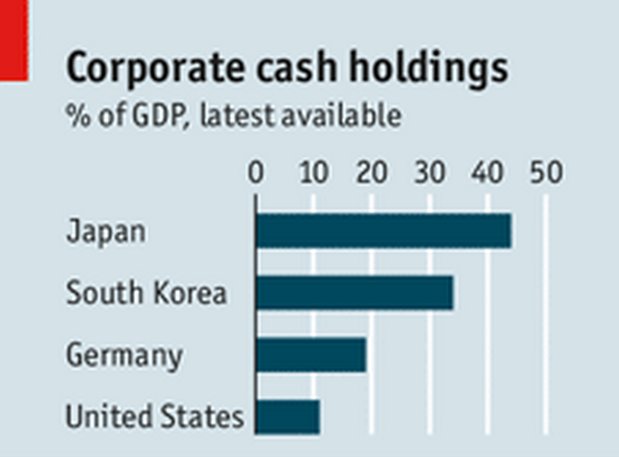
    screen shot 2014-09-28 at 2.32.00 pm.pngWhen I was studying in 12th, I had hoard of intelligent classmates. About 10% of the class was very good in Mathematics. We had completed a couple of chapters of 12th Math in advance. When these chapters were discussed in Math class session we did what we could do the best. We were wicked – as any smart fellow can be – we used to solve these problems in no time before rest of the 90% could even understand the concept. Than we used to start discussing the topic between/among ourselves. Our teacher used to be disappointed, she could not tell us anything – as we had solved the problem, we were discussing the problem (how to solve it faster and not a movie). She used to feel that she is missing on her responsibility of teaching the concept to the rest of the class.

    We were wicked, we were intelligent, we were brutal (for our other classmates) and we were trying to make as much out of our class time that we can be more competitive. The reason was whole of our class was preparing for State Pre-Engineering Test (MPPET) – 19 or 25 of us made it to Engineering out of 70 students  (which was a record for school). My friend and me were among some toppers! So, we were doing whatever we could do to get to the topics which were tough for us. One way was completing other topics faster [because we were not able to force the teacher to start topic of our choice].

    Just to give you an example – Teacher was teaching Probability theory, we used to solve the problems in no time, as most of us (the 10%) were good in that. Probability otherwise was not a simple thing, so 90% were trying to grasp the concept; we are already talking in class. The 90% used to get hassled & were not able to understand whats going on! Ma’am was little too supportive to us – we were at the top! We (the 10%) wanted to finish Probability quickly and go to Vectors and 3-D Geometry. We were learning that ourselves and wanted to support our learning with class sessions. This nonsense kept on happening starting Calculus to XYZ to Probability sessions. After a while, Ma’am realized that these guys are beating the system. The “probability” of same happening in Vectors and 3-D Geometry session was increasing day by day.

    One day before start of the mathematics class, she called us (the 10%) of the class in a different class room. She told us – in as simple words as she could – “I know you people are intelligent, I appreciate it. You are very good at Mathematics. But you know what? I have a responsibility to teach the other 90% of the class as well. I would suggest you people to abstain from class for next couple of days, because this will help your other classmates to learn better!”

    We were not able to understand her this very simple message or a very polite order. We felt she was being sarcastic. We started being more regular. Kept on beating the system. Even the Principal could not do much as everyone in our school knew – all these people are “actually” toppers whatever subject you take. This happened in 1996-97 during our class 12th.

    Now, I am revisiting that time and thinking to replace – teacher & whole school staff with the Govt of any nation. We (the 10% of us, toppers) with the top 1% or 5% of the wealthiest/powerful of that nation. Rest of the 90% of my classmates as rest of the population of the country. Did you see any ways the top seated people are beating the system? If no, please re-read the story I narrated above. Change the situation – now do you think the teacher/principal (Govt) needed (needs) to do something different? Something to perform their duty better and manage the wicked, intelligent, smart, brutal and selfish “we the top 10% students” (the top 1% or5%)

    This is the problem of top 1% or 5% or 10%, they want to maximize their own profits, most of the times beating the system. Sometimes, we need to think – if I produce something, there should be enough money in market so that my prospective buyer can buy what I produce.

    At times, its about collectively growing!

    Disclaimer – The author could – at best – secure 2nd position and remained in top 10% most of his academic career.

    Image source – http://static1.businessinsider.com/image/542851c7eab8ead666120b0a-619-457/screen%20shot%202014-09-28%20at%202.32.00%20pm.png

    If you have more time read this – http://www.businessinsider.in/Cash-Hoarding-Is-A-2-5-Trillion-Problem-In-Asia/articleshow/43753643.cms

    Note – Check image above Corporate Cash Holding in Japan and Japan’s economy – read recent blog – Did Keynes fail Japan?


  • Race – never ending

    I met Professor Arun Ramanathan a few months back (precisely in April). He taught us Corporate Governance and Business Ethics in our MBA. I told him a very practical daily situation I face. Whenever I walk, I am almost running, I notice that I walk very fast that I leave people behind as if there is a kind of competition happening. I am running to – say – win some competition.

    Courtesy Nilesh Yeram (my friend)
    Courtesy Nilesh Yeram (my friend)

    Why are we doing this? Am I alone in this kind of running (not just literal) without knowing where is the end or many professionals – like I do – are just running. Some running for money, some for a next bigger car or home, some others for a better position. Or is it that when people are young they just get in a race, a race no one knows who started but a race in which other peers are also equally involved (at least in the runners mind)? This is how ethics gets shelved in our personal and professional life. We are trying to be something. Is it of any consequence or what are the accolades related to that? It is of no interest in many cases. So the mentality is by hook or crook achieve the results.

    Two weeks back Rajagopaul uncleji shared a story with me. This perfectly relates to my discussion with Prof Ramanathan, so, sharing it here.

    Race

    I was jogging one day and I noticed a person in front of me, about 1/4 of mile. I could tell he was running a little slower than me and I thought, well, I shall try to catch him. I had about a mile to go my path before I needed to turn off. So I started running faster and faster. Every block, I was gaining on him just a little bit. After just a few minutes I was only about 100 yards behind him, so I really picked up the pace and push myself. You would have thought I was running in the last leg of London Marathon. I was determined to catch him.

    Finally, I did it! I caught and passed him by. On the inside I felt so good. “I beat him” of course, he didn’t even know we were racing. After I passed him, I realized I had been so focused on competing against him that I had missed my turn. I had gone nearly six blocks past it. I had to turn around and go all the way back.

    Isn’t that what happens in life when we focus on competing with co-workers, neighbors, friends, family, trying to outdo them or trying to prove that we are more successful or more important?

    We spend our time and energy running after them and we miss out on our own paths. The problem with competition is that it’s a never ending cycle. There will always be somebody ahead of you, someone with better job, nicer car, more money in the bank, more education, better behaved children, etc. But realize that “You can be the best that you can be; you are not competing with anyone.”

    Some people are insecure because they pay too much attention to what others are doing, where others are going. Take what has been given to you. Stays focused and live a healthy life. Run your own RACE and wish others WELL!!!

    Is not it a good thing to learn?

    Other related blogs

    Chinu and the pebbles

    Money worth earning

    Swasthay – dwelling in oneself

    What more you need?

    When will we stop?

    Why are you doing what are you doing?

  • Business Value system – Integrity

    “Integrity is very important in GE and the fastest way to get fired in GE is ‘NOT sharing knowledge/information’.”

    I have seen mission, vision and value statements of many companies. Occasionally, I have seen a word which seemed alien to me in that – integrity. I was wondering on the concept of Integrity and how it relates to business value system in the cut throat competitive world? I asked this question to Dr Ianna Contardo my professor of global business strategy and Associate Dean of the SP Jain Center of Management GMBA in Dubai. I had a brief nevertheless holistic discussion on the same. Her answers to few of my questions reinforced my approach on Business to the Buddha.

    In her opinion integrity is – unifying abstract projections of the wholeness of the identity of the being. It relates to how we behave and act in the world, align to the commonsensical approach that we are a ‘continuation of humanity’.

    This definition of integrity seemed very humane to me and therefore less business oriented. My apprehensions also echoed from the questions few people have earlier asked me, how social and commercial aspects can go hand in hand e.g. business to the Buddha. So I asked, can you please elaborate on ‘continuation of humanity’. She said – we are parts of the whole, that turns our life meaningful and transforms our existence into a multifaceted thinking, diverse interdisciplinary environments with its reach on bountiful examples of doing good through business. The statement reverberated (especially – we are parts of the whole) again to Buddha’s lessons to me. Moreover, it connected to the business very effectively.

    Then how to associate competition with integrity, how to respond to competition? There is no turning back on the values for a business and if integrity is one it also applies to fulfill expectations of all the stakeholders (including the competitors). Integrity plays a balancing role in creation and the future of business would be balance between business and humanity. CSR, social enterprises and NGOs are the initial first few steps towards the same.

    Poetically, she referred to a song and summed up – In a way, integrity represents the tipping point, the fulfillment of this prophecy whereby once you think of yourself as an accomplished ruler you will end up in the misery of solitude. On the other hand, if you walk your talk and you are that integral part of the whole, you do get to fit. Strategically, enhancing the experience of the Buddhist approach to existence is common to that of using your know-how in business. If you do engage with the rights and wrongs, learning will take place.

    What lesson I take out of this discussion was – integrity is not just a word in the dictionary of business it is actually getting into the business value system. As we are progressing in time the concept is becoming prominent and businesses are also evolving as humanistic institutions.