Blog

  • Measuring growth


    I had been asking myself a very naive question. How do we measure growth? Well the answers is not “the GDP” etc. What if I sell things very expensive? GDP might grow, right? So, I zeroed down to interest rate as one vehicle to measure growth.

    Well, let me be more fairer in providing one more reason for taking debt as a metric. I had been wondering about 2008 crisis and the fancy word – Corporate Debt Restructuring. When we look at these and other special purpose instruments we would realize that humans try to fool themselves or fool others. Therefore I considered  Debt as one metric to measure growth. I noticed Kingfisher drowning  recently – I mean the airline in India. We all have witnessed crisis of 2008. In the enthusiasm and to show fat books banks start providing loans to people; once a person is not able to repay the debt banks auction those properties. These two big cases and the housing bubble, all these things are examples of our assumption based “Growth” of economy. Here we assumed growth is represented by the ability of people/organizations to take loan. Interest rate of loans would become a representative of metric of growth.

    We all are in this mess of economic slowdown because of the concept of debt. The ability of big, smart and mighty people and organizations to restructure these debts. When I was doing a course on Independent Directors with Institute of Directors I was wondering in one session – “What if  we don’t have this concept of Debt?” In Islamic banking there is no concept of debt. We may say that Islamic banking has a more refined concept (debt), it is called as profit sharing.

    I am not a scholar of Islamic Banking and therefore whatever I am writing here is with reference to what I was told by one of my colleague and friend (Abdullah Pijvi). He too suggested to me that he is speaking from his experience (he had taken some loan) and therefore he knows that there is no straightforward concept of Debt/loan. It was interesting to know that concept however I had a question in my mind – if Islamic banks don’t have the concept of debt how do they grow? And I started defining metric of growth as – debt and interest rate!

    Related blogs – Where is growth?, What else you need? and Abundance of scarcity

    Disclaimer – 1. In this blog technicalities of economics were not considered very seriously. So readers are warned to do their research in formulating their arguments for/against such thoughts. 2. More thoughts on Islamic banking in future blogs
  • What are you searching for?


    My little niece – we call her Chinu – has a couple of  videos and books. In some of the videos and books there is a story, in this story the main character – Lenny (in one story) – is searching/waiting for a friend. The idea is – Lenny wants a friend did not know how to identify the friend. Some of the dialogs of the story –

    …”Oh Sorry! cheeped a little voice”

    “Never Mind,” growled Lenny.

    “My name is Tweek. And yours?” cheeped the voice.

    “My name is Lenny, but I don’t have time to stop and talk,” Explained Lenny. “I have to get home and wait for a friend”.

    “May I wait with you?” asked Tweek.

    “If you want to, but don’t disturb me,” replied Lenny.

    “So what does your friend look like? when is he coming?” asked Tweek.

    “Don’t know,” said Lenny.

    Believe it or not, the search/wait is on…. everyone of us is searching for something. TV channels are searching for next sensational singer or dancer. News channels are searching for next breaking news. Box office is searching for its next bigger hit or super star. Citizen of India in general for good governance and so on. Whatever said and done, search is on.

    Ideal Final Result

    When we turn to individual, the search is for a better friend, good house, better life style, peace of mind, love or a superior job. No doubt search is on. Many a times what is observed is that the search is on but one does not know what is that he/she is searching for.

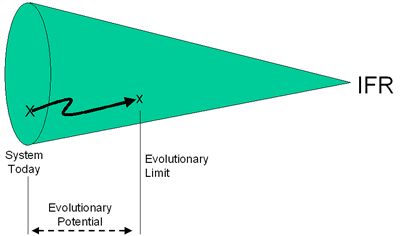
    When an organization is on the journey of innovation, not knowing what is required becomes a very big problem. In my innovation consulting and TRIZ learning I used to have a framework for removing the problem of not knowing what are we searching for. The method is Ideal Final Result (IFR). The concept of IFR seeks the destination or best solution in the beginning itself. This method helps identifying what are  looking for and where we want to go?

    So what are you searching for?

    By the way, when the Buddha was searching (enlightenment), he could not attain that. However, when he even dropped the idea of “searching” he achieved it! To start off – the Buddha knew what he is searching for.

    Image source – TRIZ Journal, article by Simon Dewulf and Darell Mann

  • Sai kaka


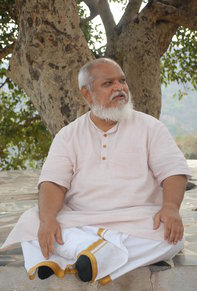
    I met Sai Kaka about 4 1/2 years back. He is from Sangli, a city in Maharashtra.  I read a book on him (in Hindi) Pooja Ka diya and quickly had an opportunity to meet him. I was  impressed with his straightforward and practical approach. Take an example Sai Kaka says “Religion is an individual choice, in groups it is not a religion but a community and where there is community there can be communalism!” What we see in India or world over, maximum wars are fought over in the name of religion, right? More about Sai Kaka is on his website. The most important lesson he taught to me was this –

    Sai KakaSanskar yukt chaitanya jab (संस्कार युक्त चैतन्य जब)

    1. chintan karata hai to usko chitt kahate hai (1. चिंतन करता है तो उसको चित्त कहते है)

    2. manan karata hai to usko man kahate hai (2. मनन करता है तो उसको मन कहते है)

    3. nirnay karata hai to usko buddhi kahate hai (3. निर्णय करता है तो उसको बुद्धि कहते है)

    4. asmita ka bhan karata hai to usko aham kahate hai (4. अस्मिता का भान करता है तो उसको अहं कहते है)

    inme se sansakar nikal jaye to jo bachata hai vo shuddha chaitanya hai (इनमे से संस्कार निकल जाए तो जो बचता है वो शुद्ध चैतन्य है)

    This in English means –

    When a conscious filled with rituals (or say the lessons learnt about ‘way of living’)

    1. thinks we call it mind (imagination)
    2. contemplate we call it Mind [there is a difference between Chitt and man which I am not able to translate in English]
    3. makes a decision we call it intellect
    4. perceives pride we call it Ego

    Now when the rituals or ‘way of life’ learnt, get out of this conscious mind, what is left is the pure consciousness.

    It means “pure consciousness” is blurred by our different (Sanskara) learning about life. Therefore in some cases religion becomes a problem.

    Thanks to http://www.quillpad.in I could write in Hindi and http://hindi-english.org for translation help.

  • Currency for the future?


    In his class, Prof Mankad asked us “what is money?” He answered – “Money is what is accepted as money”. Very apt definition. Here I am taking small freedom to change it a bit. I am changing the word “accepted” to “trusted”. Of course trust is a very heavy word. We have built a concept “of money” on trust. The question is where is trust? On a lighter note – There was a time when banks did not trust each other (recession of 2008). I have heard this idiom – “put your mouth where the money is.” Should money be replaced with “trust”.

    I was watching 3 idiots last Sunday and thought that kids like Rancho (character played by Amir Khan) – who could solve problems of class 10th while studying in class 6th – are not that rare in India. You go to Super 30 in Bihar, or any institute in Kota (Aakash, Bansal etc) you would encounter many such kids. Then what happens? Why don’t we see such extraordinary kids as stars of tomorrow? Because in future all these kids realize that the only measurement stick (metric) this world has is – Money! See the video of Staffi Graph – how much money do you have? Well, I am not blaming Staffi for that. This is just a representative video of our society. The measurement of success is how much money do you have? Not how did you get it. Also, the measurement is not how satisfied or happy you are?

    [youtube=http://www.youtube.com/watch?v=PlA_hL3NyyU]

    When these extraordinary kids get out of college, are paid enough and more so that they do “what the company wants them to do”, not what they would want to do. Most of them choose to accept that offer because measurement metric for the society is – Money.

    Let us flip the coin and say “Trust” is the currency. What would happen? Those who have hoards of currency may be the most bankrupt people on the earth. Perhaps, a business of trading of trust would start (Bomday Trust Exchange or National Trust Exchange). Would the world be a different place then when currency would be mutual trust (well not necessarily Mutual such as DLF and Robert Vadra ;))

    The day I started writing this blog I also had a brief discussion with Mr Shreekant Shiralkar and he was of the opinion – Money becomes immaterial after a certain time, what you do, what satisfaction you get from work and the trust you build is important. When he said Trust his thoughts were different compared to what I am presenting here. However, what I feel is the currency for future should be trust you build, the good you do to the society and how satisfied and happy you are.

  • Death is inevitable


    For Humans – Death is inevitable; there is no hiding from this truth. For Companies – Only the paranoids survive!

    Well, it was a coincident that my previous blog was on death and the season of Ganesha festival (an Indian festival) arrived.  This Ganesh festival I had seriously thought about the Indian culture, festivities and the small – often overlooked – lessons. In India every good work starts with invoking Lord Ganesh, even prayers, pooja etc starts with first invoking lord Ganesh and then the other “main” pooja’s.

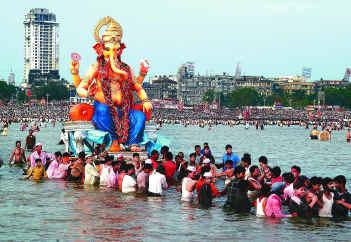
    The festival of Ganesha is a period from Ganesh chaturthi to Ganesh Chaturdashi a ten day period often in September month. During this festival, families and societies bring idol of lord Ganesh, worship the idol and within a couple of days immerse the idol in water. Similar to what happens to us – we are born one day and would be cremated one day.

    (source - http://www.thehindubusinessline.in/2004/09/28/stories/2004092802271700.htm)
    Visarjan procession in Mumbai

    Every year we follow this cycle of birth and death with our God. A God revered so sincerely that every things starts with his name – Shri Ganeshay Namah. Hats-off to this culture which has this concept of death embedded in its roots so truthfully. I think we should understand that death is inevitable and learn some lessons. (The Buddha saw this once and started his quest.)

    I started looking beyond my grieving moments and towards businesses. What I realized is that ‘the reality‘ of death applies to even companies too! As innovation consultants we used to share statistics on survival of companies. Out of Fortunes list of 1920’s and 30’s many companies do not exist now. Take an example of Kodak – a very innovative company –  filed for chapter 11 recently. If we just take Kodak as an example – Xerox was born out of Kodak’s lab. Xerox created such brand image that Photocopy became synonyms to Xerox. HP with its printing challenged Xerox. So the cat and mouse run of companies is on. The conclusion I made was if companies do not reinvent themselves, those are likely to die over a period of time.

    Last weekend I was attending a course meant for board members or to make people capable to contribute to boards. In the course (Retd) Maj Gen Mhaisale shared some HBS and McKinsey reports about shrinking life time of companies. Earlier average life of companies used to be about 40 years now it has shrunk to 16 years (in some countries 6-10 years too). Take the same example life span of Kodak was about 100 years, Xerox about 40 or so (please don’t take these life span as sanctity numbers)!

    Interesting part is a contradiction that human life expectancy is increasing and average life span of a company is decreasing. There is a lesson to learn – either be paranoid (as Andrew S Grove said in his book – Only the paranoids survive) and keep on reinventing your company or – death is inevitable!

    Related blogs – Death

    Source – BMG India training material on innovation (created and referred as a trainer) and IoD training sessions

    Image source – Business Standard

  • Death!


    Is death the ultimate truth? I asked this question to myself a couple of times during last weeks. I wrote a tribute to Dadaji on his birthday as he passed away in Jan 2012. I met with Rajgopaul uncleji recently; his father also expired recently so did my maternal uncle.

    I learnt a great deal from my uncle. He was very active and hardworking. The most critical lesson to learn from him was – working with complete responsibility, commitment and without much of expectations. I saw his this ethic resulting in fruition always. He did few businesses and was very successful. He also inculcated these ethics in my cousins. A hundred bows to my uncle. I cannot forget him and his subtle and effective teachings without teaching those extrinsically to us.

    My uncle’s death made me think very seriously about death – “Is death the ultimate truth?”. I have heard that our cells die every second and thus in a couple of months we are completely a new person. It is true that physically we change. In fact the reality is – the day we are born we start dying. (I think Osho said that). So physically, I am not the same Pravin who started writing these blogs about 2 years back. The one who used to write earlier and the one who is writing today is different. Yet, there is still a connection, I personally know that I am the same Pravin who used to blog, is blogging and hopefully keep on blogging at “business2buddha @ wordpress”.

    The question to ask is – what is that which does not change even if physically we change a lot? “That something” which does not change keeps us the same, perhaps it does not die. So with death does it die too? I believe the concept of Soul or Atman in Hindi, has evolved from the same question.

    I wonder if death is the ultimate truth, but I believe that there is something which defines an individual – something beyond the physical being.

    Books I read on Related topics –

    Same Soul Many Bodies

    Many Lives, Many Masters

    Only Love Is Real

  • Swasthay – dwelling in oneself


    “You have to move on from the posts, you dont hang around it – I was a post you have to move on now.” When Prof Lopez told me this in our last meeting at Dubai, I felt bad. He further added – “Once you pass standard 1st you move on to the 2nd and so on, right Pravin?” I had to complete my MBA and move on to a job an so on and so forth.  Slowly I moved on. Yet, recently I was going through the content of my MBA and came across some photos, class works etc and fallen back in time to relish my moment of that time. One of my friends commented on Facebbok – Movee oooooooooooonnnnnnnnnnnn! Instead of moving on, I remembered the last sentence Prof Lopez told me – “Pravin, you have to move on.” I had created this blog title – Move on… on Dec 1st 2010 and came back in the drafts to complete it now.

    The other reason to complete this blog was my recent meeting with Mr Ramana Rajgopaul my blogger friend and uncleji, he blogs at www.rummuser.com. He is reading a book – How Much Is Enough?: Money and the Good Life and we discussed economics and greediness  etc. Really the question is right. How much is enough? We think of buying a small apartment, when we own one, we think of bigger one and then a bungalow, villa, a farm house do we stop there? No! then we need something more a big car or something else. Where is the end? Take an example of corruption in India, what these politicians do not have? They have all they might need, but no! They want more.

    This “move on” is literally turning into running, running behind something, at time running away from the real problem. We have so many gadgets and even though we are connected with so many unknown people through social media, we dont know the neighbor. I personally felt that I spend more time on internet compared to talking with people. In bus I am on the net, in train I am on the net, at home I am on the net! So, are we facing our problems (personal or social) or we are just avoiding and moving on, running from one thing to the other just to save ourselves from facing those problems?

    When Angulimala met the Buddha. Angulimala screamed at the Buddha to stop because he wanted to cut fingers of the Buddha. The Buddha turned and told Angulimala that he, the Buddha, had already stopped. He had stopped killing and harming and now it was time for him, Angulimala, to stop.

    Now is the turn for us to stop. When I say we should stop it means a strange stop – our mind should stop running, time and space would move, our mind should be at peace, quiet. That is the definition of Swasthay (swa + sthith) – dwelling in one’s own self.

    Related blogs

    You cannot drive car looking at the rear view mirror

    When will we stop? (on the movie Salam Bombay)

    Dichotomy on happiness…

  • A tribute to Dadaji


    Dada Gavand

    It was a rainy day in June 2007 when I took a train to Thane. I did not know anything about how to reach Yeoor. Android phones were not around so I had to find my way. Being new to Mumbai I just asked people on different places and reached Yeoor. This was not the right time for me to meet him. Someone there told me that he does not meet people now, he is very old and he is taking rest. So I came back. Next time I went with my Sister in Sept 2007 early morning, we sat outside and waited, to our surprise he opened the door himself.

    When I saw him for the first time, and later as well, I was completely awe stuck, everything, thought and feeling vanished. So much of serenity was flowing off his face that I had nothing to talk or ask. It was a meeting of a life time. In my first meeting I only sat in open space, my sister talked with Dadaji. While sitting I had strange feeling (perhaps that is meditation), I can not explain that but there was a lot of light around me (though my eyes were close for about half an hour). Then someone (later I got to know him as Rajuji from Parel) came, I opened my eyes. He gestured to keep quiet and pointed at ground. I followed his instruction and looked – there was a snake. Without hurting anyone of us it went. In my first meeting generally I didn’t speak much but had a great experience.

    I met him later with my parents and with my art of living teacher. always I had seen the tranquility on his face and I just could say that a lot of peace was permeated through him, I don’t know how else can I explain his existence. He passed away a couple of months back so I thought to offer him a tribute on his birth anniversary 4th September.

    His site and his message to us is available on this site. I read a few of his books the books are below.

    1. Intelligence beyond thought

    2. Beyond The Mind

    3. Towards the Unknown: The Journey Into New-Dimensional Consciousness

    4. Intuitive Intelligence: A Play: Within and Without

  • Collective Materialism – likely future of economy!


    I have written about socialistic capitalism or capitalistic socialism. When I say that I simply mean that we would move our economies and businesses in a direction where there would be a balance. It would be a kind of middle path where enterprise would exist at the same time there would be a concern for the society and social development. Take an example of corporate social responsibility (CSR), however the word CSR would become more of a practice than a statement in annaul reports. The reason for the same would be – we are all connected. If I do not earn how would bank generate savings? If banks do not generate saving how would they offer loan and so on. In terms of Buddhism it is similar to interdependent coarising.

    In more sophesticated words the tripple bottomline would be the corporate mantra in future enterprise. I thought of an example which could be the model for this concept of triple bottomline. I happen to read corporate philosophy of Sahara India Parivar – “Collective Materialism”. This company is very interesting and different – it calls itself a family and everyone is a worker first. According the the website of the company the philosophy of collective materialism is as follows –

    “In any human relationship, it becomes imperative to take into consideration the materialistic aspect of life – we do so but by giving it second priority.

    The first priority is given to emotional aspect and with perfect blending of materialism with emotionalism results in continuous collective growth for collective sharing and caring, that gives an impetus to our philosophy.”

    On a lighter note collective materialism is not what Government of India doing – filling pockets of few select few (so it is collective and materialism both) Sahara shree – Subrato Roy – deservers the credit for this philosophy.

    Related blogs

    The middle path

    Balancing act

    Cause…

  • What difference will it make?


    I recently got involved with a project with the Art of Living. The project is based on the upliftment of residents of Dharavi. So, I just happened to visit the website of Dharavi School of the Art of Living. When I read this story on the site, I thought that this I would share on my blog.  Here is the story….

    The story of Starfish

    A small boy was walking along a beach with his grandfather. Every now and then he would pick up a starfish strewn on the beach and throw it back into the ocean.

    His grandfather watched for some time and then impatiently said, “Son, what are you doing? There are so many starfish. What difference will it make?”

    The small boy picked up one more starfish, looked at it, and throwing it back into the ocean said to his grandfather, “It makes a difference to this one! This one will live.”

    Often we are saddened, overwhelmed and paralyzed by the enormity of a task. But like the small boy, each one of us can make a difference to someone.

    The website concludes –

    The children of Dharavi are much like the starfish: strewn aside by circumstance and society. You can bring them back into the mainstream. Give them an education delivered with affection. They too can make a difference to this world. Wouldn’t you like to give them a chance? To know more about the school  Click here. To contribute to the school Click here!

    Source – http://www.dharavischool.org/the_starfish_story.html