Tag: Kabir

  • Happy Guru Purnima Day


    Who taught you first lesson in your life? Your parents, right? They are special. Who taught you the basics to you? Your teacher, right? They are special too. In Indian culture a teacher has a special place. The one who helps you in self-realization is called Guru in Indian cultures & religions be it Jainism, Buddhism or Hinduism. This Guru is considered even more important than the Gods themselves. Saint Kabir said –

    Guruji(Hindi) गुरु गोविन्द दोऊ खड़े, काको लागूं पायं।
    बलिहारी गुरु आपने, गोविन्द दियो बताय।।

    Translitaration

    Guru gobind dou khade, kaake lagoon paay
    Balihari guru aapne, gobind diyo batay

    (A simple translation) – Almighty (the God) and Guru both are standing right here, who should I bow to? Oh master (Guru) I bestow/pray/offer to you; you showed me the path to the almighty.

    Guru is special because he showed you the path to the almighty.

    This is somewhat confusing way – yet very interesting – of Saint Kabir, he says Guru you showed me to bow to the almighty (when the disciple reached the destination). The other is I (the disciple) bow to you because you showed me the path.

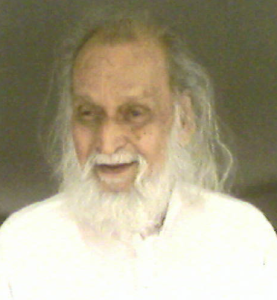
    Dada GavandBoth ways this is a wonderful cuplet of saint Kabir.

    I had the privilege of meeting few enlightened masters in my life. It has been my experience that when you are near the master (Guru) your questions dissolve. You do not have anything to ask anything to complain about. This happened to me whenever I met Dada ji (at least three times in my life time). I happened to meet Guruji (Sri Sri Ravishankar) last year. When you get to meet an enlightened master at least for the time being when you are around him/her you wont have any questions and desires that feeling is out of the world.

    Happy Guru Poornima.

  • Neeraj in Kabir’s style


    Gopaldas Neeraj is an Indian poet. He wrote many poems, some I studied in my course work may be. I remember his Bollywood songs such as O meri sharmilee (from the movie Sharmilee) and Phoolon ke rang se, dil ki kalam se (from the movie Prem Pujari) etc. Read more poems here, and one of his poetry book.

    The most I like (rather love) is below – Neeraj ka Kabirana andaz. This poem I copied in a diary in 1998, found that diary when I was relocating recently. The poem title in English can be Neeraj in the style of Kabir. Kabir is (was) a sufi saint in India in 1500’s. Kabir wrote many things (called Doha) and tried uniting Hindu’s and Muslims (against their religious “blind belief system” to an awakened self). Here goes Neeraj (trying to translate in English – bold part below – for readers of other than Hindi readers). This translation is line by line translation. In some places a line should be read after the next line e.g. Line Number N+1 should be read before line number N.

    नीरज का कबीराना अंदाज़

    दिल के काबे मे नमाज़ पड़ (Dil ke kabe me namaz pad – pray in your heart)
    यहाँ वहाँ भरमाना छोड़ (Yahan vahan bharmana chhod – do not shout everywhere)
    सांस सांस तेरी अज़ान है (Sans sans teri azan hai – every breath is a call for prayer)
    सुबह शाम चिल्लाना छोड़ (Subhah sham chillana chod – do not shout day and night)

    उसका नूर ना मंदिर में है (Uska noor na mandir me hai – HIS glory is neither in temple)
    उसकी ज्योति ना मस्जिद मे (uski jyoti na masjid me – nor HIS glory is in any mosque)
    जिस मोती को ढूंड रहा तू (jis moti ko dhund raha tu – the pearl you’re searching for)
    वो है दिल के समंदर मे (vo hai dil ke samandar me – is within the sea of yourself)
    भीतर गोता मार बाहरी (bhitar gota mar bahari – jump Within O! worldly person)
    ये सब खोज खजाना छोड़ (ye sab khoj khajana chhod – do not search outside)

    जो कुछ बोले है पैगंबर (Jo kuch bole hai paigambar – whatever Paigambar said)
    वही कहा सब संतों ने (vahi kaha sab santon ne – same is said by other saints too)
    लेकिन उसकी मानी बदले (lekin uski mani badle – but the meanings have been changed)
    सारे भ्रष्ट महंतों ने (sare bhrast mahanton ne – by all the corrupt religious representatives)
    पंडित मुल्ला सब झूठे है (pandit mulla sab jhute hai – Pandit, Mulla all are liers)
    इनसे हाथ मिलना छोड़ (inse hath milana chhod – leave them, dont follow them)

    खुदा खलक से अलग नही है (Khuda khalak se alag nahi hai – God is not separate from creation)
    इसमे ही वो समाया है (isme hi vo samaya hai – God is within the creation)
    जैसे तुझमे ही पौषिदा (jaise tujhme hi poshida – as your own body)
    तेरा अपना साया है (tera apna saya hai – has its shadow)
    दुनिया से मत दूर भाग (dunia se mat dur bhag – do not run away from the world)
    बस मन की दौड़ लगाना छोड़ (bas man ki daud lagana chhod – stop running within your mind)

    पूजा पाठ नमाज़ जप (puja paath namaz jap – worship, Namaaz, chant everything)
    सब छलना और दिखावा है (sab chhalana aur dikhava hai – are show-off & cheating)
    दिल है तेरा साफ तो (dil hai tera saf to – if you heart is pure)
    तेरा घर ही काशी काबा है (tera ghar hi kashi kaba hai – your home itself is Kashi & Kaba)
    मकड़ जाल है ये सब जग के (makad jaal hai ye sab jag ke – this all is a cob-web)
    इनका ताना बना छोड़ (inka tana bana chhod – leave these framework)

    तू ही तो संसारी है रे (tu hi to sansari hai re – you are the worldly)
    और तू ही संसार भी है (aur tu hi sansar bhi hai – you are the world)
    कैदी तू ही, जैल भी तू ही, (kaidi tu hi, jail bhi tu hi – you are the jailer, you are the jailed)
    तू ही पहरेदार भी है(tu hi paharedar bhi hai – and you are the sentinel/guard)
    तीन गुनो वाली रस्सी मे (teen guno vali rassi me – a knot with these three attributes)
    अब तो गाँठ लगाना छोड़ (ab to gaandh lagana chhod – do not knot this rope)

    Specially in this I like the last bit (I would not want to write that in English, as the translation seem to lose the meaning –

    …दुनिया से मत दूर भाग
    बस मन की दौड़ लगाना छोड़…

    …कैदी तू ही, जैल भी तू ही,
    तू ही पहरेदार भी है…

    Whole world is created by our mind – we are the jailer, sentinel and jailed…

    Kabir Good read
  • Fruit will arrive in its season…


    We talk about long term sustainability, but want to gain in short term. Shareholders want quick dividends as well as long term performance of the company. If reserves and surplus (R&S) are given in dividends where would company get money for growth. In such cases our actions and desires conflict. I initially thought about the Japanese currency crises in similar fashion (common cause Vs individual gain). Though later Prof Mankad told me that the reason of the appreciation of Japanese Yen could be the computer triggered buying/selling, the way people put stop loss trigger in share trading.

    In operations, different departments try to optimize their performance, what happens to the overall performance? It is synergy that matters rather than the individual performance. Thats where ‘Theory of Constraints’ plays an important role to achieve global optimum against the local optimum.

    I was thinking about the same for some time in a different fashion. What is long term goal of an organization and an individual? How do both the goals meet and how to build synergy between individual’s aspirations and organizations perpetuity? Why did the question arise at the first place? A branding expert told us that marketing managers want to start new brand building exercise (to gain in short term for writing on their resume – ‘I started this initiative’) and move to next level. New manager comes he/she too does the same. Short term gains are there for the marketing manager; yet for long term the brand is diluted perhaps no one knows what would the brand stand for in future. I believe, Sataym fiasco started similarly – to show the investors that Satyam is growing, numbers were made up.

    Effectively, the question to ask is – how many times we look at the bigger picture? The question goes back to Why are we doing what are we doing? I recall Prof Lopez digging deeper and probing us to the fundamental reasons and the importance of asking right questions. Where does the bug stop?

    In school we learnt couplets (termed as Doha in Hindi) of a mystic Kabir, one of them was –
    धीरे धीरे रे मना धीरे सब कुछ होय
    पानी सीचे रे घणा ऋतू आये फल होय
    Literal translation (courtesy) of the same is –
    O mind! everything happens at its own pace, slowly
    Gardner may water a hundred buckets, fruit arrives only in its season.

    I am hopeful that some day those questions would be answered and we individually and collectively would balance between the long term Vs the short term perspective. there would not be much (if not any) of opportunism. We as human beings will evolve. I am optimist, “…fruit will arrive in its season…” and we are nearing the season.