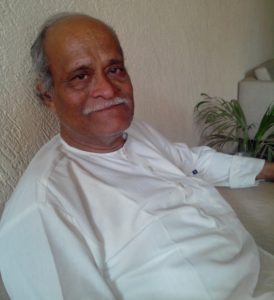
Tag: Dr Anand Saxena

  • Are You Enjoying What You Are Doing?


    I have been writing on Business to the Buddha for 6+ years, 325 or so blogs now. If you have read my previous posts and at times the title, you might have wondered, why such title? One reason you can read it on this link, and other is to look for a way how we can have a more inclusive, economically better and psychologically calmer society? The question of this post – “Are you enjoying what you are doing?” is directed towards that economics and psychological thought.

    What all do we do except our daily chores such as eating, sleeping etc? In those activities there are some mandatory activities and some forced and other times hobbies there are always choices and challenges. Some things we do not like doing yet we have to do, some times we like doing something but we have to postpone those. This is where many people think of such question.

    Long back precisely in Oct 2011, I drafted a blog “Do what you love doing”. Somehow I never completed that article, parts of that are produced below –

    …On this point, I had contention recently in a professional set-up. I also believe that if one does what he/she enjoys doing lot of issues of his/her life could be solved. Take an example – in Mumbai average a person travels 2 1/2 hours per day, works for about 9-10 hours, sleeps say 7 1/2 hours and whatever time is left she/he either stays with family, goes to social gathering or does domestic works. If more than 1/2 time daily goes in office related activities, why not someone do something which is relevant to the interest of the individual? This choice of ‘doing something which is of interest’ has to be a mature and personal decision of a person…

    This was with reference to a reward program in a company. My point of view was very opposite of what many other employees of that company believed in- though the management was appreciative of my opinion. I understood later why employee-employer relations are the way they are in many companies. My observation is – in many cases, beyond money there is a drive that makes a person get up in morning at go to a job. Until one reaches that level of awareness, person looks forward to the last day of month when salary will be credited. If someone has passion and purpose one finds time, energy and resources to do that activity. When this happens a person truly enjoys what he/she is doing.

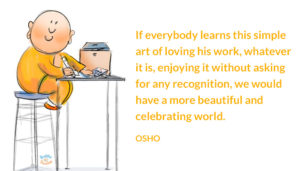
    This small point what Osho said – “If everybody learns this simple art of loving his work, whatever it is, enjoying it without asking for any recognition, we would have a more beautiful and celebrating world.” is very valid. If we would either start loving what we do, or we start doing what we love our economy and Human Development Index both will fare better.

    I raised this question to some of my email & blog friends, from that discussion the question became topic of Loose Bloggers Consortium. You can read thoughts of other two writers – Rummuser uncleji here and Shackman uncleji here.

    Image source – http://oshoinsight.com/tag/enjoy/

  • My Favorite Fictional Character


    Have you ever thought about fiction and reality? Fiction is something untrue, made-up or imaginary. How can I say that the Buddha or Krishna or Jesus was someone who actually walked the face of earth. Is it a possibility that these were imagination of someone? This thought puts me to another thought, what if I myself am is some imagination and a reality is somewhere, something else.

    Have you ever had a dream, Neo, that you were so sure was real? What if you were unable to wake from that dream? How would you know the difference between the dream world and the real world? Morpheus The Matrix

    What makes something real? Is it because I think, see, feel (perhaps smell or hear) and my mind makes me feel that this is something real because I can sense it? Or something is real because it exist without someone’s ability to sense it or no. Take an example of light – we cannot see light beyond a certain frequency range. Does it make the light non-existent?

    These questions remind me of a very interesting movie – The Matrix.

    “…The Matrix is everywhere. It is all around us. Even now, in this very room. You can see it when you look out your window or when you turn on your television. You can feel it when you go to work… when you go to church… when you pay your taxes. It is the world that has been pulled over your eyes to blind you from the truth…”

    I have had a couple of Morpheus in my life to teach me. I have written about almost everyone on this blog. I would want to be Morpheus too, for someone or few in future. I love the character of Morpheus from The Matrix the most. Morpheus is a believer, he courageous. The best part is, the kind of confidence Morpheus has in Neo, it makes me feel that I want to be Neo too. Laurence Fishburne played the role so well that I keep on watching his teachings (dialogs) whenever I feel I should. There are a lot of learnings in those dialogs – “Do not think you are, KNOW you are.” I have written on the movie (red pill) earlier too. I was so fascinated with the movie that I used to tell people that I am fine being a spot-boy for the movie – alas I am in India :(. The movie is so philosophical and spiritual to me that I repeatedly watch it.

    Instead of me talking (writing), I would want to share some videos of the movie (Youtube), not sure about the copyright permissions there.

    I see many of my teachers in Morpheus – they are indeed my Favorite (they are real) human beings, this blog post is dedicated to all of them. This was the title of this weeks Friday Loose Bloggers Consortium. Con You can read other LBC bloggers thoughts here – Rummuser and Shackman.

  • Purpose of life


    targetHe wanted to become an engineer since his childhood, perhaps even before reaching his teens. It was not easy to get into an Engineering college those days so he had to toil, stop his extra curricular activities and concentrate on studies. The hard-work paid off, now, he was pursuing his engineering and it was a dream coming true. He asked himself now what? Well, let us enjoy this education and become an engineer what else?

    With passage of each year, the question of “now what” became more prominent. He wondered what next? He thought to take up administrative services as his next goal. He filled the form, UPSC responded – instead of the admit card they had sent a letter – “your age is less than 20 years as of 31st July so you cannot take this exam in the current year.” He could have waited one more year but then his father was about to get retired in few years so except finding a job nothing could come to his mind. So, he set another goal, crack campus interview. By grace of God or he was lucky or may be because of his abilities he could secure a job on campus without much difficulty. He still had couple of months on campus to complete his final year. He was happy he got what he wanted. Thoughcliparti1_dream-clip-art_04.jpg this pleasure was short lived, his mind started playing tricks with him again – “Now, you have a job what next?”

    He was a dreamer, ambitious and committed person. So, he kept on feeding to his mind – “I will work hard, prove myself.” So, the mind probing – “You have achieved what you set as your goals without much of difficulty so sure you will get those too, but what next?” He responded to the mind – “well, I would get promoted faster than anyone else!” Mind was in no mood to end the questioning – “What after that?” He said – “I will buy Hyundai Santro. Work hard, get promoted, buy Honda City. work harder buy a house. Work hard, get promoted buy a bigger house.” He couldn’t think beyond these simple cycles of Work hard, get promoted buy car, buy house and again go back to work hard. So the mind said – “Ok! you would get retired one day doing all this, isnt it?” What after that? Why are you going to do all this? What is the purpose? Can’t one survive in smaller house? Can’t one be happy in smaller home? Can one go beyond becoming a CEO? What next? Is there an end to your carving? Is there a full stop? Why are you doing or planning to do everything? What is driving you? He slept questioning this to himself.

    He started asking himself – “Why I do what I do?” “What is the purpose of my life?” He came and asked me – “Dada (elder brother in some Indian languages), whats happening? Why we run around, except filling two square meal in stomach, do we have any bigger goal in life? Is there something beyond the physical world that we should strive for?”

    I asked him – What is the purpose of your life? He said – “I wanted to be an engineer, now I am completing engineering. Next thing came in my mind was a job. Thankfully I got that too in campus interviews, but now I am questioning myself what next? Why? How? What for?”

    I told him – there are various reasons you are running from one goal to the other. These can be put in bigger buckets such as – emotions, social acceptance, materialistic wealth. I cannot say why you wanted to be an engineer but when you set that goal you attached your emotions to that goal – you were “Happy” or you got a “sense of satisfaction” when you achieved it. Than that was in your hand, you didn’t bother about becoming an engineer – because you were doing engineering and there was no way you couldn’t get it any further. So your mind wandered – what next? The next thing came to you was social acceptance as in, job security. Than materialistic goal of car and home and bigger cars & homes. Your mind kept on pursuing these thoughts – that is great. Most of the time people never think beyond first level (“of owning a car to what next”) of these thoughts. But it was good that you could somehow get confused and couldn’t get to the end of your running around. Even if you think you would be satisfied, happy and socially respected when you get something, become somebody that happiness or satisfaction will be short-lived.

    Green-PastureI added – let me try to put these in further perspective – when you decided about a goal you feverishly ran to just get their. You missed the pasture in the race by just checking the milestones – “how much is left? Instead of enjoying the beauty of where you were standing.” I believe purpose of life is not just running from one point to the other making them as your goals. If you think of doing this; your goal will always be a moving target. No doubt you should have some or the other target, why not? But the purpose of your life should be being in present, staying satisfied with whatever you have, doing what best you could do to achieve your goals and yet you should not be feverish about your targets. When you die, you will leave everything here – your Hyundai Santro or Honda City or for that matter the big home you think you will buy when you are 55 (perhaps 34 years in the future!). You know Krishna said in the Geeta –

    कर्मण्येवाधिकारस्ते मा फलेषु कदाचन।
    मा कर्मफलहेतुर्भूर्मा ते सङ्गोऽस्त्वकर्मणि॥ २-४७
    Romans
    Karmanye vadhikaraste Ma Phaleshu Kadachana,
    Ma Karmaphalaheturbhurma Te Sangostvakarmani
    Meaning
    You’ve a right to perform your prescribed action, but you’re not entitled to the fruits of your action. Never consider yourself the cause of the results your activities, and never be associated to not doing your duty.
    ———————————

    So just do things, enjoy your journey, dont be feverish about collecting flags, batches or medals. Because whenever you have some medal as your goal, your subtle wish is happiness or satisfaction of getting that. So, basically your purpose is more to be happy or be satisfied. My learning in all these years has been – happiness and satisfaction cannot be achieved while your mind runs outside. You can be happy and satisfied when you are in the NOW.

    Your purpose in life can be anything – set the target, plan and execute. Why worry about future, be in the present, be happy and satisfied. Happiness and satisfaction lie in the present not in the future not in achieving the goal.

    Disclaimer – Please do not make a goal of bothering anyone else. Actually teachings of many religion – a very strong teaching of  Jainism – is not to harm others. So when you set a goal (or try to make a purpose of life) do not set it as killing others becoming a e.g. terrorist, at least consciously.

    Purpose of my life – be Zorba the Buddha. Be in the present, enjoy life to the fullest and yet be completely aware about it. It is not something to be achieved, it is something to be lived. That is what I think “enlightenment” is.

    This is an LBC (Loose Bloggers Consortium) blog post, check  Ramana Uncleji’s take on this weeks topic here and another perspective from Shackman uncleji is here Link.

    Image source -Target https://pixabay.com/en/target-goal-business-icon-logo-1151287/

    Dream – http://clipartzebraz.com/files/1/24044_dream-clip-art.html

    Pasture http://cdn.c.photoshelter.com/img-get/I00008ApAOrqwYQI/s/900/900/Green-Pasture.jpg
  • Happiness – how?


    There have been more than 10 blog posts related to happiness on my site. These posts included – ego, money, work we do, peace of mind etc. Recently, I came across a research – old one -by Dr Eric L. Zielnski. His research states that – about 50% of happiness levels of an individual is governed by genetic set, 40% by intention or say a desire and about 10% by circumstances of an individual.

    Isn’t it interesting? If we assume this research is representative we are sure to be happy if we prepare ourselves. An article on this research added that genetics can be modified by our thoughts and actions. Awesome, if we decide to be happy we can be happy at least 90% of the times, isnt it?

    I remember, when I met Dr Anand Saxena – my engineering professorsaxena-sir-25dec12 – in Dec 2012 he told me this –

    गो धन, गज धन, काज धन, सबे रतन धन ख़ान|
    जब आवे संतोष धन, ये सब धुरी समान||

    Go dhan, gaj dhan, kaaj dhan sabe ratan dhan khan
    Jab aave santosh dhan ye sab dhuri saman.

    Meaning:

    It is true that owning cattle, jewels or kingdoms is mine of wealth
    But when you own wealth of contentment (satisfaction) those mines (cattle, jewels etc) of wealth become worthless (like dust)

    To be happy one needs to be content. I think that is how the Buddha professed the four truths. There is misery, there is cause of misery and there is a way out. This way out is – being content and thats pretty much it, isnt it?

    Lastly, what I think was – the Buddha taught the path just alter that 90%, created the Sangha or community to remove that 10% chance of circumstantial challenge. Hope after joining the community people didnt get into competition of being the first to be enlightened 😀

  • Work is worship


    I was speaking with Fateh uncleji for more than 1/2 an hour. We were talking about many things from Indian politics to my work. When we were to conclude the talk after these long discussions, I told him I called you because I connect with you on spiritual level, I didn’t want to talk about Indian politics, corruption and my work.

    The voice from the other side said – “Work and spirituality live in the backyard of each other” The conviction in the voice was tremendous. I asked “seriously? Is that? It never happened to me.” (I was not sure if it had happened to me)

    When I blog on business to the Buddha – I see the relationship at a macro level. The daily struggles of activities does not make me realize if operationally it is happening.

    The conviction was tremendous. I was puzzled. It was already a long call so we concluded the call. But the resounding words were enough for me to lose my sleep. I felt is it really happening with people? I could not find the relationship at operational level. Am I missing something? Am I missing something in my daily execution? How do I achieve it? What do I do differently?

    As usual, I called Saxena Sir (Dr Anand Saxena, my Engineering college professor), in general and specially to discuss this one sentence – “Work and spirituality live in the backyard of each other”. I have always found that he adds a perspective on my questions; opinions that I never thought. He changes my paradigm of thinking, always.

    I called Saxena sir and told about my meeting with Fateh uncle and my telephonic conversation. When I said “Work and spirituality live in the backyard of each other”, and continued that it has never happened to me as such. He responded without a second’s delay – “Pravin, do you remember the logo of MITS?” [Madhav Institute of Technology and Science is my engineering college where I studied and Dr Saxena was HoD of my Department]

    MITSI responded – “yes of course.” I had the pictures in my mind, snakes and sun, water, it’s easy to remember pictures.

    He asked – “what is written on the logo?” I knew what is written on the logo. I got the drift, because until a second back I was thinking of the pictures on the logo but now I was thinking – “Work is worship.” I understand where he is going.

    It was a very small, straightforward and simple explanation. Saxena sir always surprises me. He makes things look easy, adds a perspective and takes me to a different plane.

    Perhaps, these discussions were very commonplace for you; however these two telephonic conversations made me unclutter myself a bit. There is still a lot of room to do that.

    Saxena sir and I concluded the call. And I questioned myself – am I making things complicated? Is it really too simple? Perhaps.

    That is where the real Business to the Buddha lies. Is not it look so simple? The Buddha also suggested that what he achieved could have been achieved without taking Sanyas. Perhaps that is why he proposed The Middle Path. What is your take?

    Did it occur to you – “Work and spirituality living in the backyard of each other?”

  • Terrorist meets The Buddha


    I heard a news that ISIS has sent a threat message to Sri Sri Ravishankar (Guruji). This blog is inspired from that message and story of The Buddha and angulimala. From This blog – …My Engineering college professor Dr Anand Swaroop Saxena told me some time in 2001 – “inherently people are not flawed, situation drive people to react in the way they react.”…

    Just imagine if a terrorist crosses roads on which The Buddha is traveling! In this high-tech age, it isn’t same as Angulimala confronting The Buddha. Angulimala was having a purpose of making a garland of 1000 fingers (read the purpose here) and he had knife/sword. The current times are different, terrorist doesn’t need to be next to you, they can kill from a long distance. If the terrorist knows The Buddha, he (assuming most terrorists are male) wont come near, chances are that The Buddha will change his heart. But for argument sake imagine terrorist confronts The Buddha (Sri Sri).

    What and how the discussion may start –Sri Sri ISIS threat
    Terrorist (T) – I’m going to kill you.

    The Buddha (B) – Why?

    T – (confused, this fellow isn’t scared) – thinking… thinking… thinking… Because you’re a threat to us.

    B – Threat? I don’t even have arms / weapon, instead you’ve. How can I be a threat? And what do you mean by “us”?

    T – (again, confused never expected this logical question. Uses his logic whatever he has) I’m armed because of you. You’re a threat to my community.

    B – How am I a threat to “Your community”? What is “YOUR community”. I never killed anyone why do you think I’m the reason of you keeping arms?

    T – (totally confused) I don’t want to listen to your stupidities. You’re a threat to us.

    B – Who is “us”? Did I bother you? Did I hurt you?

    T – Your people and those who are against us hurt my people and therefore I’m here to kill you.

    B – “Your people”… “My people” who are these? who is against YOU? How can you say that you represent the whole community? What is your community?

    T – You’re against Islam and my people are all muslims in this world. “Your people” are all non-muslims of the world. They’ve not been
    just to us.

    B – Firstly, speak for yourself and don’t try to talk about millions of others who don’t know you and do not (may not) agree to your point of view. Secondly, I am not against any religion. My religion is compassion [author’s mind – provided this Terrorist understand what this god forsaken word “compassion” means], happiness, equality, human values, meditation, peace etc. Do you believe in any of these?

    What unjust has anyone done to you? How can you speak about millions of others who are muslims, you have not met them and are happily living in their country of birth? How can you say justice wasn’t done to them? Furthermore, what harm am I causing you or likely to cause to you or in your words to your people? Am I killing them? Am I asking (advising) them to hate you? Am I asking (advising) them to do something that is against you?

    At best I’ve helped some of the people in XYZ country to help each other and rescue those whom you want to kill. Is it incorrect? Do you have license to kill anyone and everyone you wish? Does your owning weapon means you’ve license to spread hatred, riots and terror? If that is the case there are nations that have abilities to finish the whole world numerous of times. Your one weapon is just nothing compared to that.

    This time terrorist could not even comprehend and think of what all has been spoken and he has heard. Thanks to Ananda besides the Buddha, Ananda recited each sentence and gave him time to think of a reply.

    T – (reply to firstly speak for yourself…) I represent my people.
    T – (reply to secondly, I am not against any religion) You are against my religion. Why are you doing any rescue operations in XYZ country?  Meaning of my religion is peace, purity, submission and obedience to the GOD…

    B – (to this The Buddha interrupted) have you taken (or they gave you) permission to speak on behalf of the people whom “you think”, you represent? Secondly, if your religion means “peace” what are you doing? Having arms in hand and killing people does it mean the meaning itself is wrong or you have interpreted your religion incorrectly?

    T – (could not digest this) This is blasphemy you can’t question my religion who are you to question my faith and that is the problem
    because of which I want to kill you? You are infidel.

    B – Do you know what is the meaning of infidel? I am just questioning on your actions and interpretations of what you’ve in your mind. Infidel is the one who doesn’t have a religion. I listed out my religion is peace, compassion, happiness, equality, human values, meditation. Another meaning of infidel is one who is not in majority. Do you think you are in majority? Muslims all across the globe do not have gun in  their hands, according to that definition you are an infidel in – what you call it – “your community” itself. Moreover, when I said my religion includes peace, we’re on the same side, isn’t it? Your religion means peace to you. Why do you want to disregard your religion (peace) assuming you are protecting your religion by not obeying the meaning of your religion itself?

    This may go on and on in author’s mind – the author is not the Buddha. Perhaps the Buddha (Sri Sri) would perfect the discussion with a compassionate glance, no single word. Who knows in the end – terrorist bows down with no argument left and becomes a true follower of peace.

    Dedicated to Guruji (Sri Sri Ravishankar)

    Related blogs – on Angulimala

    Story of Angulimala

  • Interdependent co-arising – macro-economics example


    I hae written on Interdependent co-arising (older blogs at the link) earlier.  The concept simply means – we are all dependent on each other.

    Those who want to know the concept in layman term follow this blog – interdependent co-arising example of a farmer.

    Definintion of interdependent co-arising is below with a macro-economics example. In late 90’s the East Asian countries faced a very serious economic challenge of decades. The financial system came down like a house of cards. Dr Joseph Stiglitz – Economics Nobel Prize winner of 2001 – shares the concept of interdependent co-arising (dooming in otherwords) in his book  – “Globalization and its discontent“. On Page 106-107 he invariably – and inadvertently perhaps – explains what is interdependent co-arising. Hope economists would understand this lesson, if not from the Buddha then from Dr Stiglitz.

    Beggar-Thyself Policies

    Of all the mistakes the IMF committed as the East Asian crisis spread from one conuntry to another in 1997 and 1998, one of the hardest to fathom was the Fund’s failure to recognize the important interactions amont the policeis pursued in the different countries. Contractionary policies in one country not only deepened that country’s economy but had adverse effects on its neighbors. By continuing to advocate contractionary policies the IMF exacerbated the contagion, the spread of the downturn from one country to the next. As each country weakened, it reduced its imports from its neighbors, thereby pulling its neighbors down.

    The beggar-thy-neighbor policies of the 1930s are generally thought to have played an important role in the spread of the Great Depression. Each country hit by a downturn bolster its own economy by cutting back on exports and thus shifting consumer demands to its own products.A country would cut back on export by imposing tariffs and by making competitive devaluation of its currency, which made its own goods cheaper and others countries’ more expensive. Howeer, as each country cut back on imports it suceeded in “exporting” the economic downturn to its neighbors. Hence the term bagger-thy-neighbor.

    Solution to all these economic, social, personal, spiritual or other problems?

    Its interdependent co-arising itself. We all need to help each other grow – grow the pie and share it well, if not equally!

  • Chinu and the pebbles


    My little niece – Chinu – is about three years old. When I see her picking up small pebbles I remember my childhood. I used to do that – “Wow this stone is very smooth.” “That stone is of very different color”, I will keep this with me always, no one can find such beautiful stone anywhere.

    I used to pick up stones the way Chinu does now. Now, I am grown up (may be!) and now I care for different kind of stones :). As many of you must be doing now.

    When I compared Chinu’s activities with my current actions. I wonder my father, Saxena Sir (or Rajagopaul Uncleji) must be thinking – hey this kid (for them I may be still a kid) is growing up! One day he won’t care for all these stones!

    I am going to ask these elders of mine – what have they really earned in life? How do they measure success now? What they crave for now? And how do they feel about my or any young ambitious persons running around?

    I see Chinu and think of my childhood and my small world. What would it be when I’d be say 60. Sitting around and smiling or still running around for something else? I wonder!

    I wrote this blog in November, posting it now. Saxena Sir told me what I wrote in previous blog – Money worth earning! He taught not to even run behind earning satisfaction.

    Related blog –

    When will we stop?

  • Money worth earning


    Recently, I met my Engineering College Professor Dr Anand Swaroop Saxena (in picture). He was my Engineering degree Major project guide, actually a guide in many ways. We were discussing something and he shared the following  lines (in Hindi these are called Doha).

    गो धन, गज धन, काज धन, सबे रतन धन ख़ान|
    जब आवे संतोष धन, ये सब धुरी समान||

    Go dhan, gaj dhan, kaaj dhan sabe ratan dhan khan
    Jab aave santosh dhan ye sab dhuri saman.

    Meaning:

    It is true that owning cattle, jewels or kingdoms is mine of wealth
    But when you own wealth of contentment (satisfaction) those mines (cattle, jewels etc) of wealth become worthless (like dust)

    Note – In old days cattle used to be a measure of wealth of a person, therefore go (cow) and gaj (elephant) in this doha.

    I thought about it and added two points –

    1. This does not mean we should block our owns progress in the name of contentment.

    2. Point 1 makes everyone think – when should we stop? Because if someone should not block his/her progress, that slowly converts into greed and running behind many things (at time unnecessary things).

    I thought that one should always try to utilize one’s capability to the hundred percent in doing whatever one is doing. This thought let me to Famous shloka of Geeta

    कर्मणयेवाधिकारस्ते मा फलेषु कदाचन।
    मा कर्मफलहेतुर्भूर्मा ते सङ्गोऽस्त्वकर्मणि।

    Meaning: “You’ve a right to perform your prescribed action, but you’re not entitled to the fruits of your action. Never consider yourself the cause of the results your activities, and never be associated to not doing your duty.”

    And I felt contentment (satisfaction) is in becoming content (satisfied) and not in running behind anything, not even the desire to become content (satisfied with anything).

    Related blogs –

    When will we stop?

    Swasthay – dwelling in oneself

    What more you need?

    Source of Geeta shloka meaning – Deeds, not words, should speak

  • You cannot drive car looking at the rear view mirror


    I was watching a movie “Do Aankhen barah haath”, a very old Hindi movie directed by V Shantaram and also the lead role played by him. Since it is a very old movie acting is melodramatic, could be questioned and people can find many faults too, however as I wrote earlier in one of the blogs “Lost in translation” what is more important message or the presentation? So, you can watch the movie for the message.

    I related the movie to a part of the Buddha’s life. Many of us must have heard the story of Angulimala, a bandit. However, how many know the story of him before he became Angulimala and after the meeting with the Buddha?

    Angulimala was a bandit, killer of people just to get their fingers and make a garland. Yes thats what is known about him. The real name of Angulimala was “Ahinsak” or “Ahimsak“, a Sanskrit/Pali word meaning “nonviolent”. The pre Angulimala view about Ahinsak is on the link. What happened to him after he met the Buddha? When he met the Buddha, he became a Bhikku.

    The following part is from the book Blog – Old path white clouds (Book – Old Path White Clouds). Soon after he became a Bhikku he died, how? As a Bhikku he went to the same village where he killed people for making the garland of fingers. People attacked him to take the revenge, not noticing that he is a Bhikku, completely changed person now and he is not even reacting to the attack. The message of the attack reached the Buddha, he rushed to the place. Severely wounded, Angulimala, died in the laps of the Buddha.

    Similar situation arrives in the movie “Do Aankhen barah haath”, I could relate those sequences to the story of Angulimala.

    My Engineering college professor Dr Anand Swaroop Saxena told me way back (in 2001 some time) – “inherently people are not flawed, situation drive people to react in the way they react.” Dr Saxena taught me a great deal, I worked with him on my undergraduate project (published in a national journal :)). He always intrigued me with his simple, profound and ruminating words. For one question he said “…situations are responsible.”. Later I met a Sant Sai Kaka, he too said almost the same thing with more details and profundity. The reaction part comes from the prior experience (sanskar) one had in life. These statements changed the paradigm for my thinking. Yet it is the responsibility of the person to control oneself not to be driven by the situation/sansakar/prior experience.

    Two points to make here – 1. inherently people are not flawed, situation drive people to react in the way they react and 2. past experiences are the milestone you have left behind while you drive to a destination. You cannot drive car looking at the rear view mirror – is not it right!