Tag: Compassion

  • No water!

    During this lockdown, there were a few instances that taught me some lessons and reminded incidents. In past those incidents did mean little, however, during the lockdown, there were some learnings that emerged. This small incident happened recently which reminded me of two lessons. Lesson one, it is better to be calm when dealing with people or situations. Once again, my recent experience reinforced this lesson. Lesson two, of Hindi class during school. There is a Doha by a saint Rahim, which uses water giving a wonderful message. The message is “water is most important, without water, there is no pearl (shine in pearl), person (respect of person) or lime (use-ability of lime)”. The author uses “water” in different contexts (in Shlesh alankar – Pun decking).

    रहिमन पानी राखिये बिन पानी सब सून

    पानी गए न ऊबरे मोती मानुष चून

    https://business2buddha.com/2015/01/reaction-and-response/

    I have written a lot of blogs on water, be it on economics, meditation, rainwater harvesting, current affairs, or others. You can read the different flavors can be read here.

    No water

    Last week, we woke up to know that there is no water in our wing of the building. Recently we read the news that due to lockdown water usage in Mumbai reduced. It was a surprise how it is possible that we don’t have water?

    drop-meets-ocean

    I was not upset, probably because there are more pressures of work these days than water crisis. Probably, I was unmoved because I did not have to rush to the office. Or probably I reasoned out in my mind better – I quickly accepted the situation. “Ok there is no water, now what?” Actually it was case number three. I went down, spoke with security, and came to know that there is a new fellow on duty. He was unaware of switching on the water pump. Result? this whole trouble.

    It was a revelation – once again – to me when I was talking to him. We take things so much for granted that when we do not have it, only at that time we notice them exist. We never care for who made it possible for that thing to reach us. Water in this instance. It is stored somewhere. We receive water when an unknown BMC employee timely switching on and off of the switches. It is one of the largest supply systems in the world. It traverses the distribution line put in place by god knows who and when. We never think about these people who were the foundation for making our water tank full every morning or for that matter who made our water tank in the first place. Forget about being mindful of the security guard of our building who switches on the button daily. We take the availability of water for granted these days especially in the cities like Mumbai that we don’t realize those who make it possible actually exist!

    Lessons

    These are some important things that come to my mind with the incident

    • Be grateful

    Every individual makes some contribution to our life, we should be thankful to them for this. Yes, if today this security person is not there someone else will be, but his being there today made you feel safe at home. So for that at least – be thankful.

    • Be compassionate / considerate

    There are possible reasons for mistakes so try to look at correcting situations and not criticizing people. You may not know what a person must be going through. Or it is possible that he is new to the system and genuinely unaware of his all responsibilities. A leader must inform his team members about the end results or the basic responsibilities.

    • Own your mindfulness

    If someone loses mind the overall surroundings become tensed. If I am not mindful, it may cause harm not only to me but also to the people around me. Also, if I am mindful I can better handle the situation isn’t it? If you lose your calm the situations are going to get worst.

    These lessons are useful irrespective of personal or professional life. One has to be grateful plus considerate to people, and mindful of self, isn’t it? These factors help a person retain (water) respect – पानी गए न ऊबरे मोती मानुष चून! According to Rahim – No water is no respect too.

  • 3 small lessons from a leader

    This incident turned into 3 small lessons for all of us from our boss. Leaders make learning effortless and yet impactful when you read the story you may realize the 3 small lessons were not rocket science. Yet, how often we implement such small things in our daily life when dealing with situations and people?

    3-small-lessons-from-;leader

    It was a late morning in our office, the day had just started a few hours ago. There was tension in our small office. Our office was small. A slightly higher voice in one corner can be heard on the diagonally opposite side of the office. Generally a very calm, composed, motherly and one of the most silent persons of the office was upset. It had been more than 10 minutes since our admin and accounts person was furiously shouting to our office boy. She was asking questions, pointing errors, and suggesting the impact of all these. Irresponsible behavior and mistakes were causing a significant impact on our daily work, and costing office.

    The accounts manager continued her monologue – “it is common sense isn’t it?” For a few other things, she said “I had explained this to you earlier too”, how can you make similar types of mistakes (not exactly the same) repeatedly? So, some things were straightforward errors of judgment by the office boy. The office boy was making these errors for some time; we all had been impacted some time or the other.

    After it was enough for our boss, he called the accounts manager, who used to report to the boss. He requested the office boy to bring an early lunch. The office boy knew and generally used to collect bosses’ lunch from a nearby restaurant.

    3 small lessons

    The boss turned to the admin cum accounts manager and said I heard some parts of your conversations. This is my suggestion to you –

    • you cannot expect everyone to think the way you think
    • had our office boy been as intelligent as you are, he probably wouldn’t have been an office boy
    • you have to think from an individual’s level of intelligence and instruct him accordingly

    After these three-suggestions, he further added – “I am not saying your observations are inaccurate.” Now, when you have thought about these three points, look at the past 10-15 min, our office has been stressed out.

    http://business2buddha.com/2020/03/managing-emotions/

    The way he explained his point of view was such that the accounts manager had calmed down and the tension in the environment defused. His teachings were so good that I remember this lesson even after more than a decade. I may have failed in explaining the heat of the situation that was there. Probably, it is difficult for you to understand what difference between those three small statements made to the situations.

    When I revisit the incident, I take a few takeaways from the incident, one we have to be compassionate. Second, we have to understand the point of people. Lastly, we should start thinking about what should be our response later. These lessons can help in managing situations. I am still learning and trying to implement these and others. How do you handle tough situations?

    Image source – The Coach Space from Pexels

  • Interdependent co-arising in long run

    Last week I was in the US. I spoke with a friend of mine he is a professor in a college in USA. We discussed many things, what got our attention was the dependence of many moving parts of our society such that everything impacts everything else. This is nothing but interdependent co-arising.

    Related blogs –

    Vaccination and interdependence (pulse polio elimination initiate of Govt of India)
    Societal impact
    Interdependent co-arising a farmers example
    Entrepreneurship
    All interdependent co-arising related blogs

    We discussed the school system of USA, how the impact of 2008 great recession is going to impact funding of schools in coming time. The story is like this – during the collapse of late 2007 early 2008, birth rate in USA reduced. This is researched and published fact refer here “…the college-going population will drop by 15 percent between 2025 and 2029 and continue to decline by another percentage point or two thereafter…”. The researcher states birthrate as the factor, quote from the same source “…When the financial crisis hit in 2008, young people viewed that economic uncertainty as a cause for reducing fertility,” said Grawe. “The number of kids born from 2008 to 2011 fell precipitously. Fast forward 18 years to 2026 and we see that there are fewer kids reaching college-going age…”

    After 17 years when expected students those who could go to college have reduced this is impacting overall finances and the operations of schools. Look at the impact, how one things affects other. This is interdependent co-arising. What goes around comes around, impact on education may cause other impacts example – job market, sustainability of businesses and resulting in another possible economic crisis – it is a loop.

    Abstraction of this scenario

    You must have heard – if a butterfly flutters its wings in Amazon forest, it may cause a hurricane in Japan. We at times miss the power of small things and ignore them. This understanding of sensitivity of impact of one thing on a larger scale makes a person compassionate. Currently the world needs compassion more than the mad rush to reach somewhere. In the long term, impacts are what are left behind not the individual goals we kept in our mind.

    Image source – NeedPix

  • Intentions


    Once upon a time, there was a woodcutter, Ram. He was hardworking and had been doing woodcutting as a ancestral (family) profession. He was in this business for good about two decades. Ram’s daily schedule was to wake up in morning, get ready and go to the jungle to bring wood for selling in the village market as a fuel. His experience in all these twenty years were mixed, some days he found good wood and buyers with least heckling, other days neither of these.

    In old days in India, seeing a saint meditating was a common siting, specially outskirts of town or in jungles. One day a saint arrived in the jungle where Ram used to go for cutting wood. This saint started meditating at an open space under a tree. A couple of days passed, he was in meditation.

    Ram happened to cross this place and noticed the saint. Ram kept on cross this area daily for want of good quality wood. He noticed this saint meditating everyday. Ram was extremely impressed with the radiance of this unknown saint. The steady, unfazed and peaceful demeanor used to make Ram’s day calm, monetarily rewarding and merrier. When you’re around enlightened masters, your life changes for good, somehow things start falling in place.

    One day, Ram felt that he must help the saint by keeping some food for him. It will help the saint continue practice without wasting his time on searching for food. So he brought honey from nearby apiary, without disturb the beehive much thus avoiding disturbance in the area. Once honey was available, he kept this honey and water near the saint and left for the day.

    Saint was in deep meditation, completely unaware of the number of days passed by or someone keeping food for him. How long can you keep ants away from sweet? Ants came soon and rather than being a help; honey became a nightmare. Same evening some mischievous people also crossed this place. These people threw sugarcane sticks at the saint with full intentions to disturb his meditation. Thankfully instead of hitting the saint, these sticks fell nearby. Now, these ants got diverted to the sugarcane stick!

    One must look at the intentions behind actions, it is not always the case that someone throwing a stone at you, he/she is likely to hurt you. Someone’s good intentions may be deterrent whereas bad intentions can be a boon.

    Have you heard that one must not help caterpillar in it’s metamorphosis to a butterfly or should not break an egg to take chicken out? Good intentions but harmful outcome. Similarly –

    [Tweet “Take the stones people throw at you and use them to build a monument. Quote Robin Sharma”]

    It happens occasionally that your colleagues help you. If this assistance does not make you learn, possibly the long term outcome is harmful to you. On the contrary if your colleague does not help you; may be it is good for you because you will learn harder way with mistakes. These mistakes can teach you many ways not to do something, or how to do other new things. Isn’t it? Perspective!

    Bad things may not happen to good people. If you feel something is bad in your life, possibly you need to involve yourself in more of good work. My sister – Preeti – told me this story recently, I liked it and so I put it here.

    Image source – http://tathaastu.com (via Google search)

  • Broken pail


    Once upon a time in India, there was a farmer – Ram. In those days there were no facilities of having water in nearby areas. So, Ram used to go long distance to bring water for farming. He used to tie one pail (Ghada in Hindi) each on two corners of a stick and used to take it on his shoulders to the nearest water body. He used to fill these pails and bring them back to his farm.

    FarmerOne of the two pails was broken and Ram was poor so he wouldn’t afford to buy new one. He used to fill both the pails but by the time he is back, the broken pail used to get empty. It kept on happening for long time. The other pail used to feel proud of himself.

    These were old times, when non-living things too used to have sentiments – now even humans seem to have lost the emotions. Much to his chagrin, the broken pail used to feel because it is broken, Ram’s efforts get wasted.

    Once, out of compassion, the broke pail told to Ram – yes those were the days when people could hear murmur of non-living things too. Alas we dont listen to ourselves and fellow human beings – “I feel bad for you that I am broken and your hard-work goes in vain when by the time you reach home, I am empty. I am sorry for that.

    Ram too felt bad for the pail, however he said to the pail – today When we come back with water, look around en-route, there are a lot of flowers dont worry about water.

    The pail followed, there were a lot of different colored flowers with many different fragrances. it was happy seeing the flowers allover the route. When the famer reached his farm the broken pail was empty. Pail again felt sorry for loss incurred by Ram because of him. He again asked for apologies to him.

    Ram laughed this time around, he said to the pail. You know what? Those flowers exist because of you, I know you are broken, and water spill out of you all over the route. Knowing this I had put seeds of the flowers in the route. These flowers have made the road beautiful. People pluck the flowers to confer it to gods during prayers. You are broken but see, this helped a lot of people.

    In my innovation consulting engagements, we used to talk about – utilization of available resources. This was a good example of utilization of resource. Can you learn from Ram how to utilize the shortcoming of his resource to his benefit, or society’s benefit?

    Is it the case of strategic decisions – get rid of loss making or less profitable business and utilize the resources on other higher RoI projects? Does our Farmer in this case looks like Mr Ratan Tata?

    No, no, I have my opinions on the corporate (mis)governance, recent development in Tata group and Mr Dholakia of Shri Ram Krishna Exports. I hope to write on these some other time.

    Source of this Jataka Tale – http://www.hindisoch.com/jataka-tales-in-hindi/  (translated with freedom by KRD Pravin)

    Image source – http://mindry.in/blog/2011/05/29/civil-society-asks-government-to-acquire-highways-and-make-them-arable-lands/

  • Millennials and the future


    Old days our ancestors used to communicate using sign language. Historians have found out wall painting in many civilizations and have discussed about usage of sign languages. We humans evolved, grew and became intelligent so started speaking, reading and writing when languages were born. Or perhaps the signs were difficult to remember over a period of time, thus language was born. We have evolved. With time, a lot of developments have happened. Now we communicate across the globe.

    Development happens in cycles, so now after so much of development we have again started speaking in sign language. We call this sign language – smiley. Many a times one has to refer to the ‘dictionary’ to understand what is the meaning of that smiley. Specially that is the case with older generation (I am a part of that). Millennials are different species – well that is how media, marketeer and many people think. Millennials understand these sign language with ease. Though as per definition I should be part of millennials but I dont understand the sign language.

    Many studies state that Millennials are different compared to the older counterparts. I am of the opinion that every generation is more evolved compared to previous one. Generation of my parents were busy settling down. My generation is little adventurous, millennials are freer, more connected and apparently they have more concerns for society.

    There are many studies on Millennials, because they are going to be the biggest spender & biggest target audience for marketeers. Some studies say that Millennials are more concerned about environment, more connected, driven by sharing, more inclined towards social justice & balance and are more spiritual than religious One study. Now organizations also care for CSR, however shallow that could be. Hopefully this will be true one day – let them fake CSR until they make it. I am sure millennials will make this transition sincere with time.

    When I read about millennials I thought in another direction. Sheer size of this generation is making us note these characteristics. Of course these are key traits of this generation, but still the sheer volume is making us notice this. There must have been people in previous generation who had similar thoughts but the numbers, perhaps the ability to measure was less at that time. There are very contrary analysis also done – Millennials less spiritual and less religious too, Millennials less religious but more spiritual either these are really contrary findings or it has been the norm for generations; earlier it was not measured now it is.

    Yuga – Sadhguru. Isha Yoga

    According to Indian philosophy, the generations evolve, this happens in a cyclic fashion. Yes perhaps therefore we are moving towards spirituality now. I came across an interesting video by Sadhguru on this same thought, the video is not available now but the article is, read it here.

    If I try to connect the dots of what Sadhguru said and that of characteristics displayed by the millennials, we are likely to see a more interconnected society and more compassion and empathetic time to come. Wish my this prediction comes out to be true and terrorism stops, not by guns perhaps by the power of interdependence.

    This was last weeks title for LBC, unfortunately I could not write last week as I had two sessions on IPR – one for faculty development and one for startups those two sessions took precedence over my weekly commitments. So I missed writing. Read other’s who write on LBC here – Rummuser, Shackman.

  • Down The Garden Path


    Down the garden path went Adam
    He found and Apple to fathom

    He could not understand the depth
    Because the apple was from the knowledge tree

    Eve was cajoled by the serpent
    She forced her husband Kingdom of God

    Came upon Adm the curse
    Life for you will be arduous

    Wish Adam & Eve had not walked
    Down the garden path

    The story sounds so strange, why would God curse any of his / her creation? There are variation to the story that God punish the ground and not Adam. My point has always been – if God isn’t someone who is compassionate, why should we call him / her God?

    Story source of the stories of God cursing Adam and cursing ground –
    http://www.christianbiblereference.org/story_AdamAndEve.htm
    http://www.creationmoments.com/content/why-did-god-curse-ground-and-not-adam

  • Terrorist meets The Buddha


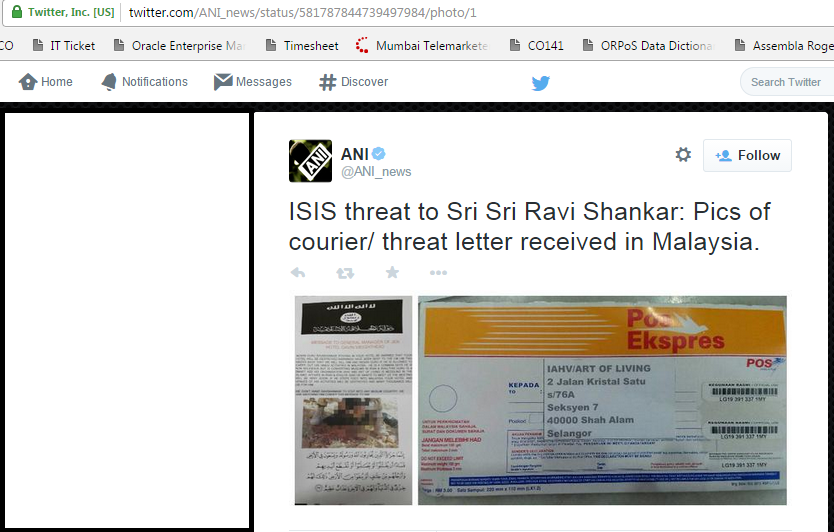
    I heard a news that ISIS has sent a threat message to Sri Sri Ravishankar (Guruji). This blog is inspired from that message and story of The Buddha and angulimala. From This blog – …My Engineering college professor Dr Anand Swaroop Saxena told me some time in 2001 – “inherently people are not flawed, situation drive people to react in the way they react.”…

    Just imagine if a terrorist crosses roads on which The Buddha is traveling! In this high-tech age, it isn’t same as Angulimala confronting The Buddha. Angulimala was having a purpose of making a garland of 1000 fingers (read the purpose here) and he had knife/sword. The current times are different, terrorist doesn’t need to be next to you, they can kill from a long distance. If the terrorist knows The Buddha, he (assuming most terrorists are male) wont come near, chances are that The Buddha will change his heart. But for argument sake imagine terrorist confronts The Buddha (Sri Sri).

    What and how the discussion may start –Sri Sri ISIS threat
    Terrorist (T) – I’m going to kill you.

    The Buddha (B) – Why?

    T – (confused, this fellow isn’t scared) – thinking… thinking… thinking… Because you’re a threat to us.

    B – Threat? I don’t even have arms / weapon, instead you’ve. How can I be a threat? And what do you mean by “us”?

    T – (again, confused never expected this logical question. Uses his logic whatever he has) I’m armed because of you. You’re a threat to my community.

    B – How am I a threat to “Your community”? What is “YOUR community”. I never killed anyone why do you think I’m the reason of you keeping arms?

    T – (totally confused) I don’t want to listen to your stupidities. You’re a threat to us.

    B – Who is “us”? Did I bother you? Did I hurt you?

    T – Your people and those who are against us hurt my people and therefore I’m here to kill you.

    B – “Your people”… “My people” who are these? who is against YOU? How can you say that you represent the whole community? What is your community?

    T – You’re against Islam and my people are all muslims in this world. “Your people” are all non-muslims of the world. They’ve not been
    just to us.

    B – Firstly, speak for yourself and don’t try to talk about millions of others who don’t know you and do not (may not) agree to your point of view. Secondly, I am not against any religion. My religion is compassion [author’s mind – provided this Terrorist understand what this god forsaken word “compassion” means], happiness, equality, human values, meditation, peace etc. Do you believe in any of these?

    What unjust has anyone done to you? How can you speak about millions of others who are muslims, you have not met them and are happily living in their country of birth? How can you say justice wasn’t done to them? Furthermore, what harm am I causing you or likely to cause to you or in your words to your people? Am I killing them? Am I asking (advising) them to hate you? Am I asking (advising) them to do something that is against you?

    At best I’ve helped some of the people in XYZ country to help each other and rescue those whom you want to kill. Is it incorrect? Do you have license to kill anyone and everyone you wish? Does your owning weapon means you’ve license to spread hatred, riots and terror? If that is the case there are nations that have abilities to finish the whole world numerous of times. Your one weapon is just nothing compared to that.

    This time terrorist could not even comprehend and think of what all has been spoken and he has heard. Thanks to Ananda besides the Buddha, Ananda recited each sentence and gave him time to think of a reply.

    T – (reply to firstly speak for yourself…) I represent my people.
    T – (reply to secondly, I am not against any religion) You are against my religion. Why are you doing any rescue operations in XYZ country?  Meaning of my religion is peace, purity, submission and obedience to the GOD…

    B – (to this The Buddha interrupted) have you taken (or they gave you) permission to speak on behalf of the people whom “you think”, you represent? Secondly, if your religion means “peace” what are you doing? Having arms in hand and killing people does it mean the meaning itself is wrong or you have interpreted your religion incorrectly?

    T – (could not digest this) This is blasphemy you can’t question my religion who are you to question my faith and that is the problem
    because of which I want to kill you? You are infidel.

    B – Do you know what is the meaning of infidel? I am just questioning on your actions and interpretations of what you’ve in your mind. Infidel is the one who doesn’t have a religion. I listed out my religion is peace, compassion, happiness, equality, human values, meditation. Another meaning of infidel is one who is not in majority. Do you think you are in majority? Muslims all across the globe do not have gun in  their hands, according to that definition you are an infidel in – what you call it – “your community” itself. Moreover, when I said my religion includes peace, we’re on the same side, isn’t it? Your religion means peace to you. Why do you want to disregard your religion (peace) assuming you are protecting your religion by not obeying the meaning of your religion itself?

    This may go on and on in author’s mind – the author is not the Buddha. Perhaps the Buddha (Sri Sri) would perfect the discussion with a compassionate glance, no single word. Who knows in the end – terrorist bows down with no argument left and becomes a true follower of peace.

    Dedicated to Guruji (Sri Sri Ravishankar)

    Related blogs – on Angulimala

    Story of Angulimala

  • Is religion another organized crime?


    Disclaimer – The below are observations, and the author feels that largely the problem is with the way religion and religious practices are followed or has become a fanatic theory.

    If ever you can win (or say find or please) God by following certain prescription of a book world would have been a different place – may be an utopia. Because hopefully the instructions would be as straightforward. Here the assumption is – algorithm would be as simple as what we used to write for making a cup of tea in our school’s programming class (about 20 years back).

    When I thought about the above, I had attack of Nairobi and Peshawar in my mind. In Nairobi people were ask what religion you follow rather than considering everyone as human. In Peshawar the attack happened in a Church (a place for prayers). One can not support terrorist attack in the name of religion; at least the few happening over last couple of years.

    Churches remind me of India where people are offered money to convert. No doubt, the churches have given opportunity to the underprivileged to go to school, have good healthcare service and some respect.

    If ever you can win (or say find or please) God by money, Forbes has recently released a list of 400 most richest people on earth. They could have find the God. Better is Govts can any day print more money to make everyone rich enough to find God.

    If ever you can win (or say find or please) God by your birth in a certain family there wont be a chance of others achieving the feat – enlightenment. As Indian political and – to fair extent – social structure developed.

    If ever you can win (or say find or please) God or be worthiest person to teach by selection process such as the way the Pope is selected democratically, politicians might have been the most successful people in the business of the God. Well, now a days religion has become more of a business and politics rather than a way to find God. And at best – a person can be democratically elected to represent people and not God.

    When I think of the other options, I feel spirituality or finding/pleasing/winning God cannot be either a democracy or privilege by birth or working in groups. Spirituality is more of an individual’s pursuit. Self-realization can largely be either hard work of individual or grace, I can not agree that killing, buying, voting or birth in certain family gives a person to be self realized. Is organized religion becoming like an organized crime? What are the other options?

    May be humanity, compassion and being at peace with yourself – because social harmony would start with individual’s peace of mind.

  • Ted Talk – Bob Thurman: We can be Buddhas


    This is a TED talk I heard yesterday. Thanks to my mobile and TED app found this video. This is a very interesting & small talk by Bob Thurman. I felt to have the transcript too so have searched and pasted it below.

    [ted id=130]

    And I feel like this whole evening has been sort of amazing to me, I feel it’s sort of like the Vimalakirti Sutra, an ancient work from ancient India, in which the Buddha appears at the beginning and a whole bunch of people come to see him from the biggest city in the area, Vaisali, and to bring some jeweled parasols to make offering to him. All the young people, actually, from the city — the old fogeys don’t come, because they’re mad at Buddha, because when he came to their city he accepted, he always accepts the first invitation that comes to him from whoever it is, and the local geisha, a movie star sort of person, raced the elders of the city in a chariot and invited him first.

    So he was hanging out with the movie star, and of course they were all grumbling, “He’s supposed to be religious and all this, what’s he doing over there at Amrapali’s house with all his 500 monks,” and so on. They were all grumbling, and they boycotted him, they wouldn’t go listen to him. But the young people all came. And they brought this kind of a jeweled parasol, and they put it on the ground. And as soon as they had laid all these, all their big stack of these jeweled parasols that they used to carry in ancient India, he performed a kind of special effect which made it into a giant planetarium, the wonder of the universe. Everyone looked in that and they saw in there the total interconnectedness of all life in all universes.

    And of course in the Buddhist cosmos there are millions and billions of planets with human life on it, and enlightened beings can see the life on all the other planets — so they don’t, when they look out and they see those lights that you showed in the sky, they don’t just see sort of pieces of matter burning or rocks or flames or gases exploding, they actually see landscapes and human beings and gods and dragons and serpent beings and goddesses and things like that.

    The made that special effect at the beginning to get people to think about interconnection and interconnectedness and how everything in life was totally interconnected.

    And then Leilei (I know his other name) told us about interconnection and about how we’re all totally interconnected here and how we’ve all known each other, and of course in the Buddhist universe we’ve already done this already billions of times in many many lifetimes in the past. And I didn’t give the talk always…, YOU did, and we had to watch you, and so forth.

    And we’re all still trying to, I guess we’re all trying to become TEDsters, if that’s a modern form of enlightenment. I guess so. Because in a way, if TEDster relates to all the interconnectedness of all the computers and everything, it’s the forging of a mass awareness, of where everybody can really know everything that’s going on everywhere in the planet.

    And therefore it will become intolerable — what compassion is, is where it will become intolerable for us, totally intolerable that we sit here in comfort and in pleasure and enjoying the life of the mind or whatever it is, and there are people who are absolutely riddled with disease and they cannot have a bite of food and they have no place or they’re being brutalized by some terrible person and so forth, it just becomes intolerable.

    With all of us knowing everything, we’re kind of forced by technology to become Buddhas or something, to become enlightened.

    And of course, we all will be deeply disappointed when we do.

    Because we think that, because we are kind of tired of what we do, a little bit tired, we do suffer, we do enjoy our misery in a certain way, we distract ourselves from our misery by running around somewhere, but basically we all have this common misery that we are stuck inside our skins and everyone else is out there.

    And occasionally we get together with another person stuck in their skin and the two of us enjoy each other, and each of us tried to get out of our own, and ultimately it fails of course and we’re back into this thing.

    Because our egocentric perception — from the Buddha’s point of view, misperception — is that all we are is what is inside our skin. And it’s inside and outside, Self and Other, and Other is all very different. And everyone here is unfortunately carrying that habitual perception, a little bit, right?

    You know, someone sitting next to you in a seat , that’s okay because you’re in a theater, but if you were sitting on a park bench and someone came up and sat that close to you, you’d freak out. “What do they want from me?” Like, “Who’s that?” And so you wouldn’t sit that close to another person because of your notion that it’s you versus the universe — that’s all Buddha discovered.

    Because that cosmic basic idea that it is us all alone, each of us, and everyone else is different, then that puts us in an impossible situation, doesn’t it? Who is it who’s going to get enough attention from the world, who’s going to get enough out of the world, who’s not going to be overrun by an infinite number of other beings — if you’re different from all the other beings?

    So where compassion comes is where you surprisingly discover you lose yourself in some way, through art, through meditation, through understanding, through knowledge actually, knowing that you have no such boundary, knowing your interconnectedness with other beings. You can experience yourself as the other beings when you see through the delusion of being separated from them.

    When you do that, you’re forced to feel what they feel. Luckily, they say — I still am not sure — but, luckily, they say that when you reach that point, because some people have said in the Buddhist literature, they say “Ooh, who would really want to be compassionate, how awful! I’m so miserable on my own, my head is aching, my bones are aching, I go from birth to death, I’m never satisfied, I never have enough, even I’m a billionaire I never have enough, I need a hundred billion, so I’m like that, imagine if I had to feel even a hundred other people’s suffering. It would be terrible.”

    But apparently, this is a strange paradox of life, when you’re no longer locked in yourself, and as the wisdom, or the intelligence, or the scientific knowledge of the nature of the world, that enables you to let your mind spread out, and empathize, and enhance the basic human ability of empathizing, and realizing that you are the other being, somehow by that opening, you can see the deeper nature of life, and you can, you get away from this terrible iron circle of I, me, me, mine, like the Beatles used to sing.

    You know, we really learned everything in the ’60s. Too bad nobody ever woke up to it, and they’ve been trying to suppress it since then. I me me mine, it’s like a perfect song, that song. A perfect teaching.

    But when we’re relieved from that, we somehow then become interested in all the other beings. And we feel ourselves differently. It’s totally strange, it’s totally strange.

    The Dalai Lama always likes to say, he says that when you give birth in your mind to the idea of compassion, it’s because you realize that you yourself and your pains and pleasures are finally too small a theater for your intelligence, it’s really too boring whether you feel like this or like that, or what, you know — and the more you focus on how you feel, by the way, the worse it gets. Like, even when you’re having a good time, when is the good time over? The good time is over when you think, How good is it? and then it’s never good enough.

    I love that Leilei said that the way of helping those who are suffering badly on the physical plane or on other planes is having a good time, doing it by having a good time.

    I think the Dalai Lama should have heard that, I wish he’d been there to hear that. He once told me, he looked kind of sad, he worries very much about the haves and have-nots, he looked a little sad because he said, Well, a hundred years ago, they went and took everything away from the haves. You k now, the big communist revolutions, Russia and China and so forth, they took it all away by violence, saying they were going to give it to everyone, and then they were even worse. They didn’t help at all.

    So what could possibly change this terrible gap that has opened up in the world today?

    And so then, ah, he looks at me.

    So I said, Well, you know, you’re all in this yourself. You teach: it’s generosity. Was all I could think of. What is virtue.

    But of course, … I think the key to saving the world, the key to compassion is that, it is more fun. It should be done by fun. Generosity is more fun, that’s the key.

    Everybody has the wrong idea — they think Buddha was so boring, and they’re so surprised when they meet Dalai Lama and he’s fairly jolly

    Even though his people are being genocided, and believe me he feels every blow on every old nun’s head, in every Chinese prison, he feels it. He feels the way they are harvesting yaks nowadays, I won’t even say what they do. But he feels it.

    And yet he’s very jolly, he’s extremely jolly.

    Because, because when you open up like that, then you can’t just, what good does it do to add being miserable with others’ misery? You have to find some vision where you see how hopeful it is, how it can be changed.

    Look at that beautiful thing Chiho showed us, she scared us with the lava man, she scaaared us with the lava man is coming, then the tsunami is coming, but then finally there was flowers, and trees, and it was very beautiful. It’s really lovely.

    So, compassion means to feel the feelings of others, and the human being actually IS compassion. (The human being is almost out of time.)

    The human being IS compassion because what is our brain for? Now, Jim’s brain is memorizing the almanac. But he could memorize all the needs of all the beings that he is, he will, he did. He could memorize all kinds of fantastic things to help many beings. And he would have tremendous fun doing that.

    So the first person who gets happy, when you stop focusing on the self-centered situation of “how happy am I?” where you’re always dissatisfied as Mick Jagger told us — you never get any satisfaction that way — so then you decide, “Well, I’m sick of myself, I’m going to think of how other people can be happy. I’m going to get up in the morning and think, ‘What can I do for even one other person, even a dog, my dog, my cat, my pet, my butterfly.’” And the first person who gets happy when you do that, you don’t do anything for anybody else, but YOU get happier, you yourself, because suddenly your whole perception broadens, and you suddenly see the whole world and all of the people in it. And you realize that this — being with all these people — is the flower garden that Chiho showed us.

    It is Nirvana