Category: Business

  • Border-less world


    Let us imagine, a border-less world. A world where

    Source - http://praditaastarina.files.wordpress.com/2011/08/170580815_bbdabc8038.jpg
    Border-less world

    1. people can move from one place to the other without Visas
    2. goods and services can be bought and sold without import/export duties
    3. education is free (at least basic education)
    4. people would be free to do what they want to do (not taking law in their hand though)

    I believe both the leading economic “-isms” and many spiritual/religious “-isms” have been trying to do that for years.

    The economic “-ism” are capitalism and socialism. Socialists want this by making a world a single big society where everyone is working for the society. Capitalists are trying to do it through Washington Consensus and IMF. Until now the results have been failure. Russia failed, China becoming a capitalist USA (being protectionist) walking on the way to become more socialistic. Seems There could be a middle path where both these -isms are together.

    Religious groups “-ism” are Christianity, Islam, Buddhism, Hinduism etc. Christianity wants the world to be Christan, Islam talks about Universal brotherhood. I am not sure about the other two asking people to convert to their religion though. However, Hinduism talks about Vasidhev Kutumbakam. Vasidhev Kutumbakam means one world family. But the idea all over the world is unity and unifying the world in different ways.

    All this is failing because – the ulterior motives are money or fan following (I mean increasing number of followers of the religion).  Since both they ways seem not working, what if we turn to something else, no politician, no economist and no religious group to lead. People leading the people’s movement!

    Take the following case – Social media for social service, crowd sourcing based funding (crowd funding) and initiatives such as Janlokpal (India), Occupy Wall Street (USA), Jasmin revolution (Tunisia) and Tahrir square (Egypt) etc. If people are empowered yet are asked not to encroach on others freedom. What if we really become an educated world, without politics, without divisions, without borders.

    This may happen if we remove ego and greed from our society!

    Image Source – http://praditaastarina.files.wordpress.com/2011/08/170580815_bbdabc8038.jpg (Apologies for delayed update, it was updated in the image description but not visible on view)

  • Segment of one & inclusive growth


    What are we? We are a society, made of communities, families and individuals. We are talking about growth on global scale. At times we are talking more about “saving” the world from financial melt down. I sometimes think – who has created it at the first place? That is for some other day though.

    When we see growth we talk on aggregate level – GDP of the country, GDP growth rate, reserve, unemployment rate etc. Have we ever thought that these numbers are “aggregate level” number for example – if I put my one hand in boiling water and another at minus thirty degrees [100+ (-30)], average temperature of my body is 35 degrees. But does that mean I am fine? No my one hand is burnt and other is numb. That is the reality of aggregate level measures.

    How do we resolve such inconsistencies? Let us start measuring things in terms of segments. As they call it in Marketing, Segmentation. On a very deeper level as segment of one. “Segment of one” means handling each individual as an individual (and not as any generic segment). Though is more of marketing and in my professional experience analytics gyan (which is not purpose of this blog) so I would come back to the point.

    Segment of oneIf we do that Marketing stuff of Segment (segment of one) in society and eventually to the individuals. We would realize that “inclusive growth” is only possible when we take growth stories to communities, at smaller level say villages, communities, to each family to each individual. I see that as the solution to a better reflection of growth. I better measure would emerge from there, upliftment of each individual.

    Writing this, I feel as if I’m a politicians, speak and no action! How to do that is the question. A very idealistic solution – what if we’ve unemployment benefits for everyone also encourage everyone to do what he/she wants to do – until found success, unemployment benefits would help these people. Word of caution – there may be free-riders one has to fix that challenge. Take an example of Venture Capitalists and Funders. They do the same but at a later stage – say when I found my calling, started working and kind of see a revenue model. This is truly a very impractical and idealistic solution, but can we build on this to devise a practical and applicable solution from it?

    Image source – http://www.dmnews.com/marketing-to-a-customer-segment-of-one/article/262747/

  • Wealth and Wisdom


    Wealth is the abundance of valuable resources or material possessions. Wealth in itself is of no value, someone owning it gives “it” some “value”.  Similarly Wisdom (Hinduism) is considered a state of mind and soul where a person achieves salvation. Again here salvation is achieved by “someone”. So salvation may not be anything in itself, right? Once you achieve it there is no “self”, that is another side of it though.

    The definition of wealth (or for being wealthy) in my opinion is – when you have no more desire to earn more possession – when you have complete disinterest for money – you are wealthy. Because there is no end to earning. There may be a possibility that you are the wealthiest person on earth in the list of Forbes. You may not be interested to say “enough is enough!” I don’t need more money.

    http://media-cache-ec3.pinterest.com/originals/af/fa/97/affa97f31778a0e75cb506d1e38f0f95.jpg

    According to me one is wealthy – if one decides doing things because he/she enjoys doing the work and therefore does his/her work just for the hack of it. Say if I go to office with a motive of Salary at the end of the month, I am not wealthy. But if I do the same work because I enjoy doing it, feel self-satisfied and content. so the salary is not the desire but the fulfillment I achieve makes me wealthy. The later becomes reality with wisdom.

    What if wealth and wisdom meet? The age old approach of the west (wealth) meets the even older approach for life of the east (wisdom). I do not think the world would remain the same, this world would become wealthy and wise. Largely we would stop running for growth, to bailout countries and to make more money. This would be the world where the Business would meet the Buddha and people would do their work as their duty rather than compulsion.

    Definition source – Wikipedia

    Image source – Pinterest

  • Budget 2013 & rainwater harvesting


    I was on twitter when Budget speech was going on. I read investment in so many good projects and felt good about it. Suddenly realized – wait, should I objectively look at the expenditure? How are these expenditure be accounted for and use? What best use is possible of this money? Can we reduce some expenses by approaching a lot of things differently? Though I did not mean overlooking required support to common man, but still is there any alternative way? Is there any Jugad as we call in Hindi.

    My previous blog was on the plight of farmers in Maharashtra – Self respect. In Budget 2013 Drinking water and sanitation is allocated 15,000 Cr and watershed 5000 Cr. So, I connected these thoughts and remembered a discussion with my father last Sept when I went to Indore. We discussed that the area of Indore is about 500 square-KM. Each year Indore receives average of 39 inches of rainfall about 1 meter. Rainfall is calculated as based on a simple method – how much water would a container receive in the rains, if the container is kept open under the sky?

    If only 10% of this rainwater is harvested, how much would it be? This 10% is very least which can be done. Right now I can think of  this 10% as roof tops of private & public buildings, unused space under Govts possession e.g. polo ground (a place in Indore), University &  college grounds and say roads (with proper water canal diverting water to the harvesting area).

    Based on the definition of rainfall measurement if that 10% is the container, this container would be of a size of 10% of 500 square-KM

    Container size would be about 50 square-KM.

    This container can accumulate a whooping 50 square-KM water upto 1 meter height during the rains.

    Let me convert it into cubic meters – 50X 1000 X 1000 (Square meters) X 1 meter

    50,000,000 cubic meters of water!

    If it is assumed that population of Indore is 2,000,000 and each individual uses 40 cubic meter water per year, 63% of the water requirement (50,000,000/2,000,000X40) of Indore can be fulfilled by harvested rainwater itself. The surplus saved water (which otherwise required in Indore) can be used by farmers around Indore. What if that is done all over India? Government can save a lot of extravagant expense on  irrigation & drinking water schemes.

    Advantages –

    1. Budget money saved by water harvesting

    2. Life saved by reducing chances of drought

    3. Increased agriculture produce due to availability of water – addition to the GDP!

    I belong to a small district headquarter Dhar in MP. About a thousand years ago a King ruled Dhar – Raja Bhoj. It is said that during his tenure he made 12 lakes for water. All these lakes were connected to each other for collecting rainwater. If during rains one lake overflows, the water would flow to the other. This was 1000 years back. I wonder what are we doing now.

    Now watch this Ted talk for solution implemented even before Britishers came to rule India. There is hope, just Wake up and take action.

    [ted id=702]

  • Do what is right in perpetuity


    The class was nostalgic, remembering the last couple of days of sessions of Operations Management with Prof Moradian. Today we were attending his last session of Operations Management. We all enjoyed each session, the quick wits and learnt a lot. We were attending his last session and thus all that was coming to an end for Operations Management.

    That session was very special, I could still hear his one statement very clearly that – “…in your career whenever you have to take any decision, always do what is right for your company in long term…”.

    When I recollect those words from Prof Moradian – “… do what is (make decisions which are) right for the company in perpetuity…” that makes a lot of sense to me. That one statement made me speak couple of tough truths in my career, but it feels good when you consider big picture vis-a-vis to your personal interests.

    An organizations need to learn the art of balancing between the short term sustainability and the long term growth OR short term profit and long term uncertainty. In current economic scenario short term sustainability seems the way to survive, let alone long term growth or profit for that matter. Message seems clear to me – Do what is right for the company in perpetuity.

    Actually this statement equally applies to each individual in life too – we should do whatever is right for us and others – IN PERPETUITY.

    Related blogs –

    Balancing Act – Professor Mankad shared this story of Balancing act with me earlier.

    Fruit will arrive in its season

  • Fiscal Cliff – TRIZ solution


    Fiscal cliff? What’s that?

    I asked Professor Mankad (Sir). He explained it to me in detail. I loved learning that big picture from him. I must admire President Obama for the way he has put in his plan. Everyone in US Admin knows that “We are in trouble”. But how to get your idea win, should be learnt from Obama & Team.

    When Sir explained whole thing with immense patience, I thought about what could be the solution. Sir also suggested that  what are the possibilities and what could be the likely future? I felt – we are (going to be) in deep trouble. Sir suggested that this trouble could be even deeper, longer and disappointing than the 2008 melt down.

    I’m scared. For all such troubles I always look at the other side as solutions. OTHER SIDE here means socialistic approach to solving capitalistic problem. I smsed Sir – could “Sanjha Chulha*” be the solution? It would help provide few  jobs for people in Sanjha Chulha and reduce expenditure of unemployed on food. When that happens, Govt can reduce expenditure of unemployment benefits.
    *Sanjha Chulha means community kitchen.

    The other approach I thought was using TRIZ. Actually that is what Govt must be doing (without the jargon of TRIZ). Before discussing the solution framework, a brief on Fiscal Cliff (Details – About link and Wiki link).

    Fiscal Cliff – is a deep impact due in the budget of Govt. Because as per “Bush tax cut” (of 2003) the taxes would increase at the same time Govt has to reduce spendings e.g. unemployment benefits offered for 99 weeks would reduce to 52 weeks, defense budget reduce by say 50% etc. All of this would result in recession in the USA. The challenge for Govt is – how to control it? Fiscal Cliff is also a function of debt reaching a ceiling % of GDP.

    In TRIZ there is a solution type for such issues. That is named as physical contradiction, which means you want something and you dont want that at the same time. You want Tax cut and you dont want that. You want reduced expenditure but you dont want that.

    Simple solution is – “increase ceiling debt as % of GDP”. Other solution would be, TRIZ offers solution by separation principle.

    1. Separate tax collection based on condition. This is tried arguement is on tax ceiling (Obama says 400k, Congress says 1M).
    2. Separate tax collection based on organization vs individuals. In TRIZ it is kind of separation of parts Vs the whole.
    3. Separate tax collection on time. This separation could be coupled with solution 1.

    1. Separate spends based on condition. spend ceiling on spends of different types
    2. Separate spends based on community vs individuals. Healthcare Vs unemployment benefits
    3. Separate spends on time. Delay spends which could be avoided.

    For testing all these ideas a very simple mathematical model and “goal-seek” of Microsoft Excel can be used. (Though its not that simple – but who wants to complicate things? Objective is to simplify life) politicians/consultants like complexity, who can leverage it.

    Relevant news Euro debt reaching 90%

    Separation principle

    Related blogs –

    1. Double dip

    2. Euro is it dead

    3. Need of the hour

  • Conflict of interest


    Disclaimer – Author himself is an MBA in Marketing (has been and is in the business of – kind of – selling dreams) and has worked as operations management consultant (has been and was/is/has been facing the challenges faced by operations department)

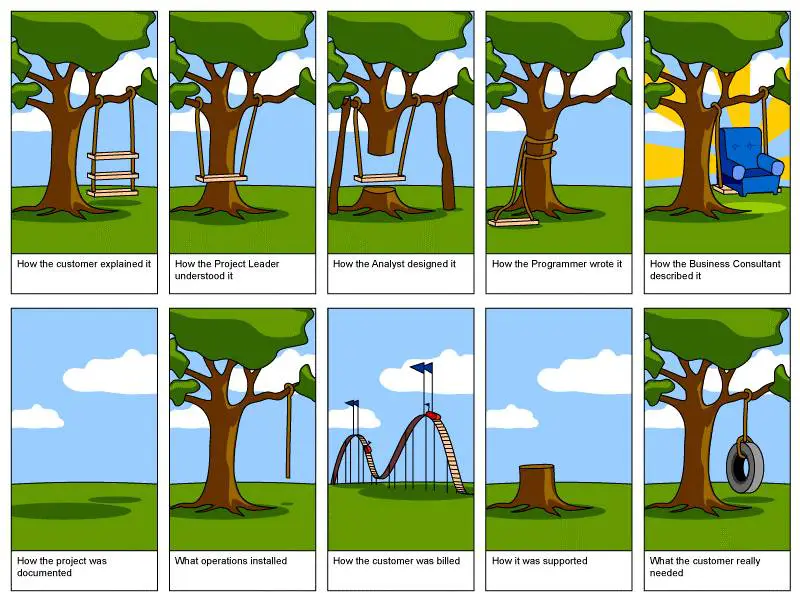
    I was comparing ourselves as an organization. I am an organization in myself, so are you and Ms Y. I was wondering about the departments Marketing and Operations. Marketing is selling dreams and Operations is capabilities. What I dream to be, could be the job of marketing department and what my capabilities are is the reality of operations.

    There is nothing wrong in dreaming, in fact it is good. At the same time knowing the capabilities is also important, that would help us realize the true potential and opportunities of improvements. Though, how often we dream then review our current potential and then think of building future capabilities to achieve potential? That’s where I think Marketing and Operations Department lock horns.

    An incident reminded me of a lecture of Prof Moradian, long term Vs short term and conflict between Marketing and Operations departments. I started seeing more reasons for conflicts between Marketing department and Operations Department.

    Marketing and Operations lock horns with each others. Because generally Marketing team communicates moon, Sales team sells the idea of “reaching the moon as a reality” to prospect and Operations finds it difficult to do that. Why? Because Operations had the capabilities and was supposed to put the prospect in the sky (not necessarily on moon). Thus, challenges faced by operations and promises made by marketing are different.

    The second issue is Marketing and Sales team lives on quarter on quarter (Q-o-Q). They have to show the revenue which is the goal for any organization. On the contrary Operations team cannot take decision for one quarter. For example – operations may not say we need infrastructure for one quarter and not in other quarter and thus make huge investment in one quarter and sell those equipment back in next.

    A branding expert told us that marketing managers (brand manager) want to start new brand building exercise (to gain in short term for writing on their resume – ‘I started this initiative’) and move to next level. New manager comes he/she too does the same. Short term gains are there for the marketing manager; yet for long term the brand is diluted perhaps no one knows what would the brand stand for in future.

    This was/is the case of 2008 melt down. Decisions were made on short term with one phrase in each agreement – “systemic risk”. BFSI industry created various certificates (CDR) etc to sell junk to make big buck in short term. Dreams were sold without real fundamentals. In other words, operations did not have the capabilities of generating the kind of returns promised – with a rider of systemic risk – to prospects.

    This is what is conflict of interest for us as individuals – our dreams Vs our realities. The same is true with Organizations – their marketing Vs operations. This is also true for us as economy – our dreams Vs the reality of systemic risk and capacity of economy to fulfill the dreams.

    Image source – http://www.cravingtech.com/blog/wp-content/uploads/2007/11/project.jpg

  • For Profit Businesses


    Businesses are made for profit making, is there a question in this assumption or argument? For the time being, I am assuming there is no doubt about the argument that business exist for making profit.

    I have been thinking about the topic of “measuring growth” I wrote recently. People may say there are businesses as “Not for Profit Businesses”. This concept of “Not for Profit” in many cases is about reinvesting profit in business rather than giving dividends to the shareholders/investors.

    There are other businesses which are “social enterprise”, I wrote on such businesses with reference to a book “I have a dream”. These are businesses which exist for making profit; however their primary reason of existence is social upliftment with moderate profits. I wanted to ask myself – why not all For Profit Business be like that?

    In my previous career engagement, a couple of times I had a chance to meet CMO of a big Mutual Fund house. In one interaction he told my boss – “you do X, Y and Z; Calculate your cost; add your 20% profit on that and charge me. I need this X, Y and Z done.” This statement was very liberal to hear. I had seen many organizations trying to squeeze their service provider. Thus the statement became a guide for me to think about such clarity and about fair co-existence. I relate the same to the previous post of “measuring growth”. When I tried understanding Islamic banking and asking the feasibility of the system, I saw contrary view points. I read somewhere Islamic banking does not call “interest” (on debt) as interest whereas terms it as profit sharing (say 20%). So there may be businesses so clear and there could be predictability in cost, profit and growth of business and economics.

    This kind of approach is very simple. However, the above case is very simplistic and everything (many things) would become very predictable – how would finance experts – involved in complex transactions and certificates  – would be able to manipulate market? There can still be demand and supply gap and market may run into a relatively predictable and stable equilibrium.

  • What are you searching for?


    My little niece – we call her Chinu – has a couple of  videos and books. In some of the videos and books there is a story, in this story the main character – Lenny (in one story) – is searching/waiting for a friend. The idea is – Lenny wants a friend did not know how to identify the friend. Some of the dialogs of the story –

    …”Oh Sorry! cheeped a little voice”

    “Never Mind,” growled Lenny.

    “My name is Tweek. And yours?” cheeped the voice.

    “My name is Lenny, but I don’t have time to stop and talk,” Explained Lenny. “I have to get home and wait for a friend”.

    “May I wait with you?” asked Tweek.

    “If you want to, but don’t disturb me,” replied Lenny.

    “So what does your friend look like? when is he coming?” asked Tweek.

    “Don’t know,” said Lenny.

    Believe it or not, the search/wait is on…. everyone of us is searching for something. TV channels are searching for next sensational singer or dancer. News channels are searching for next breaking news. Box office is searching for its next bigger hit or super star. Citizen of India in general for good governance and so on. Whatever said and done, search is on.

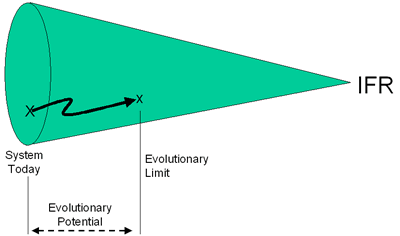
    Ideal Final Result

    When we turn to individual, the search is for a better friend, good house, better life style, peace of mind, love or a superior job. No doubt search is on. Many a times what is observed is that the search is on but one does not know what is that he/she is searching for.

    When an organization is on the journey of innovation, not knowing what is required becomes a very big problem. In my innovation consulting and TRIZ learning I used to have a framework for removing the problem of not knowing what are we searching for. The method is Ideal Final Result (IFR). The concept of IFR seeks the destination or best solution in the beginning itself. This method helps identifying what are  looking for and where we want to go?

    So what are you searching for?

    By the way, when the Buddha was searching (enlightenment), he could not attain that. However, when he even dropped the idea of “searching” he achieved it! To start off – the Buddha knew what he is searching for.

    Image source – TRIZ Journal, article by Simon Dewulf and Darell Mann

  • Currency for the future?


    In his class, Prof Mankad asked us “what is money?” He answered – “Money is what is accepted as money”. Very apt definition. Here I am taking small freedom to change it a bit. I am changing the word “accepted” to “trusted”. Of course trust is a very heavy word. We have built a concept “of money” on trust. The question is where is trust? On a lighter note – There was a time when banks did not trust each other (recession of 2008). I have heard this idiom – “put your mouth where the money is.” Should money be replaced with “trust”.

    I was watching 3 idiots last Sunday and thought that kids like Rancho (character played by Amir Khan) – who could solve problems of class 10th while studying in class 6th – are not that rare in India. You go to Super 30 in Bihar, or any institute in Kota (Aakash, Bansal etc) you would encounter many such kids. Then what happens? Why don’t we see such extraordinary kids as stars of tomorrow? Because in future all these kids realize that the only measurement stick (metric) this world has is – Money! See the video of Staffi Graph – how much money do you have? Well, I am not blaming Staffi for that. This is just a representative video of our society. The measurement of success is how much money do you have? Not how did you get it. Also, the measurement is not how satisfied or happy you are?

    [youtube=http://www.youtube.com/watch?v=PlA_hL3NyyU]

    When these extraordinary kids get out of college, are paid enough and more so that they do “what the company wants them to do”, not what they would want to do. Most of them choose to accept that offer because measurement metric for the society is – Money.

    Let us flip the coin and say “Trust” is the currency. What would happen? Those who have hoards of currency may be the most bankrupt people on the earth. Perhaps, a business of trading of trust would start (Bomday Trust Exchange or National Trust Exchange). Would the world be a different place then when currency would be mutual trust (well not necessarily Mutual such as DLF and Robert Vadra ;))

    The day I started writing this blog I also had a brief discussion with Mr Shreekant Shiralkar and he was of the opinion – Money becomes immaterial after a certain time, what you do, what satisfaction you get from work and the trust you build is important. When he said Trust his thoughts were different compared to what I am presenting here. However, what I feel is the currency for future should be trust you build, the good you do to the society and how satisfied and happy you are.