Category: Business

  • Six lessons on Culture and Leadership from a team exercise

    Mumbai taxi drivers are relatively honest. Before Google Maps, they used to propose or inform that the alternative route has more traffic (time) or this route is shorter (distance), etc. The Kali pili taxi drivers took the best route to drop you from one place to another. Well, what can a taxi driver teach you about culture and leadership? There is another story 🙂 here with multiple learnings.

    Even if you are the CEO of a company, when you are sitting in a taxi or your car, the “driver” “leads” you :), is not it an interesting fact?

    Mumbai Kaali Peeli taxi

    If your driver is as intelligent as the Kali Pili driver of old Mumbai days, he would inform you or at least ask you.

    1. Should we take this route, I heard on the radio there is traffic on another route. Or
    2. Sir, which route to take?

    In short, even if you are the leader at times you need to give the reign to someone else to make a correct decision.

    If you keep your eyes and ears open if you are ready to take a break, contemplate, and introspect there are a lot of learnings from our own life. I will share an old story with some learnings or organizational culture, leadership, communication, and trust.

    Team building

    It was the summer of 2007 or 08. We went off-site for a strategy meeting. We had a lot of interesting ideas, goals for the year, and planning work. The activities and brainstorming were intense. Our team had organized team-building exercises as well.

    Making tent with blindfold

    In one of the activities, two of my colleagues and I were to select our respective teams. Each one of us selected our favorite colleague for our teams.

    We three – Reena, Shan [Name changed], and I – followed our instructor. Our instructor took us to a corner. Our teams could not see us from that place. The instructor’s three support staff stayed with our teams for some other activities with them.

    The instructor showed us how to make a tent. He did it a few times for us so we can learn it and ask questions if we had any. During all this time, we were unaware of what the activities support staff was up to with our teams.

    We returned after some time. All our team members were blindfolded. The instructor and support staff gave us our tents and asked us to stand in open areas with our team. Then came the final note to us. The instructor started – “You are competing with other teams. Your team members cannot speak or see. They have to simply follow your instructions. You have to be as clear as possible, your team members are blindfolded. Examples of your instructions go five steps left pick this item, go left three steps. Give it to the next person and so on”

    We all laughed plus we were amazed. Later, when the timer started, we were all competing seriously. It was damn difficult to instruct our team members. Mind you, we selected each one of them amongst our already well-known colleagues. Yet in the present situation, it was difficult to even communicate and make it work.

    Somehow, we all finished our activities. Reena’s team came first. My team finished second, and Shan’s team could complete the last.

    Learning

    There were many such activities and learning too. There were umpteen Culture and Leadership learnings from this one activity.

    The activity ended. Our team member’s opened their eyes. The first thing for Reena and my team was a surprise. During the activity, they were unaware of what they were doing. When they saw a tent, they said we were unaware of what we were making.

    Shaan’s team member said – “though we were the last in this competition, the best thing that happened to us was that our leader told us what we were going to do. We were blindfolded, were trying to make sense of how would it look like, and yet were enjoying it.”

    The instructor asked Reena and my team members. What were you feeling? The responses were like this, we were-

    1. lost,
    2. unengaged,
    3. clueless about why we were doing what we were doing
    4. we felt like a cattle herd that had almost no say in anything

    Suddenly everyone laughed. The instructor added, literally yes! You had no say because you were not seeing what was shaping up right in front of you. We all smiled once again.

    The instructor turned to us, the leaders. He questioned us, how are you feeling? What was going on in your mind? Why had you instructed the way you instructed the team members.

    I replied in shock.

    I assumed that when you were training us how to make a tent, your support team taught the same to our teams as well. So, even though when we returned from our training, I was shocked that everyone is blindfolded. Yet in my mind, I was sure, what if they are blindfolded, they know they are going to make a tent.

    Secondly, I was frustrated that we had to instruct in small sentences. The instructions were as detailed as moving five steps ahead.

    Communicate-listen-no-assumption

    Thirdly, the team I had selected was the closest of my colleagues. Yet, it was difficult to communicate with them and get the work done. I never had any such difficulty working with them daily otherwise. We were just behind Reena’s team, we could have won it had the communication been a little sorted.

    The worst was yet to come. The instructor asked all of the teams – if we continue with another activity, would you want to continue working with the same leader or want a change? Many of Shaan’s team members said they will stick with the leader. Some of Reena and my team members said they may want to move. When the instructor asked reasons for requesting the move – some gave few reasons – such as frustration was visible (correction audible) in the leader’s statements. I want to be on the winning team’s side. I want to be with a leader I am comfortable with. 

    The instructor further probed the team members. You did not hear the other leaders instruct, how can you be sure other leaders were not as frustrated? How do you know or feel that in the next activity any of the other teams will win and not your current team?

    This made team members contemplate further, some said, we may want to work with another leader who we feel is more considerate, and feel we can be more productive under them. Sure, we cannot guarantee winning when working under the other leader but hope working under another leader could be encouraging.

    It was getting a bit awkward, especially for me and Reena. Most of the team members were from our teams. The instructor sensed it and started concluding the activity and lessons for all of us.

    1. As a leader, it is your responsibility to communicate your vision as clearly as possible. Shaan did it, and though his team was last, it was a better working team. Had we continued with other activities they might have won. Takeaway – communication makes culture.
    2. As a leader, you have to bring the best out of your subordinates. Reena was more resourceful and could get the most out of the team.
    3. Make your goals and objectives clear to your team. Never assume your team knows what is expected or the goal they need to achieve. Pravin assumed the team knew what is expected from the team. He further assumed that the team knew what they were doing, the only thing is this time around they are blindfolded.
    4. When communication breaks or is not done timely, it may make things difficult. Within half an hour you “selected” teams of your choice and had a tough time with them in this half an hour. You knew your team and leaders well even before the start of this game. Think about new hires or working professionally!
    5. Frustration does not fulfill the task at hand. You have to either ask your leader to clarify or the leader has to clarify sensing the situation.
    6. You cannot define winning in real-life situations, yet, you have won as a leader if you can keep your team together. People wanted to switch sides for multiple reasons this will happen always. 

    Summary

    The lessons from this exercise go from Culture, Communication to Leadership and Trust.

    Bring clarity with goals and objective communication for each project. Instead of getting frustrated ask if the team member needs help or is unclear. This fortunately or unfortunately applies to the team members as well – if they have a concern they should raise it. Though it requires openness in the culture that a subordinate can question for a reasonable answer.

    At times you need to listen to the nondescripts. On a lighter note, you may feel this nondescript is blindfolded! 🙂 In fact, sometimes give that nondescript a chance to make a decision for you however small the decision is such as which route to select.

    Be it, the Mumbai Kali Pili taxi drivers, or for that matter your car driver. Leadership is listening to your team and giving up on your assumption as well.

    Image sources – Taxi – track.in. Tent Photo by Vanessa Garcia, communication, assumptions Photo by fauxels


  • Uncertainties and acceptance

    It has been more than a week, we wake up to the no-water in the overhead tank of our wing of our residential complex. Initially, it was annoying. Daily, I or my wife went downstairs to tell the security to switch on the water pump. We raised the issue to the society manager, secretary, etc. I think it takes about 3 days to form a habit, soon we accepted this challenge as part of our life. The new ritual now is – wake up, open the tap – hoping system is fixed, go downstairs tell security to switch on the pump, come back and proceed as per the available resources. After a week, now security calls me daily to ask “do you have water in your taps now?”

    Uncertainties and acceptance

    Uncertainties make us jittery and annoyed. It depends on the situations, in some cases uncertainties make us anxious too. There was news that Deepika Padukone wanted to face the Narcotics Control Board (NCB) with her Husband because of anxiety; it is just an example. This initial annoyance made way for the acceptance of the situation. Once, we accepted the situation, we started planning our next day before we went off to sleep. The morning started with the acceptance of the unavailability of water and our workflow was changed to accommodate the situation. Once we had figured it out, life was easy, the disappointment of delay in fixing the problem was there but the annoyance and frustration ended. This happens many times in our business too.

    A conversation

    We had figured it out for our daily life. I and my wife were talking about it in the morning, the same evening I received a call from my ex-colleagues – Deepak Taunk. By chance, we happened to speak about the certainties of the outcome. The discussion started with analytics, human intelligence, AI, and business processes. It was an interesting discussion on how our brain connects the dots from analytics and business processes to our daily lives. He is a creative person who questions assumptions. So, when we spoke about some business processes he shared his displeasure with the templatization of work. When I say templatization, I mean making work process-driven and asking others to follow the guidelines. It is not that he is not process-driven – he is a very successful project manager. His point was the templatization results in blindly “follow the guidelines”. People are discouraged to ask questions.

    It is a very valid objection. His point of view was – educated people must be allowed to understand “the why”, freedom to figure it out, otherwise what is the need of highly educated people when they have to always follow the SOP (Standard Operating Procedure). I personally have seen this issue that even intelligent people follow things blindly or are asked to follow blindly. In case some ask questions they are termed as “unfit” or non-cooperative. This becomes the responsibility of the team leader or the leadership, in general, to figure out the best course of action. There is no right or wrong in being templatized for few things and creative for others. We need both the ways to run a business well – follow the process and question the assumptions.

    World of possibilities

    In business, personal life as well as in spiritual path too both the approaches are required. I had been an inquisitive person, including on my small journey of spirituality. I asked a lot of questions to many of my guides – Dr SaxenaRamana uncle ji, my father, Sai KakaDada ji, and Dr Agashe, my art of living teacher. Dr Agashe told me – “…for a few things you need to trust the predecessors/process for others ask questions, do not stop any of these. Indian spirituality offers you both the ways…” Interesting isn’t it?

    Following the process brings certainty of outcome whereas questioning assumptions bring opportunities. Uncertainty many times brings opportunities. One has to be aware of the uncertainties, accept the situation, and find out options. When we look at situations, accept the situation(instead of fighting it), look for options, and be creative we have a whole world of possibilities.

  • Improving self

    When you work somewhere ultimately who are you working for? A shallow answer is for the company or the client. The deeper answer is for the self. You are trading your skills to a company or a client to earn your bread, right? When you improve self who would benefit more? You ain’t it?

    improve

    I was thinking about developing oneself. I wrote a few sentences and continued from my previous blogs on the competition. When I reached the end of the second paragraph, I realized that I need to take the support of this one scene of the movie “Three idiots” to drive home the point. In this movie, a character goes for an interview and says ‘…I found this confidence after breaking 16 bones, I will be able to do something good with my life…”.

    This is right, everyone has the capabilities to do something worth it for his or her life. Why get in a race of anything? Especially when one understands, competition brings stress, stress causes mental or physical suffering. Why try to be a replica of someone else when one can be a better version of self?

    Improving self

    What best a person can do? Improve self isn’t it? Improving self requires looking at your own self, knowing owns strength and weakness, understanding the environment where you’ve to perform and working on these to get better results, that’s it. 

    I know people may have a point – how is that possible in a competitive world? Sales folks may say how will we bring in new business is we don’t compete with rivals? The point is – is now of learning and improving self. It is more about improving your product rather than just trying to sell a solution that may not be a good fit – your competitor’s product may be better. The point is followers look at leaders and compete with them. Leaders look at the customer best example is Amazon, isn’t it?

    In your case, you are the customer and you are the serving company.

  • Competing with ourselves

    Learning is learning, what is the scope or meaning of competition in that? Everyone has his or her level of comprehension and skillset. Some take more time to learn math but are wonderful at poetry others take less time but not good with creativity. Isn’t it common? So life is good when we try to be a better version of ourselves, competing with ourselves rather than trying to compete with everyone out there. I hope the new education policy, keeps this at its core rather than making kids slog to get more marks.

    https://business2buddha.com/2018/10/i-want-to-be-the-winner/
    Now, when I look back I feel most of the times, it is about collective growth rather than me over you. After reading about interdependent co-arising I have always believed in collective growth.
    https://business2buddha.com/2017/07/education/
     some times, “it is ok to stop in life instead of rushing.”
    https://business2buddha.com/2020/02/interdependent-co-arising-in-long-run/
    We at times miss the power of small things and ignore them. This understanding of sensitivity of impact of one thing on a larger scale makes a person compassionate.

    Inspiration for competing to improve myself

    I was an (above) average Joe in school days, used to do a lot of extracurricular. This happened when I was in grade 11. In 11th, we all took admission in this school from different schools. I started sitting with my colony friend Sumit and his friend Nikhil. Both of them were far more intelligent, toppers, and NTSE (National Talent Search Examination) scholars. At the beginning of grade 11, I wasn’t very serious about studies. I wanted to be an engineer however I was still in many extracurricular kind of lacking focus. I found the focus on studies after an interesting incident, and yet continued with extracurricular.

    school

    One day, Nikhil was sitting with his Mathematics “book” and thinking something. Because this book was kept below the desk and there was no notebook. I asked, “what are you reading”? He replied, “I am solving a problem”. I said there is no notebook and you seem to be reading a book. He said “trying to solve it mentally”. I asked again – what problem is it. It was 2 or 3 chapters ahead of our school math classes chapter.

    It made me serious about studies and made me think about how can I solve problems mentally rather than on just pen papers. When I look back, I realized that Nikhil was an inspiration for me. There was no competition for me with him or anyone else in the class. I just wanted to be better than what I was earlier. In fact on a serious note, Nikhil always scored a perfect 100 in Math that I could never. It seems like if I take the Math exam again, there will be still room for improvement. Effectively, he helped me be a better version of myself, I could never become like him in Math though. 🙂

    What better recognition one can expect? Within a year I had improved myself a lot. Once in grade 12, he said “Computer ko lekar Brahma ne banaya kya?” (Did God make you with a computer?) for solving either probability or integration/differentiation problem in class – I used to do it in the head without touching pen paper. This, coming from the same person was a testimony that I had achieved what I set as a goal. Nikhil did not know that he was eventually praising himself because he had motivated me to do something like this.

    Competing with ourselves

    There are inspirations as Nikhil was for me – how can I be like him, solve problems in mind itself. However, when we limit ourselves we either have envy or competition. The world is too big to compete with everyone – currently about 7 billion. It’d be endless and completely outwards journey as Alexander (the great) had. He kept on trying to win the world and died too young learning “I’ll die empty-handed“.

    The endless competition with “self” is better because the goal is to improve oneself daily. Nikhil had been a positive influencer who became an inspiration, not a competition. In fact, Sumit and Nikhil both became an influencer for me (read another incident from the same school here), Sumit was the state topper in 12th. A lot later in my life, I came to understand and relate to these learnings with both of them as interdependent co-arising. I wonder what they learned from me but I improved a lot. The word “competition” must be looked at with a positive perspective, it should help one improve oneself rather than becoming a race. A perspective and an approach make a huge difference in one’s life. Thank you, Nikhil for inspiring me and eventually helping me learn that one has to compete with ourselves rather than the endless world.

    https://business2buddha.com/2019/06/societal-impact-of-interdependent-co-arising/
    We all grow when we help each other to grow whether it is our subordinates or our competitors.

    Competing with ourselves in business

    I understand it becomes difficult to digest the concept of competition in academics, professional life, and business. I shall share more thoughts on that in some future blogs. Here is a pointer until that blog, I am reading a book by my MBA professor – The new rules of business. This book also gives a perspective on competition. A wonderful lesson from that can be paraphrased as – if you compete with your competitors you may end up being a copy of them in fact one may end up doing the mistakes your industry is doing.

  • Pushing the envelope

    After reading my previous blog, one of my friends called me and shared his story. I took his permission and here is an abridged version of the same. The discussion was differentiating between seeking recognition and pushing the envelope. Here is the summary.

    Recognition vs pushing the envelope

    Adviti showing sketch

    We were a joint family. It was “joint and huge” we kids could make two cricket teams and play within our family itself. My father’s eldest brother was revered and he was the real hero for the whole family. In our childhood seeking his recognition and gaining his approval was the best one could get. I and one of my cousin brothers were studying together at the same school in the same grade.

    It was a practice to show the result to the elders at home. I know it may be embarrassing for some, but it was a practice. My eldest uncle always asked me on the day of the school results – “How much did your cousin score?” This started with our 3rd standard. I never scored better than him. At last, I scored 4 or 5 marks more than him in the 8th standard – it took me whole 5 years to better him.

    After these repeated question five year in a row, I had achieved this milestone. I went to Kaka – “I scored more than my cousin”. I think Kaka always knew the results before I could tell him because all this while probably he was asking my cousin – “how much the topper scored?” My cousin was studious and he used to remain 2nd. This was the first time when I scored better marks than him, I stood 2nd in the school. So, this time around, Kaka asked me – how much did the topper score? He had whopping 47 marks (9% in % terms) ahead of me!

    Throughout these five years, my only aim was to better my scores than my cousin. I was heartbroken, however hard I try I was not able to convince him that I did something worth one’s salt. He was godfather to the whole family and seeking his recognition was the best one could get within the whole family. I gave up starting the 9th standard because I was never able to meet his expectations. He should have patted me at least once that at last after so many years I could go one step ahead on his scale.

    I stopped showing my results to him as I felt I cannot please him however much I try. Though I kept learning from him as he taught me and my cousin. He was so impressed with my punctuality that he used to say – “I can match my wall clock with his entry – it is 2 PM.” This was the only and best recognition I had from him ever.

    Result?

    Well, after this summary, I said, so what happened afterward? He said I studied at good places scored decent marks and here I am, fairly successful.

    I asked, what if you had shown him results later on too? Do you think that you would have been better off? I see the single question inspired you a lot and you tried improving yourself year after year. At last you bettered your performance. Probably a couple of years more and you would have been more successful, isn’t it a possibility?

    He was taken aback! There was this “aha! moment” for him. I am sure he had not thought of this perspective. He completed my thoughts adding – When I look back on Kaka pushing my limits, I know now that he had good intentions. I was too young to understand it, I gave up. Was my giving up, on seeking his recognition for good, it can be questioned in hindsight. Probably I should have continued the ritual.

    It is difficult to accept one’s mistake, isn’t it? One friend two mistakes of his and he stopped communicating to me. One of regarding managing emotions and other was regarding the international matter on which I asked him to keep a balanced opinion. So, I perfectly know this friend of mine was wrong at both the places, however it is difficult to accept one’s mistake.

    He added a “but” in his thoughts. He continued – However, I believe it gave me some freedom to experiment – I learned new skills and excelled in those and won awards too. Probably because I just wanted to do the stuff without expecting anything in return. I did not have the pressure to prove myself. Probably no one was watching me if I did well there.

    We concluded the call telling him that at times it is not seeking recognition. Your Kaka was pushing your envelope to do good in life. Probably, had you shown your results of every try or achievement he would have given you next goal. Since I see you were determined you would have surely achieved it. I think you mistook throughout your childhood the practice of showing your results was for blessings of elders and not for recognition.

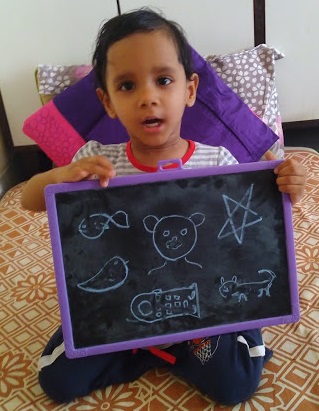
    Note – Picture of my daughter with a random scribble we did.

  • Nothing special

    Disclaimer – Death of Sushant Singh Rajpoot (SSR) has moved me deeply. This blog post is dedicated to him. Neither this post nor I mean to insinuate anything related to the causes of death or anything related to the big personality in SSR. I request you to please look at the message at a larger perspective.

    It was just another weekend morning, we were in our room, reading a newspaper. Literally, it was nothing special, usual day, nothing much exciting. My neighbor called me – “Pravin, it is your sister’s phone”. I rushed to the room, picked up the phone, and said – “hello, hi Tai”. I call my elder sisters Tai. It was my eldest sister speaking from somewhere in North East where she was posted as an army officer. She asked – “How are you doing and what is happening?” I said, I am good and nothing special at my end. She responded – “Life itself is special, do not respond to me like that next time.” Whenever I responded ‘nothing special’, she had said the same thing earlier to me.

    This happened in the year 2000. About 20 years back, we did not have mobiles as the current generation has these days in their pockets. Admission in Engineering and completing that itself was a privilege for a middle-class family kid – I had that privilege.

    Yes, I was privileged that I was doing my engineering, I had “earned it”, we’d a competition with a handful of seats (1000 in total in Govt/semi Govt colleges put together for general category) across the state. With this point too, it was “special” that I was studying in Engineering. My saying nothing special was an understatement.

    My sister’s one sentence with 2 words stuck with me. Our life is precious, it was not that I made it to engineering was special, life itself is something to be celebrated. Why am I revisiting this 20-year-old incident?

    Small incidents of saying “Nothing Special”

    sushant-singh-rajput

    Sushant Singh Rajpoot’s death – be it a suicide or a murder – moved me. The death of anyone makes me feel – the world lost life experience and numerous relationships with one person. I wrote on China India standoff and loss of lives there too, though I could not conclude it so has not posted it yet.

    I knew Sushant as “Dhoni”. Whenever I saw his picture or video, I said – “Vo Dhoni hai na (that Dhoni)” and my wife used to correct me with his name. He made me believe he is Dhoni on screen. Though, I watched only 3 of his movies Dhoni, Byomkesh Bakshi, and Chhichhore.

    When I was reading the news of Sushant Singh Rajpoot, my mother recited a Doha of Kabir das.

    साईं इतना दीजिये, जा मे कुटुम समाय। मैं भी भूखा न रहूँ, साधु ना भूखा जाय॥

    Oh God, give me as much that my family can survive. As much that neither I sleep hungry nor the saint (guest) who is at the door.

    She further elaborated, that we must not run behind many things in life – be it money, fame, success, and every other possible possession. She said – all these things end up making a person want more. My mother made valid points, in fact I have written on it for a long time. I asked her how can we say that someone had a hunger for something and that hunger forced him to take the extreme decision? In fact, I could some how make it to the engineering he was national topper. I always felt he was a very thoughtful person and find it difficult to believe he committed suicide. Though, our discussion had no conclusion in the end.

    https://business2buddha.com/2011/09/life-is-simple/

    Wish Sushant had spoken with anyone who could tell him that – “life itself is special”.

  • No water!

    During this lockdown, there were a few instances that taught me some lessons and reminded incidents. In past those incidents did mean little, however, during the lockdown, there were some learnings that emerged. This small incident happened recently which reminded me of two lessons. Lesson one, it is better to be calm when dealing with people or situations. Once again, my recent experience reinforced this lesson. Lesson two, of Hindi class during school. There is a Doha by a saint Rahim, which uses water giving a wonderful message. The message is “water is most important, without water, there is no pearl (shine in pearl), person (respect of person) or lime (use-ability of lime)”. The author uses “water” in different contexts (in Shlesh alankar – Pun decking).

    रहिमन पानी राखिये बिन पानी सब सून

    पानी गए न ऊबरे मोती मानुष चून

    https://business2buddha.com/2015/01/reaction-and-response/

    I have written a lot of blogs on water, be it on economics, meditation, rainwater harvesting, current affairs, or others. You can read the different flavors can be read here.

    No water

    Last week, we woke up to know that there is no water in our wing of the building. Recently we read the news that due to lockdown water usage in Mumbai reduced. It was a surprise how it is possible that we don’t have water?

    drop-meets-ocean

    I was not upset, probably because there are more pressures of work these days than water crisis. Probably, I was unmoved because I did not have to rush to the office. Or probably I reasoned out in my mind better – I quickly accepted the situation. “Ok there is no water, now what?” Actually it was case number three. I went down, spoke with security, and came to know that there is a new fellow on duty. He was unaware of switching on the water pump. Result? this whole trouble.

    It was a revelation – once again – to me when I was talking to him. We take things so much for granted that when we do not have it, only at that time we notice them exist. We never care for who made it possible for that thing to reach us. Water in this instance. It is stored somewhere. We receive water when an unknown BMC employee timely switching on and off of the switches. It is one of the largest supply systems in the world. It traverses the distribution line put in place by god knows who and when. We never think about these people who were the foundation for making our water tank full every morning or for that matter who made our water tank in the first place. Forget about being mindful of the security guard of our building who switches on the button daily. We take the availability of water for granted these days especially in the cities like Mumbai that we don’t realize those who make it possible actually exist!

    Lessons

    These are some important things that come to my mind with the incident

    • Be grateful

    Every individual makes some contribution to our life, we should be thankful to them for this. Yes, if today this security person is not there someone else will be, but his being there today made you feel safe at home. So for that at least – be thankful.

    • Be compassionate / considerate

    There are possible reasons for mistakes so try to look at correcting situations and not criticizing people. You may not know what a person must be going through. Or it is possible that he is new to the system and genuinely unaware of his all responsibilities. A leader must inform his team members about the end results or the basic responsibilities.

    • Own your mindfulness

    If someone loses mind the overall surroundings become tensed. If I am not mindful, it may cause harm not only to me but also to the people around me. Also, if I am mindful I can better handle the situation isn’t it? If you lose your calm the situations are going to get worst.

    These lessons are useful irrespective of personal or professional life. One has to be grateful plus considerate to people, and mindful of self, isn’t it? These factors help a person retain (water) respect – पानी गए न ऊबरे मोती मानुष चून! According to Rahim – No water is no respect too.

  • 3 small lessons from a leader

    This incident turned into 3 small lessons for all of us from our boss. Leaders make learning effortless and yet impactful when you read the story you may realize the 3 small lessons were not rocket science. Yet, how often we implement such small things in our daily life when dealing with situations and people?

    3-small-lessons-from-;leader

    It was a late morning in our office, the day had just started a few hours ago. There was tension in our small office. Our office was small. A slightly higher voice in one corner can be heard on the diagonally opposite side of the office. Generally a very calm, composed, motherly and one of the most silent persons of the office was upset. It had been more than 10 minutes since our admin and accounts person was furiously shouting to our office boy. She was asking questions, pointing errors, and suggesting the impact of all these. Irresponsible behavior and mistakes were causing a significant impact on our daily work, and costing office.

    The accounts manager continued her monologue – “it is common sense isn’t it?” For a few other things, she said “I had explained this to you earlier too”, how can you make similar types of mistakes (not exactly the same) repeatedly? So, some things were straightforward errors of judgment by the office boy. The office boy was making these errors for some time; we all had been impacted some time or the other.

    After it was enough for our boss, he called the accounts manager, who used to report to the boss. He requested the office boy to bring an early lunch. The office boy knew and generally used to collect bosses’ lunch from a nearby restaurant.

    3 small lessons

    The boss turned to the admin cum accounts manager and said I heard some parts of your conversations. This is my suggestion to you –

    • you cannot expect everyone to think the way you think
    • had our office boy been as intelligent as you are, he probably wouldn’t have been an office boy
    • you have to think from an individual’s level of intelligence and instruct him accordingly

    After these three-suggestions, he further added – “I am not saying your observations are inaccurate.” Now, when you have thought about these three points, look at the past 10-15 min, our office has been stressed out.

    http://business2buddha.com/2020/03/managing-emotions/

    The way he explained his point of view was such that the accounts manager had calmed down and the tension in the environment defused. His teachings were so good that I remember this lesson even after more than a decade. I may have failed in explaining the heat of the situation that was there. Probably, it is difficult for you to understand what difference between those three small statements made to the situations.

    When I revisit the incident, I take a few takeaways from the incident, one we have to be compassionate. Second, we have to understand the point of people. Lastly, we should start thinking about what should be our response later. These lessons can help in managing situations. I am still learning and trying to implement these and others. How do you handle tough situations?

    Image source – The Coach Space from Pexels

  • Pandemic – why companies should choose to spend

    Coronavirus pandemic is a global phenomenon, as of now 160 countries out of 193 recognized countries are affected. Many countries are in lockdown. All the developed countries are affected, therefore, the economy worldwide is severely affected. In this trying time, the whole world needs Keynesian economics. In nutshell, the concept says – “Increase government expenditures and lower taxes to stimulate demand and pull the global economy out of the depression.” Here I am going to discuss my opinion on why companies should choose to spend and continue working on their ongoing plus upcoming projects.

    http://business2buddha.com/2013/11/24/keynes/

    Keynesian economics considers or provides guidelines to the Governments. You can check India approves 1.70 lakh Crore package for poor, $2 trillion package US Congress has approved recently. Apparently, this is the biggest package US or for that matter, any government has approved. Government spending is only one part. I am of the opinion that every industry must seriously consider not only spending but also sustaining employees. Short term “shareholder value” can wait for better long terms sustenance. I know this sounds counter-intuitive – special when all companies are losing revenues due to lockdown, expecting retaining employees and to sustain a business. Surely this will impact the survival of many firms, projections and revenue targets of almost every company and shareholder returns. Let me give you some basic reasoning for my opinion of private firms too should continue their investment and how can it help bring the economy on wheels again.

    coronavirus-hospitality-industry-impacted

    Due to Coronavirus few industries are directly affected, namely; Airline, Hospitality and discretionary expense items e.g. beauty or apparel. People are going to spend on their basic necessities for the next few weeks or who knows months. The impacts revenue and therefore growth-related projects of these industries. Let us take an example as an explanation.

    Example

    An apparel company wanted to increase its footprints in a new region. That would require – finding retail space, employees for the store, furniture/store interiors design, products to put in the shelf and technology e.g. internet, hardware, POS and marketing to bring shoppers in-store. Due to the impact of a pandemic the apparel company will delay all these. The domino effect will be on – real estate, prospective employees, interior designers, producers (who produce for the apparel company in terms of aggregate demand), internet service provider, IT company planning to provide hardware and software and the marketing activation agency that was supposed to engage in the project – right from printing flyers. Why I brought flyers? Because this and interior decorators have many unskilled laborer working for them. The result – the domino engulfs many part-time workers. When these part-time workers do not have money they will have an impact on purchasing many other things. A self-fulfilling prophecy – read more about self-fulfilling prophecy here.

    At this time, what should private businesses do? At whatever negotiated discounts – they must continue their projects be it starting footprints in new regions as given in the above example. The companies must continue their spending because sooner or later things will fall in place. People will start consuming and the economy will be on track again. If spending is done as usual – the economy will come on its feet faster than it other would. Therefore I am suggesting that after the lockdown due to pandemic – why companies should choose to spend.

    Summary

    I fell in love with research of McKinsey and company, “Grow Fast or Die Slow” sustaining growth in technology companies. Paraphrase of this research is –

    1. Growth matters more than margin or cost structure
    2. No correlation between cost structure and growth rate

    Net-net one cannot cost cut to grow the business. Business growth requires “growth”. This is why I suggest that companies should choose to spend. Cost rationalization is important, questions are the discretion, putting costs in the right perspective and strategic decisions on these investments. This is the time when project costs will be more rational compared to a booming economy. At this tough time, many companies will look at cost reduction – what leadership across the globe must know is that – this is the time to look at a big picture and work towards completing the unfinished projects, starting the planned projects and reopen the businesses as usual after lockdown. Why? Because sooner we start spending on our planned projects, sooner economy will be back on track and most importantly we will be able to reach our projections, targets, and shareholder value.

    The concept of interdependent co-arising perfectly fits this conclusion. When we keep our investments on, the fund will be available to others to either spend or pay as salary. This spending results in moving the circle of growth.

    Related newsCognizant to offer extra 25% of base salary

  • Coronavirus and questions on wealth

    On the wake Coronavirus and market bloodshed, I leave you with some question this week. These questions are directly related to Coronavirus and on wealth. Our sense of defining wealth – and at times success – need a contemplation. To begin with let me share a story with you:

    Church

    Once a man won a lottery worth ten lakhs (1 million) rupees. When his wife heard this news, she was worried, how should she break this news to her husband. The man had a weak heart and a sudden such news might give him a shock or he might even suffer a heart attack due to sheer excitement. So, the wife went to a priest requesting for help. The priest said “Don’t worry, I will come with you, and together we’ll give him the news”. Next Sunday, priest went to the lottery winner’s home and asked him “My child, suppose by the grace of God you won a lottery of ten lakh, what would you do with it?”

    The man answered, “I will give half of it to the church Father.” No sooner the priest heard this, he had a heart attack.

    Wealth should bring peace. Being wealthy should not bring arrogance, hostility, jealousy, disgust or boredom.

    Coronavirus and questions on wealth

    Wealth should not be something that becomes a reason for happiness or sorrow or a cause of shock. We live in such an artificial world that a virtual belief in wealth governs so many things. Recently I read worldwide markets are down and names of people who lost millions because of outbreak of Coronavirus. The shares are down and thus many people are losing their unrealized profits; some have lost the previous day’s profits and squared off at lesser margin. What to do with riches that are dependent on outside influences. A virus hits the world and (for no faults if yours, you become poorer) the wealth is wiped out.

    I leave you with some question this week – what is wealth? How money / wealth should keep you? How should it affect you? Why do we define wealth the way we define it? Should we’ve a different way of measuring wealth? Should we revisit our definition of money / wealth?

    Relevant other blog

    http://business2buddha.com/2012/10/14/currency-for-the-future/
    http://business2buddha.com/2016/03/13/kanhaiya-to-mallya-why-lessons-from-buddha-prevail/

    Story source – Commentaries on Shiv Sutra by Sri Sri Ravi Shankar, The Art of living foundation.