It is the fourth and final blog in my 4-part exploration of why we lose interest in personal and professional life, what it reveals about our inner alignment, and how to rekindle purpose through a blend of introspection, systems thinking, and spiritual grounding.
In the first blog we explored, passion slipping away, with conclusion that “The war outside mirrors the war within.” How to know if it is burnout, boredom or an opportunity for a breakthrough.
In the second blog we closed on The mind wants clarity. The soul speaks in signals.
In the third blog we looked at 7 different scientific methods of how to brake the chain of thought, rewire and reignite interest. The conclusion was “Sometimes, the most powerful way to reignite interest is to remember you’re not your thoughts. You’re the one watching.”
When I was thinking about the blog series I was sure the third blog was conclusion. However, there remains few questions and therefore this blog.
You’ve tried the frameworks. You’ve optimized your calendar, redefined your goals, even taken a sabbatical. And yet, something still feels… off.
That’s when you know: it’s not a tactical problem. It’s a spiritual one.
When the logic hits the wall
In business, we’re trained to solve problems with logic. But what if the problem isn’t external?
A 2022 study in the Journal of Positive Psychology found that individuals with a strong sense of spiritual well-being; regardless of religious affiliation; reported higher resilience, lower burnout, and greater life satisfaction. Disclaimer: the research was on women, however I believe it applies equally on men too. Similarly there is another that was specifically done on Christian subjects and proves the same point (source: National library of Medicine).
Why? Because spirituality offers what strategy can’t:
- Perspective: You’re not your title, your to-do list, or your LinkedIn profile
- Presence: You stop chasing outcomes and start inhabiting the moment
- Purpose: You remember why you started in the first place
What spirituality really is?
Spirituality isn’t incense and mantras (though it can be). It’s the inner alignment between who you are, what you do, and why it matters. Indic philosophies has various methods for the same, be it Mantras to Meditation and Worship to Work, in Hindi – Dhyan, Gyan, Karm and Bhakti.
It’s the quiet knowing that you’re not here just to perform but to participate in something larger. In Vedanta, this is called Swadharma, your unique path, your inner blueprint. When you stray too far from it, life feels heavy. When you return to it, energy flows.
Swadharma is a Sanskrit word. Made out of two words; one Swa – means Self and another Dharma – means duty. It means duty of self. The purpose in some sense.
Reset, not a retreat but a Reset
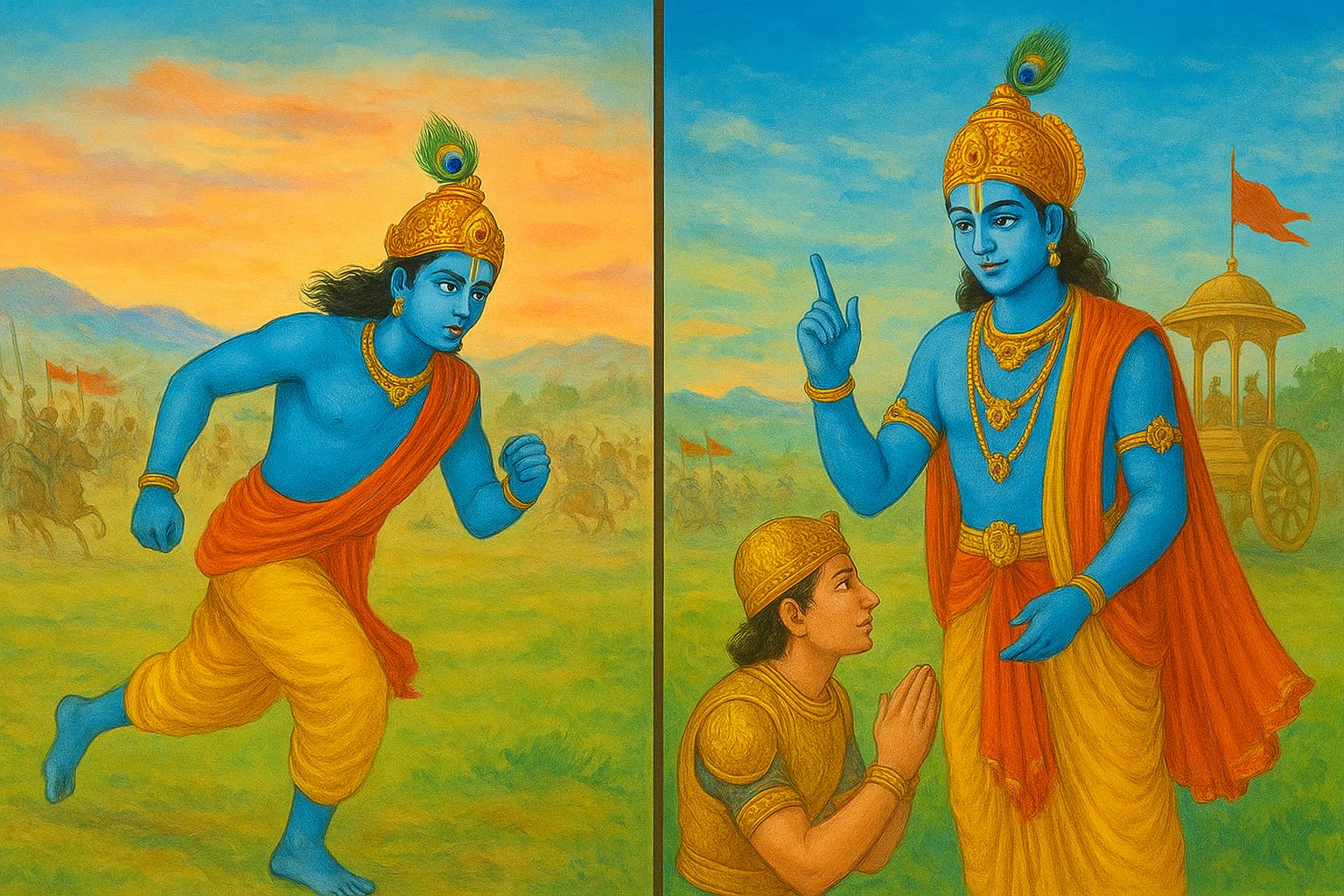
You don’t need to quit your job or move to the Himalayas. You need to shift how you show up. In fact many times the thought drawn on me and every time I heard Guruji (Sri Sri Ravi Shankar) and Osho, and felt the path they teach is not to run away. Going to Himalayas sounds like running away. In fact krishna says the same thing to Arjuna, do perform your duty.
Here’s how:
- Start with Silence: Even 5 minutes of stillness a day can help you hear what your mind drowns out. Ask: “What am I avoiding by staying busy?”
- Revisit Your Inner Scorecard: Are you chasing metrics that matter to others but not to you? Redefine success in your own terms.
- Serve Without Attachment: The Gita teaches: Karmanye vadhikaraste ma phaleshu kadachana – you have the right to act, not to the fruits. When you serve without clinging, work becomes lighter.
- Find Your Sangha: Surround yourself with people who value depth over drama. One aligned conversation can reset your compass. We had this as one of the 7 methods in previous blog.
- Let Go to Let Flow: Sometimes, the breakthrough comes not from pushing harder but from surrendering smarter (Bhakti).
When interest fades, we often look outward – new roles, new routines, new goals. But sometimes, the real answer is inward.
Spirituality isn’t an escape from life. It’s a return to it with clarity, compassion, and courage. Getting back to our Swadharma.
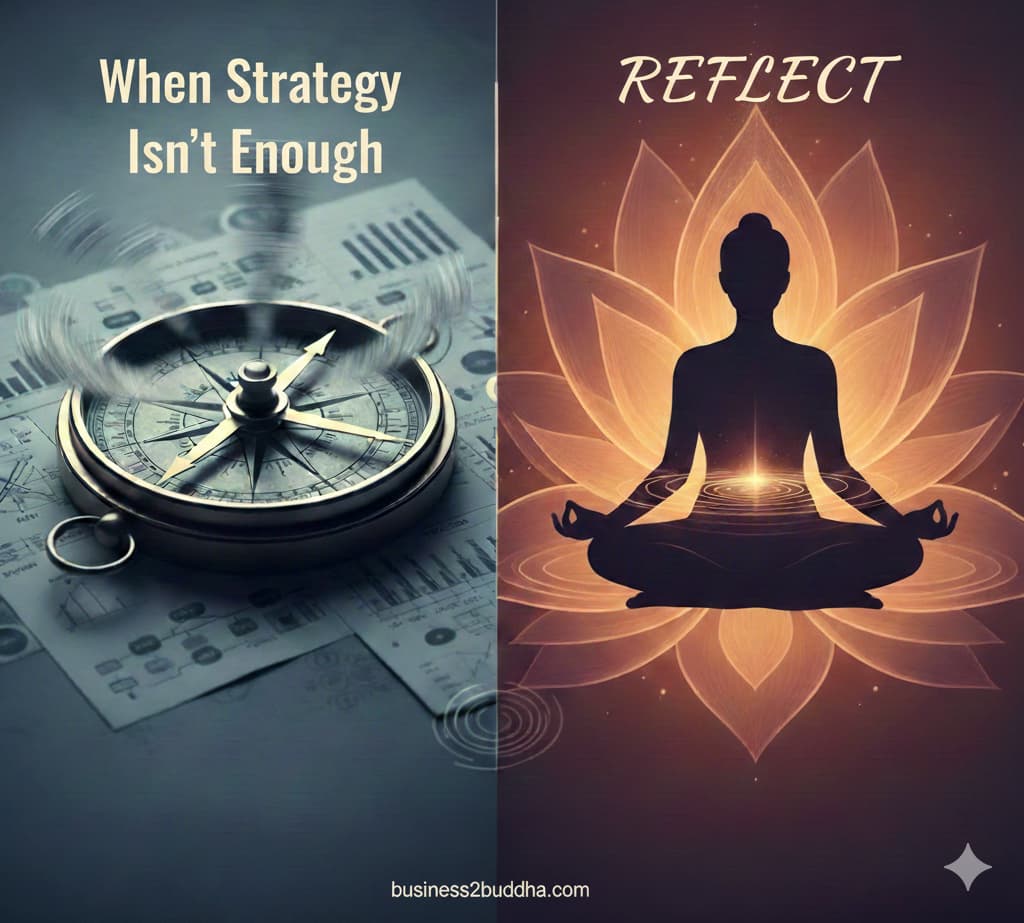
So if you’re feeling lost, don’t just optimize. Orient. Not to the next milestone but to the stillness within. Because when strategy ends, soul begins.