Tag: rituals

  • Sai kaka


    I met Sai Kaka about 4 1/2 years back. He is from Sangli, a city in Maharashtra.  I read a book on him (in Hindi) Pooja Ka diya and quickly had an opportunity to meet him. I was  impressed with his straightforward and practical approach. Take an example Sai Kaka says “Religion is an individual choice, in groups it is not a religion but a community and where there is community there can be communalism!” What we see in India or world over, maximum wars are fought over in the name of religion, right? More about Sai Kaka is on his website. The most important lesson he taught to me was this –
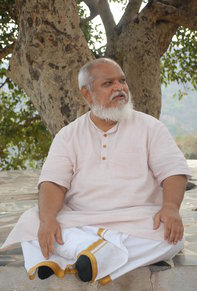
    Sai KakaSanskar yukt chaitanya jab (संस्कार युक्त चैतन्य जब)

    1. chintan karata hai to usko chitt kahate hai (1. चिंतन करता है तो उसको चित्त कहते है)

    2. manan karata hai to usko man kahate hai (2. मनन करता है तो उसको मन कहते है)

    3. nirnay karata hai to usko buddhi kahate hai (3. निर्णय करता है तो उसको बुद्धि कहते है)

    4. asmita ka bhan karata hai to usko aham kahate hai (4. अस्मिता का भान करता है तो उसको अहं कहते है)

    inme se sansakar nikal jaye to jo bachata hai vo shuddha chaitanya hai (इनमे से संस्कार निकल जाए तो जो बचता है वो शुद्ध चैतन्य है)

    This in English means –

    When a conscious filled with rituals (or say the lessons learnt about ‘way of living’)

    1. thinks we call it mind (imagination)
    2. contemplate we call it Mind [there is a difference between Chitt and man which I am not able to translate in English]
    3. makes a decision we call it intellect
    4. perceives pride we call it Ego

    Now when the rituals or ‘way of life’ learnt, get out of this conscious mind, what is left is the pure consciousness.

    It means “pure consciousness” is blurred by our different (Sanskara) learning about life. Therefore in some cases religion becomes a problem.

    Thanks to http://www.quillpad.in I could write in Hindi and http://hindi-english.org for translation help.

  • I will only show you the path…


    (A correction, in the title ‘I’ stands for ‘the teachers’ and ‘you’ stands for me or ‘the students’.)

    I have had privilege of meeting Prof Mankad recently, it is always a pleasant experience meeting him. I realized he always has something very meaningful to share and his opinion are always very well thought off, I have a lot to learn from him. While talking to him I realized that many good teachers have given a message – ‘I will only show you the path; YOU have to walk through the road.’ When the Buddha told the story ‘Finger is not the moon’ the message was –

    1. Do not stick to the finger e.g. me, because this (finger) is only a way to show you the path
    2. Get directions and pave your path. It was a message for Ananda – app dipo bhava (in Pali language) Meaning ‘Be a light unto yourself’ when you are done with identification of path
    3. Walk through the path

    Prof. Mankad taught us Macroeconomics, gave us an Financial Times in the exam to write about any current affair why? To make us start reading FT. Prof Moradian made a statement in a class ‘I will only show you the path, you have to walk through it’ (which is the title of the blog). Prof. Lopez gave us inputs on life beyond books and ‘learn to see’, e.g. did you go to Vivocity (a mall in Singapore)? Did you see this or that? What can you infer from that? Prof Ram Kumar gave us assignments wherein we had to go to market and see the performances of brands on ground. Prof Sohan Shah, gave us sleepless nights (believe me we all enjoyed the grind) while giving us assignments on marketing communication, I am pretty sure that each student of the class (perhaps some non marketing students too Ankit Jain and Rahul Krishnan) can independently workout a plan on integrated marketing communication. They have showed us the path, its our responsibility to walk through the road.

    *What I understand is the Buddha was not in favor of a religion; even it happened in case of many more spiritual masters. Why? Because as time passes the directions become rituals, systems you see! When rituals become the ONLY path to be followed it creates conflicts in individuals mind and actions. Therefore the best thing is – to learn the lessons critically and walk through the road towards the goal keeping lessons in mind rather than the literal content of the message.

    I thought to write about four noble truths and eight fold path, then I asked myself, does it make sense to connect everything of Buddhism to Business or literal Buddhism to Business? Is not it important to concentrate on messages and see whether it fits in the business context?

    * Apologies, if I hurt someone’s belief, though I didn’t intend to do anything like that.