I am sure when we read the title we all will speak about culture and nation. My take apparently is no different. India as a country, culture and in terms of way of life has been a melting pot of thoughts. If we look at Mahabharat time – there were many kingdom fighting from one side or the other in the war. The range goes from present day Afganistan to South East Asia and Kerala.
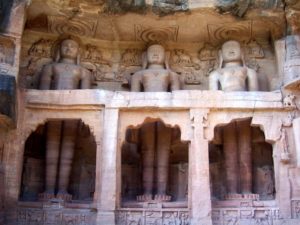
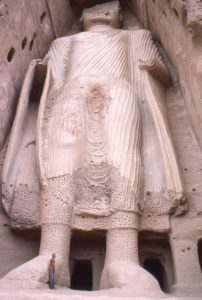 Afganistan reminds me of Bamiyan Buddha statues. The smaller statue was so big, check photo (sourced from Wikipedia), that a man standing at the foot measures only till the ankles. The statue reminds me of Gwalior fort Jain tirthankar’s statues. No wonder, when I saw them some had disfigured heads.
 The Buddha was basically from Nepal. He came to India for his quest of spirituality. India at that time too, was a confluence of different ways of life. Buddha studied with same master’s who were worshipers of fire, some teachers were of Yoga and Indian philosophies. After learning so many things we was still not self realized. After six years of hardwork, following many different teachings – including fast he was emaciated and almost on the verge of death. That day he was enlightened. Lord Mahavir was his contemporary – he had a different teaching. Both the teachings blended in Indian culture.
Indian culture basically accepts many different approach of spirituality and religion. The best blend you can see is Bhagvad Geeta. It talks about Bhakti, Gyan, Dhyan and Karma yoga etc. Every chapter in the book is a type of Yoga – yoga means addition. What does a melting pot do – it mixes everything. Right? That is what Yoga is. I have written on Yoga earlier too – including a debate and court case in the US – whether Yoga is Secular or no!
The question on secularism moves me to another dimension of India. We are secular, and in last couple of years Indian intellectuals (apparently others are equally intellectuals but are considered lesser) have returned awards for lynching of a Muslim Indian citizen. It was a sad incident in the state of Uttar Pradesh during Akhilesh Yadav Government (Samajwadi Party, which apparently is more Muslim centric political party). Recently, another lynching happened – a police officer was killed – muslim Indian citizen – in the state of Jammu & Kashmir, this time state Government is a coalition with BJP (more Hindu tilting political party). Last time the intellectuals returned awards, this time no one came forward! This is all economics of power.
Economics reminds me of an interesting fact of Indian politics. The best economists – Mr Manmohan Singh and P Chidambaram – came up with farm loan waiver in last decade. When a non economics expert can understand that it is not a solution why a renowned economist takes such a decision – a melting pot you see. The decision was a confluence of politics in economics.
All the above thoughts are in a melting pot here. My thoughts mostly are multi-directional – so this blog moves from socialism to capitalism and spirituality to business etc. The melting pot includes few dreams I have – one is here, add to it wish to help Sindhutai Sakpal‘s Orphanage, Art of Living foundation projects and rainwater harvesting in Malwa region of MP. I wrote to one District Magistrate, never received a response, not even from CM’s office – is this a participative government?
Melting pot was this week’s LBC topic where Maria, Rummuser, Ashok and Shackman write weekly. You can visit their blogs and read their thoughts on the topic.