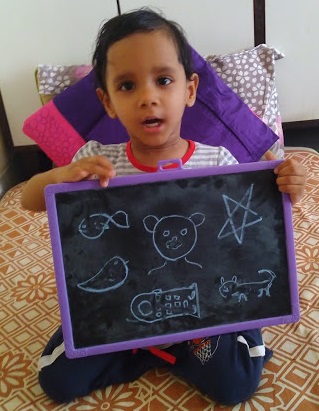
Adviti is attending school now, this started off with thoughts on education, religion, and spirituality. She is three years and we opted for online schooling finally. We avoided it initially, but the Chinese virus (Covid-19) gave us no option of formal school for her. It has been only two weeks. This time around the questions were more than just why do we educate kids? and also the race we start with our kid’s schooling.
During our primary education, we read this story in our syllabus. This is apt for our life in general and I take a parallel from this story in religion and spirituality as well. Let me first narrate the story to you.
Hunter and the parrots
A jungle was famous for its species of parrots. One day a hunter crossed by this jungle. He was mighty impressed with these different types and colors of parrots. The hunter put his net and no wonder he could catch a lot of parrots. He sold those in the market and made a lot of money. He started visiting this jungle often.

A sage lived in this jungle too. He observed that the number of parrots was drastically reducing. Sage being sage, compassionate, and friendly to every animal of the jungle, started teaching these parrots.
The sage taught these parrots –
The hunter comes, spreads his net,
puts some grains, we should avoid this trap
The exact words we learnt in the Hindi version was
शिकारी आता है. जाल फैलता है.
दाना डालता है. हमें जाल में नहीं फ़सना चाहिए।
The parrots learned it quickly. They started singing it all the time. When the hunter came he was taken aback. He was fearful now he won’t get these parrots. With a heavy heart, he put his net again. To his surprise, all the parrots were in the net and singing the same song
The hunter comes, spreads his net,
puts some grains, we should avoid this trap
With immense pleasure, he took his prized possession. This time he had value-added parrots – parrots who spoke language!
When the hunter crossed sage’s hut, sage was smiling. He saw all the parrots singing the song inside the trap that they had to avoid.
The moral of the story
We must learn instead of rote memorization. we must learn instead so that conceptual learning can be applied in many walks of life.
Additionally, there are chances that someone says one thing but does another. We must learn two things – first, we must walk the talk, and second, identify people who do not walk the talk and be cautious.
Education
When Adiviti sits for her school sessions, I sit with her. Initially, I was frustrated (at times now too) with her slow response. She knows the things but does not respond, at times she does not understand – because she predominantly understands Marathi and Hindi and not English. She does not follow instructions.
We learn a lot of very basic and important things in our schools. How much do we apply in our life? Be it learning instead of rote method or the basics – do not steal, do not tell lie, etc.
Religion
Another thought triggered in my mind. We learn almost all the ten commandments of Abrahamic religions in School, isn’t it? Most of the religion teach such basic things in our life. If this is the only lesson of religion our school or syllabus of school education is no less than a religious book. In fact, in this case, the schools and education are much more than many of the religions of the world.
Though I know I have made this comparison on a very high level. In whatever case, what more the religions teach? Follow what is taught, in some cases do not use your brain. Do not question the authority, isn’t it?
Religions that do not allow questioning is far lesser than school education. At least school education allows asking questions!
I am a born Hindu (a Lingayat), I have questioned almost everyone and everything religious since childhood. When I was unconvinced I stopped going to temples. When I started understanding few things about Hinduism and started reading few scriptures, I realized many scriptures are dialogs. On the battlefield, Arjun asked questions, Janaka asked questions to Ashtavakra, and Vashisth and Rama discussed multiple things. When someone wrote Upnishad no one asked to believe those by force.
The Buddha or Mahavir (and other Tirthankaras of Jainism) also gave the point of view without forcing others to accept those as gospel truth.
Spirituality
I have written on religion vs spirituality earlier. In that blog, I had given an analogy between religion and spirituality to sex and love. Since now I am looking at education, I created another analogy between education and learning to religion and spirituality. You can learn without formal education. I have heard of a past CM of Maharashtra – Vasant Dada Patil He was educated to only 4th grade. However, he was the harbinger of the robust canal and irrigation system of Maharashtra.
If we look at multiple definitions of spirituality what best comes to my mind is – “search for meaning in life”. I can connect to the Indic religion (Buddhism, Jainism, and Hinduism) to a large extent. Spirituality is beyond any geography, religious rituals, and believing in a single book alone. Spirituality includes every living being – I can write more on that however that is for some other day.
In fact, if I take the freedom to extrapolate the story, the hunter (शिकारी) is our false sense of self, net (जाल) greed, lust, ego etc and the grains – bait – (दाना) is our false sense of satisfaction or pleasure. We should not get in the net (जाल), here WE is the SELF.
Education, religion, and spirituality
What I have observed is that education and religion are like parrots in the cage. They know what they are saying but they do not understand the meaning of what they are saying. It is with many people and religions worldwide. In fact just because of that either we see terrorism or atheism in the world. People have either lost trust in religion or they are so faithful that they see killing those who do not comply with the point of view of the killer.
At the same time, learning and spirituality are conceptualizing, synthesizing, and questioning, and exploring. Learning involves a sense of experience similar to spirituality. Look at religion you would get a lot of people who can reiterate books word by word without knowing and experiencing. This is what differentiates religion and spirituality.
I saw a tweet from Elon Musk once – “I hate when people confuse education with intelligence, you can have a bachelor’s degree and still be an idiot.”
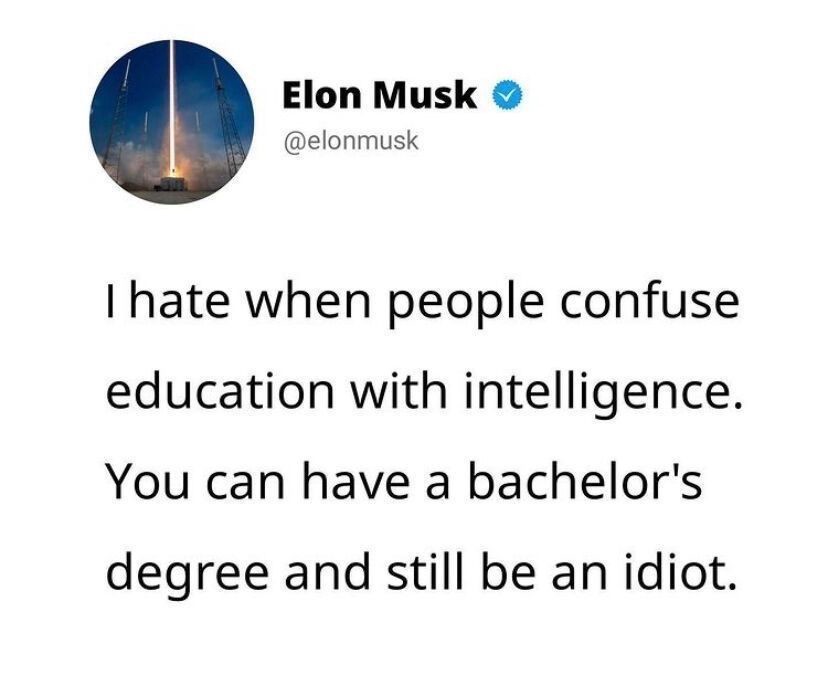
The corollary, in this case, is – one can be known for religion and religious knowledge without actually being a spiritual master. Whereas Spiritual masters many times are against the dogmas and are more practical and clear about what they say, do, and mean.
Adviti’s schooling is a learning experience for me. I have to get off the showjumping thing we have observed. I have to let her learn at her own pace. What matters is how intelligent she becomes with the education not how much she scores in school. What is more important is she becomes a virtuous person who walks the talk – not like the parrots who are in the cage reiterating the lesson –
The hunter comes, spreads his net,
puts some grains, we should avoid this trap
The exact words we learnt in the Hindi version was
शिकारी आता है. जाल फैलता है.
दाना डालता है. हमें जाल में नहीं फ़सना चाहिए।