Recently I went to meet one of our relatives. We were generally speaking and his plumber came, I asked what happened? He said – Pravin, we requested our plumber to fix the leaking pipe. Later  we asked him to put blocker from where the leaking pipe was having water inlet. I said why did you solve the problem of leaking pipe twice? He said the fixing the pipe with m-seal and other plumbing means was cheaper. But second time you had to put a blocker, isn’t it? It costs and your plumber might have charged you twice too. I curiously went to check the place – being an insider to this family it was alright. I repeated – you tried to fix a wrong problem and you did it twice! and also by putting blocker you made the pipe irrelevant too…
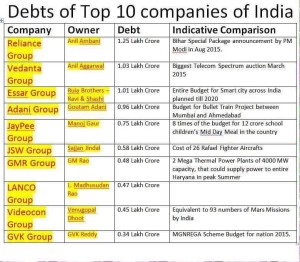
The same keeps on happening in our society be it bailout or loan waiver to farmers. Those who cannot get in such beautiful moral hazard go to UK or become part of crony capitalism.
I was speaking with my wife today, she said “loan waiver is not a permanent solution”. Yes she is right. This endemic was started by government of our own very famous economist Mammohan Singh and his another gem of an economist finance minister Chidambaram in 2008. It was a waiver of 60,000 cr, largely to win upcoming election. Manmohan Singh government won that election too, just to end up embroiling themselves in scam after scams. The scams resulted in public anger and protest – India Against Corruption. There are long lists of corruption under the Manmohan Singh government however the point of discussion currently is farmer’s loan.
 The kind of waivers offered mostly result in moral hazard. Just imagine, if I am a farmer – this year monsoon is expected to be good – why would I care to pay my loan EMIs when everyone is getting sops? The other trouble is – even after 70+ years of independence of India we are more dependent on monsoon rather than our skills of farming! Connecting all the rivers was a dream project of Atal Bihari Vajpayee 10+ years back, yet it has to see light of the day. Furthermore, we ignore solving the problems we created ourselves such as depleting underground water level. Mostly, the reason is – we are individually smart but collectively dumb. We assume that I cannot control where the underground water goes – why should I?
Imagine, the amount of 60,000 cr farm loan of 2008 – had it been utilized in making canals and rainwater harvesting, educating farmers for better methods of farming and technology interventions in agriculture and post harvest we might have been able to solve the problem to some extent if not completely. The other thing to note is – how can we ascertain the benefits are transferred to the right people? Those who have small land holding may be taking loans from local private lenders, also they might not even have their credit ratings for bank to offer them loans. Where exactly does such huge amount go?
Now think again about where the government gets this huge amount from? Have you ever seen your bills? Did you see Krishi Kalyan Cess? Government generates parts of such sops from us when we pay taxes – indirect tax. This is a problem to worry for middle class only. They earn and pay income tax, they buy and pay Krishi Kalyan Cess and when farmer’s are on strike they pay exorbitant amount for buying vegetables too. Mostly this expensive vegetables are procured by middlemen at cheap prices – all cash business less or least tax with black money. A better option for middle class Indian is to either become a farmer and get loan waiver or become an industrialist take loan and leave India!
When I completed my sentence – “you tried to fix a wrong problem and you did it twice!… …The leaking pipe was old and rusting, you should have changed it at first instance. why don’t you fix it permanently? My relative said “why should I? It is a rented property? I may go next year, someone else will come, so I am fixing it temporarily.” Same is with the governments – they solve a problem as temporary fix – farmer loan waiver for winning next election and not solving problem which causes farmers to take extreme step of committing suicide or protesting for loan waiver.
According to the Bank of America Merrill Lynch the farm loan waiver will cost 2% to the GDP of India by 2019. This wrong precedence was set by two of the most knowledgeable economists of India – Mammohan Singh and Chidambaram. Go figure what it means to be subject matter expert!