Disclaimer – Author himself is an MBA in Marketing (has been and is in the business of – kind of – selling dreams) and has worked as operations management consultant (has been and was/is/has been facing the challenges faced by operations department)
I was comparing ourselves as an organization. I am an organization in myself, so are you and Ms Y. I was wondering about the departments Marketing and Operations. Marketing is selling dreams and Operations is capabilities. What I dream to be, could be the job of marketing department and what my capabilities are is the reality of operations.
There is nothing wrong in dreaming, in fact it is good. At the same time knowing the capabilities is also important, that would help us realize the true potential and opportunities of improvements. Though, how often we dream then review our current potential and then think of building future capabilities to achieve potential? That’s where I think Marketing and Operations Department lock horns.
An incident reminded me of a lecture of Prof Moradian, long term Vs short term and conflict between Marketing and Operations departments. I started seeing more reasons for conflicts between Marketing department and Operations Department.
Marketing and Operations lock horns with each others. Because generally Marketing team communicates moon, Sales team sells the idea of “reaching the moon as a reality” to prospect and Operations finds it difficult to do that. Why? Because Operations had the capabilities and was supposed to put the prospect in the sky (not necessarily on moon). Thus, challenges faced by operations and promises made by marketing are different.
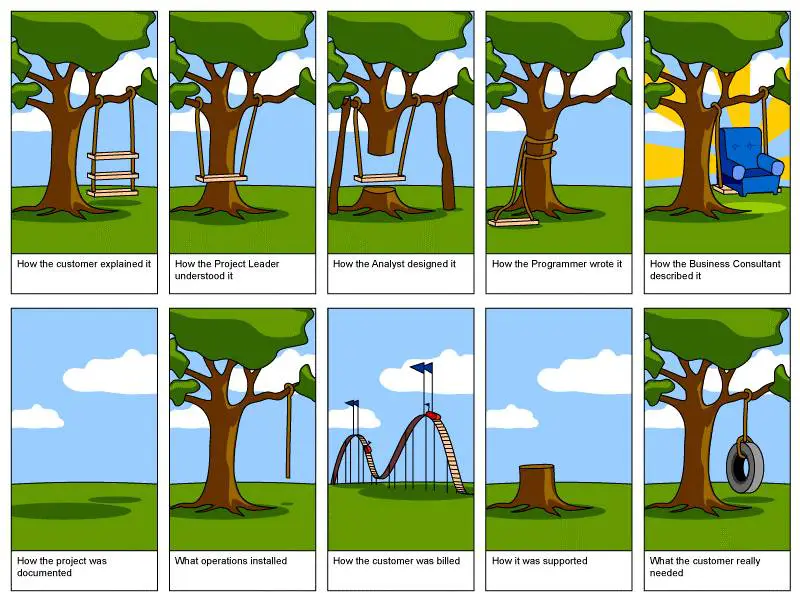
The second issue is Marketing and Sales team lives on quarter on quarter (Q-o-Q). They have to show the revenue which is the goal for any organization. On the contrary Operations team cannot take decision for one quarter. For example – operations may not say we need infrastructure for one quarter and not in other quarter and thus make huge investment in one quarter and sell those equipment back in next.
A branding expert told us that marketing managers (brand manager) want to start new brand building exercise (to gain in short term for writing on their resume – ‘I started this initiative’) and move to next level. New manager comes he/she too does the same. Short term gains are there for the marketing manager; yet for long term the brand is diluted perhaps no one knows what would the brand stand for in future.
This was/is the case of 2008 melt down. Decisions were made on short term with one phrase in each agreement – “systemic risk”. BFSI industry created various certificates (CDR) etc to sell junk to make big buck in short term. Dreams were sold without real fundamentals. In other words, operations did not have the capabilities of generating the kind of returns promised – with a rider of systemic risk – to prospects.
This is what is conflict of interest for us as individuals – our dreams Vs our realities. The same is true with Organizations – their marketing Vs operations. This is also true for us as economy – our dreams Vs the reality of systemic risk and capacity of economy to fulfill the dreams.
Image source – http://www.cravingtech.com/blog/wp-content/uploads/2007/11/project.jpg