Tag: marginal cost

  • Marginal analysis


    We, as a community, are too evolved to be simple. We complicate many things which are Simple.

    One of my friends wrote on Facebook few days back – “Trying to figure out whether the marginal utility of the next shot increases or decreases.” At times this marginal analysis becomes a problem in our life.  We think too much about the outcomes and benefits of taking an action rather than taking the action.

    I believe life is indeed very simple. I have observed struggles of families living on the Footpath of Mumbai. I always wondered the tough life for them. It is another thing that we may talk about them encroaching on footpath and so on, which actually results in few death once in a while, when some people – when drunk returning home from late night parties – drive over the footpath dwellers.

    Poor on footpathWhat surprised me lately was, observing a few kids playing on footpath. The kids were happy, playing with discarded polythene. They do not have toys or an Android (Akash) etc to play. They are enjoying their life, dancing on the footpath. At times they are wearing something, many a times nothing. But they were happy. Also, their families (parents / uncles) were happy smiling with the kids.

    I started thinking – how often we get such time to enjoy with our family?A typical young parent is struggling in office long hours during the week. Do we have time? In Mumbai I travel about 2 hours one way (my stupidity if not Mumbai on the wrong side), how much time and energy I am left with to be at home and just relax? Think of someone who has kids and traveling so much daily. Does he/she have time to be with the kid as I say the footpath family has? For the footpath family life is simple. They enjoy life with whatever they have. I thought that they do not think so much, they do not do a lot of marginal analysis. They take decisions with whatever “limited” options and resources they have.

    They do not own few Mercs and don’t eat in five star hotels, they do not hide behind big words such as inflation, GDP and “we do not need to worry when rupee is sliding!” These people are just working on daily wages not having a proper shelter, yet I have seen the smile with their kids, happy in whatever they have. Most precious thing they have is Time. Time to spend few peaceful minutes with kids though on a footpath.

    We do a lot of marginal analysis – if I buy a Honda Amaze worth X amount and Y liter mileage. Is it going to be a good decision over a  Mahinda Quonto worth A amount and B liter mileage.Than what is the maintenance cost and this and that and whatever and parking place. EMI per month, expense per month. Utility of the vehicle over the cost of the vehicle.

    I feel we have made progress. Alas! we have made ourselves miserable.  We need some introspection.

    Image source- http://www.rediff.com/money/slide-show/slide-show-1-column-can-we-trust-indias-poverty-figure-well/20130724.htm#1
  • Do what is right in perpetuity


    The class was nostalgic, remembering the last couple of days of sessions of Operations Management with Prof Moradian. Today we were attending his last session of Operations Management. We all enjoyed each session, the quick wits and learnt a lot. We were attending his last session and thus all that was coming to an end for Operations Management.

    That session was very special, I could still hear his one statement very clearly that – “…in your career whenever you have to take any decision, always do what is right for your company in long term…”.

    When I recollect those words from Prof Moradian – “… do what is (make decisions which are) right for the company in perpetuity…” that makes a lot of sense to me. That one statement made me speak couple of tough truths in my career, but it feels good when you consider big picture vis-a-vis to your personal interests.

    An organizations need to learn the art of balancing between the short term sustainability and the long term growth OR short term profit and long term uncertainty. In current economic scenario short term sustainability seems the way to survive, let alone long term growth or profit for that matter. Message seems clear to me – Do what is right for the company in perpetuity.

    Actually this statement equally applies to each individual in life too – we should do whatever is right for us and others – IN PERPETUITY.

    Related blogs –

    Balancing Act – Professor Mankad shared this story of Balancing act with me earlier.

    Fruit will arrive in its season

  • Conflict of interest


    Disclaimer – Author himself is an MBA in Marketing (has been and is in the business of – kind of – selling dreams) and has worked as operations management consultant (has been and was/is/has been facing the challenges faced by operations department)

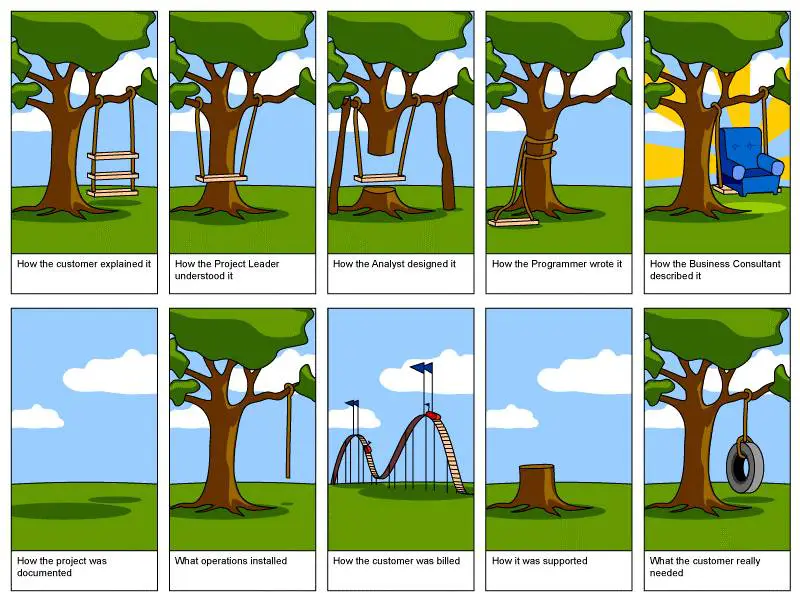
    I was comparing ourselves as an organization. I am an organization in myself, so are you and Ms Y. I was wondering about the departments Marketing and Operations. Marketing is selling dreams and Operations is capabilities. What I dream to be, could be the job of marketing department and what my capabilities are is the reality of operations.

    There is nothing wrong in dreaming, in fact it is good. At the same time knowing the capabilities is also important, that would help us realize the true potential and opportunities of improvements. Though, how often we dream then review our current potential and then think of building future capabilities to achieve potential? That’s where I think Marketing and Operations Department lock horns.

    An incident reminded me of a lecture of Prof Moradian, long term Vs short term and conflict between Marketing and Operations departments. I started seeing more reasons for conflicts between Marketing department and Operations Department.

    Marketing and Operations lock horns with each others. Because generally Marketing team communicates moon, Sales team sells the idea of “reaching the moon as a reality” to prospect and Operations finds it difficult to do that. Why? Because Operations had the capabilities and was supposed to put the prospect in the sky (not necessarily on moon). Thus, challenges faced by operations and promises made by marketing are different.

    The second issue is Marketing and Sales team lives on quarter on quarter (Q-o-Q). They have to show the revenue which is the goal for any organization. On the contrary Operations team cannot take decision for one quarter. For example – operations may not say we need infrastructure for one quarter and not in other quarter and thus make huge investment in one quarter and sell those equipment back in next.

    A branding expert told us that marketing managers (brand manager) want to start new brand building exercise (to gain in short term for writing on their resume – ‘I started this initiative’) and move to next level. New manager comes he/she too does the same. Short term gains are there for the marketing manager; yet for long term the brand is diluted perhaps no one knows what would the brand stand for in future.

    This was/is the case of 2008 melt down. Decisions were made on short term with one phrase in each agreement – “systemic risk”. BFSI industry created various certificates (CDR) etc to sell junk to make big buck in short term. Dreams were sold without real fundamentals. In other words, operations did not have the capabilities of generating the kind of returns promised – with a rider of systemic risk – to prospects.

    This is what is conflict of interest for us as individuals – our dreams Vs our realities. The same is true with Organizations – their marketing Vs operations. This is also true for us as economy – our dreams Vs the reality of systemic risk and capacity of economy to fulfill the dreams.

    Image source – http://www.cravingtech.com/blog/wp-content/uploads/2007/11/project.jpg