Tag: Marginal analysis

  • Options, analysis and decisions


    I have been analyzing buying a house vs living on rent and buying a four wheeler vs riding a cab. This is not a new comparison and analysis for me. Most of the time, answers to these two were – buy a house and rent a car or use a cab service.

    How did I arrive at these conclusions? Of course after some calculations and considering options. The question is – what was the measure on which I measured these things to come up with some conclusion? The measure was “utility”. In economics utility means resultant benefit achieved from something (usage or consumption of product or service). When you eat Idly on road side @20 INR and when the same idly plate is served to you in a better place it could by @60 INR. We may argue about taste, hygiene etc of idly from 20INR to 60INR. When one moves from basic utility to additional utilities we measure that in terms of marginal utility. Marginal utility, is the incremental benefit one gets from consumption or usage of an offering.

    We can continue from our situation of buying a four wheeler. The first question one may have is – which car – SUV, Sedan, Hatchback. Once that is decided which company which brand and what amenities such as AC, power window and music system etc. There are obviously many more questions in making a decision. The other option is hiring a local taxi or app based service. After all this analysis – what one gets is drop from point A to point B. At times pain of parking – if it is owned car or self driving. The drop from A to B is utility in this case. Marginal utility is – can you play music of your choice while driving or is the vehicle air conditioned during the trip. In the bargain of ability to play music and air conditioning you need to pay extra. This extra amount vs the additional benefit you get defined marginal utility.

    Many of our life decisions are made emotionally and justified rationally. I analyzed a lot with a decision of buying a house and renting a car. Currently, I live in a rented house and drive a car. How often do we take decision by listening to our heart and mind? Is there a rational justification to our decision? Why do we take such decision? When we have to really take a plunge with faith, we falter. When we have to take a decision with full analysis we do the opposite!

    Give it a thought – Mahavir and Buddha – both were from warrior families and were to be the kings. Why did they renounce everything, how on earth they both might have taken such step? Had they both done enough analysis possibly both had stayed back. I know more about the Buddha so can think of an incident, when he was following extreme austerity such that he could had died of hunger, he decided to eat. In short term his five best friends went away saying he has left the path. But the Buddha was right, austerity and self affliction may not necessarily help. He said to himself, if I die of hunger I wont be able to achieve what I strive for.

    In my analytics practice one of my senior’s Eron Kar used to say – “If you torture data enough it will confess to the story you want it to narrate.” Always it is not right to over analyze, at times leaders need to take a leap of faith and decide.

    Prof Mankad told me once – “Pravin, when you become a leader, sitting in the 76th floor of your corporate office when you have to make a tough choice do one thing. Leave aside all the papers and analysis. Walk toward the window. Take out a coin from your pocket, toss it and you will have the decision.” Dr Mankad continued “Pravin, sometimes you should stop over analyzing.” I need to learn a lot to do that one I have to become that big a decision maker of a company and two stopping the urge to analyze everything, I still analyze a lot!

    Image source – http://novalo.com/flat-fee-self-employed/
  • Marginal utility


    This was the topic for last weeks LBC. I have been finding it difficult to spare time these days to write regularly. The year 2017 has started like this irregular weekend blogging, hope I will break it sooner.

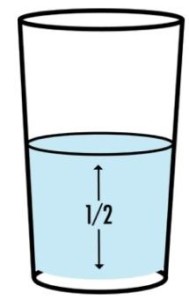
    Half full, half empty, possibility thinking, optimism, pessimismI have written on Marginal utility earlier – Marginal analysis. Let me first explain what is this jargon? My wife explained it to me – see if you are very hungry and you are given an orange you would find it the most satisfying thing in the world. My wife is a CA, she knows economics better than me, I was trying to come up with an example of buying a 1 bedroom hall kitchen (BHK in short) apartment in Mumbai vs a 2 BHK or 3 BHK etc, but I could not come up with some example like that. She does not like oranges as much, wonder why and how orange came as an example in her mind. It is difficult to analyze mind of a lady!

    She continued – once you have had one orange and your hunger is bit quenched, now the second or a third orange would not be that satisfying to you. The satisfaction you get from the second or third orange is less, marginal utility is the same what is the incremental utility, benefit or satisfaction you get from eating the one extra orange.

    The concept can be applied to anything in life – having an extra laptop or mobile to a home. In terms of economics the concept fits perfectly. Marginal utility of anything reduces over the quantity. Just because of the same we have abused air, water and everything that we have available freely. I am trying to relate this concept to a Sanskrit saying – Ati sarvatra varjayet (अति सर्वत्र वर्जयेत) – surplus of anything is not good.

    The next best thing that comes to my mind on it is – love. I have had a tough time explaining to someone that love does not necessarily mean sex, I have written on love earlier. Love is something where there may not necessarily be a marginal utility. It is something unconditional, something endless. So goes, the concept of profits and revenue. Yet both the types of endlessness are of different types. In love – a particular type – there is no ownership. When there is no ownership and mostly when there is no “I” or ego, it automatically becomes endless – so the concept of marginal utility ends the slop is infinite. On the other hand how much is too much for a company to grow? There is no marginal utility question on revenue each unit revenue brought adds utility in terms of PAT. Of course we may say that until breakeven of a company the marginal utility of each unit revenue is steep whereas after a certain profit margin say 30% PAT the utility diminishes. Sometimes sales are differed to next quarter or booked in current quarter even if that costs in terms of dumping products to distributors.

    If we start living in present moment in spontaneity I wonder if we would even have a complex calculation of “Marginal utility” in life.

    I am late in writing this post again, Marginal utility was last week’s LBC topic where MariaRummuserAshokShackman and I write weekly. You can visit their blogs and read their thoughts on the topic.

  • Marginal analysis


    We, as a community, are too evolved to be simple. We complicate many things which are Simple.

    One of my friends wrote on Facebook few days back – “Trying to figure out whether the marginal utility of the next shot increases or decreases.” At times this marginal analysis becomes a problem in our life.  We think too much about the outcomes and benefits of taking an action rather than taking the action.

    I believe life is indeed very simple. I have observed struggles of families living on the Footpath of Mumbai. I always wondered the tough life for them. It is another thing that we may talk about them encroaching on footpath and so on, which actually results in few death once in a while, when some people – when drunk returning home from late night parties – drive over the footpath dwellers.

    Poor on footpathWhat surprised me lately was, observing a few kids playing on footpath. The kids were happy, playing with discarded polythene. They do not have toys or an Android (Akash) etc to play. They are enjoying their life, dancing on the footpath. At times they are wearing something, many a times nothing. But they were happy. Also, their families (parents / uncles) were happy smiling with the kids.

    I started thinking – how often we get such time to enjoy with our family?A typical young parent is struggling in office long hours during the week. Do we have time? In Mumbai I travel about 2 hours one way (my stupidity if not Mumbai on the wrong side), how much time and energy I am left with to be at home and just relax? Think of someone who has kids and traveling so much daily. Does he/she have time to be with the kid as I say the footpath family has? For the footpath family life is simple. They enjoy life with whatever they have. I thought that they do not think so much, they do not do a lot of marginal analysis. They take decisions with whatever “limited” options and resources they have.

    They do not own few Mercs and don’t eat in five star hotels, they do not hide behind big words such as inflation, GDP and “we do not need to worry when rupee is sliding!” These people are just working on daily wages not having a proper shelter, yet I have seen the smile with their kids, happy in whatever they have. Most precious thing they have is Time. Time to spend few peaceful minutes with kids though on a footpath.

    We do a lot of marginal analysis – if I buy a Honda Amaze worth X amount and Y liter mileage. Is it going to be a good decision over a  Mahinda Quonto worth A amount and B liter mileage.Than what is the maintenance cost and this and that and whatever and parking place. EMI per month, expense per month. Utility of the vehicle over the cost of the vehicle.

    I feel we have made progress. Alas! we have made ourselves miserable.  We need some introspection.

    Image source- http://www.rediff.com/money/slide-show/slide-show-1-column-can-we-trust-indias-poverty-figure-well/20130724.htm#1