Tag: IMF

  • Inclusive growth, How?


    There is income inequality. Agree? If no check this – IMF Publication

    …increasing the income share of the poor and the middle class actually increases growth while a rising income share of the top 20 percent results in lower growth—that is, when the rich get richer, benefits do not trickle down…

    If businesses want to earn good profits in long term; businesses need to improve purchasing power of poor. Why? When people will have enough money to buy products/services, then only profits will increase at a better rate. Isn’t it? The simple explanation to this is – once poorer population gets resources (buying power) market size for companies increase multiple times. The increase would not be for one company but for every company in the market. One example of that could be involvement in CSR activity wherein poor can get good basic facilities and opportunities to earn. Once the poor can earn, they can spend too! Of course a caution here is – CSR is not charity, it should not become charity where it may lose its meaning.

    If this logic is clear – shouldn’t business be investing in making people prosperous? Once we do this we would solve a big problem – poverty. Hopefully, we will be able to not only grow the businesses but also grow every strata of society. Isn’t it? This is interdependent co-arising.

    Let me share a store, a very old & cliche, but I think that can drive home the point.

    Heaven HellLong ago a person wanted to see how heaven and hell were. An angle obliged and granted the wish. Person was blindfold and was sent to hell first.

    When the blindfold was removed, person was standing at the entrance to a great dining hall, full of round tables piled high with delicious foods of all kinds.

    The person noticed that, people seated around those round tables but their bodies were thin, and faces gaunt and creased with frustration. Each person sitting on dinning table held a spoon though their arms had no elbows and the spoons were four feet long. These people could reach the food on those platters, but could not get the food back to their mouths.

    Next the person was sent to the heaven. In the heaven the entrance to the dining hall was big, it too had round tables with piles of lavish feast as hell had. Here too people did not have elbows in arms and they were holding long spoons about same length as the hell. The person noticed that the people in heaven were plump and happy, the dinning hall was full of joy and laughter. Situation in both – Heaven and Hell were similar, however there was difference in the milieu, the reason?

    The difference between heaven and hell was – the people in heaven were using those long spoons to feed others so effectively everyone was full, plump & happy.

    Source of the story is AnomalyBeta and LinkedIn

    So, if we take the concept of interdependent co-arising as the core of growth, capitalism or communism or any economic structure we follow we will surely have inclusive growth. The catch here will be – value of money will decline, and exclusivity (as marketing or demand / supply concepts of economics) will play in different fashion. In whatever case at least the basic necessities hopefully be fulfilled.

    Other blogs on inequality – The Price of InequalityNot so trickling down!, Economics concepts and equality and Has the time for this idea come? and Inclusive growth
  • Chicken in the “poultry farm of economy”


    It was October and winters were just starting in Canada, for a change it was nice weather for me. I had not seen < 10 degrees in Mumbai for almost a decade now. In this beginning of winter we – Anil, Abhijit, Prasad and I – were talking about eggs being Veg or non-veg food. I was the only Veg person amongst all and do not eat egg (by choice). So the point went on to whether egg has life & how does fertilization of egg happen?

    poultry

    That discussion became an argument and point of contention. I said I do not eat egg because of my choice, I do not want to question whether an unfertilized egg should be considered as veg & I (and many more Veg) should consume egg.

    It was an interesting question, I never had thought of this. So I searched on net and of course others too did it. The argument was won by Abhijit in the process of egg fertilization. My mind was running in different direction when I read the production process or making of an egg! If you want the drift read how egg production happens (inside a chicken!) here.

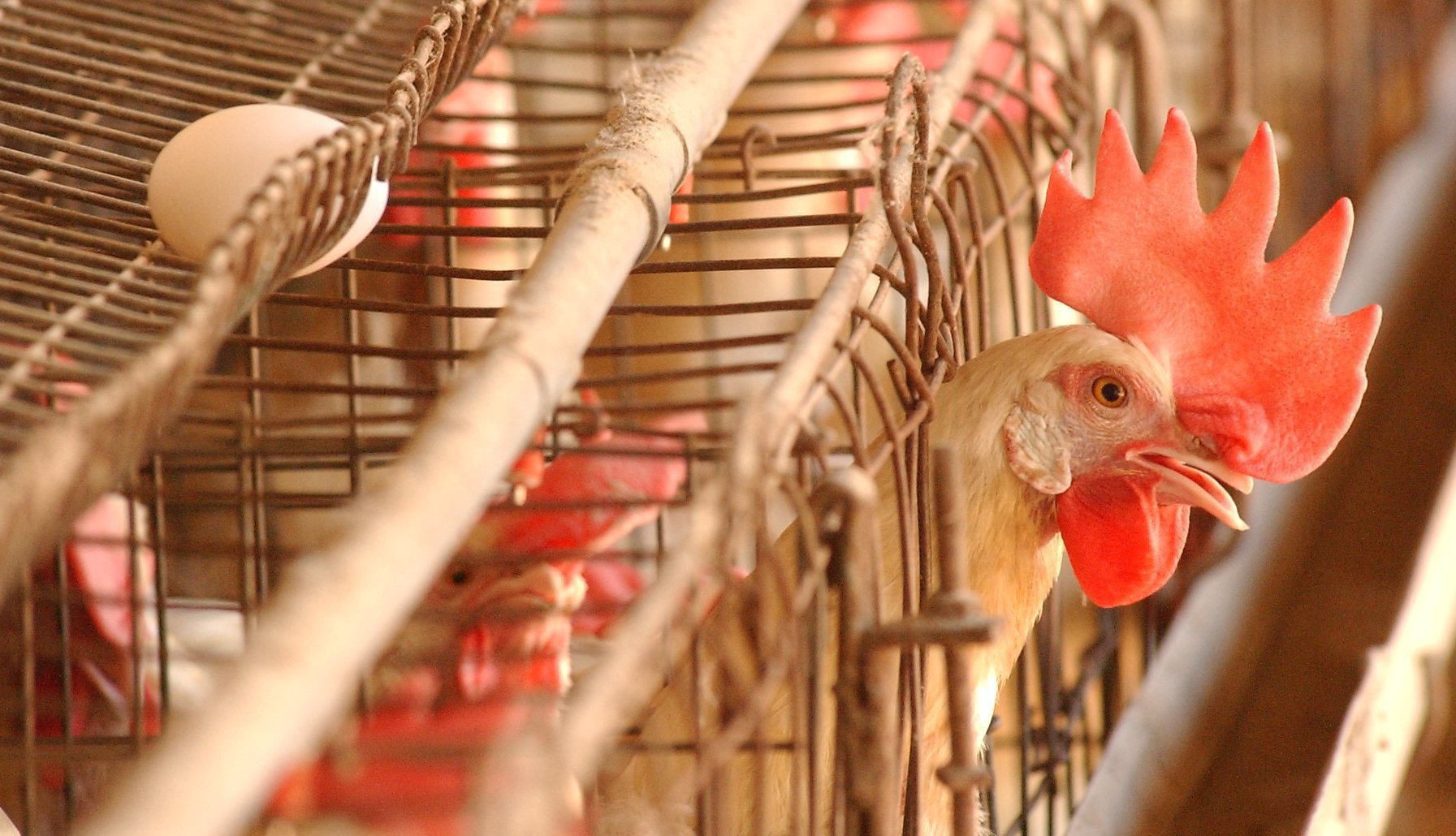
    Hens are like gumball machine (as the author of the blog calls it), popping eggs every 25 hours. Hen keeps on producing eggs through its process of ovulation, where Ovum is released to infundibulum, to magnum, to isthmus and to shell glands. The most surprising and disappointing part comes here at shell gland. The white shell which we see in egg is made by not either the diet (ok that is good) or by procuring enough calcium from the hen’s body. Yes, calcium is taken from hen’s body e.g. bones if enough calcium is not consumed by it. Just imagine daily this hen is producing egg and if enough calcium is not in its diet it is decomposing its body to produce the egg.

    Now let us think about hens as human, poultry farm as world economy (well I want to say this but still want to mince the words) and owners of poultry farm are the few who are heading World Bank, IMF, Banks and politicians. They perhaps do not care about what happens to the hen what they want is their egg next day. Oh yes, the owner of poultry farm does health check-up, takes care of sanitation & cheks quality of feed (equivalent of running education and development programs), but its as good a guess of yours as mine – for what?

    Making of shell of an egg and effectively the whole DAILY process of production of egg made me think of humans as the chicken. We are burning our lives (ask chicken uses its bones); why to make the economy work! An economy which is judged by GDP, share market growth and value of money et al. and who is at the core of it all? The Pseudo-owners or the proprietor of the economy of the world!

    Abhijit helped me learn that Veg people can eat eggs which isn’t fertile as that does not have life in it & it could be called similar to any dairy produce.

    Image source http://blogs.economictimes.indiatimes.com/AgroCommodities/54197/

  • Not so trickling down!


    How would you define prosperity of a society?

    imf_sealThis is a question many have been asking for so many years. The answers to this question lies in not finding the average income of the society – the metric used globally is – income per capita. This very simplified measure is like saying – what Professor Moradian told us in class of operations management – putting one hand in boiling water (100 degrees) and other in freezing water (0 degrees) and saying I am at an average of 50 degrees and kinda ok! We see a widespread income inequality across the globe.

    The definition of prosperous society should be defined by meeting basic needs of the people of the country. Communication and Internet is one thing which has become a part of basic necessities now a days. Human development index the other measure. For a couple of years when I am writing about business and its relation with spirituality (my interest being the Eastern philosophies – teachings of the Buddha and Hinduism) I see a measure is contentment as well is a measure – What more you need?

    I was reading a recent news – Trickle down economics is wrong, says IMF of IMF research. This seems to be an interesting conclusion. We have been running behind capitalism during 1980’s now we are running on the other side in 2010’s. The research says – Trickle down economics reduces the GDP.

    What is Trickle down economy? Ronald Regan – President of US of A – coined this economics by providing special benefits to rich. The assumption of this theory is – if rich are provided tax benefits (reduced taxes) they would eventually invest in economy and growth will occur. In last 3 decades we have seen the impact of that economy.

    According to the said IMF report –

    A 1% increase in the income share of the bottom quintile results in a 0.38% increase in GDP. Meanwhile, a 1% increase in the income share of the top 20% results in a 0.08% decrease in GDP growth.

    There are a couple of take-aways –

    • Trickle down does not work, it does not mean tilt towards the socialist approach.
    • There has to be a balanced approach – as stated earlier – the Middle path
    • And yes – how would you measure prosperity? Well, by checking how content is each individual. That comes from within not outside. Remember the measure of contentment should not be like putting one hand in freezing water and other in boiling.

    Research document link – https://www.imf.org/external/pubs/ft/sdn/2015/sdn1513.pdf