Tag: growth

  • Pandemic – why companies should choose to spend

    Coronavirus pandemic is a global phenomenon, as of now 160 countries out of 193 recognized countries are affected. Many countries are in lockdown. All the developed countries are affected, therefore, the economy worldwide is severely affected. In this trying time, the whole world needs Keynesian economics. In nutshell, the concept says – “Increase government expenditures and lower taxes to stimulate demand and pull the global economy out of the depression.” Here I am going to discuss my opinion on why companies should choose to spend and continue working on their ongoing plus upcoming projects.

    http://business2buddha.com/2013/11/24/keynes/

    Keynesian economics considers or provides guidelines to the Governments. You can check India approves 1.70 lakh Crore package for poor, $2 trillion package US Congress has approved recently. Apparently, this is the biggest package US or for that matter, any government has approved. Government spending is only one part. I am of the opinion that every industry must seriously consider not only spending but also sustaining employees. Short term “shareholder value” can wait for better long terms sustenance. I know this sounds counter-intuitive – special when all companies are losing revenues due to lockdown, expecting retaining employees and to sustain a business. Surely this will impact the survival of many firms, projections and revenue targets of almost every company and shareholder returns. Let me give you some basic reasoning for my opinion of private firms too should continue their investment and how can it help bring the economy on wheels again.

    coronavirus-hospitality-industry-impacted

    Due to Coronavirus few industries are directly affected, namely; Airline, Hospitality and discretionary expense items e.g. beauty or apparel. People are going to spend on their basic necessities for the next few weeks or who knows months. The impacts revenue and therefore growth-related projects of these industries. Let us take an example as an explanation.

    Example

    An apparel company wanted to increase its footprints in a new region. That would require – finding retail space, employees for the store, furniture/store interiors design, products to put in the shelf and technology e.g. internet, hardware, POS and marketing to bring shoppers in-store. Due to the impact of a pandemic the apparel company will delay all these. The domino effect will be on – real estate, prospective employees, interior designers, producers (who produce for the apparel company in terms of aggregate demand), internet service provider, IT company planning to provide hardware and software and the marketing activation agency that was supposed to engage in the project – right from printing flyers. Why I brought flyers? Because this and interior decorators have many unskilled laborer working for them. The result – the domino engulfs many part-time workers. When these part-time workers do not have money they will have an impact on purchasing many other things. A self-fulfilling prophecy – read more about self-fulfilling prophecy here.

    At this time, what should private businesses do? At whatever negotiated discounts – they must continue their projects be it starting footprints in new regions as given in the above example. The companies must continue their spending because sooner or later things will fall in place. People will start consuming and the economy will be on track again. If spending is done as usual – the economy will come on its feet faster than it other would. Therefore I am suggesting that after the lockdown due to pandemic – why companies should choose to spend.

    Summary

    I fell in love with research of McKinsey and company, “Grow Fast or Die Slow” sustaining growth in technology companies. Paraphrase of this research is –

    1. Growth matters more than margin or cost structure
    2. No correlation between cost structure and growth rate

    Net-net one cannot cost cut to grow the business. Business growth requires “growth”. This is why I suggest that companies should choose to spend. Cost rationalization is important, questions are the discretion, putting costs in the right perspective and strategic decisions on these investments. This is the time when project costs will be more rational compared to a booming economy. At this tough time, many companies will look at cost reduction – what leadership across the globe must know is that – this is the time to look at a big picture and work towards completing the unfinished projects, starting the planned projects and reopen the businesses as usual after lockdown. Why? Because sooner we start spending on our planned projects, sooner economy will be back on track and most importantly we will be able to reach our projections, targets, and shareholder value.

    The concept of interdependent co-arising perfectly fits this conclusion. When we keep our investments on, the fund will be available to others to either spend or pay as salary. This spending results in moving the circle of growth.

    Related newsCognizant to offer extra 25% of base salary
  • Marginal utility


    This was the topic for last weeks LBC. I have been finding it difficult to spare time these days to write regularly. The year 2017 has started like this irregular weekend blogging, hope I will break it sooner.

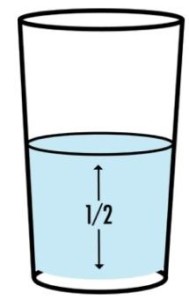
    Half full, half empty, possibility thinking, optimism, pessimismI have written on Marginal utility earlier – Marginal analysis. Let me first explain what is this jargon? My wife explained it to me – see if you are very hungry and you are given an orange you would find it the most satisfying thing in the world. My wife is a CA, she knows economics better than me, I was trying to come up with an example of buying a 1 bedroom hall kitchen (BHK in short) apartment in Mumbai vs a 2 BHK or 3 BHK etc, but I could not come up with some example like that. She does not like oranges as much, wonder why and how orange came as an example in her mind. It is difficult to analyze mind of a lady!

    She continued – once you have had one orange and your hunger is bit quenched, now the second or a third orange would not be that satisfying to you. The satisfaction you get from the second or third orange is less, marginal utility is the same what is the incremental utility, benefit or satisfaction you get from eating the one extra orange.

    The concept can be applied to anything in life – having an extra laptop or mobile to a home. In terms of economics the concept fits perfectly. Marginal utility of anything reduces over the quantity. Just because of the same we have abused air, water and everything that we have available freely. I am trying to relate this concept to a Sanskrit saying – Ati sarvatra varjayet (अति सर्वत्र वर्जयेत) – surplus of anything is not good.

    The next best thing that comes to my mind on it is – love. I have had a tough time explaining to someone that love does not necessarily mean sex, I have written on love earlier. Love is something where there may not necessarily be a marginal utility. It is something unconditional, something endless. So goes, the concept of profits and revenue. Yet both the types of endlessness are of different types. In love – a particular type – there is no ownership. When there is no ownership and mostly when there is no “I” or ego, it automatically becomes endless – so the concept of marginal utility ends the slop is infinite. On the other hand how much is too much for a company to grow? There is no marginal utility question on revenue each unit revenue brought adds utility in terms of PAT. Of course we may say that until breakeven of a company the marginal utility of each unit revenue is steep whereas after a certain profit margin say 30% PAT the utility diminishes. Sometimes sales are differed to next quarter or booked in current quarter even if that costs in terms of dumping products to distributors.

    If we start living in present moment in spontaneity I wonder if we would even have a complex calculation of “Marginal utility” in life.

    I am late in writing this post again, Marginal utility was last week’s LBC topic where MariaRummuserAshokShackman and I write weekly. You can visit their blogs and read their thoughts on the topic.

  • Ambitions, selfishness or fear?


    I was watching Gulal (A Hindi Movies by Anurag Kashyap) yesterday, somehow, it is available on Youtube.


    That movie revolves around State of Rajasthan, kings of that state and their wish to get independent Rajasthan – independent from India. At first it sounds very weird, as the story unfolds different characters start playing their strategies for their own benefits. Whatever happens in the movie, that movie reminded me of Brexit – British Exit from the European Union.

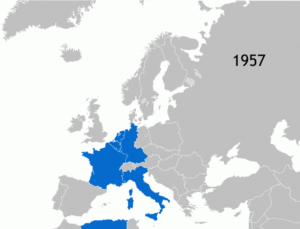
    After watching the movie, I was going through the documents of European Union. EU came into existence after two consecutive world wars. The wars which involved almost the whole world but centered around Europe. Just imagine a Europe between 1920 to 1938 (between the two world wars, or the Europe just after 1945. There was enmity, conflicts and the fight for economic dominance. This all actually ended with economic agreement! Isn’t it interesting?

    The foundation of EU was more on economic development, social development – let me call it human development. Quote from EU website – “The EU regional policy starts to transfer huge sums of money to create jobs and infrastructure in poorer areas.” Such a wonderful concept that people can cross man-made borders, do business without trouble and follow one set of rules yet their countries do not lose their identity. Just imagine all European countries making a team to compete in Olympics or Fifa world cup!

    The EU regional policy starts to transfer huge sums of money to create jobs and infrastructure in poorer areas.

    EC-EU-enlargement_animationThe union started 21st century with a couple of aims – Peace in member states, Citizen’s security, economic and social solidarity. Such lofty goals require enormous efforts. These efforts at times become lobbying for one or the other. No doubt there may have been political and business interest groups who might be trying to get better deals or benefits for themselves. This type of lobbying – or cheating in some ways – can only be stopped when there is genuine connect to develop others and heartfelt desire to help those in need. EU adds close to 20% to the world GDP, what is more important to note is – its population is only is only 7% of the world population.

    Just imagine if we get to see such geographic unions in other parts of the world, such as South East Asian Union or South American Union. These type of geopolitical, economical and social unions would require building trust first. A caution the union must only be on two fronts – economic development and social welfare. No! don’t even think of religion – religion is and must be an individual pursuit, those who make religion a group’s belief they mostly want to gain power. Also, religion is only used mostly for generating fear in the heart and mind of followers.

    The movie Gulal had a very selfish and political motive. Can we compare that story of Gulal with British Exit from European Union? At times my mind says yes and other times no. No because it was a democratic decision, based on votes from common people. The statistics says older people were not in favor of remaining in EU. Reason – they were getting affected in many respect on personal level. By the way, these old people are the same who had benefited some or the other ways from being a part of EU.

    My mind says yes because who says canvassing was not done? Who says there was no political motives, selfish goals? Who can deny all these? It has repeatedly proved that we select being individually smart and therefore we are collectively dumb – British exit from EU is an example of the same. Though we may argue that parts of Britain was against it and 51 to 49 cannot be generalized.

    Also heard that those who voted against were fearful of immigrants. I wonder how big is the problem of immigrants in Britain! Of late, the fear of immigrant is evident in a way – every morning I am waking up to a city trending on twitter. There is some or the other attack at some place, European Union was built for peace and social uplifting – not for terrorist attacks.

    My question came a full circle from the movie Gulal to British Exit to Gulal again – What drives people? What drives an individual? Ambition, selfishness or fear? I wish in future we would not be driven fear and selfishness and, in future we would see such union and countries coming together to prosper together, instead of people terrorizing and killing fellow human beings. This wish includes economic and social development – religion is a very personal affair, it should not come on streets and should not be forced.

    Disclaimer – Author supports such collaboration and unification as done by the European Union. Such unions would one day make our world more connected and the interdependence will help us embrace each other with our respect, trust and support to each other as fellow human being rather than black or white, European or Asian or for that matter capitalist or socialist. We indeed are interdependent.

    Image source – Wikipedia

  • Chicken in the “poultry farm of economy”


    It was October and winters were just starting in Canada, for a change it was nice weather for me. I had not seen < 10 degrees in Mumbai for almost a decade now. In this beginning of winter we – Anil, Abhijit, Prasad and I – were talking about eggs being Veg or non-veg food. I was the only Veg person amongst all and do not eat egg (by choice). So the point went on to whether egg has life & how does fertilization of egg happen?

    poultry

    That discussion became an argument and point of contention. I said I do not eat egg because of my choice, I do not want to question whether an unfertilized egg should be considered as veg & I (and many more Veg) should consume egg.

    It was an interesting question, I never had thought of this. So I searched on net and of course others too did it. The argument was won by Abhijit in the process of egg fertilization. My mind was running in different direction when I read the production process or making of an egg! If you want the drift read how egg production happens (inside a chicken!) here.

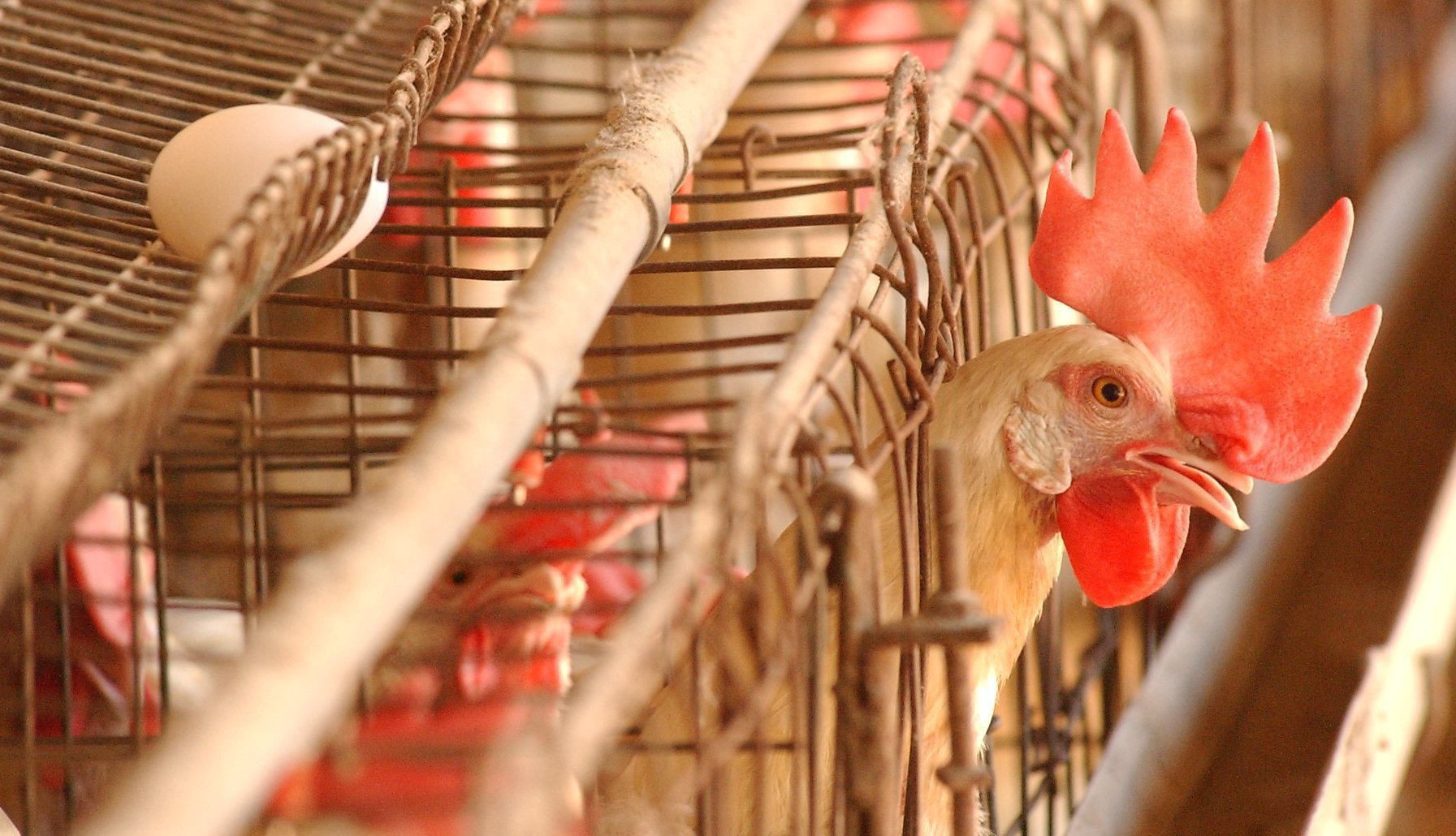
    Hens are like gumball machine (as the author of the blog calls it), popping eggs every 25 hours. Hen keeps on producing eggs through its process of ovulation, where Ovum is released to infundibulum, to magnum, to isthmus and to shell glands. The most surprising and disappointing part comes here at shell gland. The white shell which we see in egg is made by not either the diet (ok that is good) or by procuring enough calcium from the hen’s body. Yes, calcium is taken from hen’s body e.g. bones if enough calcium is not consumed by it. Just imagine daily this hen is producing egg and if enough calcium is not in its diet it is decomposing its body to produce the egg.

    Now let us think about hens as human, poultry farm as world economy (well I want to say this but still want to mince the words) and owners of poultry farm are the few who are heading World Bank, IMF, Banks and politicians. They perhaps do not care about what happens to the hen what they want is their egg next day. Oh yes, the owner of poultry farm does health check-up, takes care of sanitation & cheks quality of feed (equivalent of running education and development programs), but its as good a guess of yours as mine – for what?

    Making of shell of an egg and effectively the whole DAILY process of production of egg made me think of humans as the chicken. We are burning our lives (ask chicken uses its bones); why to make the economy work! An economy which is judged by GDP, share market growth and value of money et al. and who is at the core of it all? The Pseudo-owners or the proprietor of the economy of the world!

    Abhijit helped me learn that Veg people can eat eggs which isn’t fertile as that does not have life in it & it could be called similar to any dairy produce.

    Image source http://blogs.economictimes.indiatimes.com/AgroCommodities/54197/

  • We are no different – Up or Down


    I am watching the highway from my hotel room at 6th floor, a bird flies just at the same level as I am currently. What an interesting sight that is – cars (and humans within) are down on road however fast they can drive and here up about 60 feet from the ground a bird is flying effortlessly. More interestingly I am able to witness all this in an AC room without any qualm of weather and being at a foreign country. The birds are not worried about the height they achieve while flying, unlike humans who care too much for the high’s their company share, fast pace of growth of their wealth et al. At times we humans do not even bother to play with numbers to show these growth figures which are fudged.Toshiba

    This weekend I read in the Economist that Japanese company Toshiba was involved with accounting fraud for last 7 years. In this duration there were 3 different CEOs, all let that happen. Where has it not happened – USA (Enron), India (Satyam) and Japan (Toshiba) sure there must be big/small cases everywhere in the world. I always had high regards for Japanese system and people – but Toshiba has let me down. The inference is same – many people are shortsighted. Here Keynes should not be blamed for making a comment – “in the long run we all are dead”, his context was different.

    The problem with corporate world is (specially with listed companies) the CXO and board is more interested in showing quarterly results over the long term. In fact, the plague of living quarter by quarter comes down to the sales associate level too. If they want their bonus or incentives they too hPoor on footpathave to jack up their sales numbers. How they do it, can be a different topic of debate.

    Such incidents let me ask the same question again and again – What more you need? When will we stop? Are the markets – that govern these listed companies – moral? And why do I think about these things?

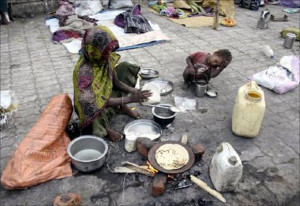
    The last question to myself lets me relate us – Humans – to the character of Ice age – Scrat. Scrat is running behind its one corn seed and it is unending running for the same for last 4 series. We are the same – whether we become a CXO of Toshiba or just a daily wages worker on the streets of Mumbai – who has to think of this ability to feed his/her family tomorrow.

    My take is only one fold – Until we merge whole of human life (include business, economics, science, politics etc) to spirituality we would see the kind of frauds happening.

    This blog relates to LBC (Friday Loose Bloggers Consortium) blog topic but not exactly the same – Up and Down. Though I was supposed to write on that topic last Friday but could do it today. Other bloggers who write regularly are, in alphabetical order – Ashok,  gaelikaa,  Lin,  Maxi, Padmum,  Ramana Uncleji,  Shackman and The Old Fossil. Do drop in on their blogs and see what their take is on this week’s topic. This time I was the one who posted very late, do visit blogs of others they must have posted their opinions too.

    Image source – Toshiba executive – AFP Link, Rediff Indian Poverty figures

  • Wealth and Wisdom


    Wealth is the abundance of valuable resources or material possessions. Wealth in itself is of no value, someone owning it gives “it” some “value”.  Similarly Wisdom (Hinduism) is considered a state of mind and soul where a person achieves salvation. Again here salvation is achieved by “someone”. So salvation may not be anything in itself, right? Once you achieve it there is no “self”, that is another side of it though.

    The definition of wealth (or for being wealthy) in my opinion is – when you have no more desire to earn more possession – when you have complete disinterest for money – you are wealthy. Because there is no end to earning. There may be a possibility that you are the wealthiest person on earth in the list of Forbes. You may not be interested to say “enough is enough!” I don’t need more money.

    http://media-cache-ec3.pinterest.com/originals/af/fa/97/affa97f31778a0e75cb506d1e38f0f95.jpg

    According to me one is wealthy – if one decides doing things because he/she enjoys doing the work and therefore does his/her work just for the hack of it. Say if I go to office with a motive of Salary at the end of the month, I am not wealthy. But if I do the same work because I enjoy doing it, feel self-satisfied and content. so the salary is not the desire but the fulfillment I achieve makes me wealthy. The later becomes reality with wisdom.

    What if wealth and wisdom meet? The age old approach of the west (wealth) meets the even older approach for life of the east (wisdom). I do not think the world would remain the same, this world would become wealthy and wise. Largely we would stop running for growth, to bailout countries and to make more money. This would be the world where the Business would meet the Buddha and people would do their work as their duty rather than compulsion.

    Definition source – Wikipedia

    Image source – Pinterest

  • Collaboration in logistics and supply chain management


    We all are on a path of evolution. We evolve, systems evolve, technology evolves… everything evolves.
    We were discussing in supply chain management, how cost can be reduced, how inventory is managed and how transport can be efficiently managed. The part which attracted me to write that here is ‘collaboration’ amongst distributors, suppliers, transporters and businesses. Resources are pooled and thus efficiencies are improved by collective transportation.
    Our professor suggested to us that until two decade back organizations used to have many suppliers in their procurement database. Reason – companies were Price sensitive. Slowly companies switched/switching to single or less suppliers. Even the quality management of supplied material is also moved to the supplier. I think that is called supplier development (evolution of suppliers). The reason to do this is supplier and the manufacturer is working in unison and both have incentive – growth. I reflected on the concept of interdependent co-arising, together everyone grows. When the costs are controlled with better quality, this could be transferred to the customers, and companies can become more competitive. Further, this process helps everyone – supplier gets business (helps his employees), companies get better cost control (more profit) and customer gets quality at economic pricing.
    This blog is going through its third update. There were few examples I missed earlier. I found in my diary one was – a manufacturing company started buying steel from the steel companies not only for itself but also for its suppliers. This gave the company – good quality and competitive pricing because of volume buying. We have evolved and so the businesses consider suppliers as partners in business. Therefore, businesses partner with supplier and rely on them.
    I was asked by someone; prove this in practical life that businesses are using Buddhists concepts. I said many times businesses are using that, however unknowingly. This idea was again a concept of interdependent co-arising.