Tag: GDP

  • Why socialism fails? NYAY

    Our maid – Sarala – works at about 4 homes. She works close to 6 hours a day. With this hard work she earns more than INR 15,000 per month. There are laborers who work at construction sites and as daily wage electrician or carpenter – Kishore – in our area. Assume laborer earns INR 250 per day that comes out to be more than INR 6,000 per month. I am giving these numbers for Mumbai’s unskilled workers. So, I did some back of the envelop calculations. Here are some questions that make us believe Why socialism fails?

    Now let’s review a probable scheme NYAY announced few days back. NYAY is promised by Congress party (erstwhile Congress (Indira)). In this scheme they intend to offer 6,000 per month to the bottom 20% poorest people of India.

    Many of the people identified in the beginning, will fall in that category. Why? Because there is no way you can define bottom 20% poorest people. The reason is none of the above are in tax bracket. There is no way you can define their being “poor”. You may argue that there is a Below Poverty Line (BPL) cards. Many of the Indians know that our systems are such that this card – like a Bangladeshi illegal immigrant can get an Aadhar – is easy to get. If you do not remember any such card being made, read here. At the same time, if without such verification a scheme is run – you would get to see a misuse like this. Both the points are seemingly contradictory, however this is how manipulation happens with Government schemes. Most of the money allocated goes to the corrupt party’s politician’s pockets.
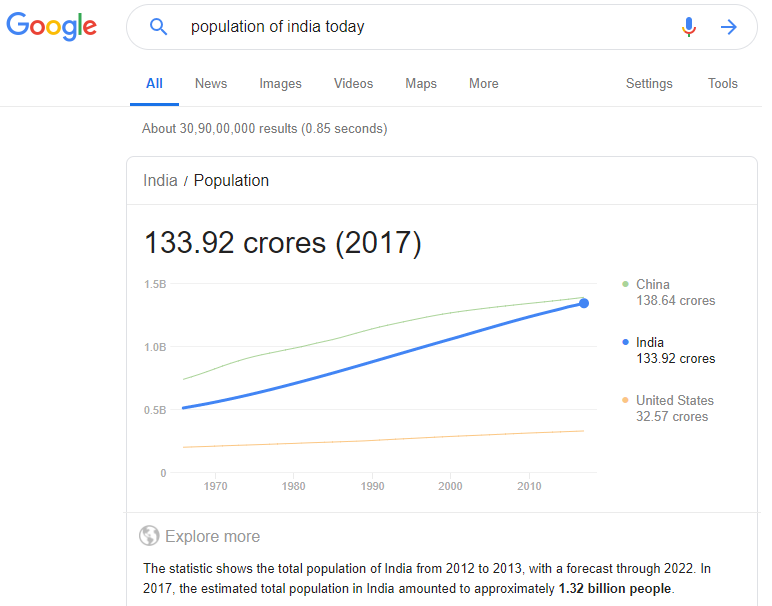
    population-estimate-India-2017
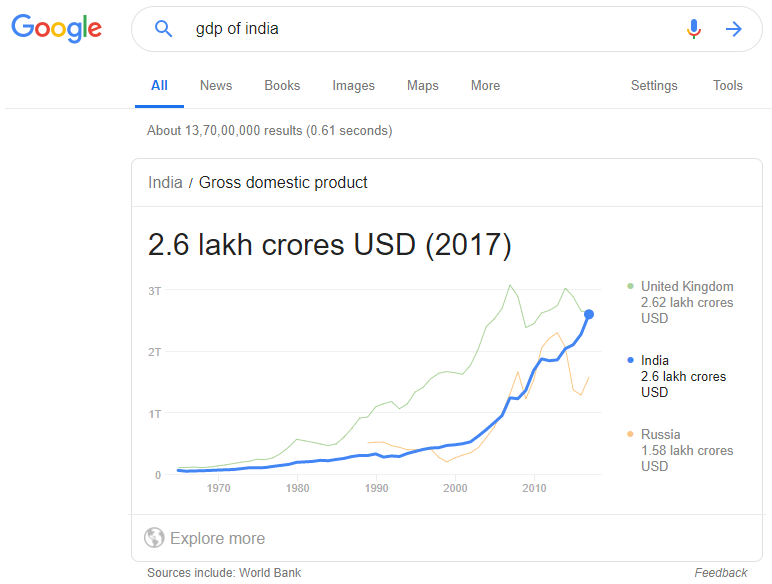
    GDP-estimate-India-2017

    This corruption is just one part of the story. Let’s dig a bit on how it can impact country’s economy. Now, since Sarala and Kishore are immigrants from different parts of India either they can get the benefits in their respective villages or the worst migrate back to the village – because they can get 6,000 for free per month. A village may not be as expensive so survival can be easy there. If they get the benefits staying here the NYAY scheme becomes UNNYAY (injustice) in itself. If they migration and so possibly many others. The shortages of unskilled labor in cities certainly will result in expensive labor. This expensive labor will translate in expensive stuff – be it real estate (the industry is in a tight spot anyway) or a house maids.

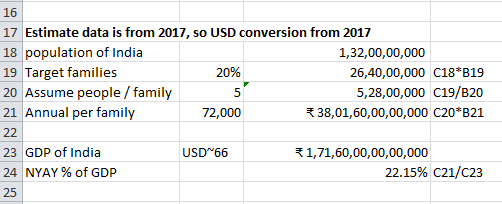
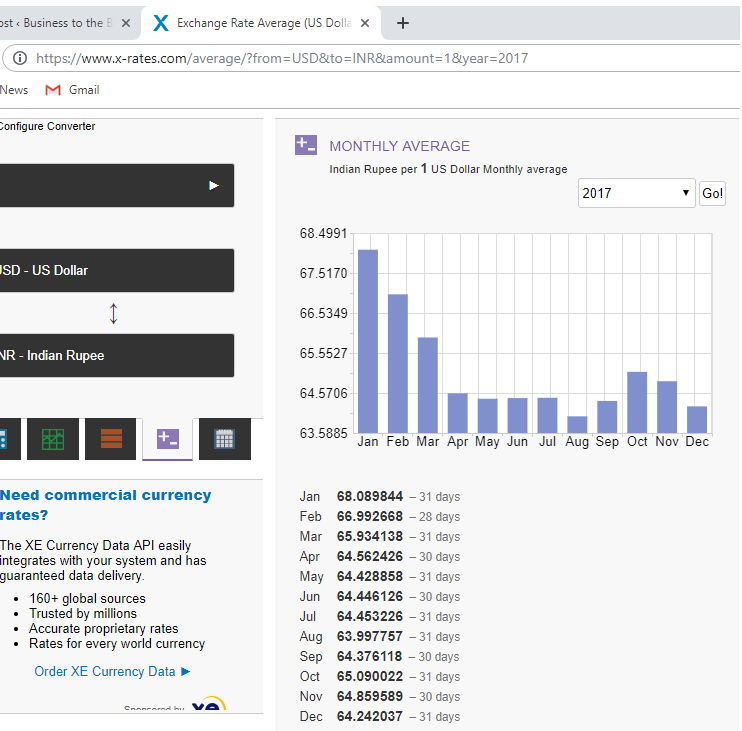
    Assuming some numbers and bringing others numbers, I did some back of the envelop calculations, references are attached herewith. Click on the images to enlarge.
    NYAY-GDP-impact-calculation-Summary-base-2017
    USD-INR-Exchange-rate-2017

    The worst is yet to come – one of the Congress’s think tanks Sam Pitroda says we will have to increase tax on income to manage in this expensive scheme. The outlay of NYAY can be as much as 22% of GDP. The numbers are calculated based on population estimates of 2017 and GDP estimates of 2017. Please check screenshots. This scheme would most likely cross defense budget of India. Effectively, it will reduce savings of middle class due to tax burden and higher inflation.

    I will leave you with few questions on this scheme – why would Sarala or Kishore want to up skill him/herself and ADD to the economy if such free money is available to him/her? Would not there be a competition to show oneself poorer than the poorest to get this free money? Should not job creation and up skilling be the priority of government rather than splurging tax money? Just imagine if up skilling program gets such fund (3.8 trillion or 3.8 lakh crores INR) how much skilled labor we can create? How successful is MGNREGA? If it really was, we must have had pukka roads across country by now. If a report writes positively about the scheme – can it possibly be PAID for?

    And the last question to you – if you were Sarala or Kishore what would you prefer – free money or a dignified earning, up skilling and job opportunity? If your answer is former – read individually smart collectively dumb.

    Note: numbers of 2017 are taken as those were readily available on Google Search

  • At times capitalism it is!


    CD of Jane Fonda can be more useful for you to learn Yoga – an Indian physical, mental and spiritual practice. When you watch her video you are likely to feel as if she is a native to this art, have you ever thought why? It is not a case of go Yoga alone that many Indians would neither know nor will be able to practice such things well. It is the case with practice of meditation – an eastern method of consciousness – too. Would not you be impressed with many foreigners not only talking seriously about meditation but also practicing meditation religiously and needless to say better than many Indians.

    Have you ever wondered why? What happened that we have relegated such a unique knowledge to either books or only to religious institution? At the same time how the Western world has been taken to these practices with ease and are excelling in it? It would not be surprised that in next 100 years there would be more spiritual readers from the Western world than from India or South East Asia.

    There was a time when India was prosperous. Prosperity makes one question the significance of life, after life and whys of existence. It is unlikely for a hungry stomach to think beyond food. It is difficult for a person in danger to think about higher purpose of life; not impossible but difficult for sure. I remember my professor Dr Anand Saxenasaxena-sir-25dec12 told me –

    गो धन, गज धन, काज धन, सबे रतन धन ख़ान|
    जब आवे संतोष धन, ये सब धुरी समान||

    Go dhan, gaj dhan, kaaj dhan sabe ratan dhan khan
    Jab aave santosh dhan ye sab dhuri saman.

    Meaning:

    It is true that owning cattle, jewels or kingdoms is mine of wealth
    But when you own wealth of contentment (satisfaction) those mines (cattle, jewels etc) of wealth become worthless (like dust)


    I love capitalism because it gives an individual the possibility to be prosperous. Prosperity, at least once, can give a person a chance to raise questions on existence. I believe capitalism and what follows, for example wealth, well-being, abundance etc may make one question – why and how of cycle of life. That is why probably Jane Fonda is a better practitioner of Yoga and many in West are turning towards meditation.

    When a person goes beyond food, shelter and social standing one can think of bigger purpose in life. It has been story of many warriors in India – Mahavir or Buddha. Shashi Throor in one of his famous speech said before Britisher’s arrived in India, India had 23% of the world GDP. That is as much as if not more than current GDP of USA’s proportional GDP to the world. When a society is prosperous that is when it starts or tend to move inwards – at times capitalism it is that provides opportunity to dig deeper within. It seems very counter-intuitive though but that is how the logic of Business to the Buddha; that is how the journey for within may start for the West.

  • Dont divide – we are all interdependent


    Yes I know you must be wondering as if the topic is not complete or I missed something? This blog is not related with politics or religious division either. No, no I am not going to write about terrorist attacks again. They are becoming something very common now a days. We do need a solution to that with Talks, if that does not work perhaps force.

    Look inwardsThe year started on a very strange note – people wrote if 2016 is similar to 2008? The world bank reduced forecast of world GDP growth rate to 2.9% however had a positive outlook on growth of India. However, as we read news like this, we tend to think – ok make this strata analyse this. How about the developing countries as a whole? How is Europe doing? How about China? So we try to divide and look at each as individual or strata or country, isnt it? We are all interdependent, we must think of the whole world. If we look at worldwide trend, we realize that 2.9% is lowered expectation, that is a cause of concern. When such concerns are raised we must do one thing – turn inwards. This inwards is applied on an individual level as well as a local level e.g. the smallest strata we are considering for growth for example country. Look for options for improvement locally. When we see troubles in GDP growth worldwide – the best option to consider is looking for improving economy at country level – increasing local consumption, improving livelihood of the citizen by infrastructure or other basic needs. Because these small steps add to the monolith of global GDP, isnt it?

    The other thing to keep in mind is – when a hungry person eats, that adds to his/her health. If a stuffed person eats extra, his/her health may deteriorate, isnt it? When we are seeing world GDP, we must concentrate on the underdeveloped not on developed world as the driving force for growth. In the end once again – we are all interdependent.

    Image source – Petfinder.com

  • Chicken in the “poultry farm of economy”


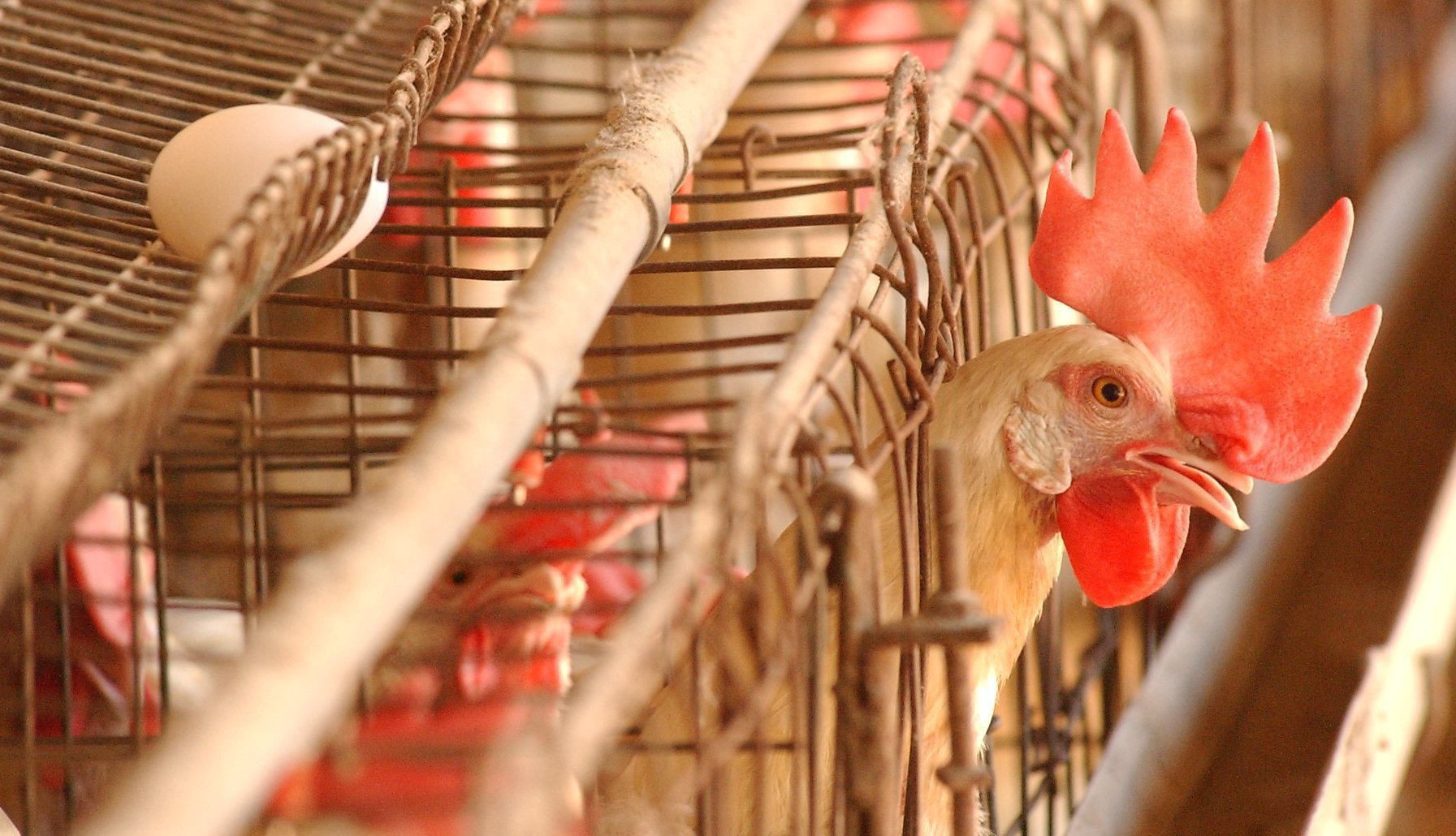
    It was October and winters were just starting in Canada, for a change it was nice weather for me. I had not seen < 10 degrees in Mumbai for almost a decade now. In this beginning of winter we – Anil, Abhijit, Prasad and I – were talking about eggs being Veg or non-veg food. I was the only Veg person amongst all and do not eat egg (by choice). So the point went on to whether egg has life & how does fertilization of egg happen?

    poultry

    That discussion became an argument and point of contention. I said I do not eat egg because of my choice, I do not want to question whether an unfertilized egg should be considered as veg & I (and many more Veg) should consume egg.

    It was an interesting question, I never had thought of this. So I searched on net and of course others too did it. The argument was won by Abhijit in the process of egg fertilization. My mind was running in different direction when I read the production process or making of an egg! If you want the drift read how egg production happens (inside a chicken!) here.

    Hens are like gumball machine (as the author of the blog calls it), popping eggs every 25 hours. Hen keeps on producing eggs through its process of ovulation, where Ovum is released to infundibulum, to magnum, to isthmus and to shell glands. The most surprising and disappointing part comes here at shell gland. The white shell which we see in egg is made by not either the diet (ok that is good) or by procuring enough calcium from the hen’s body. Yes, calcium is taken from hen’s body e.g. bones if enough calcium is not consumed by it. Just imagine daily this hen is producing egg and if enough calcium is not in its diet it is decomposing its body to produce the egg.

    Now let us think about hens as human, poultry farm as world economy (well I want to say this but still want to mince the words) and owners of poultry farm are the few who are heading World Bank, IMF, Banks and politicians. They perhaps do not care about what happens to the hen what they want is their egg next day. Oh yes, the owner of poultry farm does health check-up, takes care of sanitation & cheks quality of feed (equivalent of running education and development programs), but its as good a guess of yours as mine – for what?

    Making of shell of an egg and effectively the whole DAILY process of production of egg made me think of humans as the chicken. We are burning our lives (ask chicken uses its bones); why to make the economy work! An economy which is judged by GDP, share market growth and value of money et al. and who is at the core of it all? The Pseudo-owners or the proprietor of the economy of the world!

    Abhijit helped me learn that Veg people can eat eggs which isn’t fertile as that does not have life in it & it could be called similar to any dairy produce.

    Image source http://blogs.economictimes.indiatimes.com/AgroCommodities/54197/

  • Segment of one & inclusive growth


    What are we? We are a society, made of communities, families and individuals. We are talking about growth on global scale. At times we are talking more about “saving” the world from financial melt down. I sometimes think – who has created it at the first place? That is for some other day though.

    When we see growth we talk on aggregate level – GDP of the country, GDP growth rate, reserve, unemployment rate etc. Have we ever thought that these numbers are “aggregate level” number for example – if I put my one hand in boiling water and another at minus thirty degrees [100+ (-30)], average temperature of my body is 35 degrees. But does that mean I am fine? No my one hand is burnt and other is numb. That is the reality of aggregate level measures.

    How do we resolve such inconsistencies? Let us start measuring things in terms of segments. As they call it in Marketing, Segmentation. On a very deeper level as segment of one. “Segment of one” means handling each individual as an individual (and not as any generic segment). Though is more of marketing and in my professional experience analytics gyan (which is not purpose of this blog) so I would come back to the point.

    Segment of oneIf we do that Marketing stuff of Segment (segment of one) in society and eventually to the individuals. We would realize that “inclusive growth” is only possible when we take growth stories to communities, at smaller level say villages, communities, to each family to each individual. I see that as the solution to a better reflection of growth. I better measure would emerge from there, upliftment of each individual.

    Writing this, I feel as if I’m a politicians, speak and no action! How to do that is the question. A very idealistic solution – what if we’ve unemployment benefits for everyone also encourage everyone to do what he/she wants to do – until found success, unemployment benefits would help these people. Word of caution – there may be free-riders one has to fix that challenge. Take an example of Venture Capitalists and Funders. They do the same but at a later stage – say when I found my calling, started working and kind of see a revenue model. This is truly a very impractical and idealistic solution, but can we build on this to devise a practical and applicable solution from it?

    Image source – http://www.dmnews.com/marketing-to-a-customer-segment-of-one/article/262747/

  • Measuring growth


    I had been asking myself a very naive question. How do we measure growth? Well the answers is not “the GDP” etc. What if I sell things very expensive? GDP might grow, right? So, I zeroed down to interest rate as one vehicle to measure growth.

    Well, let me be more fairer in providing one more reason for taking debt as a metric. I had been wondering about 2008 crisis and the fancy word – Corporate Debt Restructuring. When we look at these and other special purpose instruments we would realize that humans try to fool themselves or fool others. Therefore I considered  Debt as one metric to measure growth. I noticed Kingfisher drowning  recently – I mean the airline in India. We all have witnessed crisis of 2008. In the enthusiasm and to show fat books banks start providing loans to people; once a person is not able to repay the debt banks auction those properties. These two big cases and the housing bubble, all these things are examples of our assumption based “Growth” of economy. Here we assumed growth is represented by the ability of people/organizations to take loan. Interest rate of loans would become a representative of metric of growth.

    We all are in this mess of economic slowdown because of the concept of debt. The ability of big, smart and mighty people and organizations to restructure these debts. When I was doing a course on Independent Directors with Institute of Directors I was wondering in one session – “What if  we don’t have this concept of Debt?” In Islamic banking there is no concept of debt. We may say that Islamic banking has a more refined concept (debt), it is called as profit sharing.

    I am not a scholar of Islamic Banking and therefore whatever I am writing here is with reference to what I was told by one of my colleague and friend (Abdullah Pijvi). He too suggested to me that he is speaking from his experience (he had taken some loan) and therefore he knows that there is no straightforward concept of Debt/loan. It was interesting to know that concept however I had a question in my mind – if Islamic banks don’t have the concept of debt how do they grow? And I started defining metric of growth as – debt and interest rate!

    Related blogs – Where is growth?, What else you need? and Abundance of scarcity

    Disclaimer – 1. In this blog technicalities of economics were not considered very seriously. So readers are warned to do their research in formulating their arguments for/against such thoughts. 2. More thoughts on Islamic banking in future blogs