Tag: Business

  • “When you get to the end of your rope…

    “When you get to the end of your rope, tie a knot and hang on”. This was one of my MBA batchmate Rachita’s status message. I am talking about 2010-11. I asked her, what is the meaning? Why have you put it?

    She explained it to me, the context was our tiring coursework and demanding content. I kept it in my blog drafts and I loved the concept, finally returned and writing this after 14 years!

    During MBA, at times it was difficult to even comprehend and we needed extra-classes. Later in the course, we used to discuss that MBA is all about commonsense. We laughed at ourselves and for few things we discussed how easy was the concept and we were confused!

    Many times, when we do not comprehend things in life, we find ourselves completely lost, but when the aha! moment happens the concept becomes so easy.

    Let me explain it with a story of A Potter.

    The Potter from Banaras

    Long ago, in the ancient city of Kasi, lived a humble potter. He wasn’t learned, rich, or respected – just a quiet man who made clay pots by the Ganga. Business was erratic. Sometimes, the rains ruined his clay. Sometimes, he couldn’t afford to buy food after a day’s work.

    One monsoon season, his kiln collapsed in a storm. His year’s savings – gone. His cart broken. For a while, he tried everything: borrowing money, seeking help from traders, selling small items door-to-door. Nothing worked.

    One evening, standing alone by the riverbank, he muttered:

    “Why is this happening to me? I did nothing wrong.”

    There was no answer. Just rain, river, silence.
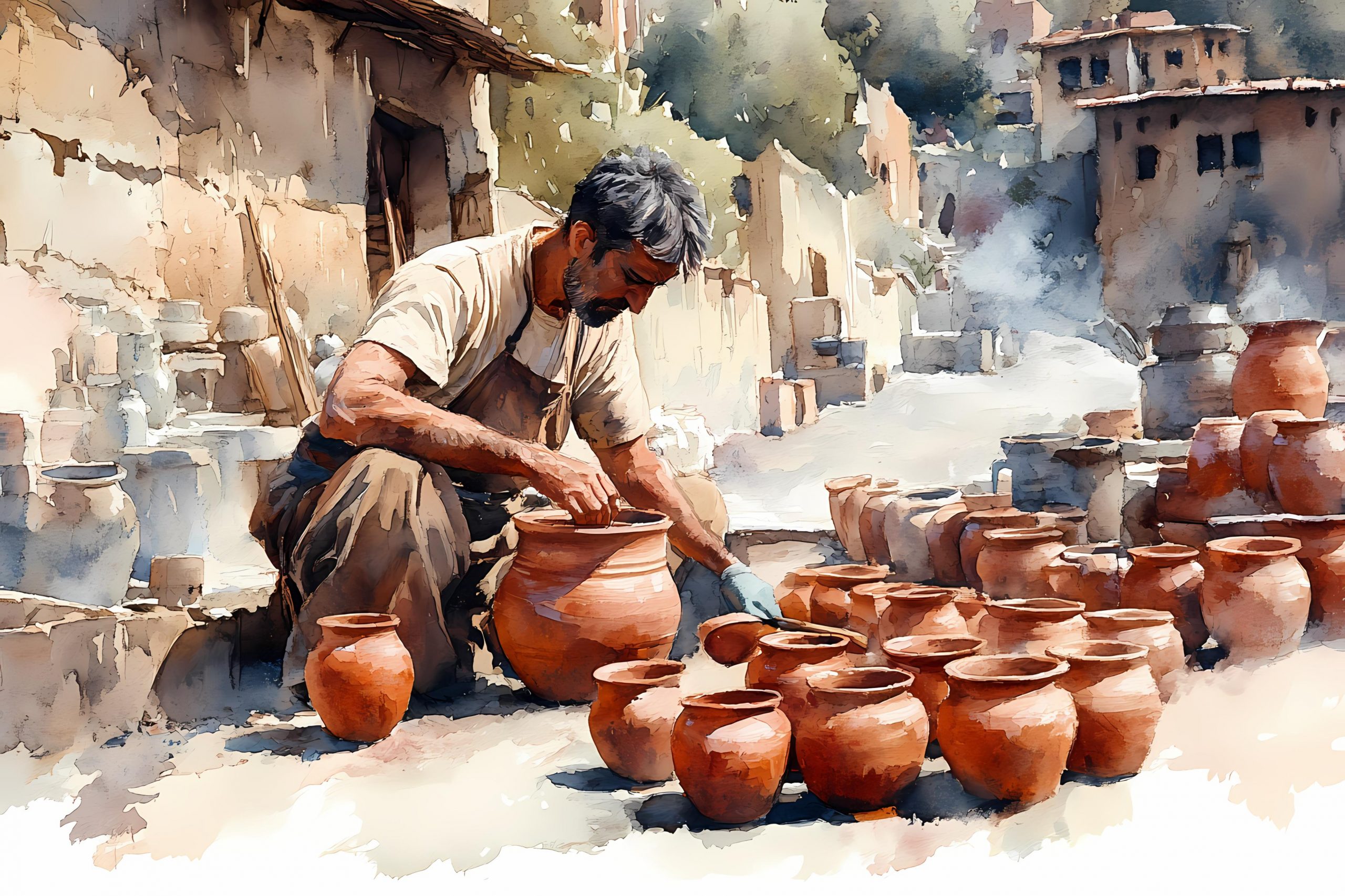
    He returned home. And the next morning, he did the only thing he could: he sat with his broken pots, gathered bits of salvageable clay, and began again. Slowly. Quietly. He built his business once again brick, by brick, by brick.

    He stopped chasing fast fixes. He rose each morning, meditated by the river, shaped one pot at a time – sometimes selling none, sometimes one. He became known not for his success, but for his stillness.

    Years passed. He never became famous. Why care for his becoming famous or rich, what he gained is the inner peace. But many came just to sit with him. He listened more than he spoke. His calm presence became a space of peace.

    A young boy once asked him, “Why didn’t you give up when your kiln broke?”

    The potter smiled and said, “Because sitting with the mud was all I had. And somehow, it was enough.”

    Business and Spiritual Parallels

    Economically, he faced collapse: no income, no capital, no safety net.

    Managerially, he shifted from problem-solving to process-living – focused on what he could still control: rhythm, presence, patience.

    Spiritually, he became what the Gita calls a Sthitapragna – a still-minded person, unmoved by success or failure.

    So always remember – “When you get to the end of your rope, tie a knot and hang on”.

    Picture source: Freepik.com AI generated image

  • Competing with ourselves

    Learning is learning, what is the scope or meaning of competition in that? Everyone has his or her level of comprehension and skillset. Some take more time to learn math but are wonderful at poetry others take less time but not good with creativity. Isn’t it common? So life is good when we try to be a better version of ourselves, competing with ourselves rather than trying to compete with everyone out there. I hope the new education policy, keeps this at its core rather than making kids slog to get more marks.

    https://business2buddha.com/2018/10/i-want-to-be-the-winner/
    Now, when I look back I feel most of the times, it is about collective growth rather than me over you. After reading about interdependent co-arising I have always believed in collective growth.
    https://business2buddha.com/2017/07/education/
     some times, “it is ok to stop in life instead of rushing.”
    https://business2buddha.com/2020/02/interdependent-co-arising-in-long-run/
    We at times miss the power of small things and ignore them. This understanding of sensitivity of impact of one thing on a larger scale makes a person compassionate.

    Inspiration for competing to improve myself

    I was an (above) average Joe in school days, used to do a lot of extracurricular. This happened when I was in grade 11. In 11th, we all took admission in this school from different schools. I started sitting with my colony friend Sumit and his friend Nikhil. Both of them were far more intelligent, toppers, and NTSE (National Talent Search Examination) scholars. At the beginning of grade 11, I wasn’t very serious about studies. I wanted to be an engineer however I was still in many extracurricular kind of lacking focus. I found the focus on studies after an interesting incident, and yet continued with extracurricular.

    school

    One day, Nikhil was sitting with his Mathematics “book” and thinking something. Because this book was kept below the desk and there was no notebook. I asked, “what are you reading”? He replied, “I am solving a problem”. I said there is no notebook and you seem to be reading a book. He said “trying to solve it mentally”. I asked again – what problem is it. It was 2 or 3 chapters ahead of our school math classes chapter.

    It made me serious about studies and made me think about how can I solve problems mentally rather than on just pen papers. When I look back, I realized that Nikhil was an inspiration for me. There was no competition for me with him or anyone else in the class. I just wanted to be better than what I was earlier. In fact on a serious note, Nikhil always scored a perfect 100 in Math that I could never. It seems like if I take the Math exam again, there will be still room for improvement. Effectively, he helped me be a better version of myself, I could never become like him in Math though. 🙂

    What better recognition one can expect? Within a year I had improved myself a lot. Once in grade 12, he said “Computer ko lekar Brahma ne banaya kya?” (Did God make you with a computer?) for solving either probability or integration/differentiation problem in class – I used to do it in the head without touching pen paper. This, coming from the same person was a testimony that I had achieved what I set as a goal. Nikhil did not know that he was eventually praising himself because he had motivated me to do something like this.

    Competing with ourselves

    There are inspirations as Nikhil was for me – how can I be like him, solve problems in mind itself. However, when we limit ourselves we either have envy or competition. The world is too big to compete with everyone – currently about 7 billion. It’d be endless and completely outwards journey as Alexander (the great) had. He kept on trying to win the world and died too young learning “I’ll die empty-handed“.

    The endless competition with “self” is better because the goal is to improve oneself daily. Nikhil had been a positive influencer who became an inspiration, not a competition. In fact, Sumit and Nikhil both became an influencer for me (read another incident from the same school here), Sumit was the state topper in 12th. A lot later in my life, I came to understand and relate to these learnings with both of them as interdependent co-arising. I wonder what they learned from me but I improved a lot. The word “competition” must be looked at with a positive perspective, it should help one improve oneself rather than becoming a race. A perspective and an approach make a huge difference in one’s life. Thank you, Nikhil for inspiring me and eventually helping me learn that one has to compete with ourselves rather than the endless world.

    https://business2buddha.com/2019/06/societal-impact-of-interdependent-co-arising/
    We all grow when we help each other to grow whether it is our subordinates or our competitors.

    Competing with ourselves in business

    I understand it becomes difficult to digest the concept of competition in academics, professional life, and business. I shall share more thoughts on that in some future blogs. Here is a pointer until that blog, I am reading a book by my MBA professor – The new rules of business. This book also gives a perspective on competition. A wonderful lesson from that can be paraphrased as – if you compete with your competitors you may end up being a copy of them in fact one may end up doing the mistakes your industry is doing.

  • Business and Humanity


    The visionary thinks beyond his company or his immediate profit. He thinks of the larger good. And, that is what makes him different. There is no place for labor exploitation and harassment of workers in such an enterprise

    I have been thinking about both Business and Humanity repeatedly. The above quote was one that caught my attention. This blog was due in Sept 2014. Yes a lot of things come in mind and thus ideas get spread, and forgotten at times.

    I revisited this title with reference to an interesting news of recent past – Donating the milk of human kindness. This kind of businesses and business ideas impress me a lot. There are a lot of social enterprises that work on the balance between Business and Social good. I have written a couple of blogs on social enterprise earlier. At times it is very difficult to survive in competitive markets with such a cause. There may have been a lot of other companies that probably we (I) might not know and were wound up due to financial crisis. When such closures happen, I start questioning myself again – what is the purpose? Why we work? and many other such leading questions. These points make me wonder many a times, that perhaps when we did not have the concept of money, humans were valued more. With Humans, human values were respected more. With human values, we probably were more caring, just and welcoming.

    The other thoughts going on in my mind were – my recent vacation to Ganpatipule and a video clip of actress Mahira Khan which is going viral of late. In Ganpatipule I visited “Prachin Kokan” a tourist attraction there. It is a place to know about how was Indian social fabric in past, for those who have never lived in Indian village or are kids growing up in tier-1 or tier-2 cities in India it could be a place to know how was our society. Though caste system was depicted there, I could not find a mention to “untouchables” there, so I may be able to write on what was wrong in past – compared to what we learnt in schools. In that museum I could relate to business and humanity working together in historic India – such as a bangle seller would not take money from a baby girl of village. At the time of the girl’s marriage, father of the girl will give this bangle seller gold coin or something. I wonder if we were less ambitious (perhaps driven less by wealth) – as a society – during those times. I could relate this museum and that society to gratitude.

    Gratitude, made me connect to the opinion and viral video clip of Mahira Khan. In this video I felt that if this actress had problem with India she should have refused working here. Though the interviewer is talking more in the clip, but if a person has so much issue with a whole country he or she should just keep oneself away from them isn’t it? This shows a person being opportunistic and thankless. This thought makes me go round to business. The actress is doing business, by acting in Indian movie. Agreed! The question again comes back – can we club or say compromise – “business and humanity” and “business and our self-respect” and “business and our values”?

    Quote – Business Standard article – Buddha at Work

    Disclaimer – author has not seen/visited the website of BabyChakra (referred in the donating the milk of human kindness), nor is related to the company.

  • Resonance


    We were sitting in chairman’s room of a big corporate house. He had gifted me a signed copy of a book written by his family member – the book was related to work, spirituality and family life. I wish I had met the author once, because the book is on aspects of life which I am exploring. The book has a straightforward message similar to Bhagvat Geeta – work is worship and how to achieve a content life even after being fully involved with material world. I had been writing for close to 6 years now on spirituality and business, this was the first time I had met a Chairman of a successful and listed company who spoke so eloquently on spirituality.

    During our discussion I asked him, how does he balance spirituality and work? How can he pass on the message of spirituality to his line managers, executioners’ et al? This question was in my mind because when a person has basic needs fulfilled (shelter, food & clothing) then only he/she may think of higher pursuit in life. So, it sounds tough to send the message of spirituality, work, and growth and still balance in life to those who are struggling to make ends meet, isn’t it?

    His response was pretty interesting. He asked me – “Have you studied Physics?” I said yes. He continued – “So you must be aware of resonance” He further added, “we all are made of same energy. So laws of physics apply to all of us. If someone reaches the resonance frequency of source (s)he starts resonating on the frequency. It does not require for an object to know physics to resonate on its natural frequency, isn’t it? This is how message has to be communicated; this message does not require reading books spirituality, if environment is conducive person learns. That is how the message goes to every level.”

    It was interesting to speak with him, he spoke about business, spirituality and added another dimension to my thinking – science! Even if a person is atheist, the natural law of physics will apply to him; gravitational force will pull him down, right? That is how spirituality is, it does not differentiate. Spirituality is the science which is essence of everything, even if one believes or follows any religion.

    I believe when more and more people become spiritual, the organizations and economy will take a more interesting turn worldwide.

    PS – What is resonance? Every material has its natural frequency of oscillation. Once another object oscillating in same frequency comes near this material, the material starts oscillating or comes into vibrational motion.

    Note – this is more than a year old article published after modification.

  • Inclusive growth, How?


    There is income inequality. Agree? If no check this – IMF Publication

    …increasing the income share of the poor and the middle class actually increases growth while a rising income share of the top 20 percent results in lower growth—that is, when the rich get richer, benefits do not trickle down…

    If businesses want to earn good profits in long term; businesses need to improve purchasing power of poor. Why? When people will have enough money to buy products/services, then only profits will increase at a better rate. Isn’t it? The simple explanation to this is – once poorer population gets resources (buying power) market size for companies increase multiple times. The increase would not be for one company but for every company in the market. One example of that could be involvement in CSR activity wherein poor can get good basic facilities and opportunities to earn. Once the poor can earn, they can spend too! Of course a caution here is – CSR is not charity, it should not become charity where it may lose its meaning.

    If this logic is clear – shouldn’t business be investing in making people prosperous? Once we do this we would solve a big problem – poverty. Hopefully, we will be able to not only grow the businesses but also grow every strata of society. Isn’t it? This is interdependent co-arising.

    Let me share a store, a very old & cliche, but I think that can drive home the point.

    Heaven HellLong ago a person wanted to see how heaven and hell were. An angle obliged and granted the wish. Person was blindfold and was sent to hell first.

    When the blindfold was removed, person was standing at the entrance to a great dining hall, full of round tables piled high with delicious foods of all kinds.

    The person noticed that, people seated around those round tables but their bodies were thin, and faces gaunt and creased with frustration. Each person sitting on dinning table held a spoon though their arms had no elbows and the spoons were four feet long. These people could reach the food on those platters, but could not get the food back to their mouths.

    Next the person was sent to the heaven. In the heaven the entrance to the dining hall was big, it too had round tables with piles of lavish feast as hell had. Here too people did not have elbows in arms and they were holding long spoons about same length as the hell. The person noticed that the people in heaven were plump and happy, the dinning hall was full of joy and laughter. Situation in both – Heaven and Hell were similar, however there was difference in the milieu, the reason?

    The difference between heaven and hell was – the people in heaven were using those long spoons to feed others so effectively everyone was full, plump & happy.

    Source of the story is AnomalyBeta and LinkedIn

    So, if we take the concept of interdependent co-arising as the core of growth, capitalism or communism or any economic structure we follow we will surely have inclusive growth. The catch here will be – value of money will decline, and exclusivity (as marketing or demand / supply concepts of economics) will play in different fashion. In whatever case at least the basic necessities hopefully be fulfilled.

    Other blogs on inequality – The Price of InequalityNot so trickling down!, Economics concepts and equality and Has the time for this idea come? and Inclusive growth

  • Saint in Suit


    It was Feb or March of 2011. We were just completing our MBA and as would be the case with any other B-school companies were visiting campus for recruitment. A big company was scheduled to visit one day. One of my friends – Jaydutt – was among the most likely candidates to be selected. However, he did not even attend the presentation of the company. Everyone was curious, why?

    I – besides others – was shocked it! I went to his room and asked him, why did not you attend the presentation itself forget the recruitment process?

    He said – “I know the company well, and I have firsthand experienced working there. Pravin, as confident you were, other friends too were confident and I was under pressure to make a decision, it was a enormous confusion I was also not able to make a choice. So, yesterday night when I was about to go to bed, I asked myself this question – ‘if I join them, would I be happy getting up every day in the morning and going to office? Would I enjoy working there? I would invest at least 8 hours per day there, which is 33% of my daily life or close to 50% of my hours awake in a day, am I really keen to go there?’ My conscience told me NO! I decided to skip the company.”

    MeditationThis small conversation with Jaydutt made me think – those points were such that even after full 5 years I still remember the discussion. I recalled that small discussion with Jaydutt when I planned another of my journey from Business to the Buddha to Saint in Suit. I realized whenever I say Business to the Buddha, there seems to be a gap between Business and the Buddha. There seems to be a movement from one place to the other. It requires separate effort or action.

    When I met Fateh uncle recently, I realized that it is not going from one place to the other. It is “being” that. He is a successful businessman and a spiritual person. The title Saint in Suit actually came in my mind when we met once and he was wearing a suit! Now or in future we’ll have to be professionals with the spiritual connect. We need to be saints in the form of professionals. That awareness will either sprout or if does not, we need it to be developed. Though, unfortunately currently I don’t have time to commit to this and keep writing regularly there besides keeping my pace here too.

    Saint in Suit concept is spirituality and business are together. In this concept the plan is to write about how business works (or should work) on spiritual practices, how it can work on spiritual practices, sharing any model related spirituality and business, sharing or defining model related to spirituality and business in any business function e.g. Board level to line executive from marketing to HR to suppliers etc.

    I’m hoping to bring like minded people on this platform to start writing about being saint in suits. your contributions are welcome there create your login.

    Image source – http://www.bravefury.com/six-reasons-men-should-do-yoga/

  • Jal jagruti abhiyan


    Very interesting video, must watch. It is in Hindi (occasionally English), so apologies for those who cant understand Hindi. Yet a brief for you and some key points from the video –

    The person is talking about environment & in general about agriculture in India.

    1. People are migrating to cities
    2. People are quitting agriculture, to survive we have to eat but no one wants to do farming!
    3. We are saying agriculture is a business of loss. We have made it “business” when we do something as business, greed comes in it inherently. When greed comes somewhere ethics are compromised.
    4. Well and water, how is water used by us?
    5. Are we just bringing up a generation of kids scoring 99% in exam but having now available natural resources such as air, water, food?
    6. Please just do your bit, how? Watch in the end.

    Across the nation and across religious / political affiliation this is something we all must think about.

    Related blog – http://business2buddha.com/2015/09/14/think-it-over/


  • Inconvenience of established practices


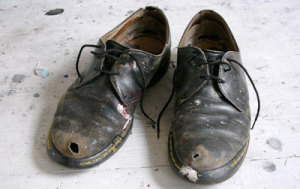
    One of my friends was grumbling about his office. He told me that their company is bringing a new dress-code policy. According to the policy everyone has to wear formal outfit in office at least from Monday to Thursday irrespective of the role a person is in. He told me – “I dont feel comfortable in formal pants, for past so many years I wear jeans and sports shoe. In fact, when I wear leather shoe I have trouble in walking.”

    After this conversation I started noticing, many older people – kind of retired – wear formal cloths but prefer wearing sports shoe. They dont go to offices. They general going for a walk or say in the market in formal cloths & sports shoe.

    I am from the old school, I prefer wearing sports shoe on casual wear, but if I am in formal outfit I need leather shoe. When I saw older people wear formal outfit and sports shoe, I wondered, really? Com’on! I thought my friend who was grumbling about his office’s dress-code policy is done – he is an old man now 😉 I told him so.

    I realized that sports shoe are more comfortable for walking over leather shoe. I noticed the difference when I started jogging in the morning and then going to office – of course I wear formal shoe for office. Sports shoes are better. Perhaps thats the reason these old folks wear sports shoe on their formal attire. So, I asked myself, why do I wear leather shoe when I am far comfortable in sports shoe? Reason is for more than 15 years I have been wearing typical formal attire and now if I wear formal cloths but sports shoe, I feel completely out of place and extremely uncomfortable (in my mind and not in activity of walking).

    The problem is with our established, Traditionsassumption based belief that formal cloths goes well with formal shoe (leather shoe). This is the case with many of our beliefs, social practices and rituals. We are forced to do somethings which we do not feel comfortable doing. Some beliefs or practices are considered “normal” even if people are uncomfortable doing them. If someone is not comfortable doing those things and does not follow the established practices, that person – unfortunately – is considered as “abnormal”. As is the problem with my friend in his office.

    Let us take the same example of wearing formal shoe on formal cloths, in particular the office setup. Disruptor are those who question these practices. They tend to something new. How far people should accept inconvenient established practices in the name of following the norm? This going out of established Norms is a trouble for the society. Society by and large tries to create an order. But, since the Big Bang entropy of the world is only increasing. More on entropy some time in the future.

    My friend – poor guy – getting hassled for wearing formals because that is being “normal”, better and more “office type”! Wonder if his work will count in his appraisal 😉

    Image source – http://tuanmalam.blogspot.in/2009_05_01_archive.html

    This is a scheduled and thus auto published blog, author is currently having limited access to the internet.

  • Spirituality & Business


    It was winter of 2012, Sujoy was getting married. I traveled to Pune to attend his wedding function. There I met one of my very old College mate – Anurag Tambe.

    Anurag is smart guy, thoughtful and practical. We discussed many things, including my faSteve_Jobsvorite topic – purpose of what we do? This topic eventually boils down to spirituality. Anurag told me about Steve Jobs and what his experience was about India and spirituality. His visit to India made him go back to the US and keep doing his work as good as he could. [Anurag’s reference to the book on Steve Jobs]

    Here is an interesting story from Father Antony De Mellow, book – Prayer of the Frog Volume 1 and Prayer of the Frog Volume 2 on similar concept.

    A cobbler met a Rabbi and said. “Tell me what to do about my morning prayer. My custo­mers are poor men who have only one pair of shoes. I pick up their prayer of frogshoes late in the evening and work on them most of the night; at dawn there is still work to be done if the men are to have their shoes ready before they go to work. Now my ques­tion is: What should I do about my morning prayer?”

    “What have you been doing till now?” the Rabbi asked.

    “Sometimes I rush through the prayer quickly and get back to my work—but then I feet bad about it At other times I let the hour of prayer go by Then too I feel a sense of loss and every now and then, as f raise my hammer from the shoes, I can almost hear my heart sigh. “What an unlucky man I am that I am not able to make my morning prayer.”

    Said the Rabbi. “If I were God I would value that more than the prayer.”

    Steve Jobs, I think, did what the Rabbi suggests in the story.

  • Freemium – business model


    The Buddha shared his knowledge for free, you know these universities charge so much for the degrees!

    One argument could be – 1. That time was different. 2. The Buddha asked for bigger fee – leave all material possession, family, even ‘self’. What fee are you talking about? But yes, what the Buddha taught was priceless and of course for free.

    The second is – Well you have a MOOC (Massive Open Online Courses) – Coursera, EdX etc. These MOOC are based on a freemium Business Model.

    “Freemium” is a coined word; it is made using two words – free and premium. A business model which is based on this term “freemium” offers products/services free as well as paid. What is so great about it? Well, in this business approach few basic functionality of product/service are free and advanced features are premium. An example is LinkedIn. This business model is possible in cases where marginal cost of distribution and production are low – most commonly internet and software businesses. Advantage? It can offer huge scale for premium access. How? Once responded to free and limited period premium content business can expect to convert higher % of free users to premium users. LinkedIn has been doing this successfully.

    I liked this idea. It relates to offering your services – though limited – to everyone. Here everyone means – meaningful target audience which needs it. The business offering such service is not creating a complete monopoly – by asking users to first PAY and then USE. It gels with the concept of Business and the Buddha as well.

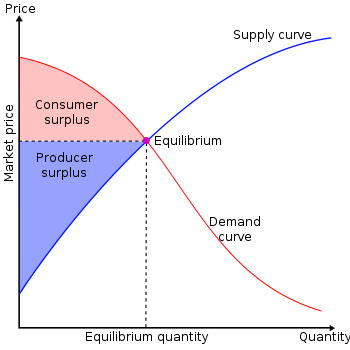
    Well, a word of caution – fremium can be wicked as well – when pricing is done to squeeze “consumer surplus”#. That is where it may not be what “Business to the Buddha” would apply. At the end of the day – there is no limit to squeezing the consumer, isnt it?

    An interesting business concept I have seen in Singapore [searched on net they are in India too!]. There is a restaurant near China Town MRT station – Annalaxmi. There you can have lunch and pay as much as you want, Sing $ 0 or even 100. There is no cashier. The amount such collected goes in running this not for profit restaurant and rest is utilized in organizing cultural activities.

    Whatever said, freemium seems to (should) be the way to go!

    Image source – Consumer surplus – Wikipedia


    consumer surplusesConsumer surplus – it is a term used in microeconomics in demand and supply analysis. Though the author is not a PhD in economics, still in his simple words – consumer surplus is what a few consumer “can” pay to avail the service but would not pay as company selling the offer keeps the price lower so that the company can reach scale.