Tag: Bhagvad geeta

  • One consciousness

    I had been thinking about writing on Bhojan Mantra unfortunately for the last couple of days I did not get time. This Covid lockdown has changed me in more than one way, especially regarding spiritual practices and reading books on One consciousness. I have started respecting food a lot. Earlier I used to just gobble in anything – vegetarian of course – without giving it any thought as such. Food is there, I have to eat it at a given time or if I am hungry I am going to eat it. During Covid when people are struggling for food, suddenly my approach to eating is changed. Many people are donating especially for the daily wage workers, in fact, I had been donating also to International associations for human valuesdonate here –  an organization which is donating food packets to the daily wage earners.

    I said that Covid-19 changed me in a certain manner, food is one very change. Almost always whenever I eat my lunch or dinner I recite this Mantra called Bhojan Mantra. There are two mantras the video of the same is given here a loose translation of the same is also available on this video. This is my first trial of creating video, Sanskrit recitation is not an issue, the challenge is the usage of technology. I wish someone could help me in creating or editing the videos better.

    The first Mantra (sourced by Bhagvad Geeta Chapter 4, Shloka 24) loosely means that whatever we are eating is the energy or the Brahman whoever is eating it is a Brahman and the action performed afterward and even during eating the food is also Brahman that is by the Brahman for the Brahman of the Brahman. Interesting isn’t it? Everything is made up of the same energy – only forms are different – and everything is going to go back in the same energy. If you now try to relate it to the concept of Physics concept E=Mc2 (Mass-Energy Equivalence) you realize that this Mantra was written long back and it means the same thing which has been accepted and proven scientifically.

    Note – Here Brahman is not the varna that Indian system has.

    I was attending a meditation session of Sri Sri Ravi Shankar – Guruji – in the session, he said every incoming Breath energizes You and outgoing breath relaxes it suddenly struck to me the moment you eat your food it becomes you, the moment you breathe in that air the air also becomes you and the moment you breathe out that air going out actually is no more you. In a way, we can say that the breath becomes me and dies as me when it goes out! Or if we expand our Horizons actually everything is ME – the air the food.

    http://business2buddha.com/2012/12/tender-coconut/

    We define ourselves as the body alone which was some mineral in some parts of the world some time ago. Now it is me, or perhaps now I am feeling that it is me, it was, it is and it will remain me – only thing is I need to look beyond the body alone. This is also a concept of Indian spirituality – Adwait – everything is one single Monolithic entity represented or manifestation of the same energy or consciousness – Brahman – in multiple ways.
  • Melting pot


    I am sure when we read the title we all will speak about culture and nation. My take apparently is no different. India as a country, culture and in terms of way of life has been a melting pot of thoughts. If we look at Mahabharat time – there were many kingdom fighting from one side or the other in the war. The range goes from present day Afganistan to South East Asia and Kerala.

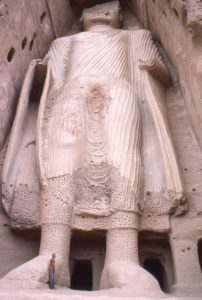
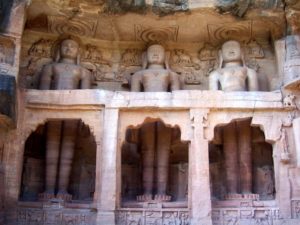
    Afganistan reminds me of Bamiyan Buddha statues. The smaller statue was so big, check photo (sourced from Wikipedia), that a man standing at the foot measures only till the ankles. The statue reminds me of Gwalior fort Jain tirthankar’s statues. No wonder, when I saw them some had disfigured heads.

    The Buddha was basically from Nepal. He came to India for his quest of spirituality. India at that time too, was a confluence of different ways of life. Buddha studied with same master’s who were worshipers of fire, some teachers were of Yoga and Indian philosophies. After learning so many things we was still not self realized. After six years of hardwork, following many different teachings – including fast he was emaciated and almost on the verge of death. That day he was enlightened. Lord Mahavir was his contemporary – he had a different teaching. Both the teachings blended in Indian culture.

    Indian culture basically accepts many different approach of spirituality and religion. The best blend you can see is Bhagvad Geeta. It talks about Bhakti, Gyan, Dhyan and Karma yoga etc. Every chapter in the book is a type of Yoga – yoga means addition. What does a melting pot do – it mixes everything. Right? That is what Yoga is. I have written on Yoga earlier too – including a debate and court case in the US – whether Yoga is Secular or no!

    The question on secularism moves me to another dimension of India. We are secular, and in last couple of years Indian intellectuals (apparently others are equally intellectuals but are considered lesser) have returned awards for lynching of a Muslim Indian citizen. It was a sad incident in the state of Uttar Pradesh during Akhilesh Yadav Government (Samajwadi Party, which apparently is more Muslim centric political party). Recently, another lynching happened – a police officer was killed – muslim Indian citizen – in the state of Jammu & Kashmir, this time state Government is a coalition with BJP (more Hindu tilting political party). Last time the intellectuals returned awards, this time no one came forward! This is all economics of power.

    Economics reminds me of an interesting fact of Indian politics. The best economists – Mr Manmohan Singh and P Chidambaram – came up with farm loan waiver in last decade. When a non economics expert can understand that it is not a solution why a renowned economist takes such a decision – a melting pot you see. The decision was a confluence of politics in economics.

    All the above thoughts are in a melting pot here. My thoughts mostly are  multi-directional – so this blog moves from socialism to capitalism and spirituality to business etc. The melting pot includes few dreams I have – one is here, add to it wish to help Sindhutai Sakpal‘s Orphanage, Art of Living foundation projects and rainwater harvesting in Malwa region of MP. I wrote to one District Magistrate, never received a response, not even from CM’s office – is this a participative government?

    Melting pot was this week’s LBC topic where Maria, Rummuser, Ashok and Shackman write weekly. You can visit their blogs and read their thoughts on the topic.

  • Time


    In the war of Mahabharata, there were days when one or the other side was looking at the sun to set as soon as possible. The rules of the war were set that war will happen between sunrise and sunset. When Arjuna took oath to kill Jayadrath before the next day’s sunset or immolate himself, Kaurava’s were waiting for day to end sooner.

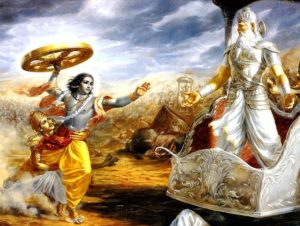
    On the other hand when Bhishma was the supreme commander of Kaurava’s army everyday was a mayhem for Pandava’s army. Bhisma killed thousands of soldiers and hundreds of chariot warriors everyday. Krishna’s frustration (though frustration cannot be the right word here) was at peak, when he felt that Arjuna isn’t fighting with Bhishma with all his capabilities and took weapons in his hands to kill Bhishma – Krishna had vowed not to fight from either side, but was a Charioteer for Arjuna.

    At this Arjuna requests to Krishna not to break his vow, and he promises to fight with his full might to not just defeat Bhishma but also end the war today itself “only if the sun does not set (as fast for the day)!” Arjuna even if was a great student yet had missed occasionally – Krishna’s loudest message to him in the whole of Geeta was perform your duties, do not think of results. Arjuna kept on missing this during these 18 days. Once here and other time at Jayadrath’s killing, Arjuna wanted the sun to be bit slow – Time to stop. I wish he had remembered the beginning of the war when Krishna was teaching him the Geeta – time must have stopped at that time, how can time fly when the god himself is speaking about the truth. Perhaps time must have not even existed when the Bhagvad Geeta was narrated.

    Time is a difficult concept to explain, oxford dictionaries define it as – “the indefinite continued progress of existence and events in the past, present, and future regarded as a whole.” What is the start and end of time? There seems to be none. In Indian philosophy time is defined as Kala. Kala has a lot of small to large measurements, that is for some other day. However when I thought about Time as a topic for LBC I could think of two things – one commentator of was Old Hindi TV Serial Mahabharat, and other a consultant saying – time is the commodity I sell. It is the most precious commodity I have, I cannot get it back once it is gone.

    The commodity is really very important and extremely perishable plus nontransferable, it cannot be restored once gone or consumed. The best thing is each one of us have the same amount of it – unlike any other commodity. What use we make of it is something to be decided by each one of us.

    We all want the time to move slowly when we are happy and to just vanish when we are in trouble. However, we always feel that when we are elated time elapses fast and vice-versa. Isn’t it? The following I wrote long back when I was doing my engineering (about 2 decades back, 1998-99 – my god I am old!) Hindi and English translation side by side

    स्वर्ग भी है यहाँ, नर्क भी है यहीं Heaven and Hell are ‘here and now’
    तुमने जैसे जिया जो पल The way you pass each moment
    तुम ही परिभाषित करोगे, कि तुम जो स्वर्ग याकि नर्क मे You define whether you are in Heaven or a Hell.

    Ramana uncleji suggested this topic for the weekly LBC blog posts. You can see what the other writers perspective is on this topic at their respective blogs Maria, Ramana and Shackman uncleji.

    Image source – http://sathyasaiwithstudents.blogspot.in/2013/06/bhakti-part-1-story-of-bhishma.html