Tag: assumptions

  • Uncertainties and acceptance

    It has been more than a week, we wake up to the no-water in the overhead tank of our wing of our residential complex. Initially, it was annoying. Daily, I or my wife went downstairs to tell the security to switch on the water pump. We raised the issue to the society manager, secretary, etc. I think it takes about 3 days to form a habit, soon we accepted this challenge as part of our life. The new ritual now is – wake up, open the tap – hoping system is fixed, go downstairs tell security to switch on the pump, come back and proceed as per the available resources. After a week, now security calls me daily to ask “do you have water in your taps now?”

    Uncertainties and acceptance

    Uncertainties make us jittery and annoyed. It depends on the situations, in some cases uncertainties make us anxious too. There was news that Deepika Padukone wanted to face the Narcotics Control Board (NCB) with her Husband because of anxiety; it is just an example. This initial annoyance made way for the acceptance of the situation. Once, we accepted the situation, we started planning our next day before we went off to sleep. The morning started with the acceptance of the unavailability of water and our workflow was changed to accommodate the situation. Once we had figured it out, life was easy, the disappointment of delay in fixing the problem was there but the annoyance and frustration ended. This happens many times in our business too.

    A conversation

    We had figured it out for our daily life. I and my wife were talking about it in the morning, the same evening I received a call from my ex-colleagues – Deepak Taunk. By chance, we happened to speak about the certainties of the outcome. The discussion started with analytics, human intelligence, AI, and business processes. It was an interesting discussion on how our brain connects the dots from analytics and business processes to our daily lives. He is a creative person who questions assumptions. So, when we spoke about some business processes he shared his displeasure with the templatization of work. When I say templatization, I mean making work process-driven and asking others to follow the guidelines. It is not that he is not process-driven – he is a very successful project manager. His point was the templatization results in blindly “follow the guidelines”. People are discouraged to ask questions.

    It is a very valid objection. His point of view was – educated people must be allowed to understand “the why”, freedom to figure it out, otherwise what is the need of highly educated people when they have to always follow the SOP (Standard Operating Procedure). I personally have seen this issue that even intelligent people follow things blindly or are asked to follow blindly. In case some ask questions they are termed as “unfit” or non-cooperative. This becomes the responsibility of the team leader or the leadership, in general, to figure out the best course of action. There is no right or wrong in being templatized for few things and creative for others. We need both the ways to run a business well – follow the process and question the assumptions.

    World of possibilities

    In business, personal life as well as in spiritual path too both the approaches are required. I had been an inquisitive person, including on my small journey of spirituality. I asked a lot of questions to many of my guides – Dr SaxenaRamana uncle ji, my father, Sai KakaDada ji, and Dr Agashe, my art of living teacher. Dr Agashe told me – “…for a few things you need to trust the predecessors/process for others ask questions, do not stop any of these. Indian spirituality offers you both the ways…” Interesting isn’t it?

    Following the process brings certainty of outcome whereas questioning assumptions bring opportunities. Uncertainty many times brings opportunities. One has to be aware of the uncertainties, accept the situation, and find out options. When we look at situations, accept the situation(instead of fighting it), look for options, and be creative we have a whole world of possibilities.
  • Change in belief

    Incidents shape our experience, experiences shape our opinions and opinions in long term shape our beliefs and set of belief become our religious practices. With time everything must evolve and must change! We must always remember – This too shall pass and should always be ready to accept change in belief, questioning our assumptions based on new experiences. Here is an incident that changed a laughing stock of our life into a serious affair after the Corona pandemic in which more than 2,00,000 reported deaths have happened until now.

    Our incident

    It was the year 2015, I had married to Simple – my wife – for only 8 months. In these 8 months, I had to travel out of India twice for a month or more. So before leaving for the second time, I had arranged for my wife’s travel to join me in Toronto. Due to her half-yearly audit preparation, she flew later. This is a story how things make or change us.

    While in flight, Simple sneezed. Fellow passenger, who was flying to the USA, was somewhat taken aback. She quickly took out her first aid box and gave a tablet to Simple. Initially, Simple was a bit hesitant to take this medicine. Remember we were told in our childhood – “while traveling do not eat anything given by others.” She said I am alright, it was due to the cabin temperature I do not have a cough or a cold. Probably the co-passenger was also told something like, don’t eat anything given by strangers, in her childhood. So the co-passenger read the content line by line and said it is just multivitamin. Somehow Simple got away this time. However, she sneezed again, this time she could not say no to her. Simple had realized by now how petrified the lady on her next seat was. So, this time around she took the medicine – unwillingly though. So, the whole flight afterward was peaceful for both – Simple and the passenger.

    Simple landed in Toronto and the first thing that she narrated was this incident. We laughed together on this and, I told her somehow in India it is not a big deal, I think we are so immune to it isn’t it? We remembered this incident whenever we flew, smiled at each other. Karma you call it. This small smile and fun started haunting me recently.

    Change-in-belief

    This Corona happened and we are all locked down at home. Now whenever we go out for buying essentials, we get hand sanitizer at the entrance of D-Mart as if it is a Prasad! Honestly speaking, touching the shopping trolley I feel scared and giving cash or card, I tell myself hope this person is safe. Now, I realize how that co-passenger must be feeling about sneezing of Simple. How life, experience and opinions change, isn’t it?

    One virus that is bothering everyone across the globe has given a new perspective to the joke we used to tell each other almost every time we flew. Small or big all types of incidents shape us as we grow up. So I changed my opinion about coughing, sneezing and more! If someone coughs around us now the eyebrows rise. Simple and I changed our opinion towards the fellow passenger of Simple in 2015.

    http://business2buddha.com/2019/11/10/this-too-shall-pass/
  • Socialism the right way

    Recently I wrote on why socialism fails? The article may sound a complete no-no to socialism. I believe any concept is inherently not flawed. The flaw is mostly in the execution – be it capitalism, socialism or any other “-ism. So, what can possibly be socialism the right way? I am sure many would know Venezuela going through hyperinflation and complete chaos – that is one gift that socialism may give you.

    In economics many of the rules are written in some assumption or concept like – “everything else being constant…” the concept will work like this or like that. For an example – demand curve or supply curve. These curves are belied by the prices in some cases such as – price of oil or price of diamond.

    Similar is the case of assumption in the underlying concept of socialism. The assumption is – no one will try to game the system. If I take the same example of Sarla or Kishore of the previous blog any Sarla or Kishore with average intelligence will stop working or will try to get a certificate that proves (s)he is the bottom 20% of Indian population to get the benefits of NYAY scheme announced by the Congress Party in its election manifesto.

    In India, Amitabh Bachchan got a certificate of being a farmer long back. So, it is not difficult for people to get a certificate to the race to the bottom. Though, off late Mr Bachchan has paid off loans of many farmers in UP. The way a farmer’s certificate was easy to obtain for Mr Bachchan it is easy to get a BPL certificate too. What the scheme Nyay is most likely trying to do is – make youth and many Indians lazy or to game the system. This is how Socialism fails.

    There is another example of similar scheme running in India – MGNREGA. I have heard of cases where there is immense corruption in this scheme. People are getting part of the allocated fund per person just for signing a document (rest goes to the chain of officials). Thus, the unskilled people for whom it was an employment guarantee, get money for free. If one wants to get the same work done by someone, the wages asked are higher. It results in increase in inflation.

    With schemes like MGNREGA or Nyay, does not the leaders of the political parties implying that they do not have any idea for – 1. how to create more jobs (run the economy) and 2. how to increase skill level of the citizens so that citizen can do something for themselves rather than depending on others. It looks like these politicians have not heard the idiom – “Teach a man to fish and you feed him for life”. By the way, MGNREGA was started by one of the most renowned economists of the world!

    If I recall 2009 farm loan waiver of Manmohan Government – again a Congress government – more socialistic in its letter and spirit that did not augur well to our economy. The impact of that according to Bank of America Merrill Lynch the farm loan waiver will cost 2% to the GDP of India by 2019. At times educated economists try to fix a problem at the wrong place. Possibly the Modi Government GDP numbers could have been 2% higher!

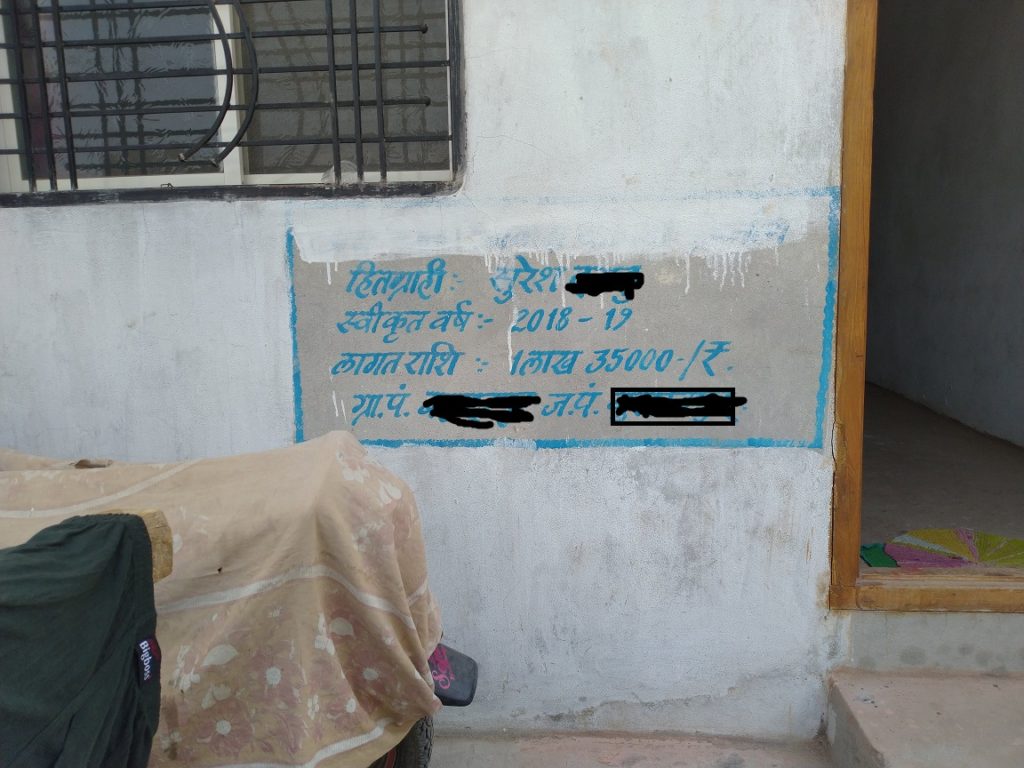
    No doubt the basic principles of the right to food, shelter, water, education, and healthcare is considered given in today’s capitalistic economies and countries – example Obama care in the USA or Ayushman Bharat Health Scheme in India. There is a universal education program running in India Education for all (Sarva Shiksha Abhiyan). When I started looking at quick implementations of government’s schemes such as Pradhan Mantri Awas Yojana I feel current Indian Prime Minister Narendra Modi is more socialistic than the Socialists / Marxists in India. In fact, recently I went to a village (about 500 KM from Mumbai), and I first hand saw – took some photos too shown here – the scheme being used by the villagers effectively.

    However, good the intentions to keep everyone at an equal level, humans do not seem to have found a way for equality. Possibly in the ant world, socialism is practically depicted to a better extent. Why USSR failed and communism of China is not worth appreciating, why Venezuela failed? Because there is no incentive to work or there is no ownership (common ownership) involved. Further, the move from capitalism to socialism follows communism as a midway stop. Communism gives power to the few, who – like any other human being – would not want to relinquish their power? The result – communism does not seem to end ever.

    Socialism (to some extent any -ism) can only work if we create a different scale for all of us – human beings. A different scale for success, survival, and growth. Many times greed and wish to control – people, things and systems – makes way and thus the Marx intermediary (read communism) from capitalism to socialism remains never-ending. Why can not we have a good execution, social good, and profit together? We can have it, provided we look at some new scale to measure ourselves.

    If any form of socialism needs to survive it has to be a middle path – a mix of different approach to economics, policy making and system. A system where we reward work, we provide essentials at appropriate cost or subsidy or for free and let people benefit from their work. At the same time, all the world political, social, economic and cultural systems must include teaching spiritual practices, trust and fairness – example is concepts of Jainism – Ahinsa (non-violence), Asteya (non stealing), Aparigraha (non-attachment) and concepts of Buddhism – meditation, interdependent co-arising. These concepts are essentially from different philosophy of Hinduism.

  • Assumptions


    I’ve heard of a variation of the following story, I don’t want to come between you and the story. Read it, enjoy it and remember – try to avoid assumptions – as much as possible – in professional and personal life.

    Source – The prayer of the Frog I & II by Father .

    prayer of frog

    AWARENESS

    Many years ago, back in the Middle Ages, the Pope was urged by his advisors to banish the Jews from Rome. It was unseemly, they said that these people should be living unmolested in the very center of Catholicism. An edict of eviction was drawn up and promulgated much to the dismay of the Jews who knew that wherever else they went they could only expect worse treatment than was meted out to them in Rome. So they pleaded with the Pope to reconsider the edict. The Pope, a fair-minded man, offered them a sporting proposition: Let the Jews appoint someone to debate with him in pantomime. If their spokesman won the Jews might stay.

    The Jews met to consider this proposal. To turn it down was to be evicted from Rome. To accept it was to court certain defeat, for who could win a debate in which the Pope was both participant and judge? Still, there was nothing for it but to accept. Only, it was impossible to find someone to volunteer for the task of debating with the Pope. The burden of having the fate of the Jews on his shoulders was more than anyone man could bear.

    Now when the synagogue janitor heard what was going on he came before the Chief Rabbi and volunteered to represent his people in the debate. “The janitor?” said the other rabbis when they heard of this. “Impossible!”

    “Well,” said the chief Rabbi, “None of us is willing. It is either the janitor or no debate.” Thus for lack of anyone else the janitor was appointed to debate with the Pope.

    When the great day arrived, the Pope sat on a throne in St Peter’s square surrounded by his cardinals, facing a large crowd of bishops, priests and faithful. Presently the little Jewish delegation arrived in their black robes and flowing beards, with the janitor in their midst.

    The Pope turned to face the janitor and the debate began. The Pope solemnly raised one finger and traced it across the heavens. The janitor promptly pointed with emphasis towards the ground. The Pope seemed somewhat taken aback. Even more solemnly he raised one finger again and kept it firmly before the Janitor’s face. The janitor thereupon lifted three fingers and held them just as firmly before the Pope who seemed astonished by the gesture. Then the Pope thrust his hand into his robes and pulled out an apple. Whereupon the janitor thrust his hand into his paper bag and pulled out a flat piece of matzo. At this the Pope explained in a loud voice, “The Jewish representative has won the debate. The edict of eviction is hereby revoked.”

    The Jewish leaders promptly surrounded the janitor and led him away. The cardinals clustered around the Pope in astonishment. “What happened, your Holiness?” then asked. “It was impossible for us to follow the rapid thrust and parry of the debate.” The Pope wiped the sweat from his forehead and said, “That man is a brilliant theologian, a master in debate. I began by sweeping my hand across the sky to indicate that the whole universe belongs to God. He thrust his finger downward to remind me that there is a place called Hell where the devil reigns supreme. I then raised one finger to signify that God is one. Imagine my shock when he raised three fingers to indicate that this one God manifests Himself equally in three persons, thereby subscribing to our own doctrine of the Trinity! Knowing that it was impossible to get the better of this theological genius I finally shifted the debate to another area. I pulled out an apple to indicate that according to some newfangled ideas the earth is round. He instantly produced a flat piece of unleavened bread to remind me that, according to the Bible, the earth is flat. So there was nothing to do but concede the victory to him.”

    By now the Jews had arrived at their synagogue. “What happened they asked the janitor in bewilderment. The janitor was indignant. “It was all a lot of rubbish,” he said. “Look. First the Pope moves his hand like he is telling all the Jews to get out of Rome. So I pointed downwards to make it clear to him that we were not going to budge. So he points a finger to me threateningly as if to say. Don’t get fresh with me. So I point three fingers to tell him he was thrice as fresh with us when he arbitrarily ordered us out of Rome. The next thing, I see him taking out his lunch. So I took out mine.”

  • Question your Assumptions


    This is a repost of author’s article on LinkedIn – Question your assumptions.

    In 2008, in the winters of Pune, I along with one of my friends were having sumptuous buffet dinner in a restaurant of the hotel. In the candle lights and gentle music of the restaurant we discussed the lighting of the hall. This hall was lit with yellow colored lights not so bright, neither dimly lit. My friend asked me why the height of this restaurant room is more than the rooms of the hotel rooms upstairs? That was an interesting question I never asked this question to myself or to anyone else.

    Next day we were sitting in a meeting for exploring possibility of licensing some IP of my friend with another interested professional group. We finished the meeting late in the evening. After the meeting we had some snacks and went out for a walk. We were speaking on various issues right from our meeting and way forward to how is his business going and what are my plans, I was planning to do my MBA at that time. It was evening, therefore in a while street lights lit up. The moment these lights lit, he suddenly asked me – “have you ever thought why these streetlight pole are this tall? Why these poles are say X meters and not 2X meters or X/2 meters in length? Can you think of possible reasons for the height?” I tried some possible answers as per my knowledge. However I didn’t know the actual reason, so I requested if he can tell me.

    He said, the length of the poles have not been change for almost a century. In old days there were some type of streetlights that gave best illumination (light rendering) on road if the bulb is kept at a certain height. Though in the whole century technology of bulbs have evolved not the length of the poles (specially in India).
    I asked him, so why not change the length of these poles? Is it a rocket science to find out best illumination for current street bulbs? He said, now for the current technology length of pole can be reduced to about 70%. Just imagine if we save 30% of steel on each pole how much we can save? That was an interesting idea.

    This dinner, meeting and walk as a whole taught me a lot. My friend was so thoughtful that he questioned many assumptions. He could convert these questions into useful opportunities. I realized that an innovator is always on a lookout to question the assumptions. Why are we doing this thing or that thing? Why are we doing this in a particular way. He is always looking for some workaround, solution or better way of doing it or multiple ways of doing the same thing. Occasionally this results in breaking the assumption themselves.

    In past I – along with some of my colleagues – was working on a business model, we had thought of some possible monetization approaches. These approaches included what assumptions we have in our mind, what is the target market et al. When we went to the market our prospective clients (partners) started giving us more options, create more slice and dice of the services, customization of offerings/schedule of charge. Initially, we were somewhat restrained we were reluctant to consider the ideas / service offering charges with reservations. Slowly we started accepting this. It was interesting to see these slicing and dicing by prospective clients. They were creating more opportunities for us. They were unwittingly helping us explore more possibilities.

    There were learnings in these experiences. The challenge we face many a times are not outside, the challenges are our owns assumptions. When we start looking at things in a different perspective, when one starts questioning assumptions new opportunities emerge. An open mind provides opportunity for innovation as well as doing business in a better way – so Question your assumptions.

    Image source – http://s20.postimg.org/bmt4ul5ot/IMG_20140216_WA0000.jpg

  • Conditioned mind


    In our last meeting Professor Mankad suggested to try some Chinese, we went to a Chinese restaurant at Dadar bang opposite Shiv Sena Bhavan. I agreed, as for me this restaurant was new, earlier when I lived in Dadar the restaurant was named Chandragupt, not specialty Chinese restaurant. A very good service and good food as well. During the lunch we spoke on different topics and my earlier posts have some as the blogs on the same discussions.

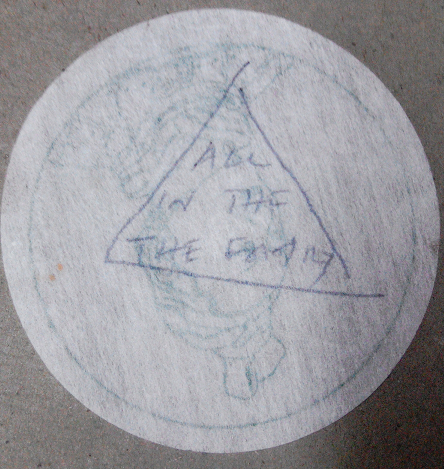
    While discussing and before leaving the restaurant, Prof Mankad did a simple experiment on me. He took a piece of paper and wrote “All in the the family”. He asked me just read it. I read it “All in the family”, he asked me read it again. I read it again and again for good about 5-6 times for next 30 seconds – “All in the family”. All the time when I read that I was asking if the words I am reading are right, in terms of legibility! Reference check image

    ReadingIn the image if you notice the first THE is not clear. So, I had various reasons to ask questions about words and spellings. So, I was digging the hole at the wrong place. Prof Mankad was enjoying it. So after a while I said there are two THE in this sentence, one on line 2 and other on line 3, “I noticed it but thought it was by mistake”. He smiled little more. I also made little more observations. This all went on interestingly, the waiter kept on watching us.

    So, Prof Mankad concluded, Pravin, you saw what you wanted to see, not what exactly is there. This is the problem with many of us, we are conditioned according to our choices and opinions. We need to be open to possibilities. Last week when I wrote on served by biases the idea was same, to highlight this problem of conditionality. Just to conclude with example (reference Times Now debate – that I overheard) – yesterday night heard Indian Rail fares will be increased. Until last year when UPA Govt raised fare 1st time in 10 years, BJP questioned and called names to UPA. Now, when BJP is increasing fare, BJP was supporting it with various reasons & even Twiple (on twitter they are called Bhakts by some people) supporting BJP started supporting the act! Isn’t it surprising! I know there would be instances when people will say – ok! this Govt is not as corrupt as the UPA was, we can live with it! The only reason for that will be – because it is the Party which I support, has done the scams. This is the way we think and act based on conditioned mind.

    The same happens with innovation efforts in the company, people are so biased and conditioned that they ignore simple things (as repeated THE). For such cases organizations need external consultants for advisory.

  • The line of understanding


    I heard a story that a person was ready to change his religion because of the strange rituals followed in time of demise of someone in the family. The question to ask at such times is – Are we meant for systems or systems are meant for us?

    A mobile operator and a credit card company did the same with me. I always paid bills on time, at times in advance! Yes, I paid 1/3rd of my credit limit in advance. The problem with them was they did not listen to my problems because of an error in their system! Yes, ‘paralysis of system dependency’ – I would call it – could result in loss of business. I have also heard and witnessed in some cases – not invented here! and cannot work in this setup, type of comments. The reason for such limited thinking is our dependencies and self imposed limitations. I recall one of my senior facing similar situation, told to the client – are tum karo to sahi, bad me dekhenge kya problem hai. (You just do it we will analyze if there is any problem). He could say this with confidence because he knew what works, what is going to work and importantly he was not the part of the system.

    I am not arguing against systems. I am just trying to say that one has to answer the question – why at first place we designed systems? Answer is to

    1. facilitate operations of society (in case of religion, culture and laws)
    2. facilitate operations of work (in case of businesses).

    We resist change – because we have become inured to our system. See what is happening in case of banking reforms in USA. The situation is dire, yet reforms seem to be a tough nut to crack.

    How long are we going to depend on systems and follow the system till death even if systems are not supporting our cause? Were systems made for making our life miserable? Well, I am not asking to rebel against systems, what I am giving a thought to is – why not critically look at why we are doing what we are doing and question our assumptions. These questions and issues if not addressed correctly create rebellion such as hippie movement.

    What I could see is – There has to be two lines drawn, one between system and understanding its short comings and the other is understanding and rebelling against the system. I would call that line ‘the line of understanding’. More on this in future when I take information age Vs other ages.

    I know this all seems a very weird connection, starting with religion, talking about my personal experience, challenge of a consulting assignment and then banking reforms and lastly to hippie movement! The reason I found is – in the end we all are human being, and everything connects somewhere. The need is to learning to see (oops its a title of a book on LEAN, which I have not read yet) and yes questioning assumptions.

  • Game changers…


    You need to know the rules of the game to change the rules of the game. The rider is – you should not be engrossed in the game such that ‘the obvious becomes ignorable and thus a lost opportunity’. You should have birds-eye view and worm eye view on the game simultaneously. Sure, you might or might not know the complete rules; however, knowing the boundaries within which players are playing can help redefine the boundaries themselves and changing the rules. At times you may come up with a new game altogether, who knows?

    I know generally people talk about i-pod, Tata nano and other famous products when they talk about “Game Changers”. I would state a different example here – Freej. Freej is a famous animation series in Middle East region. This animation series is a tale of four old Emirati women living in a secluded neighborhood in modern day Dubai. The concept of Freej moved the animation audience from kids to adults and from translated Disney characters to local, people next door type of characters. This picked up very quickly – a move from translated animation to ‘our own animation’.

    It is not necessary to connects everything to Business and the Buddha together, that is what I wrote in ‘Why the title?’ blog. This entry could have been one on business only; nevertheless since I know about the lessons the Buddha learnt during his search I think there is a direct connection.
    The Buddha, in his quest for enlightenment, went to many different experts of the time. He mastered all the arts/procedures from them quickly and realized something is incomplete. In the end he made his own path. Later on his belief and knowledge became foundation for one of the oldest religion on the earth. He knew what is useful, important and contemporary for the society and what should be the path. He reinforced few things, refuted others and added more to the existing knowledge. The Buddha was also a game changer in that context.
    My point of contention always has been, it is good to know the rules, understand the approach normally players need to take and know the boundaries of the field. At the same time, one has to be ‘traditionally unconventional’ to move out and come in to defy the rules and pave a way forward. I foresee two approaches to do this
    1. Doing different things and
    2. Doing things differently.
    Both these approaches involve “questioning assumptions”, and this is what I trust in. One may appear as irritating, fool or excessively inquisitive person but that is important to do something different.