Tag: Art of Living

  • My 4 Pillars of Health: Staying Fit at 45+

    My 4 Pillars of Health: Staying Fit at 45+

    I turned 45 recently! But my annual health report shows that it looks like the report is of someone in his 30s.

    I’m neither a gym freak nor a marathoner. In fact, it is evident that I do not have bulky muscle! I’d like to soon start at least light gym or exercise.

    I’m just like any professional who is fairly at senior position – juggling work, deadlines, targets, city traffic, finding difficult to get time for self or family and any other sort of stress. Additionally, I have gained 3 KGs in last couple of months.

    People asked me – how do you manage to look younger, fitter, healthier than your age? At times, I only thought of my physical appearance, and I responded lightheartedly “looks can be deceptive” and dismissed the question.

    When this question was asked too often I started thinking about possible reasons.

    When I looked deeper, I found four big levers of health:

    1. Genetics – no control, thanks Mom and Dad.
    2. Lifestyle – long hours, stress, traffic, only partly in our hands.
    3. Food – this one matters. At home, we eat balanced, mostly fresh meals. Think dal, sabzi, whole grains, fruits, nuts, everyday real food. Rarely junk. That credit goes to my wife.
    4. Spirituality – my daily anchor, 20+ years of Art of Living practices.

    My this deeper analysis has given me this insight – what could be different in many others vs what I do is combination of above. I have control on some of these and some are God’s gift. I mean parents and wife :).

    What is complete in my control is part of life style, food I eat and my Daily practice of Art of Living Sadhana. I’ve been pretty regular with it since 2004. For the past 20 years, I’ve practiced Sudarshan Kriya, pranayama, meditation – every single day. That consistency has been my anchor. It keeps my stress low, my energy high, my mind clear – and yes, those health numbers reflect it.

    You don’t need extreme diets or punishing workouts. If you anchor yourself in two things – simple, mindful eating and consistent spiritual practice – it can transform your health and your life.

    I would seriously and sincerely recommend – Art of Living Happiness Program and regular practice of the same after the course.
  • “When you get to the end of your rope…

    “When you get to the end of your rope, tie a knot and hang on”. This was one of my MBA batchmate Rachita’s status message. I am talking about 2010-11. I asked her, what is the meaning? Why have you put it?

    She explained it to me, the context was our tiring coursework and demanding content. I kept it in my blog drafts and I loved the concept, finally returned and writing this after 14 years!

    During MBA, at times it was difficult to even comprehend and we needed extra-classes. Later in the course, we used to discuss that MBA is all about commonsense. We laughed at ourselves and for few things we discussed how easy was the concept and we were confused!

    Many times, when we do not comprehend things in life, we find ourselves completely lost, but when the aha! moment happens the concept becomes so easy.

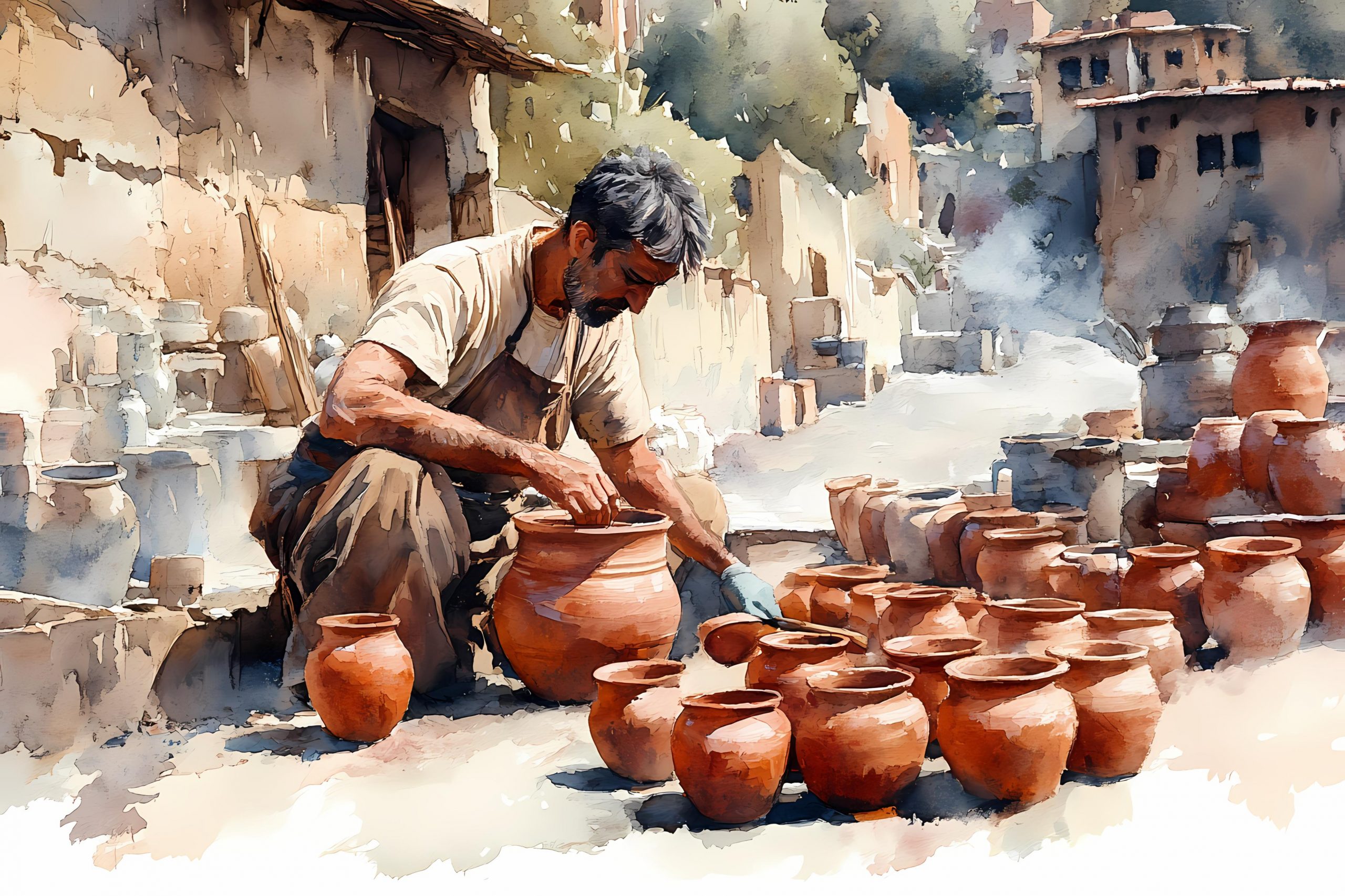
    Let me explain it with a story of A Potter.

    The Potter from Banaras

    Long ago, in the ancient city of Kasi, lived a humble potter. He wasn’t learned, rich, or respected – just a quiet man who made clay pots by the Ganga. Business was erratic. Sometimes, the rains ruined his clay. Sometimes, he couldn’t afford to buy food after a day’s work.

    One monsoon season, his kiln collapsed in a storm. His year’s savings – gone. His cart broken. For a while, he tried everything: borrowing money, seeking help from traders, selling small items door-to-door. Nothing worked.

    One evening, standing alone by the riverbank, he muttered:

    “Why is this happening to me? I did nothing wrong.”

    There was no answer. Just rain, river, silence.

    He returned home. And the next morning, he did the only thing he could: he sat with his broken pots, gathered bits of salvageable clay, and began again. Slowly. Quietly. He built his business once again brick, by brick, by brick.

    He stopped chasing fast fixes. He rose each morning, meditated by the river, shaped one pot at a time – sometimes selling none, sometimes one. He became known not for his success, but for his stillness.

    Years passed. He never became famous. Why care for his becoming famous or rich, what he gained is the inner peace. But many came just to sit with him. He listened more than he spoke. His calm presence became a space of peace.

    A young boy once asked him, “Why didn’t you give up when your kiln broke?”

    The potter smiled and said, “Because sitting with the mud was all I had. And somehow, it was enough.”

    Business and Spiritual Parallels

    Economically, he faced collapse: no income, no capital, no safety net.

    Managerially, he shifted from problem-solving to process-living – focused on what he could still control: rhythm, presence, patience.

    Spiritually, he became what the Gita calls a Sthitapragna – a still-minded person, unmoved by success or failure.

    So always remember – “When you get to the end of your rope, tie a knot and hang on”.

    Picture source: Freepik.com AI generated image

  • Finding Balance: Between Focus and Flow

    The past few months have been intensely demanding. Even when I wanted to write or reflect, I simply didn’t have the time. Ironically, the only quiet moments came while taking a bath—and during those moments, I often wished for a wireless connection to my brain, just to download my thoughts directly.

    This constant “busy-ness” wasn’t just professional; it touched every part of my life – personal, familial, and work-related. Of the three, my professional commitments were the most overwhelming, often pushing me to the edge and sidelining everything else.

    I found myself caught in a strange conundrum: needing to focus deeply on one task while simultaneously juggling dozens of minor issues. It felt like trying to stretch myself across too many roles, while still hoping to give each one my full energy. It was exhausting – and, honestly, it felt impossible.

    In moments of reflection, I kept thinking of one person: my eldest sister. A retired defense officer, she managed a high-pressure career that took her across almost every state in India, yet she remained deeply rooted in spirituality. No wonder she was an academic and extra-curricular superstar. It was she who introduced me to the Art of Living. Throughout her career, she displayed a rare ability: to fully engage with the task at hand, while somehow managing multiple responsibilities with grace and presence.

    Last week, during our weekly Art of Living follow-up session, something profound happened. Our teacher concluded the session by reading a knowledge sheet from Guruji. One line from it struck a deep chord in me:
    “The balance between the focused mind and expanded consciousness brings perfection.”

    That single sentence felt like an answer to what I’d been grappling with for months. I’ve been struggling to maintain focus – constantly pulled from one meeting or deliverable to the next. Each time I start concentrating, I get interrupted. And when I finally return to the task, it feels just out of reach. Then I jump to the next priority. It’s a frustrating, never-ending loop.

    Thinking back, I remembered how my sister once pushed me – literally from Kolkata – to enroll in the Art of Living course. She was persistent, calling me multiple times to register. Yet, even with her packed days, she handled her responsibilities with calm and focus. She meditated regularly and gave herself space to unwind.

    It’s like threading a needle – you focus intensely, get the thread through, and then move on. You don’t hold on to the needle, praising yourself endlessly for a job well done. You complete the task, then flow into the next.

    That’s the kind of balance our work and life demand: focus when needed, detachment when the task is done.

    Of course, this is easier said than done. I’ve only experienced this state of balance when I’ve been truly present. But in a world of competing priorities and endless to-do lists, staying present isn’t easy. Each demand pulls at us, scattering our attention. Still, I know this balance – this dance between focus and flow – is possible. I’ve seen it in others. I’ve felt it briefly myself.

    I hope to return to it with more ease. And maybe, this time, I’ll stay there a little longer.

  • Endless trip of the mind

    Over thinking can cause a lot of damage. This endless trip of mind creates two worlds within our mind. It is difficult to tame the monkey mind. An easy solution is meditation. My personal experience is Art of living part Happiness Program helps in multiple ways.

    Meditation helps in more than one ways. I shall share a recent incident some time in future. Until I get time to write my experience, here is a wonderful story from the book I have referred multiple times on my blog post – Prayers of the frog.

    Our one mind creates so much of trouble, understand Ravana had ten and the disaster it caused. Better to have a head over shoulders that is balanced, isn’t it? Wish you a very Happy Dussehra and I leave you with these thoughts of bringing peace.

    Endless trip of the mind

    Samuel was down in the dumps and who could blame him? His landlord had ordered him out of the apartment and he had nowhere to go. Suddenly the light dawned. He could live with his good friend Moshe. The thought brought Samuel much comfort until it was assailed by another thought. Samuel thought “what makes you so sure that Moshe will put you up at his place?” “Why wouldn’t he?” Came another question in his mind. He said to himself sharply “After all it is I who found him the place he is living in now; and it was I who advanced him the money to pay his rent for the first six months. Surely the least he could do is put me up for a week or so when I am in trouble.”

    That settled the matter in Samuel’s mind, until after dinner. After dinner, his mind again took a trip of thoughts; “Suppose Moshe were to refuse?” “Refuse?” Samuel again reasoned in his mind; “Why in God’s name would he refuse?” The man owes me everything he has. It is I who got him the job, it is I who introduced him to that lovely wife who has borne him the three sons he glories in. Will he grudge me a room for a week? Impossible.”

    Once again, Samuel’s mind settled until he go to the bed. He could not sleep as the thoughts came back “But just suppose Moshe were to refuse. What then?” This was too much for Samuel. His mind was on an endless trip, the thoughts continued “How the hell could he refuse?” Samuel was losing his temper in thoughts itself. His mind continued the chain of thoughts “If the man is alive today it is because of me. I saved him from drowning when he was a kid. Will he be so ungrateful as to turn me out into the streets in the middle of winter?”

    This mental exercise continued in Samuel’s mind; “Just suppose…”. Poor Samuel struggled with it as long as he could. Finally, he got out of the bed around 2 AM in the morning, went over to Moshe’s home, and kept ringing the doorbell until Moshe, half-asleep, opened the door and said in astonishment, “Samuel! What is it? What brings you here in the middle of the night?” Samuel was so angry by now he could not keep himself from yelling, “I’ll tell you what brings me here at this hour of the mind! If you think I’m going to ask you to put me up even for a single day, you’re mistaken. I don’t want to have anything to do with you, your house, your wife, or your family. To hell with you all!” With that, he turned on his heel and walked away.

    How to get over it

    Before your mind or relationships explode like Samuel’s did, my experience based suggestion would be – register for a course mostly happening online during Covid or reach out to me I shall try to connect you with someone who can help you attend an upcoming course.

  • Uncertainties and acceptance

    It has been more than a week, we wake up to the no-water in the overhead tank of our wing of our residential complex. Initially, it was annoying. Daily, I or my wife went downstairs to tell the security to switch on the water pump. We raised the issue to the society manager, secretary, etc. I think it takes about 3 days to form a habit, soon we accepted this challenge as part of our life. The new ritual now is – wake up, open the tap – hoping system is fixed, go downstairs tell security to switch on the pump, come back and proceed as per the available resources. After a week, now security calls me daily to ask “do you have water in your taps now?”

    Uncertainties and acceptance

    Uncertainties make us jittery and annoyed. It depends on the situations, in some cases uncertainties make us anxious too. There was news that Deepika Padukone wanted to face the Narcotics Control Board (NCB) with her Husband because of anxiety; it is just an example. This initial annoyance made way for the acceptance of the situation. Once, we accepted the situation, we started planning our next day before we went off to sleep. The morning started with the acceptance of the unavailability of water and our workflow was changed to accommodate the situation. Once we had figured it out, life was easy, the disappointment of delay in fixing the problem was there but the annoyance and frustration ended. This happens many times in our business too.

    A conversation

    We had figured it out for our daily life. I and my wife were talking about it in the morning, the same evening I received a call from my ex-colleagues – Deepak Taunk. By chance, we happened to speak about the certainties of the outcome. The discussion started with analytics, human intelligence, AI, and business processes. It was an interesting discussion on how our brain connects the dots from analytics and business processes to our daily lives. He is a creative person who questions assumptions. So, when we spoke about some business processes he shared his displeasure with the templatization of work. When I say templatization, I mean making work process-driven and asking others to follow the guidelines. It is not that he is not process-driven – he is a very successful project manager. His point was the templatization results in blindly “follow the guidelines”. People are discouraged to ask questions.

    It is a very valid objection. His point of view was – educated people must be allowed to understand “the why”, freedom to figure it out, otherwise what is the need of highly educated people when they have to always follow the SOP (Standard Operating Procedure). I personally have seen this issue that even intelligent people follow things blindly or are asked to follow blindly. In case some ask questions they are termed as “unfit” or non-cooperative. This becomes the responsibility of the team leader or the leadership, in general, to figure out the best course of action. There is no right or wrong in being templatized for few things and creative for others. We need both the ways to run a business well – follow the process and question the assumptions.

    World of possibilities

    In business, personal life as well as in spiritual path too both the approaches are required. I had been an inquisitive person, including on my small journey of spirituality. I asked a lot of questions to many of my guides – Dr SaxenaRamana uncle ji, my father, Sai KakaDada ji, and Dr Agashe, my art of living teacher. Dr Agashe told me – “…for a few things you need to trust the predecessors/process for others ask questions, do not stop any of these. Indian spirituality offers you both the ways…” Interesting isn’t it?

    Following the process brings certainty of outcome whereas questioning assumptions bring opportunities. Uncertainty many times brings opportunities. One has to be aware of the uncertainties, accept the situation, and find out options. When we look at situations, accept the situation(instead of fighting it), look for options, and be creative we have a whole world of possibilities.

  • One consciousness

    I had been thinking about writing on Bhojan Mantra unfortunately for the last couple of days I did not get time. This Covid lockdown has changed me in more than one way, especially regarding spiritual practices and reading books on One consciousness. I have started respecting food a lot. Earlier I used to just gobble in anything – vegetarian of course – without giving it any thought as such. Food is there, I have to eat it at a given time or if I am hungry I am going to eat it. During Covid when people are struggling for food, suddenly my approach to eating is changed. Many people are donating especially for the daily wage workers, in fact, I had been donating also to International associations for human valuesdonate here –  an organization which is donating food packets to the daily wage earners.

    I said that Covid-19 changed me in a certain manner, food is one very change. Almost always whenever I eat my lunch or dinner I recite this Mantra called Bhojan Mantra. There are two mantras the video of the same is given here a loose translation of the same is also available on this video. This is my first trial of creating video, Sanskrit recitation is not an issue, the challenge is the usage of technology. I wish someone could help me in creating or editing the videos better.

    The first Mantra (sourced by Bhagvad Geeta Chapter 4, Shloka 24) loosely means that whatever we are eating is the energy or the Brahman whoever is eating it is a Brahman and the action performed afterward and even during eating the food is also Brahman that is by the Brahman for the Brahman of the Brahman. Interesting isn’t it? Everything is made up of the same energy – only forms are different – and everything is going to go back in the same energy. If you now try to relate it to the concept of Physics concept E=Mc2 (Mass-Energy Equivalence) you realize that this Mantra was written long back and it means the same thing which has been accepted and proven scientifically.

    Note – Here Brahman is not the varna that Indian system has.

    I was attending a meditation session of Sri Sri Ravi Shankar – Guruji – in the session, he said every incoming Breath energizes You and outgoing breath relaxes it suddenly struck to me the moment you eat your food it becomes you, the moment you breathe in that air the air also becomes you and the moment you breathe out that air going out actually is no more you. In a way, we can say that the breath becomes me and dies as me when it goes out! Or if we expand our Horizons actually everything is ME – the air the food.

    http://business2buddha.com/2012/12/tender-coconut/

    We define ourselves as the body alone which was some mineral in some parts of the world some time ago. Now it is me, or perhaps now I am feeling that it is me, it was, it is and it will remain me – only thing is I need to look beyond the body alone. This is also a concept of Indian spirituality – Adwait – everything is one single Monolithic entity represented or manifestation of the same energy or consciousness – Brahman – in multiple ways.

  • Online Meditation session

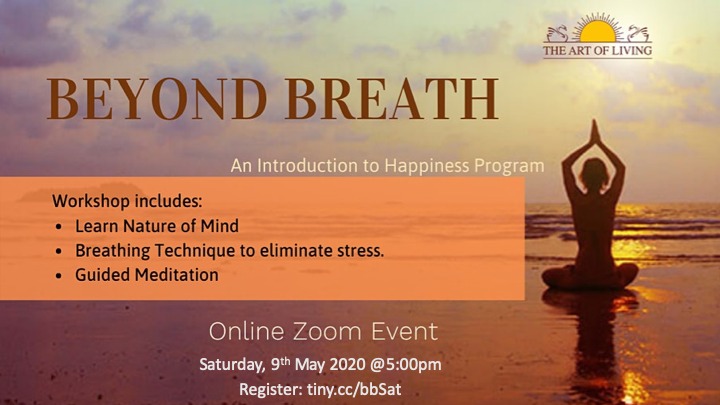
    Stressed, frustrated, bored or worried about world after #lockdown. Join #meditation session it’ll be stress buster.

    Date: 9th May 2020 5:00 PM – 6:00 PM India Time
    Register: http://tiny.cc/bbSat

    Date: 10th May 2020 11:00 AM – 12:00 AM India Time
    Register: http://tiny.cc/bbSun

    A one hour Free Introduction session for Meditation Workshop

    You’ll understand how to :

    ✔ Learn to deal with your thoughts and stress ?
    ✔ Increase your Happiness quotient
    ✔ Learn a scientific breathing techniques and guided meditation

    Venue: Zoom call

    Because IN is the only way OUT.

    Conceptualized and planned on Buddha Poornima and delivered over the weekend for bust people.

  • Perceptions, perspectives and expectations

    I was watching Mahabharat episodes. The epic is the best depiction of conflicts we keep on going through on a daily basis. The biggest conflict and learning is the shloka of Mahabharat that teaches the value of the action and no entitlement of the results. Dhritrashtra’s perception was he is the eldest so the throne belonged to him. Bhishma’s perspective was that he has to take care of the kingdom (even if the king is incorrect). Dronacharya’s expectation from teaching Kuru prince was to take revenge from Panchal king. Many in the epic knew that their opinions are based on ideology applied incorrectly in the given situation, yet they did not amend their ways. When the battle started everyone took side not based on what is right or lawful but which side my enemy is on. This is the result of these perceptions, perspectives, and expectations. The outcome was – people were fighting their own battles at the backdrop of Pandavas and Kauravas.

    Perception

    Aurora borealis

    When I was thinking about aurora borealis (or polar lights), I thought that such a phenomenon or any other related ionization must be happening at different wavelengths that are beyond the human eye’s abilities to see. Our incapability to see does not mean some things do/did not happen. Sound below 20 Hz and above 20,000 Hz exist, we humans are unable to hear it. Our senses and perceptions create our realities. I wrote last week “our past experiences – Sanskara – condition us”. We need to go beyond the conditioning to change our perceptions.

    http://business2buddha.com/2011/02/15/no-judgement-its-all-about-perception/

    Perspective

    In some of the satsangs of Art of living, I heard a few romantic Bollywood movie songs. Earlier when I had heard these songs I felt ok it is a romantic song sung by the lover for the loved one. However, when I heard the same song in a different setup it was as perfect in Bhakti too! These presentations of songs change my perspective, examples are in the below videos –

    The perceptions made these songs to be romantic songs however when I looked at these songs from a different perspective the meaning of the song itself changed.

    Expectations

    कर्मण्येवाधिकारस्ते मा फलेषु कदाचन ।

    मा कर्मफलहेतुर्भुर्मा ते संगोऽस्त्वकर्मणि ॥

    You have a right to perform your prescribed duty, but you are not entitled to the fruits of action. Never consider yourself to be the cause of the results of your activities. Bhagavad Gita, Chapter II, Verse 47. Effectively, we must do our actions as per need of the hour and do not be feverish about either the actions or the results.

    Conclusion

    http://business2buddha.com/2010/08/19/playing-golf-work-and-meditation/

    In Mahabharat, each person was living his perceptions, defining his stand in his own’s perspective and having different expectations. These three things blinded people. Isn’t it true that we live in the cage of our perceptions, perspectives, and expectations? Meditation can help change in all these three.

  • Gratitude – clap your hands

    A few weeks back I had a chance to meet an Art of Living faculty. During his discussion with us, he said to be grateful. Be grateful to what you have and life will be full of abundance. There were wonderful examples and stories he shared with us. It was fascinating to listen to him. I remembered this discussion on gratitude and Prime Minister Mr. Modi’s suggestions for clapping and applauding many unknown people in healthcare or essential services sector who are selflessly working day in and day out. Show your gratitude – clap your hands.

    Have you ever thought of those who pick up your dustbean everyday morning. The sweeper, the cleaner or for that matter the car washing young man of your society. Many of us may not even know the names of these people whom we pass-by every morning. However, bad is the status of cleaning in Mumbai – compared to Indore, my home town – but it works at its own level of efficiency. Is not it? Should not I be grateful to this cleaning system too? Yes there is room for improvement, yet grateful to the existing levels of cleaning.

    http://business2buddha.com/2015/07/12/gratitude-by-coincidence/

    Gratitude – an example

    Last week, I went for a haircut to a nearby saloon with my father. Since, I was with him, it was nearby and finding parking was difficult I took two wheeler. While returning, my hair were oily, we lived nearby so I took it for granted and did not wear helmet. Murphy’s law kicked in. Police was challaning, I was charged INR 500/- (roughly $70) for not wearing helmet.

    This is another story that I paid the challan outstanding within 15 mins on Mumbai Traffic Police App, ICICI Bank has cut the amount from my account and yet Mumbai Traffic Police App shows the challan is unpaid. On a lighter note a lesson – do not use the app to make challan payment.

    Coming back to the story, I told the police sir I live nearby – literally 300 meters from here, I am coming after a haircut and my hair are oily. So I did not wear the helmet, it is in my dickey. He replied – it is for your safety, you should have worn it. He didnt budge, completed the process. I asked now can I go without helmet it is just 300 meter! He replied what is more important – your head, you and your fathers safety or helmet getting oily? You can go you be a better judge, no one is ahead to cut another challan for you.

    http://business2buddha.com/2018/02/06/driving-in-india/

    I was upset, my father told me he was right. My father always wear helmet (it was even when there was no one wearing it about two decades back). He continued – you should have worn helmet. I made payment on the app instantly and gave it a thought later on. That policeman was not wrong, he was doing his duty, he could have done his job and let me go. However he was kind enough to politely remind me – what is more important “your safety”. This lesson costed me 500 rupees. Though I am rarely that careless, in last 24 years challaned second time. Once for stopping ahead of stop line on signal which where stop-line was barely visible. I felt bad but grateful later on for the policeman – I even wonder if I would see him back in life (I would not want to too :)). Small cautious act can go a long way. In current times it is home quarantine during Coronavirus spread. This small act of individuals can go a long way for the whole society.

    Gratitude – clap your hands – be grateful to the unknown

    Gratitude

    Today is the day when we have to be grateful to the healthcare and essential services professionals. Prime Minister Mr. Modi has said that we have to clap for these people whom we have not seen, not known. They are doing their best to help us fight the biggest challenge our generation is seeing. The graveness of Coronavirus cannot be ignored – especially when there is no known vaccine or medication for that. It is immaterial whether we are sick or healthy, rich or poor, youngster or senior citizen. We must be thankful to these professionals.

    We miss-out on thinking about so many people working on so many things on a daily basis. Some are directly associated with us many are not – be it the local trains of Mumbai or bus or Metro trains services across many cities. If you work in a stockbroking company, you may be taking a local train to the office. Your boss or the owner of the company is not. But to come to work in the owner’s company the employee needs to take the local train. Unknowingly or indirectly the local train driver is adding value to the stockbroking company’s owner. Many a time’s people do not consider this list for gratitude.

    Be grateful

    There is a good amount of research on this – check Harvard articles. Gratitude is a virtue, one must inculcate it. You are alive, be happy about it. Someone told me a couple of days back, you woke up you are fortunate, respect that you have got time and today to live. Especially we must be happy, restrained and grateful at this tough time when the world is facing the pandemic of Coronavirus.

    Be happy today; be grateful for so many known and unknown people and things in your life. Take care and do not forget to Show your gratitude – clap your hands on 22nd March 2020 at 5 PM for 5 minutes.

  • Coronavirus – Lock down? Stop and introspects

    Coronavirus has put many people across the world in a lock down situation. Many cities in Europe, China and US are standstill. In India also, some states govt or cities authorities have closed malls, cinema halls, schools etc. Who have got the luxury for them, it is a great time to sit at home to stop and introspect. People should not become couch potato at home and watch Netflix / Youtube day in and day out. This is a time to sit and introspect, what I did and what is my take? Here it is.

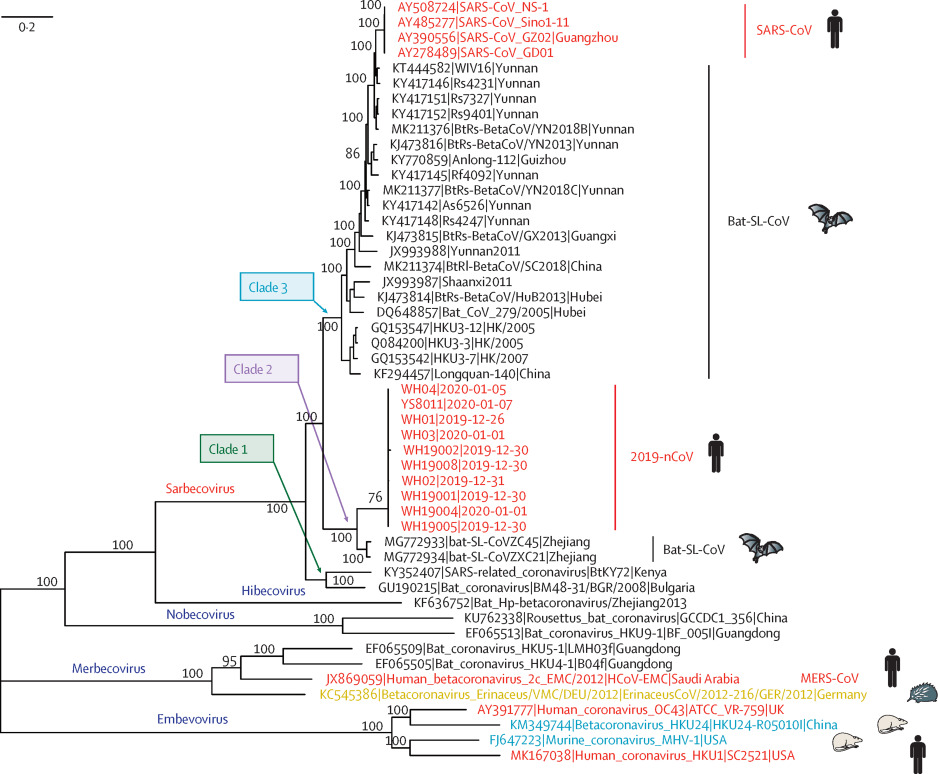
    Phylogenetic analysis of Coronavirus

    Introspection

    I started off with asking a question to myself – have we become dinosaurs of current times? Animals evolve, even the virus evolves check this last para of CDC website on Coronavirus – “…coronaviruses … can evolve….” This research by The Lancet states the virus has evolved and closely related – 88% – to two bat derived virus. Imagine how fast the virus is evolving from 2002 to now. It is an amazement that the tiniest virus evolves. How about human beings? How are we evolving? We’ve improved our healthcare system from outside, is this healthcare restricting us from developing our inherent immunity that has been there in every organism naturally? If your belief system does not allow you to accept the theory of evolution be it. However, this evolution is evident scientifically and being researched and discussed on the science fraternity widely.

    Dinosaur’s extinct one fine day, we are still struggling to hypothesize how this happened? Is it a possibility that something like Coronavirus happened with them too? I do not intend to scare with conspiracy of dooms day. My thoughts are still on introspection, we have developed a lot of technologies. Example is mobile phone, I have a 6 GB RAM mobile, I hardly require such configuration, My father has a smartphone too, he only accesses calling feature and one fitness app. Our technologies have grown multi-fold; many of us we do not even know how to use these. During this lock-down of cities, people are going to waste time on entertainment and create havoc on social media. Instead, we must spend this time with self sitting silently. It could be above conspiracy theories war, economy, healthcare and evolution.

    Conclusion

    I introspect on evolution and meditation. We spend time on how we can remain fit. Here is an interesting research done by Oslo University on a Breathing technique (Sudarshan Kriya) taught in Art of living courses. The research says Yoga Changes your Genes (Oslo university, Norway) and improve your immune system. Until the natural selection helps human beings evolve, practice Yoga and meditation it will help you – as the research states that “…changes in 111 genes expression patterns were observed, improving immune system…”.

    I leave you with this thought – stop, meditate and introspect.

    Image Source – The Lancet “Phylogenetic analysis of Coronavirus”

    Disclaimer – I am associated with the Art of Living foundation and practicing Yoga, Meditation and Sudarshan Kriya from 2004 onward.

    Related other blogs –

    http://business2buddha.com/2013/07/06/yoga-secular-or-not/
    http://business2buddha.com/2019/04/06/the-observer/