Author: KRD Pravin

  • The Machine that Changed the World


    I read this book recently “The Machine that Changed the World“. It is indeed a good book every businessman should read it. “The business is run on trust” or “the business will be run on trust”. When we hear this statement it seems odd, however it is true Trust is the factor. I wrote often about ‘interdependent co-arising‘ (Blog 1, Blog 2 and Blog 3). When I read this book I realized that it is practiced in Japan for many years. Toyota has substantial equity share in its suppliers and the suppliers of suppliers. This is a complete mesh of cross-locking equity structure. They trust each other decide a profit margins rather than hiding the cost structures. According to the book “…This system has replaced the vicious circle of MISTRUST into VIRTUOUS circle of COOPERATION…”.

    The cross linking equity structure goes to a deeper level and different competitors also own each others share. This shareholding pattern is to help each other raise funds. Reference to this is – “The Machine that Changed the World” page 194 perhaps it is edition 1.

    What I found interesting (page 151 of the book I think first edition) – when the volume of demand changes and assembler gives notice to the supplier and in case the volume (demand forecast) fluctuates “…The assembler will work with the supplier to look for other business…”. This is not only interesting but also a surprising and welcoming effort to build trust. One more thing I found very impressive and useful – “…we (suppliers) work without safety net, so we cannot afford to off the high wire…” and thus suppliers maintain the quality not only for their own sake but also for the assemblers.

    The other interesting fact is not just production but also product development is done in cooperation. We hear “crowd-sourcing” as a means for innovation however, a crude system has been used by Toyota for years now. New product development at Toyota involves the suppliers and major work of NPD is done by the suppliers.

    One more interesting factor I realized while reading the book. When we say “one customer at a time” and “managing customer relation in Marketing”, this concept was far more ingrained in the Lean system of sales even in 60s. So beyond Operations the Lean system has been a pioneer in Marketing and Sales too.

    Still after praising the book I am of the opinion that there would be some method which will change the game even further. The question to ask is when and how (which I contemplated earlier)?
  • Connecting the dots – innovation


    This is the third blog in the series of Connecting the dots… which started from way off the track blog on cricket.

    You see how things and ideas connect to one another. I was wondering about cartoon channels. These channels show many foreign based cartoon series and the characters are very famous amongst children. Ask kids – “Pokemon, who is this?” and see their reaction as if you are an alien, ‘oh! you don’t know Pokemon?’ And “world becomes their stage” they would show all the trademark actions and dialogs of the key characters of the series. Well, I don’t see any issue to this however it made me think on a tangent. The tangent resulted in an earlier blog on Cricket… another on “Amar Chitra Katha” and finally here I am writing on innovation. I connected the dots and here I am. The dots are as below –

    Cartoon Channel -> Blog on Cricket -> Amar Chitra Katha -> an article by Darrell Mann -> Blog on Innovation.

    Darrell Mann

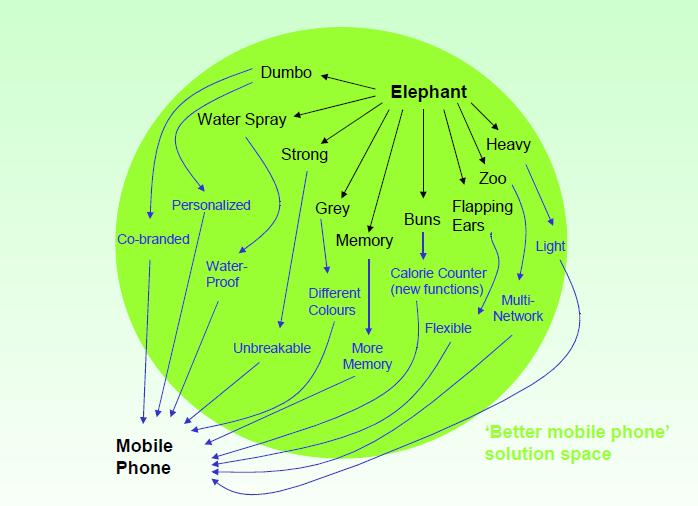
    Once in a tutorial Dr Darrell Mann (a renowned TRIZ expert and professional) created a solution space for Better Mobile Phone starting from an Elephant. Surprised! Yes he did that in 2006 in a tutorial session. And if one knows how to connect dots one can design/formulate or conceptualize faster and better.

    I started thinking in the following fashion –
    ‘why we do not have any local Indian Character?’ I asked myself. Then answered to myself – ‘Hello! do people know that Chess and Badminton are conceptualized in India? Well in India Cricket is a sport rest are time pass. Perhaps true! How many notice, that the first archery competition in world happened during the time of Mahabharat, when Arjuna hit the eye of a fish. Oh! Olympics, from 1996 onwards in each Olympics India brought at least one medal home’.

    1996 – Peas
    2000 – Karnam Malleshwari
    2004 – R S Rathore and
    2008 – a few… who were they? Let me ask people if they recall names of these sports men/women

    Mahabharat, cartoon characters and kids not knowing about the Indian Mythologies – wow! that was what was the premise on which Amar Chitra Katha was born.

    Innovation requires flow of thoughts, flow of thoughts from different directions to a solution or an offering (Product/Service). However, we cannot rely on random thought and free-will for solutions. We need solution better and faster. Innovation requires open mind, ability to connect dots and think and look beyond obvious. At the same time it does not mean innovation is a play of experts, if someone is open and willing to learn one can learn approaches to be innovative. All the freewheel thoughts were the random stimulus and I connected them in the form of blogs – Cartoons, Cricket and Amar Chitra Katha.

  • A tree is only as strong as its roots


    Have you heard this saying before?

    This is the second blog in the series of … wait for it… (updated on Jan 2013) Connecting the dots – innovation

    Well, to continue from the earlier blogs – Cricket… here I am to write the next in one which takes off from the Amar Chitra Katha.

    Why Amar Chitra Katha? Because it relates to me on two levels. One on Business and the other the Buddha… As an innovation consultant I observed that innovative ideas not necessarily become successful revenue source. There could be many reasons for the same. One most important point for constant innovation and healthy top/bottom line is understanding the customer, understanding their overt and covert needs. That is what Uncle Pai could do with the concept of Amar Chitra Katha. No doubt he had a noble cause at the center. However, he also knew the need gap and could fulfill the same. So effectively, he was one who could understand the consumer insight and voice of the customer.

    I loved reading the comic and magazines by him and I was unfortunate that even though I lived in Dadar for a long time I could never meet him and when I heard about his sad demise I was not in India.

    Part two of Amar Chitra Katha is the Buddha. Again reiterating the fact that when I say “the Buddha” I do not restrict myself to the Buddha only. This relates to every possible concept which connects us more on a higher plane above our made so called ‘religion’. Amar Chitra Katha was born for all round development of kids. Read any story it would be either for knowledge, imparting some lesson or last but not the least to develop the habit of reading. Uncle Pai took this root as an obvious path – stories are easy to remember, kids (at least that time – 60s-70s) used to hear stories (Dada Dadi ki kahaniya) – when Jatak tales were used by the Buddha why reinvent the wheel?

    A to Z mysteries 1A to Z mysteries 2A to Z mysteries 3A to Z mysteries 4A to Z mysteries 5, A to Z mysteries 6,


  • Cricket is a sport in India rest are time pass


    Spoiler alert! Answers to the question posed here are below, please do not spoil the fun of the post… Believe me I knew the answers to many of the questions asked below…  This is the first blog in the series of … wait for it… (updated on Jan 2013) Connecting the dots – innovation

    1. What is the ATP ranking of an Indian men’s singles player, after recently concluded French Open? (First tell me his name…)
    2. Who won the lone medal in Olympics in 2000 for India?
    3. What was the score of Abhinav Bindra when he won the Medal in Olympic in China? Well, can you answer when did China Olympic happen?
    4. Who are the other two members who won individual medals in Olympics for India (this post was written in 2011 June)?
    5. Which games played in international arena are originated in India?

    On the contrary if I ask questions on Cricket (which I do not follow that much after 2003 world cup Final defeat of India) –

    1. who hit 6 sixes in an over for India some time back, in an international cricket tournament, which was the opposing team? This seems easy to even me to answer. Even there would be people who would tell me name, location, scores of winning and loosing teams and even the run/wicket difference etc etc. which I didnt even ask here.

    2. Let me ask little more difficult question. What is the name of one daughter of Lara. Brian Lara named his daughter after name of a city, why? This is kind of difficult, Very difficult question.

    Do you have answer for any of the above questions? Well, without the Google Search. Mostly Cricket related questions are answered easily by Indian people. Therefore, I say “Cricket is a sport in India rest are time pass.” No offenses against other sports women/men. How many would agree with me on this statement?

    I guess the number of people able to answer the above questions on cricket would be more than the number of people able to answer the question posted in first few lines. Take a random sample. So what is the reason.

    Now let me come to the other part which relates to me and I wanted to write about. “Amar Chitra Katha” was started by Uncle Pai on the same premise. He observed that kids participating in a quiz contest were able to answer questions related to Greek mythologies however they were not for Indian mythologies.

    There is a saying in Hindi – Ghar ki murgi dal barabar meaning: Self possessions are always undermined and other’s possessions seem better. I think when I am writing this I look like a representative of political faction BUT I AM NOT. We need to learn our own culture better before looking beyond. I love Amar Chitra Katha on which I will write later…

    Answers are as follows –
    1. Somdev Devvarman ATP ranking 67,
    2. Karnam Malleshwari in Weight lifting, medal – Bronze.
    3. Find out yourself, now at least Google it 🙂 in case you do not know
    4. Leander Paes 1996, Tennis (of course) Bronze Medal Atlanta Olympics 1996 and Major Rajyavardhan Singh Rathore doubletrap shooting Silver Medal 2004.

    The sports originated in India and played internationally (at least the following two)
    1. Chess
    2. Badminton (How many of you know the fathers name of a Bollywood actress who won All England Badminton competition) – Prakash Padukone
    3. I am not sure on this (and I didnt Google Search it) – Horse Polo is also originated in India

    Cricket
    1. Yuvraj Singh, Against England in T20 2007.
    2. Sydney after scoring 277 runs in Test Match, try Google for the year (at least you can do that)

    Answering questions of sports – other than cricket  – by people of India is difficult. And therefore I say “Cricket is a sport in India rest are time pass.” I apologies for the sports people of other sports, this is just an effort to bring this to the notice of WE THE PEOPLE…

    Further blogs on – we the people and Amar Chitra Katha…

  • Cogito ergo sum


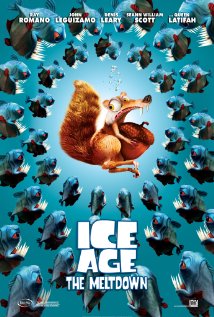
    I always wonder about these things… what is the difference between we human beings and animals? They are also living being, then what is the difference? This thought comes again and again in my mind. Recently when I was watching the movie Ice Age 2: The Meltdown. The thought again came in my mind – whats the difference? Most interesting part is – the protagonists in the movie are animals.

    Whenever I watch that movie, one character pops out – “on the face” – often and it reminds me of us – the human beings. It is the squirrel – Scrat. In every screen it is fighting for its corn – similar to our life. The corn represents our jobs, loved ones and issues faced regularly etc etc and alas! the list never ends. And secondly, the fight and the run never ends!

    Cogito, Ergo Sum is a philosophical statement by Descartes, meaning – I think, therefore I exist. Yes the proof of ‘my existence’ is that at least I am thinking that whether I exist or not, right? And the question of my existence is not just about existence; it is deeper, why are we doing what are we doing? And even further it goes to why do we exist? Because perhaps even without thinking of existence animals exist, right? And here the logic fails, I have heard saints saying – life does not listen to your logic. There has to be some reason of us having a more developed brain which gives us the capabilities to think about our existence and the question – why we exist? It is similar to phophobia – fear of phobia, existence of the question of existence :).

    Whatever the case is – I think, therefore I exist! And we all exist like the Scrat in the mids of the fish (e.g. ourselves, our friends and enemies) trying to save our corn e.g. ourselves, job, loved one etc etc.

    Image source – www.imdb.com

  • Book review


    Few years back I read books written by Dr Brian Weiss. Dr Weiss is a psychotherapist, had published papers in journals and was teaching in a University. During late 70s and early 80s his life changed complete, when he was treating one of her clients. The first book of Dr Weiss I read was based on this patients treatment, title of the book is – Many lives many masters. It is a good book, about Past lifes and past life regression methods. After reading the third book – Only love is real, I wrote the following review on . In total I read four books of Dr Weiss
    1. Many Lives Many Masters,
    2. Same Soul Many Bodies,
    3. Only Loves Is Real and
    4. Messages From The Masters exactly in the same order.

    I am of the opinion that everyone should read at least Many lives many masters and Only love is real. One point, when you read the books please do not think of your ideology or what you have been taught since childhood, just read the book. The review is below.

    You believe in past life or not… you can learn from this book, sometimes you can read it as a novel. But believe me you will not only love reading it but will understand the depth of the phenomenon called “LIFE”.

    I am more of a spiritual but not religious, still after reading the book I felt the depth of the teachings of the Buddha and Hindu-ism. Please do not go to the dogmatic belief of any religion when you are reading this review.

    It would be good if you read Same soul many bodies (its almost the Buddha teachings in chapters), when I read that I felt that Buddhas teachings are retold. I would say read “Only love is real” and do not ask me more, but I would say read it and understand the meaning deep meanings.. we are not just this life we are all eternal be happy… be loving.

    On the contrary is Ashtavakra Geeta. So do not get confused, do read at least Many lives many masters and Only love is real. When I read those books the books were expensive, I think they are relatively economical now through online.

  • You cannot drive car looking at the rear view mirror


    I was watching a movie “Do Aankhen barah haath”, a very old Hindi movie directed by V Shantaram and also the lead role played by him. Since it is a very old movie acting is melodramatic, could be questioned and people can find many faults too, however as I wrote earlier in one of the blogs “Lost in translation” what is more important message or the presentation? So, you can watch the movie for the message.

    I related the movie to a part of the Buddha’s life. Many of us must have heard the story of Angulimala, a bandit. However, how many know the story of him before he became Angulimala and after the meeting with the Buddha?

    Angulimala was a bandit, killer of people just to get their fingers and make a garland. Yes thats what is known about him. The real name of Angulimala was “Ahinsak” or “Ahimsak“, a Sanskrit/Pali word meaning “nonviolent”. The pre Angulimala view about Ahinsak is on the link. What happened to him after he met the Buddha? When he met the Buddha, he became a Bhikku.

    The following part is from the book Blog – Old path white clouds (Book – Old Path White Clouds). Soon after he became a Bhikku he died, how? As a Bhikku he went to the same village where he killed people for making the garland of fingers. People attacked him to take the revenge, not noticing that he is a Bhikku, completely changed person now and he is not even reacting to the attack. The message of the attack reached the Buddha, he rushed to the place. Severely wounded, Angulimala, died in the laps of the Buddha.

    Similar situation arrives in the movie “Do Aankhen barah haath”, I could relate those sequences to the story of Angulimala.

    My Engineering college professor Dr Anand Swaroop Saxena told me way back (in 2001 some time) – “inherently people are not flawed, situation drive people to react in the way they react.” Dr Saxena taught me a great deal, I worked with him on my undergraduate project (published in a national journal :)). He always intrigued me with his simple, profound and ruminating words. For one question he said “…situations are responsible.”. Later I met a Sant Sai Kaka, he too said almost the same thing with more details and profundity. The reaction part comes from the prior experience (sanskar) one had in life. These statements changed the paradigm for my thinking. Yet it is the responsibility of the person to control oneself not to be driven by the situation/sansakar/prior experience.

    Two points to make here – 1. inherently people are not flawed, situation drive people to react in the way they react and 2. past experiences are the milestone you have left behind while you drive to a destination. You cannot drive car looking at the rear view mirror – is not it right!

  • Life is trouble. Only death is not…


    Wait, wait, wait… well the title has to be understood completely. I was reading something by J. Krishamurti (JK), liked the following and posting here. JK was a philosopher of last century, more on wiki or just search on net….

    When we close
    the windows and doors of our house
    and stay inside, we feel very secure, safe.

    But life is not like that.
    Life is constantly knocking at our door,
    trying to push open our windows that we may see more;
    and if out of fear we lock the doors, bolt all the windows,

    the knocking only grows louder.

    The closer we cling to security in any form,
    the more life comes and pushes us.

    – Life Ahead. p 54

    I recall the following statement of Zorba a character in Book – “Zorba The Greek” a novel by Nikos Kazantzakis.

    Life is trouble. Only death is not. To be alive is to undo your belt and *look* for trouble. – Zorba the Greek

    Think it over, life is a trouble only death is not… take challenges, uncover yourself, open the doors of possibilities and fly as high as you can. As much as I try to explore myself and push the envelop I realize I can go even further… it is all about getting to know oneself.

    Therefore take trouble, undo your belts and open the doors to possibilities.

  • Porters five forces


    Three or four years back when I was reading the book – Blog – Old path white clouds (Book – Old Path White Clouds), I started looking at businesses with a changed mindset. In India, there are small stalls on roadside. The stalls could be tea stall, paratha stall, idly dosa stall, Sandwich or others. What I observed was, at many places these stalls were near each other e.g. tea stall near the sandwich stall or the idly stall. This is so common that we overlook such arrangements of shops.

    What is the reason of them being next to each other? The reason is roughly 50% of the buyer of sandwich would buy a cup of tea or the other way round some people buying tea would order for a paratha. These offerings are seemingly different for the stall owners, they are selling a refreshing drink or a breakfast however, from the point of view of a customer it is a wholesome offering – tea with paratha/sandwich.

    Well the point I am trying to make with the example is one and the same. In terms of business Prof Mohan Sawhney (of Northwestern University) says ‘Metamarket’ and in Buddhism they called it interdependent co-arising.

    Representation of porters five forces
    In organized retail, there are two parties catering to the end customers. One the manufacturer and the other retailer. Here too, we would see the collaboration or the dependence of one on the other. If I relate the concept of interdependent co-arising further with the very basic management lessons – Porters Five Forces – we would observe few things. Earlier the manufacturers had power (suppliers power) and now the retailers are gaining power (buyers power), and this cat and mouse game would continue. This power would shift to the ultimate buyer – the customer – perhaps it will happen in the future.

    How can the forces be balanced? Well, when we look in the basics we would learn. The idea in any game theory based dilemma (Prisoners dilemma) is that when each one starts co-operating everyone wins. That would apply in long term. Net net – we would have to be on the basics – the concept of interdependent co-arising.

    Image source – http://www.smartcode.com/

  • Music and Yoga


    For a long time I refrained from writing on this topic on my blog. Here it is today…

    I was learning Indian Classical Music (ICM) during 2008-2010. I felt that there is relation between ICM nd Yoga (the chakra of Human body). There are seven swars (Notes) in ICM and seven chakras in body, can any raaga be used to invoke a chakra or help in spiritual practice of an individual? This was the question when I started working on this. My Art of Living teacher (Dr Shikant Agashe) and my Guruji of Music class (Mr B G Tilak) helped me explore this further until I left for further academic pursuits.

    Honestly speaking, I do not have any conclusive research report/measure for the same currently, however a strong feeling says there is some relation. With a few challenges we also devised an experiment and in fact we communicated with few other doctors and experts of ICM.

    People have helped us in providing information about use of ICM in medicine as alternative method and Nad Yoga. So, there are many paths going out from ICM, the path I am considering here is ‘ relation between ICM and The Chakras of human body.

    At a later stage, I happened to read a book titled Music As Yoga by Patrick Bernard (visit PatrickBernard.com). In the book I found something interesting – Page 109 – …According to Young: “when a specific series of harmonically related frequencies are continuous, in more definite way, the sound thus produced stimulates a psychological state which is felt by the listener given the fact that such a series of frequencies will continually trigger a specific series of auditory nerves which, in turn, will carry out the same transmission operation from a periodic model of impulses to the series of points determined by their counterparts in the cerebral cortex…” The above part I feel – somehow – relates to the ICM and yoga. The term written above “specific series of harmonically related frequencies” seems to be specific raaga.

    Still the search (research) is to be continued and for that measurement system is needed, things to do and cart to move… Just thought to share it on my blog – perhaps some strings can vibrate, some can resonate and some find the right tune… and we find something interesting.