Author: KRD Pravin

  • Yoga – Secular or not?


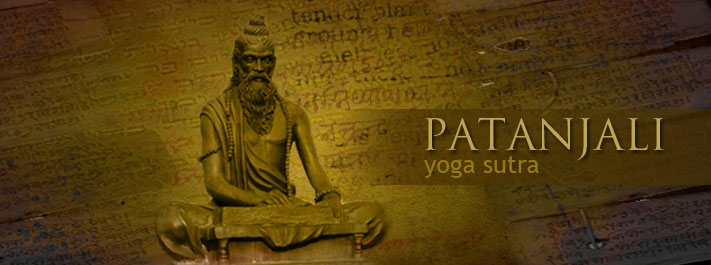
    Patanjali Yoga Sutras
    Source – Art of Living website

    It takes a lot of time for courts to offer a judgement, there are argument and counter-arguments. Logic and intuition fails if you do not have proof. That’s why Indian courts take 20 years even for high profile cases (e.g. Mumbai bomb blast), small cases are either solved out of court or not at all during the life time of an accused / plaintiff. Galileo died and hundreds of years later (in 1992) Churches exonerated him of the heresy – of saying Earth if not flat. People do not think logically and thus recently I have been bothered by fanatics on Twitter (follow me on Twitter @krdpravin). So, I feel petty on some things. Well, today I want to write about whether Yoga is secular or not?

    Disclaimer – I am discussing Yoga as Patanjali Yoga Sutra I am not an “authority on Yoga”.

    There was a case filed in California- “Yoga can not be taught in schools as Yoga is not secular”. Effectively the contention was Yoga is actually Hindu religion. California Judge rejected this claim.  Yet there is little more discussion needed on this.

    Think – is breathing secular or not? In yoga Patanjali has talked about Pranayams – breathing exercise. Is remembering (concentrating, meditating on) any God or whether Jesus or other prophet related to only “Hinduism”? Yoga talks about meditating on deity too. Is speaking truth not secular? I can list few more food for thoughts, however let me instead brief on Patanjali Yoga Sutra. Patanjali was a sage, he existed before Christ and had written Yoga Sutras. The sutras have eight limbs –

    1. Yama – 5 abstinence – non-violence, truth, non-covetousness, abstinence and non-possessiveness.

    In today’s world we need all these virtues, very importantly non-covetousness, non-possessiveness. Financial crisis is result of covetousness

    2. Niyama – 5 observances – cleanliness, contentment, austerity, reading scriptures, surrender to god.

    Here one may argue – reading scripture is religious. Did Patanjali say do not read Bible? Even in Surrender to God it is not mentioned that the God has to be only HINDU God!

    3. Asana – Discipline of the body and body posture.

    Largely – people all over the world (include many Indians and Hindus) think Yoga means Asana. Asana is just 12.5% (e.g. 1 part of 8 fold path of Patanjali) of what Patanjali said about yoga. Also, can you say that whatever games played in Olympics are religion? In this context – Hinduism? No! right?

    4. Pranayam – Control of breath

    Common we call breath and this would be idiotic to call breathing non-secular.

    5. Pratyahar – withdrawal of senses from their external objects.

    Well, many of us would not understand this. This is not talked in many religions – this helps in being non-covetous, non-possessive and being content. This is where I think Yoga is far more evolved and different than any Western religion. Though Yoga is not a religion.

    6. Dharana – concentration of the Chitta upon a physical object (say a photograph of Jesus, a frivolous example – Computer mouse).  Take an example of Rosary (a bead) and remembering any mantra / God. Use of bead is common in Islam too. Who says Dharana is about only one religion? It can be followed by any person whether following a religion or not.

    7. Dhyan – Meditation. It is largely professed by Indian religions e.g. Jainism, Hinduism and Buddhism. So, meditation is also not specific to only Hinduism. Additionally if someone prays with complete devotion that can become meditation.

    8 Samadhi – oneness with the object of meditation.

    Yoga is a very evolved science, of course developed and practiced more than 2000 years ago. But yes Yoga is science, there is no religious seal on it. My Indian and Hindu friends may argue against me saying – it is Hindu practice with various arguments. Foreigners may argue on same lines and state Yoga is religion.

    Well, I am of the opinion – religion is very personal matter and not a group matter. So, if I follow yoga practice (which I do not) I may say Yoga is my religion. But otherwise yoga is a way of life beyond and above all the so call religions of the world – which effectively are cause of troubles, war (include terrorism), fundamentalism and superiority complexes. And yes, Yoga is above the courts and laws too.

    Most importantly – Now do you follow what religious fundamentalism is? I am putting Yoga above everything which is what happens when fanaticism creeps in making a suicide bombers. I did the same in above para (by stating Yoga is above all).

    Yet please remember – 1st step of Yoga has first abstinence – non-violence. This includes not having superiority complex also.

    Image source – http://www.artofliving.org/patanjali-yogasutra

    One of the Authority on Yoga is – Sri Sri Ravishankar (Guruji)

  • Miracles of life – are we sleeping?


    As usual, this story again comes from – ‘The prayer of the Frog’ by Father Anthony de Mello, S.J. The book has small stories and worth reading one at a time, sleep over the story and think what we can improve in our life?

    A man took his new hunting dog out on a trial hunt. He shot a duck that fell into the lake. The dog walked over the water, picked the duck up and brought it to his master.

    The man was flabbergasted! He shot another duck. Once again, while he rubbed his eyes in disbelief, the dog walked over the water and retrieved the duck.

    Hardly daring to believe what he had seen, he called his neighbor for a shoot the following day. Once again, each time he or his neighbor hit a bird the dog would walk over the water and bring the bird in. The man said nothing. Neither did his neighbor. Finally, unable to contain himself any longer, he blurted out, “Did you notice anything strange about that dog?”
    The neighbor rubbed his chin pensively. “Yes,” he finally said. “Come to think of it, I did! The son of a **** can’t swim!

    It isn’t as if life is not full of miracles. It’s more than that: it is miraculous, and anyone who stops taking it for granted will see it at once.

    At times I think the life itself is a miracle, we take it for granted. Naxals are killing, Terrorist are killing, in fact people are dying on pilgrimages to add to the trouble people are leaving ethics and morals to earn few bucks here and there (eventually we would leave everything here). I wonder if they would realize some time – life is a miracle live it, don’t kill anyone and be peaceful with what you have.

    Related blog – Don’t be empathetic

  • Marginal analysis


    We, as a community, are too evolved to be simple. We complicate many things which are Simple.

    One of my friends wrote on Facebook few days back – “Trying to figure out whether the marginal utility of the next shot increases or decreases.” At times this marginal analysis becomes a problem in our life.  We think too much about the outcomes and benefits of taking an action rather than taking the action.

    I believe life is indeed very simple. I have observed struggles of families living on the Footpath of Mumbai. I always wondered the tough life for them. It is another thing that we may talk about them encroaching on footpath and so on, which actually results in few death once in a while, when some people – when drunk returning home from late night parties – drive over the footpath dwellers.

    Poor on footpathWhat surprised me lately was, observing a few kids playing on footpath. The kids were happy, playing with discarded polythene. They do not have toys or an Android (Akash) etc to play. They are enjoying their life, dancing on the footpath. At times they are wearing something, many a times nothing. But they were happy. Also, their families (parents / uncles) were happy smiling with the kids.

    I started thinking – how often we get such time to enjoy with our family?A typical young parent is struggling in office long hours during the week. Do we have time? In Mumbai I travel about 2 hours one way (my stupidity if not Mumbai on the wrong side), how much time and energy I am left with to be at home and just relax? Think of someone who has kids and traveling so much daily. Does he/she have time to be with the kid as I say the footpath family has? For the footpath family life is simple. They enjoy life with whatever they have. I thought that they do not think so much, they do not do a lot of marginal analysis. They take decisions with whatever “limited” options and resources they have.

    They do not own few Mercs and don’t eat in five star hotels, they do not hide behind big words such as inflation, GDP and “we do not need to worry when rupee is sliding!” These people are just working on daily wages not having a proper shelter, yet I have seen the smile with their kids, happy in whatever they have. Most precious thing they have is Time. Time to spend few peaceful minutes with kids though on a footpath.

    We do a lot of marginal analysis – if I buy a Honda Amaze worth X amount and Y liter mileage. Is it going to be a good decision over a  Mahinda Quonto worth A amount and B liter mileage.Than what is the maintenance cost and this and that and whatever and parking place. EMI per month, expense per month. Utility of the vehicle over the cost of the vehicle.

    I feel we have made progress. Alas! we have made ourselves miserable.  We need some introspection.

    Image source- http://www.rediff.com/money/slide-show/slide-show-1-column-can-we-trust-indias-poverty-figure-well/20130724.htm#1

  • Just do it… ok try it


    It was a rainy day of 2007. As usual Sachin and I got down from our 7th floor rented apartment to have a ” morning cutting chai”. Cutting Chai in India is a 1/2 cup tea generally preferred over large quantity. Irony is – people drink as much as 8-10 cuttings a day not realizing it.  I was to go to office after that small tea time and Sachin, back to get ready for office. Evident, I was in formals with my laptop bag. We were talking and enjoying that our tea with some drizzle. The perfect thing – tea during the rain!

    This morning too, without any exception the day for all those small temporary shop owner was starting. The temporary shops are established in the morning and wrapped-up – literally – in evening (many times without a trace). Generally, you may find an ecosystem of shops in India (specially in Mumbai). A chai-wala (tea stall) next to a idly-dosa or Sandwich (breakfast) stall. These things become complementary and good business ecosystem as well as service ecosystem for people.

    We were enjoying tea and Sunil – a paratha wala (temporary shop – sample image) came. He had his paraphernalia in a hand driven cart (Thela gadi – sample image). He asked for help to chai-wala (being neighbor and knowing each other). Reason was – his thela gadi was not balanced and he had to take down stuff, in fact go back and bring something more too. Chai-wala refused – “its raining and blah blah..”. I found it strange, told “him tomorrow you may need his help”. He laughed. I felt bad at the plight of the paratha wala, kept my bag aside went out of shade helped him take stuff down. As it was raining, I was wet and had some blots on shirt because of his few dirty things. I felt happy helping Sunil in need, though I got wet and my shirt was dirty. But the help was selfless act. The whole day my morale was high and I felt very happy.

    Recently when I started reading Sikh literature I see emphasis on selfless act (seva). Seva is preached by the Art of Living foundation as well. Really if you help someone or do something without expecting any returns you feel very good. Just start doing it… ok try it. I bet if you would not enjoy doing it.

    Remember – no expectation and complete selfless act.

  • Don’t be empathetic


    Do an experiment – do not empathize with people. I mean try this, when you are talking to someone or listening to someone just do not empathize. Just listen as if the other person is talking to a stone.Be completely disinterested. Than once the person is through with his/her blabbering just reflect, reflect that the person is/was in this mood or that mood. Continue doing this experiment for few other people. You would realize that this other people or persons are in some mood. You are just “a third party” “an observer”. In some time you would realize that people fall in different mood segments. Our mood changes and therefore we move from one segments to other.

    I was doing this research on relationship between Indian Classical Music and Yoga. In that research I came across music therapy and color system’s relations with it. Each color reflects a different emotion, Ragas do the same. Each Swar of Indian classical Music is associated with a Chakra in human body. These chakra’s have an associated color too. This research made me connect a couple of things. Approach note here. Ragas are called Colors of life that is emotions.

    Each color reflect an emotion, each one of us reflects an emotion. When you observe people disinterestedly (here I have called it without empathy) you would observe people are reflecting a particular emotion or color.

    Now look back – before that person came to you, were things different? Things were same – air was flowing, sun was shining, perhaps it is/was raining, birds chirping.  The nature did not differentiate before that person came to you and after that. It is only you who (if empathize with other person) change your mood. Observe around you the world is same whatever you think, feel or do. That is being consistent (in Hindi – eksar). Related blog – Swasthay – dwelling in oneself.

    We are like a Prism. A “consistent” sunlight falls on it and it scatter the color components of sunlight.

    http://chipl.edublogs.org/files/2010/11/Reverse-light-spectrum-yy6cje.jpg

    We also scatter our mood in surrounding. Otherwise place (space) is consistent. The color can be a rage – red color or a serenity – blue color. We should strive to be a “combination Prism” which reflect light without scattering it. (Image source)

    I say – be empathetic but do not get rundown by the emotions of others. That would be being Swasthay – dwelling in oneself.

    Disclaimer –
    1. The Author does not endorse “being non-empathetic”. The author is trying to make a point “assuming” if we do not empathize for this experimental purpose we would be able to understand that nature does not change if we are in one mood or the other. Nature is consistent with itself (as Sunlight). We are the Prism which reflect particular color of the consistent sunlight.
    2. Most importantly – author does not preach and does not believe he is someone who should preach.

  • The circle, conflicts and avoiding conflicts


    Perform an experiment – a simple 2-minute experiment. Take a blank sheet of paper and a pen. At the center of the page, put a dot. What is it? A dot nothing else right? Now draw a big circle with the dot as the center of the circle. Now what is the dot? It is center of the circle, right? Everything on the page is around it “now”.

    The dot was nothing when there was no circular periphery. The dot was meaningless in itself. The periphery gave it a very powerful definition. It became the center of the existence e.g. the periphery. Now for a moment if you remove the dot (the center of the periphery), the periphery losses its definition. The periphery would not remain a circle without the dot “center”. This is interdependent co-arising in one sense for the center and the circle.

    Visualize the page you took is the universe and the dot represents you. We think that “I am” the center of the universe. This is the case with many of us – if not all. We are self centered. Everything is around me and everything should happen as per my desire. But there are more dots on the page with each one having its periphery, these periphery intersect which causes conflict. How to avoid the conflicts? I see there are three possible ways to avoid it –

    When I was searching for an image for this blog I found this image

    1. reduce the periphery such that only you remain in that periphery
    2. increase the periphery such that everything falls under it without intersection
    3. Make your periphery someone (only one) else with “full devotion”

    In Indian philosophical context first two could be path of meditation and third is path of devotion (Bhakti). Do you know any other? Please share.

    Image source – http://www.astronomyforum.net/blogs/astroval/106-where-center-universe.html

    A different perspective on dot – http://phataktejas.wordpress.com/2012/02/15/dot-hain-to-hot-hain/

  • Incentive to cheat – Problem with Democracy


    I read a book – Games Indians Play by Mr Raghunathan a Professor in IIM-A and CEO of GMR group. I have written on this book earlier too – Individually smart collectively dumb. The problems with Indian – supposedly sharp – minds is given below in story format.

    This story is from a book – ‘The prayer of the Frog’ by Father Anthony de Mello, S.J. This book has very interesting stories on religion, spirituality and human relations etc. The story precisely explains how we – Indians – think and act.

    A great festival was to be held in a village and each villager was asked to contribute by pouring a bottle of wine into a giant barrel.

    When the banquet began and the barrel was tapped what came out of it was water. One of the villagers had had this thought: “If I pour a bottle of water in that giant barrel, no one will notice the difference.” But it hadn’t occurred to him that everyone else in the village might have the same thought.

    This happens in Indian political system. Everyone thinks that yes there is corruption, but I am paid 100/- let me vote this corrupt politician. Others would not vote him… similar to the story above. Every poor person gets an incentive to cheat – that cheating is a responsibility of politician – development Vs one time benefit to voter – 100 rupee note or a quarter of alcohol etc.

    The interesting part is we Indians more complex yet cheat always. We think in two fashion. 1. the way story suggests above and 2. why should I do it when everyone else is cheating?

    Option two suggests that every Indian knows what others are going to do and thinks why should not I do the same?

  • Interdependent co-arising intra-country example


    In previous blog “Coalgate…” I touched on the topic of Dutch Disease. The concept of Dutch disease rebounds me to the interdependent co-arising once again (interdependent co-arising means – we are all dependent on each other.). This concept of Buddhism is applicable in every walk of life. If we (each individual) do not understand it we are going to remain in the problems we face. Check previous blogs on the same below.

    Interdependent co-arising farmers example (ground level example) – this blog is about how interdependent co-arising relates to a smaller level of activity of one businessman / farmer. This could be you or me in our regular work environment.

    Interdependent co-arising macroeconomic example (world level example) – this blog is about how interdependent co-arising relates to macro-economics.

    This blog is a country level example of interdependent co-arising (Pali original concept – Pratītyasamutpāda – at Wikipedia).

    What is Dutch disease?

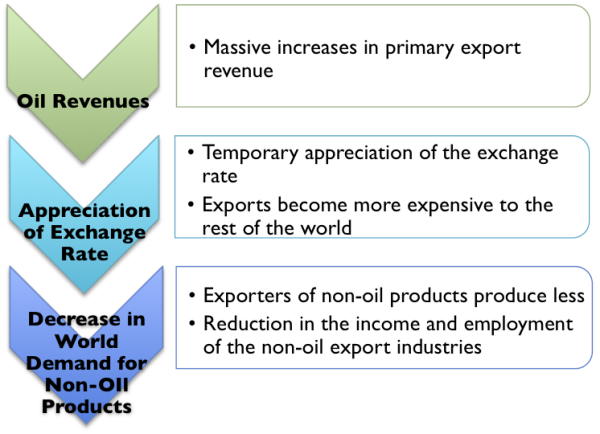
    The inflow of capital leads to an appreciation of the currency, making imports cheap and export expensive. The name comes from the Netherlands experience following the discovery of gas in the north sea. Natural gas sales drove Dutch currency up, seriously hurting the country’s other expdutch-diseaseort industries.

    In late 50’s Netherlands found huge source of natural gases. This resulted in 1. investments (largely foreign direct investments) in that sector 2. decline in other sectors e.g. one example could be people moving for jobs in that sector (consider Indian IT sector as reference) 3. investments (specially foreign investments) in that sector resulted in stronger currency. The excessive investment made Netherlands currency stronger resulting in making exports expensive eventually resulting in decline of export from Netherlands. Manufacturing suffered and thus jobs in manufacturing too go to step 2.

    This convoluted – action/reaction and impact at not so obvious industries – example again suggests to us that even if industries are not linked directly they are linked in some way. This link is interdependence. This interdependence should make one value the existence.

    The  “Dutch disease” should make us once again think about the invisible connections we share with each other.

    Image source – http://globalprosperity.wordpress.com/2010/08/19/oiling-africas-gears-for-democratic-change/

  • #CoalGate, corruption, politics & economics


    A few days back I completed this book Globalization and is discontent by Dr Stiglitz, a nobel laureate. I wrote on that recently – Interdependent co-arising a macroeconoics example. Besides this macroeconomics example, I had this intra-country example of the same concept of interdependent co-arising. Stiglitz has written so many things more than 10 years back which are happening in India currently. However, here I am just interested in quoting a small part of the book which relates to the corruption of coal mine allocation in present day India. This example is from page 71 of the book –

    There is more to the list of legitimate Complaints against Foreign Direct Investment (FDI). Such investments often flourish only because of special privileges extracted from the govt. While standard economics focuses on the distortion of incentives that result from such privileges,  there is a far more insidious aspect: often those privileges are the result of corruption the bribery of govt officials. The Foreign Direct Investment comes only at the price of undermining domestic processes. This is particularly true for investments in much oil and other natural resources where foreigners have a real incentive to obtain the conversation at low prices.

    Moreover such investment have other adverse effect- and often so not promote growth.  The income that mining conversation brings can be invaluable but Development is a transformation of society. An investment in mine – say in a remote area of a country – does little to assist the development transformation, beyond the resources it generates. It can help create a dual economy, an economy in which there are pocket of wealth. But this duel economy is not a developed economy. Indeed, the inflow of resources can sometimes actually impede development, through a process that is called “Dutch disease”

    So effectively, what Stiglitz said was bribing of officials for mining in developing / undeveloped countries. Further, the dual economy this FDI may create is not best for country to develop. I would take this example of Dutch disease in my next post – “Business to the Buddha”.

    Here what I want to highlight is this – the current issue in India – #CoalGate scam is a clear example of what Stiglitz wrote more than 10 years back. Indian Prime Minister – Dr Manmohan Singh – being an economist might have been aware about this and perhaps therefore kept Coal Ministry with him. This is just an extrapolation. Otherwise why would Law ministry and Law minster would want to change parts of report? According to the Supreme Court of India, the changes are Heart of the report.

    After reading the book – Globalization and its discontents – I realized that Stiglitz is not against Globalization but against the way Globalization is happening. So, when you read the above part, you should not infer that Stiglitz is against Globalization.

  • Generation running behind Technology


    Over the weekend I was talking to Rummuser uncleji. We were talking about many things one was – “uncleji you dont call me, its only me who calls you!”. So he said “Pravin  I am a generation old and for me internet, mobile etc are new age things and not necessary to communicate.” In fact he told me that he even receives inland letters from some of his friends. What? thats history right? But yes  STILL that is also a mode of communication.

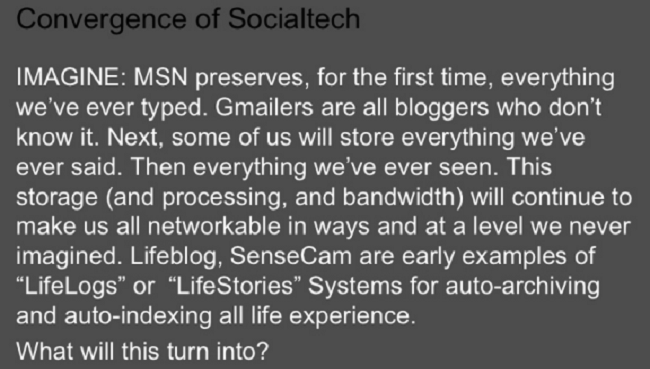
    I happened to read the following, copied as image some time back (source unknown now). I was thinking that it is true, my father must be thinking, this is too much what these guys and the kids do. This is complex and where all would this technological running around go and end?

    Convergence of Social Tech
    Convergence of Social Tech

    The question I asked myself was is it generation, running behind the technology? That is Latest things and fashion introduced and the young one’s running behind them. Or is it Generation running behind, technology? That is generations left behind the technology evolution and just trying to catch up or sit and relax. Older people who use technology as and when required.

    Perhaps 30 years from now I would think the same manner. Technology would be even more evolved and kids of that generation would find it cool, ok and obvious. At times those kids would think – how our forefathers survived without such gadgets?
    I think if my father is thinking something about technology and how far would it go? He is right, there seems to be no end. Step back and ask yourself – do you need a tweeter or a facebook to have a “Social Network” or to be “socially connected”? Do you think you need a mobile to Communicate? Do you think you need a TV or movie for Entertainment? I dont intend to say that we dont need many things; the question is how much is needed? and when is it needed?

    World would keep on evolving but there would be something that wont change and time and again a few people would think about it. Should we just stop and look within now? Is not it enough of running around?