Author: KRD Pravin

  • Karma


    The Endless Knot

    Associating Karma with financial success seems completely falsified way of using the doctrine of Causality.

    I was reading an article and it referred to financial success of people as the results of their Karma. Specially when we speak of “Karma” the context is effect of past life on the current one. Additionally, Karma of current life influencing the future life.

    The conceptual explanation of financial success of people to their Karma made me question the concept of Karma itself. Does Financial success mean everything and is the END in itself?

    I believe – Not necessarily.

    I have seen kids playing with mud, plastic bottles & almost without cloths very happy and kids with LEGO toys at home crying for something else. Just let the kids be little old and see adults or old aged people – they start grumbling about money! But we forget we leave empty handed. Karma in my opinion should be construed as – something that will help us progress. Progress spiritually – if finances help in spiritual progress – be it. But otherwise putting the whole concept of Karma around Financial success is not agreeable.

    Specially, when west misunderstands the concepts and tries to prove every point of their belief using concepts such as Karma – I remember Ashtavakra. I remember reading that Ashtavakara in his Geeta denied the concept of Karma.

  • Guide – Duel Between Mind & Heart


    Rarely, you get to see commercially successful yet very profound movies. ‘Guide’ is one such movie. It was a distinct movie by Dev Anand. Though he has made unique type of moives, but Guide is class apart. The end of the movie is a duel between the Bad Guy (within Dev Anand) and the Good Guy (within Dev Anand), this part discusses Bhagvat Geeta at extent and whole of Indian spirituality.

    If I write more it would be less, instead watch the video. Apologies I do not have English translation or script of the same. I will try and post that here some time.

    Watch online Guide (Movie), R K Narayan Novel – The Guide

  • Kashmiri Saint – Lalla


    I was listening to Osho’s discourse and in one discourse he was referring to a Kashmiri woman Saint – Lalleshwari. I was impressed with the first verse I read from her. Thought to share it here for many others to read –

    Whatever work I did became worship of the Lord;Lalla
    Whatever word I uttered became a prayer;
    Whatever this body of mine experienced became
    the sadhana of Saiva Tantra
    illumining my path to Parmasiva. -138

    So wonderful, profound meaningful and to the point. I plan to read more of her writings.

    Read this – The Hindu Article – Mystic insights

    Image source – Poet Seers

  • landslide


    When Alan Greenspan said in 2008 – “I really didn’t get it until very late.” It was as if someone was digging under his feet and Mr AG did not know. May be Mr AG really did not know, because he was keeping his eyes and ears closed. May be he was so inebriated in the wheel of growth that not just Mr AG but any banker was not willing to feel the “overheating economy”, hear or see that someone was digging deeper – under their feet.

    These words overheating and digging remind me of environment and when I received the above video* from someone on Whatsapp I could relate this video to one and only thing – economy.

    When I was watching this video, I was having strange feelings in my mind that the economy is going to do in down turn once again in 2015-16. “Everything just works as perfectly as it can…until it stops working!” That seems to be the case yet again for the economy.

    There are other reasons to believe that we are going to have a tough time. Though I do not want to be a doomsayer or conspiracy theorist, but here are few things – Developed world wages freeze analysis (The Economist), ISIS is likely to help economy sustain (wars have helped bring economy back on track), Upcoming elections in the USA, France unhappy and rise of EU opponent leader there. Though when it comes to EU, I wish it remains an integrated unit, that is a start for unifying the world in the lines of – interdependent co-arising.

    Watch that video once again – remember Economy goes down like this. Have we ever questioned the actual reasons for these things? Dig deeper! This digging deeper to make some extra pound creates the problem. Economy crumbles like this when we do not nurture it the way we – as a collective group – fail to maintain the hill which just crumbled in the video. As capitalists too – we are individually smart collectively dumb.

    *The origin of this video is unknown to the author – video shared by Dr Mala Kapadia.

  • Has the time for this idea come?


    When I wrote Problem of top 5% blog I was little too concerned due to various reasons. One was, I – being a centralist – am not a good judge of the situation in completely capitalistic societies. Second was – I myself was at the center of the example. How can I judge myself. I may get biased was the very obvious possibility. I shared the draft with Prof Mankad, again various reasons. He knows me, he has lived in the US for many years, he is an economist etc. His response was –

    QUOTE# – The solution lies with top 5/10%. Regulators – teachers, principals – also bank on 10% and would not want to do anything to hurt them. (Refer to a very long article in Huffington* Post yesterday -26th Sept 2014 – on ‘culture’ at FED NY to ignore the trespasses of Goldman’s.)
    With current socioeconomic yardsticks of success, it will take time for the 10% to shed their arrogance. The society may attempt to generate a social consciousness to move away emphasis (not d-emphasise) top 10 %. Can we start with admissions to prime colleges? Take an honest, mathematically random system of selection of say 50 from top 500? Such a system would retain the academic standard and defuse the arrogance of top 50 and perhaps reduce the commercial exploitative practices of coaching classes.
    Same practice may be chosen in recruitment of employees. (And perhaps in selection of brides!) [that “bride” part a “late cut” – as Prof Mankad calls it 🙂 – on me]
    This would be revolutionary. Who will start the revolution? UNQUOTE


    So the possible solutions Prof Mankad suggested starts from the top. Top 5% or 10% need to shred their arrogance (read Problem of top 5% a figurative real life example of representing our society, economy and even schools).

    An interesting case happened recently in India. A Gujarat based Jeweler – Savji bhai – has gifted generously to his employees this Diwali. Apparently he is a standard 4th dropout! Mahatma Gandhi used to say what Prof Mankad suggested in his opinion – “…the wealth of the owners is distributed among the workers and when this situation is arrived at, only then would India grow in real terms…”

    According to reports Savji Bhai has given Diwali gifts based on a loyalty program, so even though he did not study typical “Employee Engagement” and “Loyalty Marketing” or any other jargon of an MBA. Additional interesting this is – he supports pilgrimage of his employees families, has made stadium in Surat.

    Just to conclude – Mahatma Gandhi said wealth distribution as the way for Swaraj, Top 5% are hoarding the wealth (reference Dr Joseph Stiglitz) and even Govts are afraid of top 5% so we have a creative solution which Savjibhai experimented with recently. Has the time for this idea come? Wish we see Business and the Buddha co-exist positively to make this world a better place to live and be enlightened.

    NDTV interview (I am yet to watch it though)

    Savjibhai in a brief speech (Gujarati) 2012 – when not many people knew him.


    Note –

    # The blog Problem of top 5% was published on 11th Oct, draft created was on 26-27th Sept. Prof Mankad shared his opinion on 27th Sept.

    * I read Huffington Post article which Dr Mankad referred, however currently not able to get that link, so here is related link – http://www.propublica.org/article/carmen-segarras-secret-recordings-from-inside-new-york-fed

  • Interdependent co-arising in Ecosystem


    As I have been writing a lot about interdependent co-arising, I came across this video and thought to share it without delay on my blog.

    If you can understand this video you can understand the concept of Buddhism on interdependent co-arising. Please watch this small <5 min video a wonderful experiment. According to the description of the video – When wolves were reintroduced to Yellowstone National Park in the United States after being absent nearly 70 years, the most remarkable “trophic cascade” occurred. What is a trophic cascade and how exactly do wolves change rivers?

    “When we try to pick out anything by itself, we find it hitched to everything else in the Universe.” – John Muir

    An interesting way to explain interdependence. Hope we learn this sooner rather than later that ecology has to be balanced, political, social and religious ideas should also be balanced because perhaps nothing is perfect! I think therefore Mahavir used the concept of Syadvada (doctorine of postulation) and the Buddha middle path.

    Source – Youtube channel Sustainable Human http://www.youtube.com/channel/UCYv_csqWJTSfQK3vOZDJKQw

  • Problem of top 5%


    screen shot 2014-09-28 at 2.32.00 pm.pngWhen I was studying in 12th, I had hoard of intelligent classmates. About 10% of the class was very good in Mathematics. We had completed a couple of chapters of 12th Math in advance. When these chapters were discussed in Math class session we did what we could do the best. We were wicked – as any smart fellow can be – we used to solve these problems in no time before rest of the 90% could even understand the concept. Than we used to start discussing the topic between/among ourselves. Our teacher used to be disappointed, she could not tell us anything – as we had solved the problem, we were discussing the problem (how to solve it faster and not a movie). She used to feel that she is missing on her responsibility of teaching the concept to the rest of the class.

    We were wicked, we were intelligent, we were brutal (for our other classmates) and we were trying to make as much out of our class time that we can be more competitive. The reason was whole of our class was preparing for State Pre-Engineering Test (MPPET) – 19 or 25 of us made it to Engineering out of 70 students  (which was a record for school). My friend and me were among some toppers! So, we were doing whatever we could do to get to the topics which were tough for us. One way was completing other topics faster [because we were not able to force the teacher to start topic of our choice].

    Just to give you an example – Teacher was teaching Probability theory, we used to solve the problems in no time, as most of us (the 10%) were good in that. Probability otherwise was not a simple thing, so 90% were trying to grasp the concept; we are already talking in class. The 90% used to get hassled & were not able to understand whats going on! Ma’am was little too supportive to us – we were at the top! We (the 10%) wanted to finish Probability quickly and go to Vectors and 3-D Geometry. We were learning that ourselves and wanted to support our learning with class sessions. This nonsense kept on happening starting Calculus to XYZ to Probability sessions. After a while, Ma’am realized that these guys are beating the system. The “probability” of same happening in Vectors and 3-D Geometry session was increasing day by day.

    One day before start of the mathematics class, she called us (the 10%) of the class in a different class room. She told us – in as simple words as she could – “I know you people are intelligent, I appreciate it. You are very good at Mathematics. But you know what? I have a responsibility to teach the other 90% of the class as well. I would suggest you people to abstain from class for next couple of days, because this will help your other classmates to learn better!”

    We were not able to understand her this very simple message or a very polite order. We felt she was being sarcastic. We started being more regular. Kept on beating the system. Even the Principal could not do much as everyone in our school knew – all these people are “actually” toppers whatever subject you take. This happened in 1996-97 during our class 12th.

    Now, I am revisiting that time and thinking to replace – teacher & whole school staff with the Govt of any nation. We (the 10% of us, toppers) with the top 1% or 5% of the wealthiest/powerful of that nation. Rest of the 90% of my classmates as rest of the population of the country. Did you see any ways the top seated people are beating the system? If no, please re-read the story I narrated above. Change the situation – now do you think the teacher/principal (Govt) needed (needs) to do something different? Something to perform their duty better and manage the wicked, intelligent, smart, brutal and selfish “we the top 10% students” (the top 1% or5%)

    This is the problem of top 1% or 5% or 10%, they want to maximize their own profits, most of the times beating the system. Sometimes, we need to think – if I produce something, there should be enough money in market so that my prospective buyer can buy what I produce.

    At times, its about collectively growing!

    Disclaimer – The author could – at best – secure 2nd position and remained in top 10% most of his academic career.

    Image source – http://static1.businessinsider.com/image/542851c7eab8ead666120b0a-619-457/screen%20shot%202014-09-28%20at%202.32.00%20pm.png

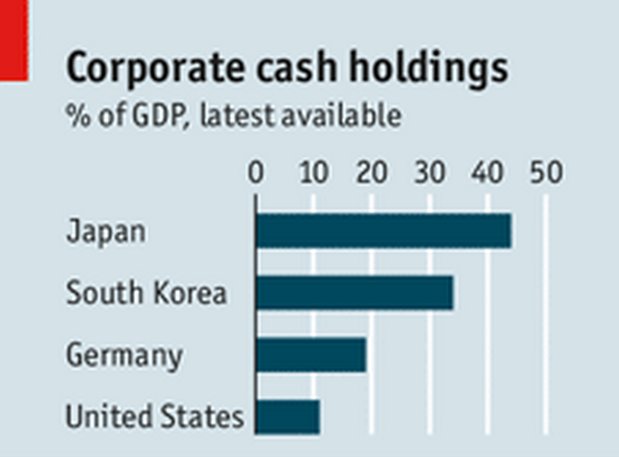
    If you have more time read this – http://www.businessinsider.in/Cash-Hoarding-Is-A-2-5-Trillion-Problem-In-Asia/articleshow/43753643.cms

    Note – Check image above Corporate Cash Holding in Japan and Japan’s economy – read recent blog – Did Keynes fail Japan?


  • Did Keynes fail in Japan?


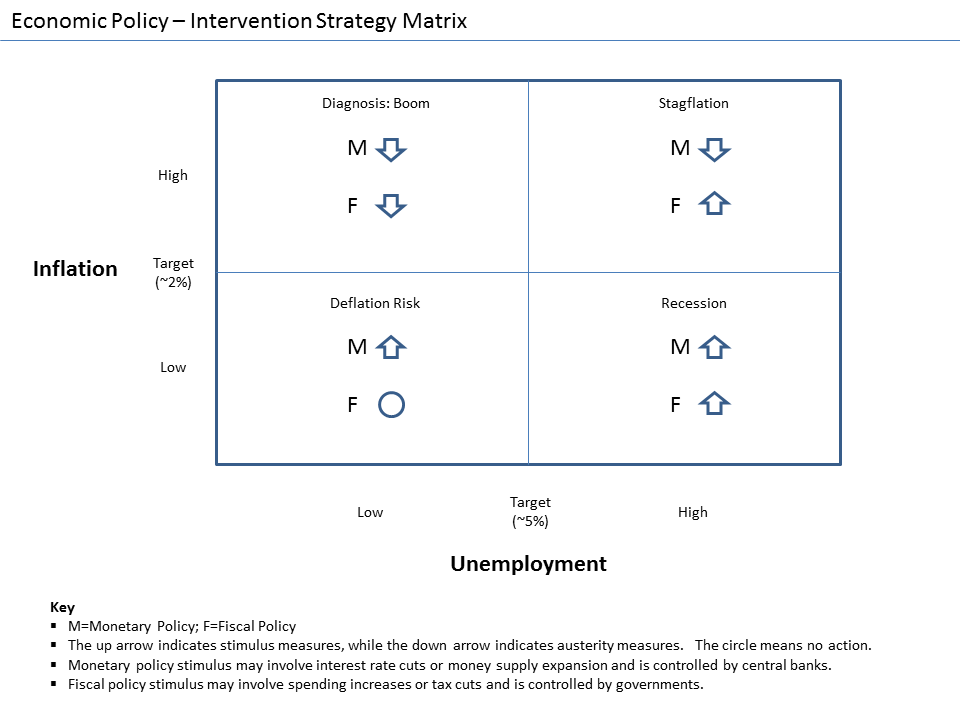
    It all started in 1990s when Japan took the step to deflate its economy – Yen devaluation, lower interest rate, money supply etc. The effect is observed till today and in fact we may get into another slowdown in 2015-16. Actually, that’s what is the fear. Some experts are forcing Euro-zone not to make the same mistake Japan made in 1990s. If one sees debt of the developed countries one may be forced to conclude – we are sitting around next slowdown. Take Japan – about 250% debt to GDP ratio! Surprising right? Nope, situation is not better in US either, USA is also at 100% debt to GDP. Many are already blaming Quantitative Easing for the next likely downfall.

    I happened to read a news last month on Keynes failing Japanese economy. Well, I agree with the concept of Keynesian economics; you may even call me anti-capitalistic – though I am not. I am more in the league of following the middle path. May be Japanese have become too devoted of Keynes’ concept – so I started questioning myself on many fronts i. Is Keynesian economics the problem? ii. Did Japan over do it? iii. How things work around here? Etc These questions may be comforting to those who are against the Keynesian economic theory.

    Economic_Policy_-_Intervention_Strategy_MatrixSince, Keynesian economics had worked in relatively less connected world of 1930s I dismissed the question 1 for future blog. Japan’s overdoing it and how the system works were somewhat related questions. So, that question became central in my very tiny analysis.

    The question I had was – how does Govt issue bonds and how does it get circulated in the market? Well, that is done through the banks and the bankers. Aha! did I hear bankers? Those bankers who went to the President (USA) and said – “we would buy Jet for our executives?” Ok! If those who still blame Keynes, would you ask with each slow down who makes the most money? Is not it the same – bankers? At least the Govt is putting money in the system in the hopes that this method will work to keep the economy afloat. I was checking Wikipedia article on Economy of Japan. An external states that – Japan possesses 13.7% of the world’s private financial assets (the second largest in the world) at an estimated $14.6 trillion [2010 data]. This data states that – Keynesian economics is doing more services to the Capitalism than otherwise!

    [Tweet “Japan has 13.7% of the world’s private financial assets! #Keynesian #economics does more service to #Capitalism than otherwise”]

    Who is playing with the hopes and cheating the system? I am little too critical when I say “cheat” because some people are in the profession of making investment decision and those decision at times counter intuitively work against the basic premise (hope) on which at the first place Govt had put money in the system. I think a solution for the problem of Japan or for that matter world economy (likely next economic burst) lies in answer to the question(s) – who has actually hoarded the money? How to make amend for this workaround of Keynesian method of boosting economy?

    I asked Prof Mankad about his opinion on Japan. He shared this – “One of the real reasons for Japanese stagnation through the last decade of twentieth century had little to with Japanese policy. It was caused by two important external forces viz., depreciation of dollar (and hence default appreciation of Yen) and rise of ‘low cost’ China which deprived Japan of its traditional export markets. The fault of Japanese policy makers was absence of policy response to the changing situation and rise of China.”

    So there is seemingly an emotional explanation [which questions the other side] from my side. There is another more analytical, logical and thoughtful explanation from Prof Mankad. Whichever you want to ponder upon – Keynes did not seem to have failed Japan.

    Yet at the same time, every generation needs a revised look at things & our generation too! Keynesian Economics was successful when the world was not that connect, now QE of USA is invested in India/China which did not happen in 1930s.

    Image source – http://upload.wikimedia.org/wikipedia/en/a/a7/Economic_Policy_-_Intervention_Strategy_Matrix.png

  • Random Act of Kindness


    I have started watching a SitCom – Dharma and Greg. In one episode Dharma (a strangely spiritual women), does Random Act of Kindness. She gets into trouble as a Policeman fines her. Well, I shall write on the serial sometime later. I thought to take up this point of “Random Act of Kindness” in this blog. I have written on Can money buy Happiness? earlier, however here is another take. Though, upto an extent yes Money can buy you happiness, yet beyond that threshold “value of money” does not add any “value” to one’s happiness – point of diminishing returns.

    Related blog – Just do it… ok try it

    I received this video from my brother on WhatsApp. I am sharing this video here, do watch, if you like do share as well. After watching this video you may say why do such thing? People will be “tempted to find such person” on daily basis! Just watch the video and feel free to share it, like it and write your opinion on the comments box below.

    If you want to check this video in Youtube

    It is my birthday today – 26th Sept. So instead of waiting till weekend (starting tomorrow), I thought that let me share this blog on my Birthday. Will you share some Random Act of Kindness with anyone? May be today? Not necessarily me [jokes apart].  Anyone who is in need.

  • Spirituality & Business


    It was winter of 2012, Sujoy was getting married. I traveled to Pune to attend his wedding function. There I met one of my very old College mate – Anurag Tambe.

    Anurag is smart guy, thoughtful and practical. We discussed many things, including my faSteve_Jobsvorite topic – purpose of what we do? This topic eventually boils down to spirituality. Anurag told me about Steve Jobs and what his experience was about India and spirituality. His visit to India made him go back to the US and keep doing his work as good as he could. [Anurag’s reference to the book on Steve Jobs]

    Here is an interesting story from Father Antony De Mellow, book – Prayer of the Frog Volume 1 and Prayer of the Frog Volume 2 on similar concept.

    A cobbler met a Rabbi and said. “Tell me what to do about my morning prayer. My custo­mers are poor men who have only one pair of shoes. I pick up their prayer of frogshoes late in the evening and work on them most of the night; at dawn there is still work to be done if the men are to have their shoes ready before they go to work. Now my ques­tion is: What should I do about my morning prayer?”

    “What have you been doing till now?” the Rabbi asked.

    “Sometimes I rush through the prayer quickly and get back to my work—but then I feet bad about it At other times I let the hour of prayer go by Then too I feel a sense of loss and every now and then, as f raise my hammer from the shoes, I can almost hear my heart sigh. “What an unlucky man I am that I am not able to make my morning prayer.”

    Said the Rabbi. “If I were God I would value that more than the prayer.”

    Steve Jobs, I think, did what the Rabbi suggests in the story.