Month: January 2025

  • From Wish Lists to World Peace

    From Wish Lists to World Peace

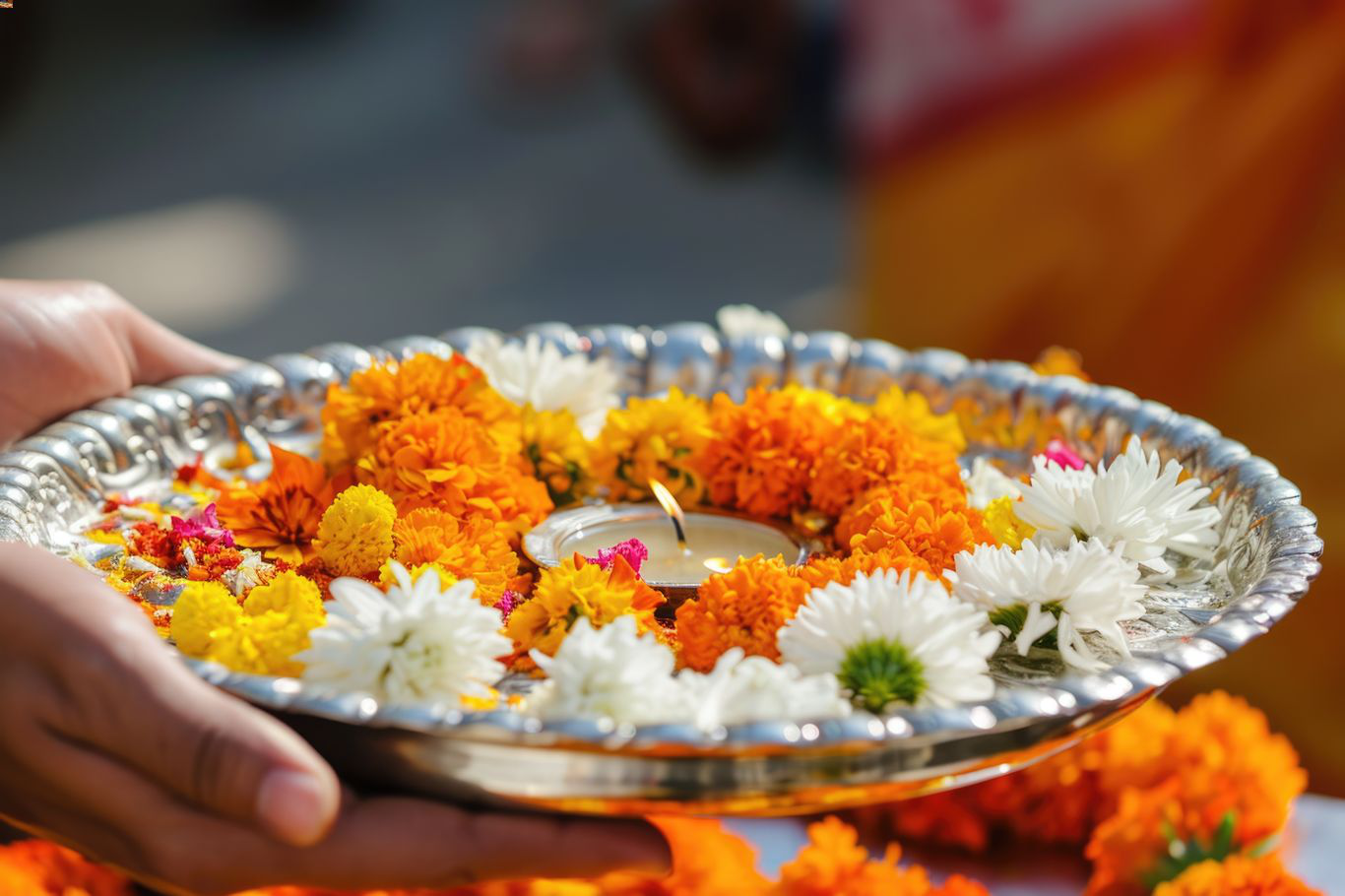
    I had the privilege of visiting several temples in Tamil Nadu last month, including the iconic Rameshwaram, one of the Char-Dhams for Hindus. It was an eye-opening experience that stirred memories of my younger days in Dhar, Madhya Pradesh, where I visited temples more frequently.

    Over time, however, my visits had become less frequent. The reasons were a plenty. Two that I feel important to discuss include first there is “no conversation” and second mostly I provide my “wish list” to the deity and leave. I’d ask for personal favors such as success in exams. Even if I go repeatedly to the same temple, I have no visibility of “fulfilment”.

    As I reflect on those early years, I find myself chuckling at the simplicity and short-term nature of those requests. It feels almost childish now. But there was another, subtler reason for my growing distance from temples: the lack of conversation.

    When I was in engineering, I started asking deeper questions about life: What is my purpose? What will I do 40 years from now, after retirement? What is the purpose of life? Is there anything that we are missing in our mundane life? There was confusion, there were questions in mind, no clarity who will answer and my point of not checking in temples was clear. Though, in hindsight, I wish I had tried asking few people in there.

    These existential questions expanded into a spiritual search. I felt a profound confusion, unsure of where to turn for answers. While I distanced myself from temples, I started reading different books (those days internet was just in its nascent stage). I was fortunate in my younger days that I came across some good people to guide me (my Engineering college professor Dr Anand Saxena was my first guide), help me and later on I joined The Art of Living foundation, which helped address many of my questions (My Art of Living teacher Dr Shrikant Agashe was a great help). Some were answered, some new added too.

    Slowly, the internal debate of why to go to a temple subsided. Though, I am talking about a journey of 20+ years here – 1997 till 2022. As I moved to Bangalore recently, my perspective has shifted. Whenever I visited a temple nearby (which is still a rarity), it no longer feels like a place to simply make personal demands. Instead, it began to feel like a sanctuary for service – an opportunity to give back and help those in need, rather than merely asking for favors. Slowly, I noticed a shift in my own approach to prayer. When I found myself asking for something, the request went beyond me and my immediate family. My thoughts began to expand, and I started wishing for the well-being of everyone—neighbors, society, and humanity as a whole.

    This growing understanding reminded me of a Sanskrit shloka I had learned in school:

    सर्वे भवन्तु सुखिनः, सर्वे सन्तु निरामयाः |
    Om Sarve Bhavantu Sukhinah, Sarve Santu Niraamayaah
    सर्वे भद्राणि पश्यन्तु, मा कश्चित् दुःख भाग्भवेत्
    Sarve Bhadraanni Pashyantu, Maa Kashcid-Duhkha-Bhaag-Bhavet
    शान्तिः शान्तिः शान्तिः॥
    Om Shaantih Shaantih Shaantih

    In childhood, it was not as clear to me, now when I look at the deeper meaning and see my own’s prayers going in the same direction, I realize the futility of “The wish list” One’s prayer must call for universal happiness, health, and auspiciousness, extending beyond personal desires. The Shloka states exactly the same. I realize how important it is to move from asking for individual blessings to seeking blessings for the entire world.

    This shift in mindset became even clearer when I thought about recent global events—COVID-19, wars, and countless challenges faced by humanity. It’s more important than ever to pray for the collective good of society. When you step into a temple, it’s not just about you.

    So, next time you visit a temple, remember that it’s not about the wish list you carry with you. It’s a space for self-reflection, for expanding your consciousness, and for sending out your prayers not only for your own needs but for the well-being of all. It’s a place for peace – peace within, and peace for the world.

    The experience of going to Rameshwaram was unique, at the same time, it gave me many additional clarities be it prayer or be it running to Temples.

    Image source: freepik

  • AI, Humans, and Bharatnatyam

    Recently, I had an intriguing conversation with my friend Vikas on our society’s basketball court. Vikas is an excellent practitioner of Yoga, and he does his practices often around the court. Though we had never discussed spirituality or meditation before but this time we discussed not only work, books but also the Indian spiritual masters. After exchanging New Year pleasantries, we found ourselves talking about the impact of AI on our lives and businesses.

    It was a casual conversation, as our past discussions never really ventured into the realms of spirituality. But as we spoke, I brought up an interesting prediction from the 1920s. Renowned economist John Maynard Keynes had forecasted that in the future, we would work only four days a week, thanks to advancements in technology. I mentioned that with AI progressing rapidly, this could very well become a reality (though it has been close to 100 years from the prediction). One of our common concerns, however, was about the future of jobs – would there be enough work to keep everyone occupied and economy running?

    AI is already transforming every aspect of life, the endless possibilities of Biz Apps to generating artwork to creating videos. Initially, I believed that impact on creative work would be the last by AI, but my perspective changed when I watched a cat cook a meal in a video. While the video was amusing, it also made me rethink the boundaries of AI’s creativity.

    One thing became clear to me—the future may hold something unique: people will increasingly seek out real human experiences. Activities that involve human participation or performances,, like dance, will hold more value than any AI-generated fantasy. People will want to see and connect with others, and the demand for authentic human expression will rise.

    If we revisit Keynes’ prediction of “less work,” I am confident that it will happen. The real question is: what will people do with their newfound spare time? Will they continue to watch endless cat videos, or will they pursue things they genuinely enjoy? Over time, I believe the latter will take precedence. People will look for activities that engage them—activities that require human involvement, passion, and creativity.

    This conversation with Vikas stayed with me, and the same weekend, the thought resurfaced. That Saturday, my daughter Adviti – who is learning Bharatnatyam few months – had a dance performance. The event concluded with a deeply insightful speech from her teacher. The teacher explained –

    In Bharatnatyam, the performer has to be completely in the present moment. Body (through gestures and movements), mind (focusing on rhythm and mudras), and facial expressions (conveying emotions) all require perfect coordination of body, mind, and soul. Without this harmony, the performance falls flat. This concept resonated deeply with me, extending far beyond Bharatnatyam. It mirrored my understanding of meditation.

    As an audience, we were moved by the kids’ performances, but we were absolutely entranced by the senior performers. The speech, combined with the mesmerizing performances, made me realize something profound: perhaps the true joy of a dance like Bharatnatyam lies not in watching it, but in performing it. It’s an activity that requires full human engagement – body, mind, and soul – something AI simply cannot replicate.

    Reflecting on both my conversation with Vikas and the insights I gained from the dance performance, I saw a clear connection. The future will indeed offer fewer “work hours,” as Keynes predicted. But more importantly, people will likely grow tired of passive consumption – whether it’s endless reels or AI-generated content – and turn to more fulfilling, creative pursuits. Activities that involve deep personal expression, like cooking, dancing, or art, will become more valuable. In fact, it’s possible that many people will turn inward, exploring spirituality. It’s not just about watching a cat cook dinner, but about immersing yourself in the joy of cooking your own meal. Similarly, it’s not just about admiring a dance – it’s about becoming part of the rhythm, the movement, and the expression yourself.

    Also read –
    Playing golf, work and meditation
    Meditation
    Unifying Heart, Mind and Action

    In the end, AI may change how we work and live, but it will never replace the deep human need to create, to express, and to connect. The future, as I see it, will not be defined by what AI does for us, but by what we choose to do for ourselves.