Month: January 2013

  • Chinu and the pebbles

    My little niece – Chinu – is about three years old. When I see her picking up small pebbles I remember my childhood. I used to do that – “Wow this stone is very smooth.” “That stone is of very different color”, I will keep this with me always, no one can find such beautiful stone anywhere.

    I used to pick up stones the way Chinu does now. Now, I am grown up (may be!) and now I care for different kind of stones :). As many of you must be doing now.

    When I compared Chinu’s activities with my current actions. I wonder my father, Saxena Sir (or Rajagopaul Uncleji) must be thinking – hey this kid (for them I may be still a kid) is growing up! One day he won’t care for all these stones!

    I am going to ask these elders of mine – what have they really earned in life? How do they measure success now? What they crave for now? And how do they feel about my or any young ambitious persons running around?

    I see Chinu and think of my childhood and my small world. What would it be when I’d be say 60. Sitting around and smiling or still running around for something else? I wonder!

    I wrote this blog in November, posting it now. Saxena Sir told me what I wrote in previous blog – Money worth earning! He taught not to even run behind earning satisfaction.

    Related blog –
    When will we stop?

  • Money worth earning

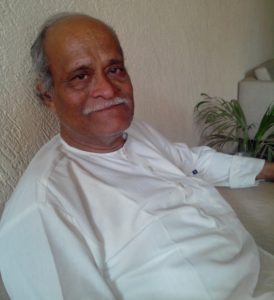
    Recently, I met my Engineering College Professor Dr Anand Swaroop Saxena (in picture). He was my Engineering degree Major project guide, actually a guide in many ways. We were discussing something and he shared the following  lines (in Hindi these are called Doha).

    गो धन, गज धन, काज धन, सबे रतन धन ख़ान|
    जब आवे संतोष धन, ये सब धुरी समान||

    Go dhan, gaj dhan, kaaj dhan sabe ratan dhan khan
    Jab aave santosh dhan ye sab dhuri saman.

    Meaning:

    It is true that owning cattle, jewels or kingdoms is mine of wealth
    But when you own wealth of contentment (satisfaction) those mines (cattle, jewels etc) of wealth become worthless (like dust)

    Note – In old days cattle used to be a measure of wealth of a person, therefore go (cow) and gaj (elephant) in this doha.

    I thought about it and added two points –

    1. This does not mean we should block our owns progress in the name of contentment.

    2. Point 1 makes everyone think – when should we stop? Because if someone should not block his/her progress, that slowly converts into greed and running behind many things (at time unnecessary things).

    I thought that one should always try to utilize one’s capability to the hundred percent in doing whatever one is doing. This thought let me to Famous shloka of Geeta

    कर्मणयेवाधिकारस्ते मा फलेषु कदाचन।
    मा कर्मफलहेतुर्भूर्मा ते सङ्गोऽस्त्वकर्मणि।

    Meaning: “You’ve a right to perform your prescribed action, but you’re not entitled to the fruits of your action. Never consider yourself the cause of the results your activities, and never be associated to not doing your duty.”

    And I felt contentment (satisfaction) is in becoming content (satisfied) and not in running behind anything, not even the desire to become content (satisfied with anything).

    Related blogs –

    When will we stop?

    Swasthay – dwelling in oneself

    What more you need?

    Source of Geeta shloka meaning – Deeds, not words, should speak

  • Do what is right in perpetuity

    The class was nostalgic, remembering the last couple of days of sessions of Operations Management with Prof Moradian. Today we were attending his last session of Operations Management. We all enjoyed each session, the quick wits and learnt a lot. We were attending his last session and thus all that was coming to an end for Operations Management.

    That session was very special, I could still hear his one statement very clearly that – “…in your career whenever you have to take any decision, always do what is right for your company in long term…”.

    When I recollect those words from Prof Moradian – “… do what is (make decisions which are) right for the company in perpetuity…” that makes a lot of sense to me. That one statement made me speak couple of tough truths in my career, but it feels good when you consider big picture vis-a-vis to your personal interests.

    An organizations need to learn the art of balancing between the short term sustainability and the long term growth OR short term profit and long term uncertainty. In current economic scenario short term sustainability seems the way to survive, let alone long term growth or profit for that matter. Message seems clear to me – Do what is right for the company in perpetuity.

    Actually this statement equally applies to each individual in life too – we should do whatever is right for us and others – IN PERPETUITY.

    Related blogs –

    Balancing Act – Professor Mankad shared this story of Balancing act with me earlier.

    Fruit will arrive in its season